Sumer is icumen in
"A Midsummer Night's Dream"
New York City Ballet
David H. Koch Theater
Lincoln Center
New York, New York
May 29, 2024
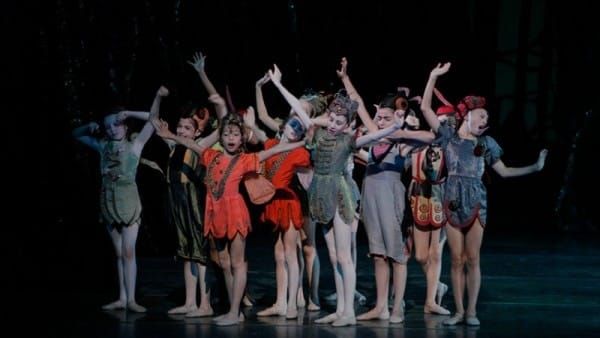
Though it is not quite as inevitable as “Nutcracker” at Christmas, “A Midsummer Night’s Dream” often means summer for the New York City Ballet, and it returned this year for a week of magic. Its structure does have some issues—why is Titania off in her grotto dancing with a boy toy, what does that magic flower actually do, and why are the dancers parading around so endlessly in Act II, only to leave as the entertainment starts? But the choreographic high points are so very high, and the settings and costumes are so very beautiful that these questions don’t really matter. As always, the many children made delightful, confident, and well-rehearsed little bugs, fluttering through the shifting, shimmering shapes of Balanchine’s choreography. Unity Phelan and Joseph Gordon were the warring couple, and there were several debuts, including Ashley Bouder as the scorned Helena, an unexpectedly small role for the long-time principal.
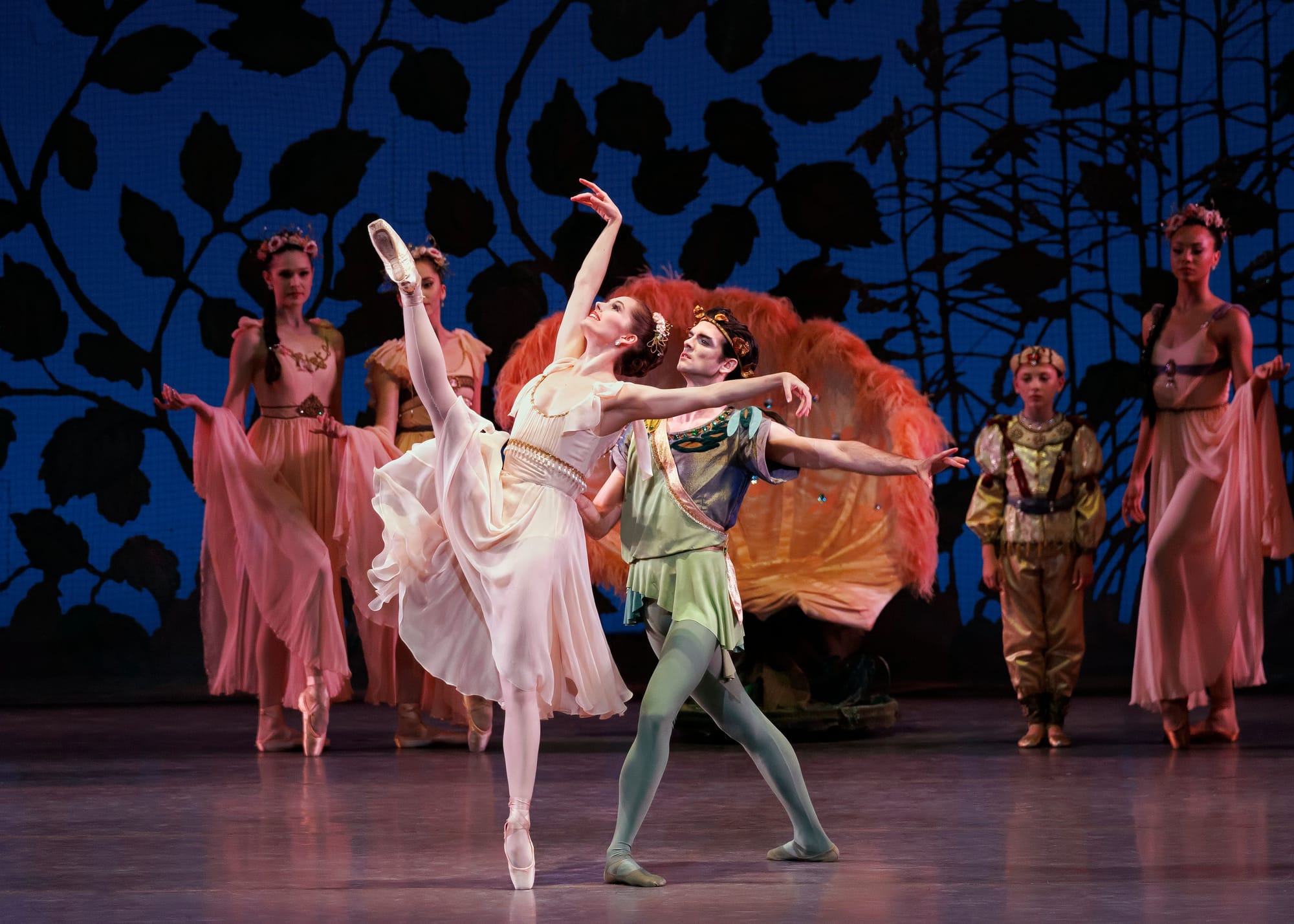
Phelan was a lovely Titania, with creamy dancing, an elegant line, clear, flowing shapes and a costume to set off her porcelain beauty. Her dance with the unnamed cavalier (Peter Walker, a paragon of deferential nobility) was effervescent, full of daring jumps and floating lifts. I did miss an imperious power in her mime, and she seemed a bit too polite to hog the little changeling. She often seemed like a phenomenally talented dancer rather than a willful, slightly dangerous magical creature, though her dance with Bottom (a wonderfully hangdog Lars Nelson) was exceptionally vivid. She played it straight, without any knowing nods to the audience, which made her helpless infatuation even funnier. She was a perfect incarnation of blind love.
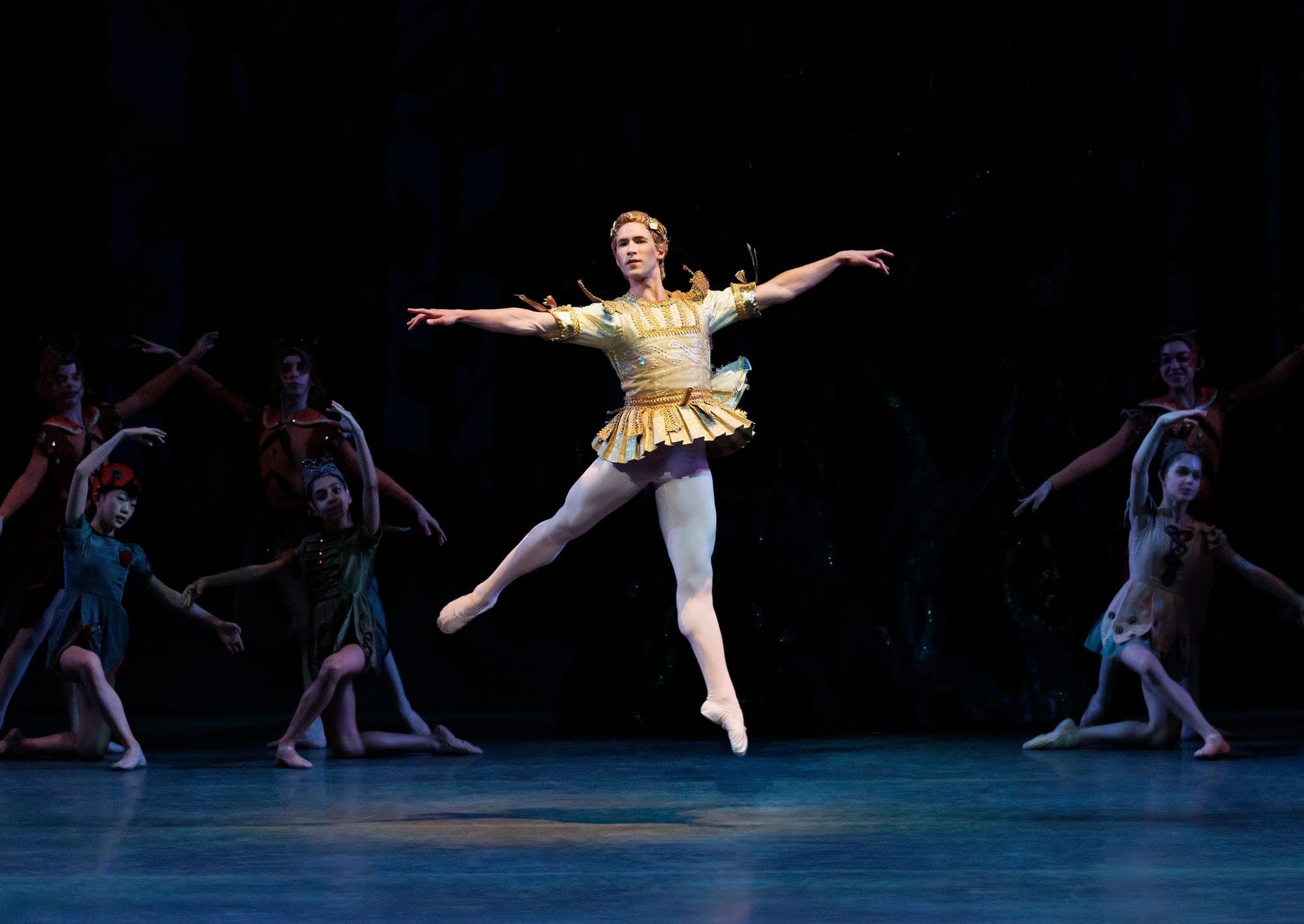
Gordon was a regal, arrogant Oberon, commanding the world around him and toying with the mortals. (Oberon is really quite unpleasant to poor Bottom.) His dancing was smooth and clear, and his beats sharp. He didn’t quite have the explosive power that some Oberon’s have, but he moved with a beautiful flow, gradually building the excitement; it was like watching a golden river flowing through the forest.
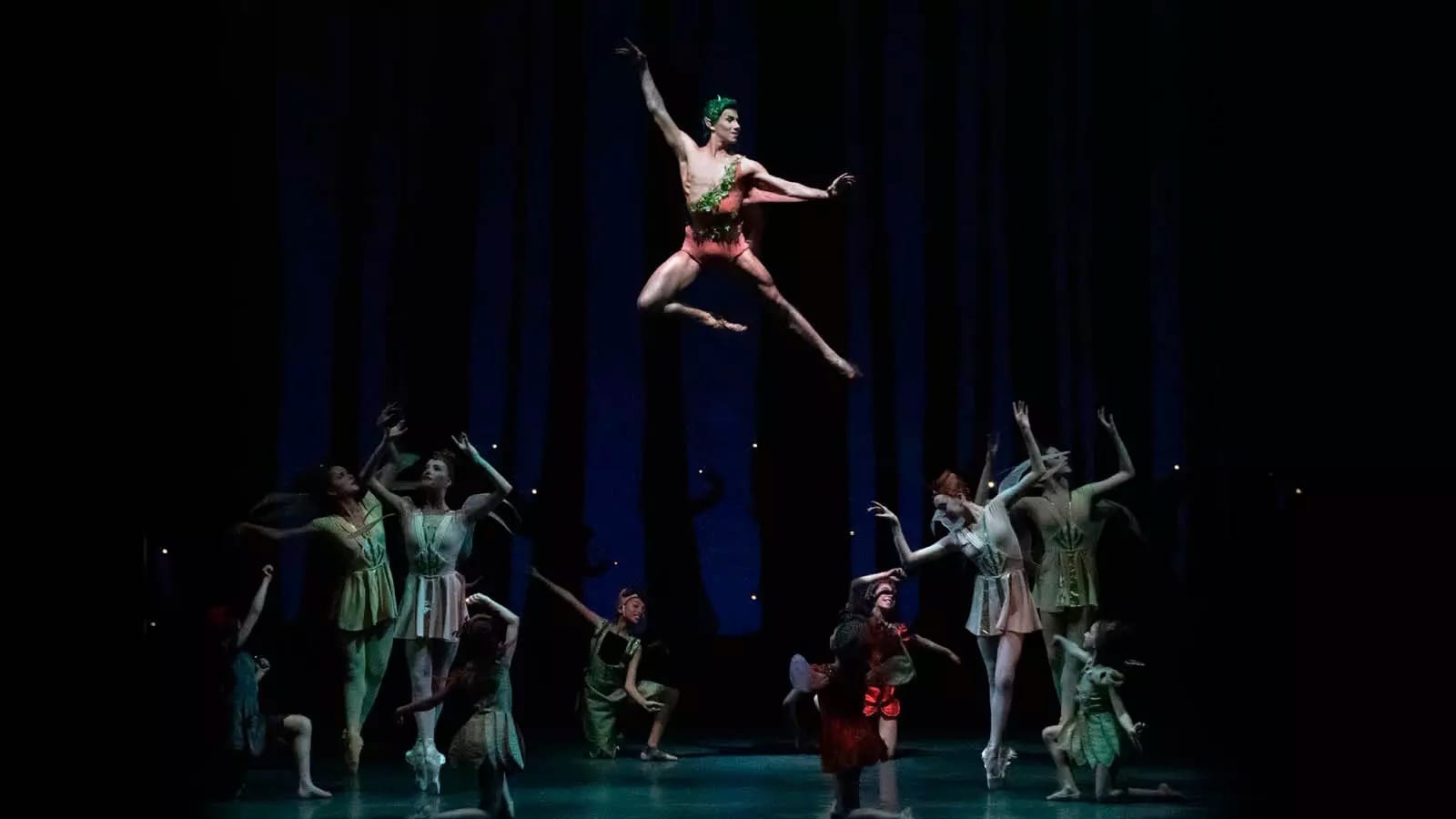
There was plenty of explosive power in Roman Mejia’s Puck. He danced with an airy lightness, controlling his jumps so that he landed as if dancing on moss. He has always been a phenomenally exciting dancer, but he has added a touch of elegance that made his Puck seem supernatural. He seemed to relish every twist and turn of the plot, loving every bit of his power almost as much as the audience did.
He almost met his match in Olivia MacKinnon’s Butterfly (a debut); the role is often danced as a fluttering sprite, hoping from one pose to another, but MacKinnon had a regal dignity which she combined with a lot of speed. She used her expansive, flowing arms to watch over the little bugs, almost as if Butterfly were related to the Lilac Fairy; she dominated the stage.
Bouder, too, was quite impressive in her small role, though the Act II costume was not flattering. She gave Helena an unusual depth, showing a quiet desperation devoid of exaggerated bug-eyed faces, as she was tossed aside by the brusque Demetrius (Davide Riccardo, in his debut). Her fear and confusion when Lysander (Harrison Coll), tricked by that magic flower, ran after her, was genuinely moving, reminding us that Shakespeare, even in the silliest of situations, was writing about the human heart. Comedy still ruled, though, and Bouder was very funny fighting with Erica Pereira’s sweetly sappy Hermia. The two male lovers, too, had distinctive personalities, helped no end by the absence of those awful wigs, which used to make them look like a mixture of Prince Valiant and a scarecrow.
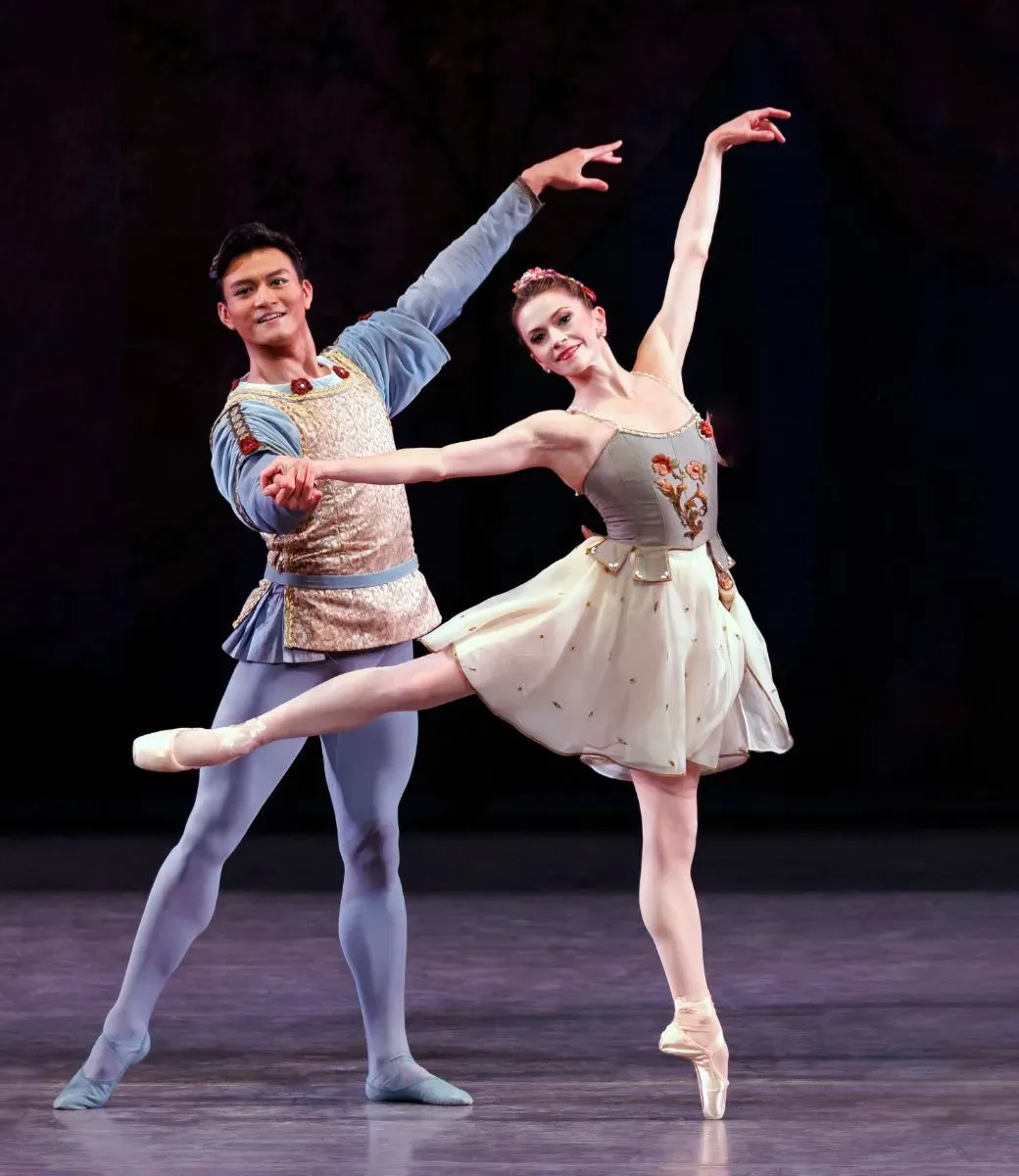
Fortunately, the luminous pas de deux in Act II never had costume issues, and though it is basically completely unconnected to the first act the pas de deux is a gem of lyrical, luminous feeling. Megan Fairchild and Chun Wai Chan (in his debut) danced the anonymous couple. There were a couple of minor missteps, but the dancing floated in a luxurious stream. Fairchild is often paired with shorter men, but Chan’s height helped created a protective air, and couple had an air of complete trust and confidence, especially in the final slow backbend which seemed to last at least five minutes as Fairchild floated down into Chan’s arms. Chan has a naturally warm presence combined with wonderfully cushy dancing and while concentrating on Fairchild, seemed to embrace the entire audience. And so did that lovely ballet, a shimmering harbinger of summer.
© 2024 Mary Cargill



