Story Time
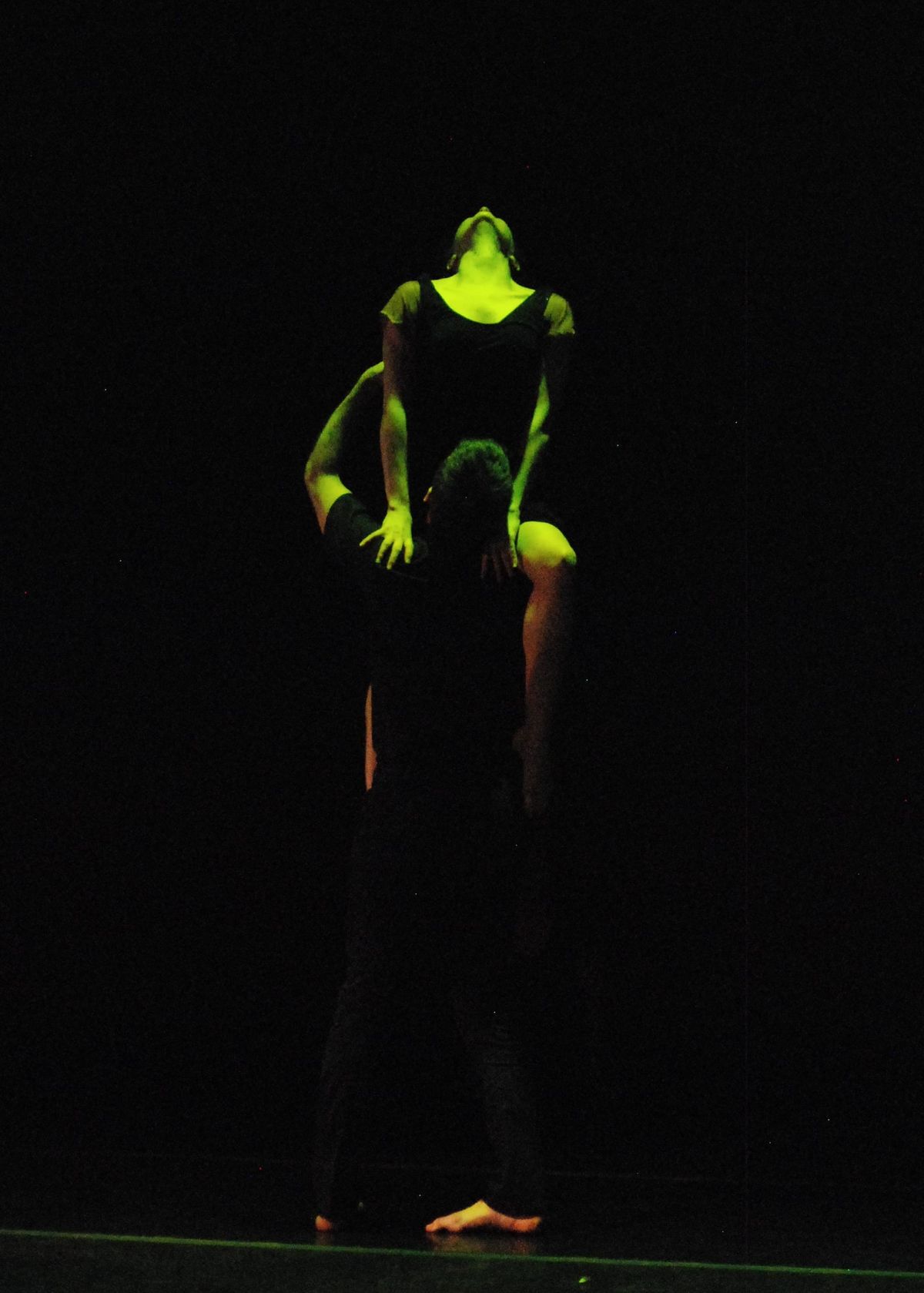
"In Violent Circles (The Rite of Spring)", "Vashti"
Riedel Dance Theater and Ariel Rivka Dance
Ailey Citigroup Theater
New York, New York
March 7, 2013
Two modern dance companies, the Riedel Dance Theater and the Ariel Rivka Dance, premiered new works together. These were both character-driven explorations of old stories--a medieval Swedish ballad in Riedel's piece and the Biblical myth of Vashti in Rivka's work. Jonathan Riedel, who danced in the José Limón Dance Company from 1996-2006, has created a number of interesting pieces; his Edward Gorey works were especially intriguing for his concise, witty approach. "In Violent Circles" is not witty, nor concise. It is set to Stravinsky's "The Rite of Spring" in a piano arrangement by Neil Alexander, played live, and the thoughtful, meandering, restless quality of the arrangement was extremely effective. The ballad, which also inspired Igmar Bergman's "The Virgin Spring", tells the story of daughters (three in the ballad, two in the dance) who are killed by vagabonds. The killers turn up at the parent's house and (in the ballad) try to sell the girls' shifts. The dance has the mother discover the necklace (a cross) that one girl had. The mother then urges the father to kill the murderers, which he does, and then suffers spasms of guilt. The ballad is even grimmer, since the parents discover that the murderers are their own sons, sent away years ago to fend for themselves. (Medieval parents tended to be careless that way.)
The underlying themes of guilt and retribution (and in the medieval original, salvation, as the father built a church to commemorate his daughters) are, in Riedel's retelling, a bit difficult to tease out, as most of the work is narrative, with a lot of knifing. The shock and horror is diluted by the repetition, and obviously fake knifings can't be as evocative as the dispassionate descriptions of the ballad or the allusive photography of the film.
The dancers, a mixture of Pace students and professional dancers, were as effective as the sometimes diffuse work would let them. The mother, Julia Kelly, was especially affecting as she pretended to court one of the intruders to allow her husband (James Brenneman III) to kill him. The killers, Joshua Arnold, Louis Chavez, and Hana Ginsburg) were able to convey a covert menace from their entry.
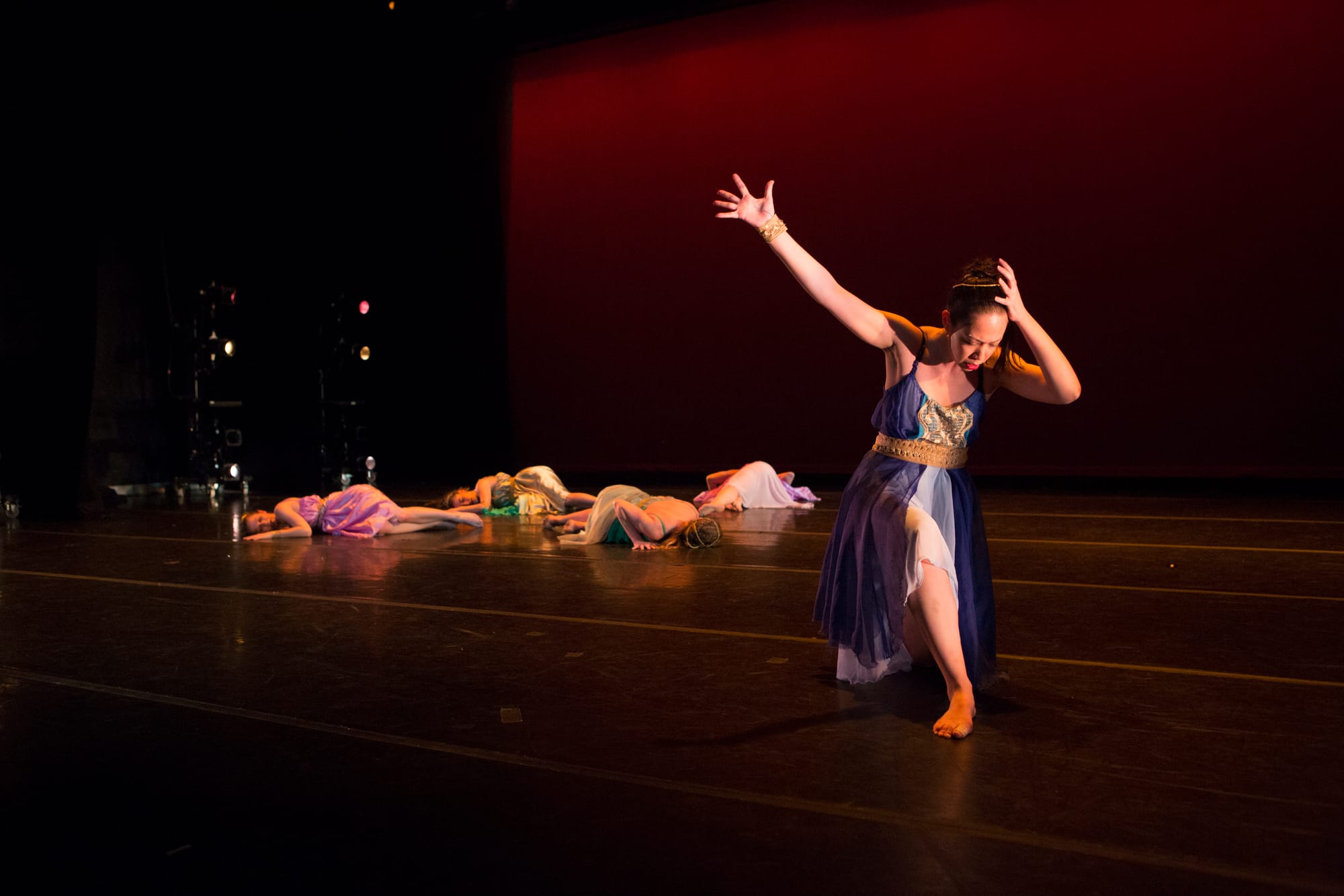
Ginsburg also danced Vashti in Ariel Grossman's work. Vashti, in Jewish mythology, is the wife of King Ahasuerus, who later married Esther of Purim fame. She was discarded because she refused to dance for his drunken orgy, and so has become something of a feminist icon. The work, to a quartet (played live) by David Homan, for the dance, features five women, four handmaidens and the queen. The music (for violin, guitar, cello, and piano) was gently plaintive, with echoes of folk rhythms at times, extremely danceable and elegantly melodic.
The dancers, in bright, flattering, slightly Grecian tunics (designed by Christina Kim), were elegant and willowy. Grossman used their ballet training, shown in their soft, pliant arms and eloquent upper bodies, very effectively, without exaggeration--no hyper-extended poses. Ginsburg was able to make small movements resonate, as she put on and finally took off her crown, a powerful gesture of renunciation.
copyright © 2013 by Mary Cargill



