Step Sequined
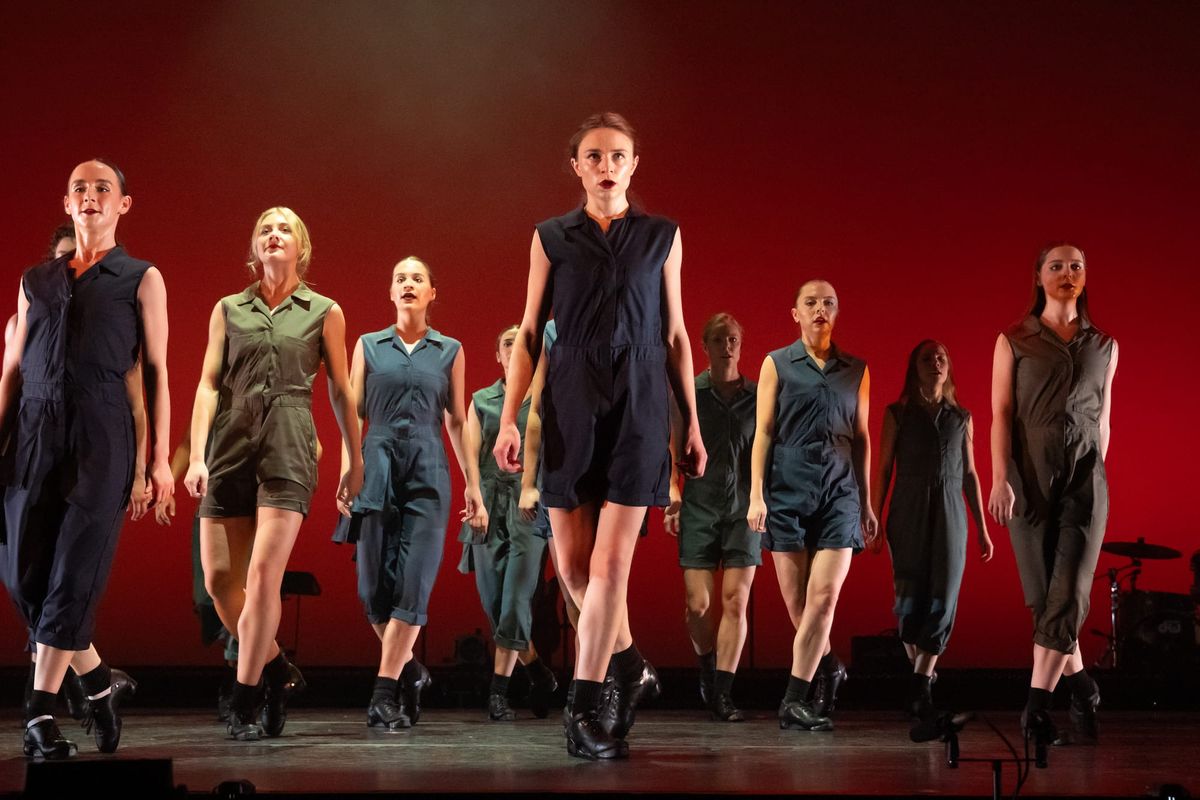
Trinity Irish Dance Company
The Joyce Theater
New York, NY
February 17, 2026
The Riverdance phenomenon may have faded from public consciousness, but Trinity Irish Dance Company wasted no time at The Joyce Theater in proving that Irish dancing is not only alive and well — it is more of the present moment than ever. In a program of nine works including two world and one New York premiere, the company tapped, twisted, and slapped infectious rhythms with an energy that was simultaneously accessible and exhilarating. The evening's choreography, largely by artistic director Mark Howard, moved fluidly from modern experimentation to traditional interpretation, always staying fiercely loyal to its roots.
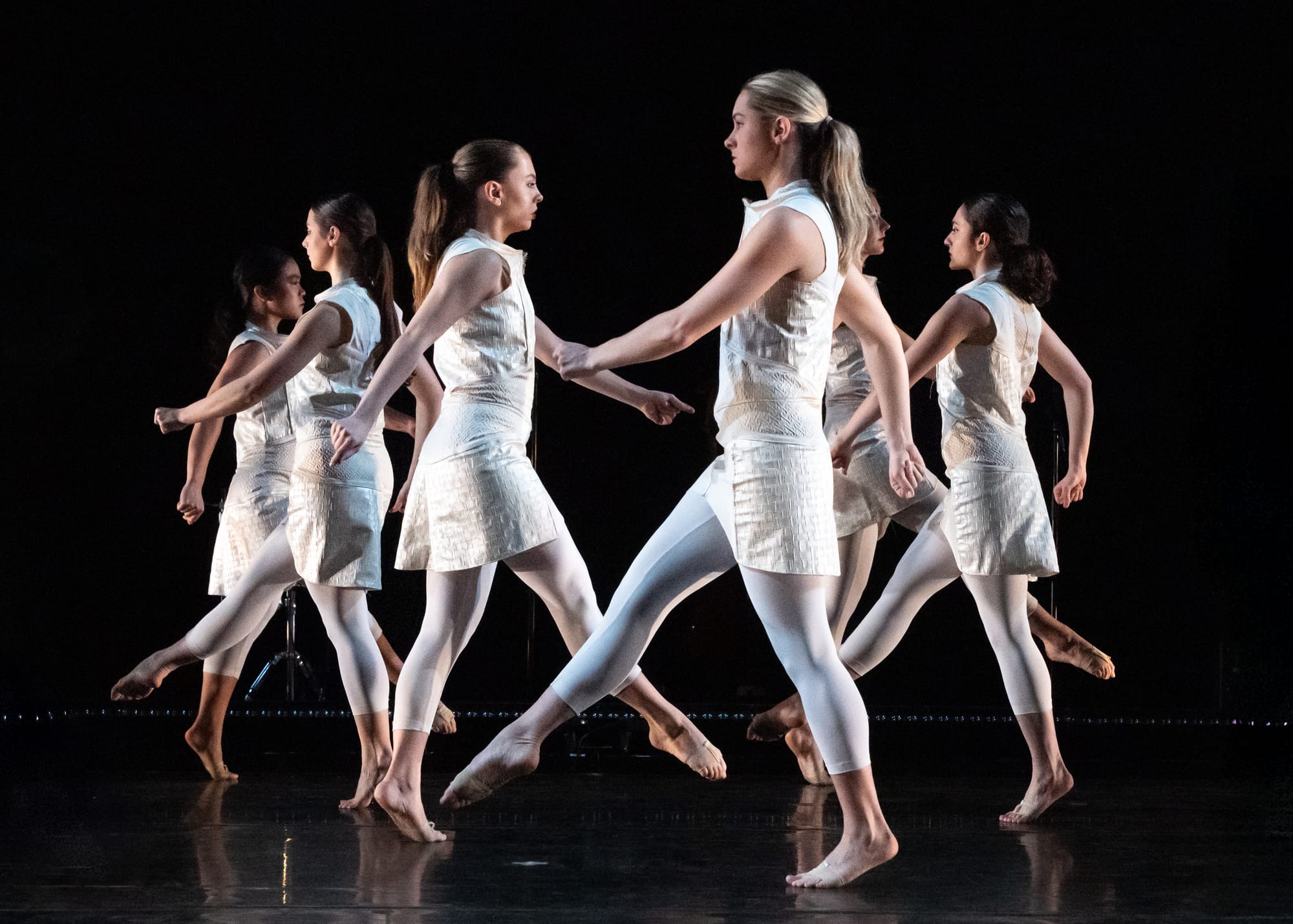
The opening work, "Communion," felt the most experimental, despite being over a decade old (created in 2014, then updated in 2024). Dressed in white leggings, skirts and tops, the dancers wore no Irish dancing shoes, percussing instead through hand slaps to the body and bare-footed stomps and adding melody through the dancers' own singing. The piece explored human connection: movements weaving in and out of pattern, suggesting a living symbiosis among these bodies in motion – undoubtedly the core of Irish dancing.
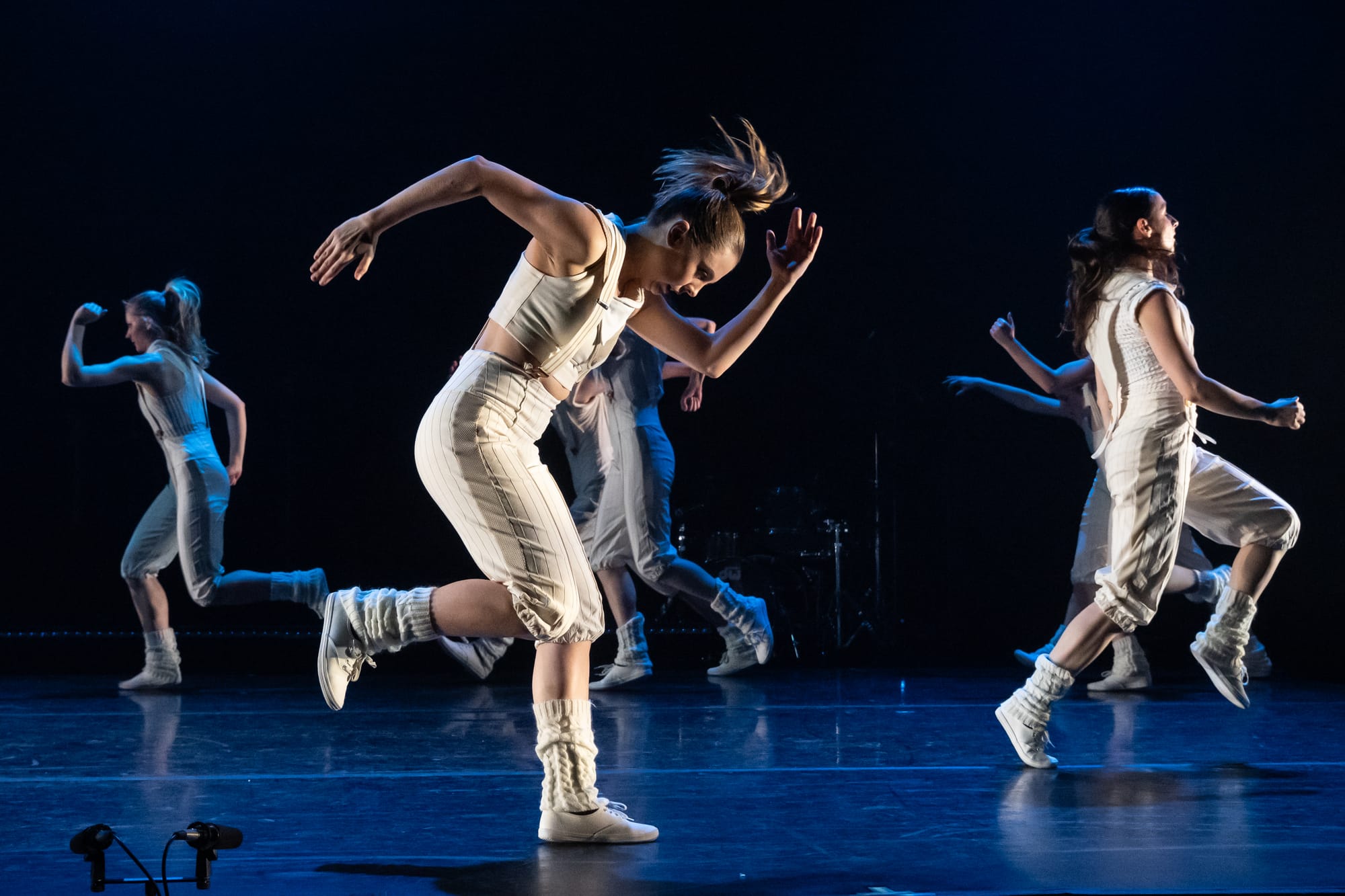
It was a provocative start, and a strong lead-in to the world premiere of Michelle Dorrance's new work "SÉseacht" — a modern-age extravaganza of traditional steps and contemporary flair. Beginning with two men, Patrick Grant and Francisco Lemus, taking turns launching into powerful, high-kneed jumps, the dance quickly wound itself into a potpourri of airborne foot claps, intricate rhythms, and shifting patterns. The work had an urban energy, far removed from theatrical or tradition-bound convention, and felt all the more earnest and accessible for it. As momentum built, the women gathered in a circle, their feet softly tapping a unison rhythm in hushed anticipation — until the musicians joined them and the dancing erupted into a renewed, energetic dimension.
A musical interlude followed, with Brendan O'Shea of the TIDC Band warmly introducing the concept of Seisúin, several songs of which gave the evening the feel of an elevated céilí. It was a mood that carried into the next premiere, "Sofia," in which Jake James and the band led with a music-forward theme before gradually introducing a duet between Sofia Dorantes and Patrick Grant. Dorantes moved almost like a ballerina, so much of her impressive footwork percussion was on her toes. It was a beautifully slowed interlude — and the perfect runway into one of the night's fireworks: the New York premiere of "The Sash."
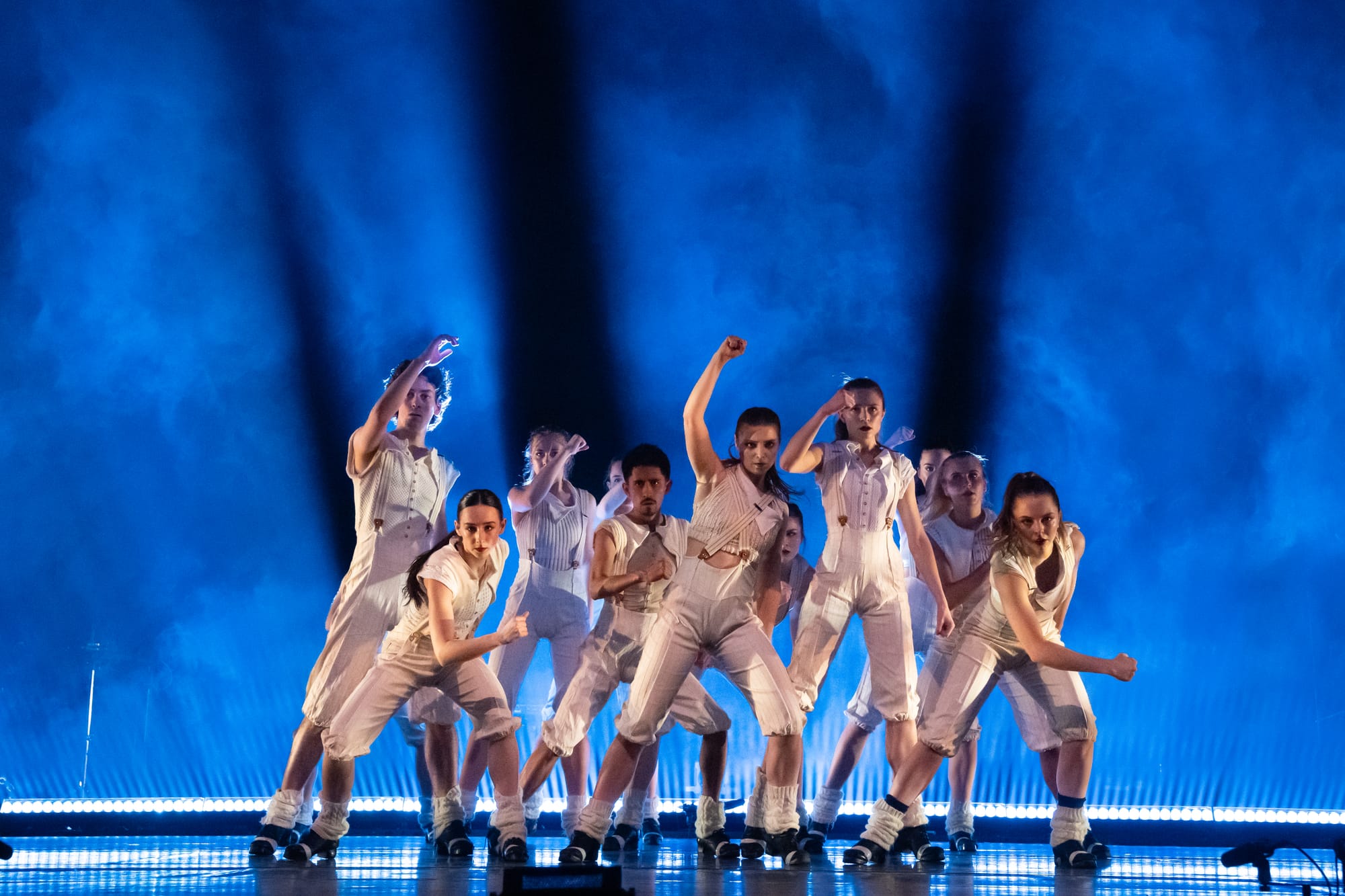
Starting with a short film introducing Kevin Sharkey, who spoke with quiet numbness about The Troubles and the hope that outlasts violence, "The Sash" uncomfortably brought to the forefront the Catholic/Protestant divide that has been a cloud upon the Irish soil for ages. A voiceover asking "What do Catholics and Protestants have in common?" carried that emotional weight into the dance itself, but as the work uncoiled, it became a testament to unity. Dancers entered in white, moving with near-military precision and parade-like arm movement. Soon, their steps periodically shot through with hip-hop inflected flair, and a deliberate looseness to their movement — some even ran backwards, with fleeting gestures of emotion breaking through the formality. Not long into the work, a couple materialized from the group — Francisco Lemus (like the rest, in shoes) and guest artist Taylor Yocum (shoeless). The couple’s connection attracted judgment of Yocum as the outsider, and a circle of dancers closed around them. She was allowed to speak in dance, with the rest of the cast moving toward the front of the stage to turn back, sit and face her and her movement monologue. Yocum was compelling enough that quickly, one by one the onlookers removed their own shoes and soon joined the dance, the resulting unity echoing the opening number with quiet power.
After intermission, the sportier and more irreverent "Push" opened with a series of musically unaccompanied solos. Described in the program as "percussive power on equal footing," it was a dazzling display of technique — though ultimately one of the program's few weak spots. After a succession of impressive passages it built toward what felt like an inevitable crescendo, then simply stopped. One wished there had been more of it.
With a tonal shift back to the traditional in “A New Dawn,” the dance introduced children, showing the Irish dance form has a future, and then pivoted again with “Black Rose,” which minimized the footwork percussion, focusing instead on “Big Horse” – an ancient Irish Lambeg drum, and varied ethnic themes.
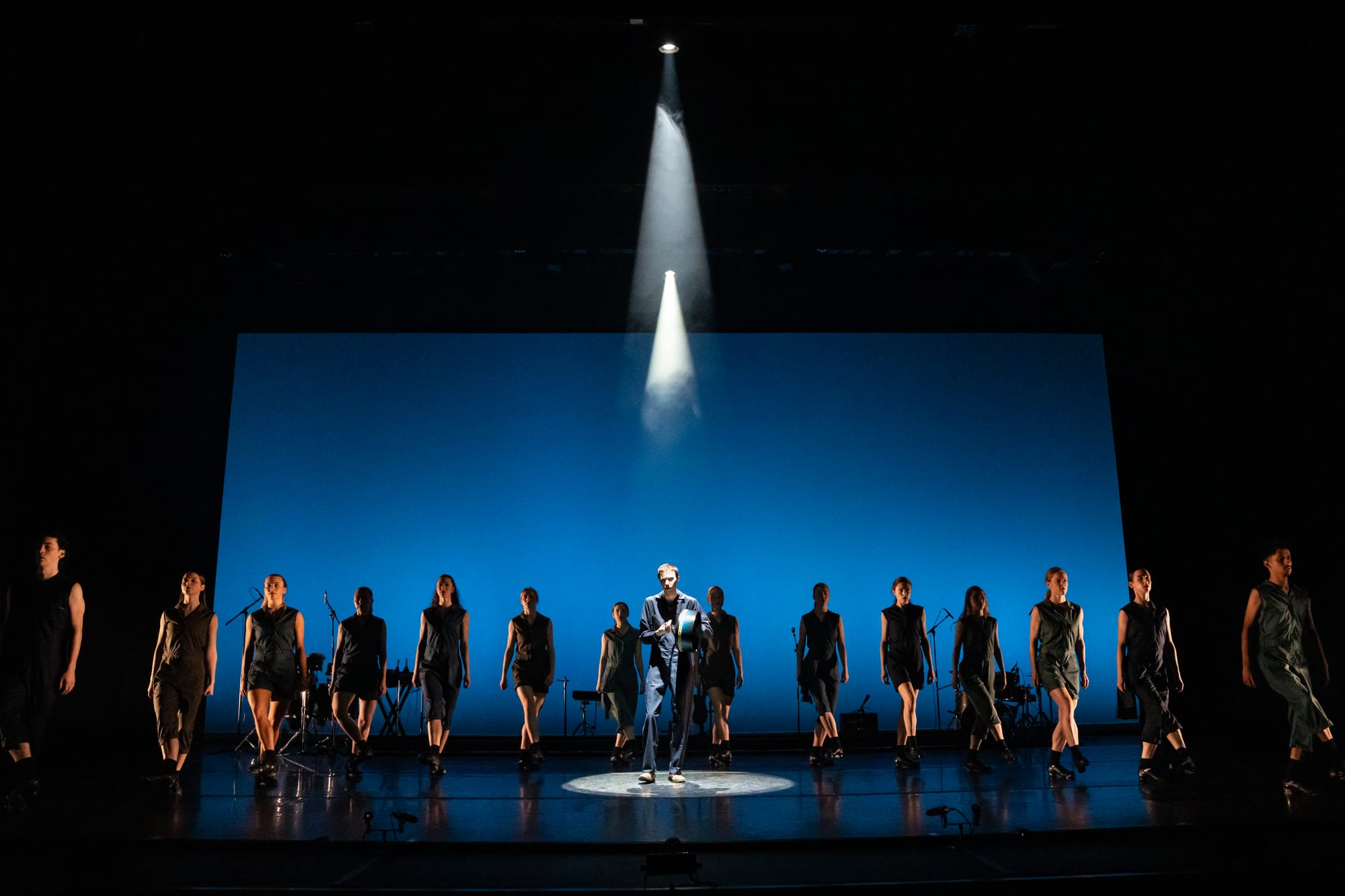
Two musical breaks punctuated this stretch: a world premiere of the song "White Rose" by Brennan O'Shea and Chris Devlin, and later, Sinead O'Connor's "Thank You For Hearing Me" — a welcome moment of stillness that gave the dancers, and the audience, room to breathe.
The evening's finale, "Soles," was a grand one. Dressed in athletic black, the company set aside narrative in favor of pure virtuosity — a showcase of just how rich and eloquent Irish dancing truly is, and how many dazzling sequences can weave together. It sent the audience out into the night buzzing.
copyright © 2026 by Marianne Adams



