Steeped in Tradition
"Written in Water"
Ragamala Dance Company
Terrace Theater
The John F. Kennedy Center for the Performing Arts
Washington, DC
November 3, 2018
In “Written in Water,” a menagerie of talented dancers, music- ians, and visual artworks joined together and intermingled to perform a sonically extravagant and visually alluring show. Ranee and Aparna Ramaswamy, the mother-daughter duo responsible for Ragamala Dance Company’s artistic direction, were informed by tradition and compelled by innovation to create a masterpiece respecting the sanctity of the present, exploring the boundaries of their culture, and celebrating beauty the in their journey. This show’s DC premiere last weekend at the Kennedy Center Terrace Theatre was intimate and charming, presenting a variety of dynamic movements and melodies.
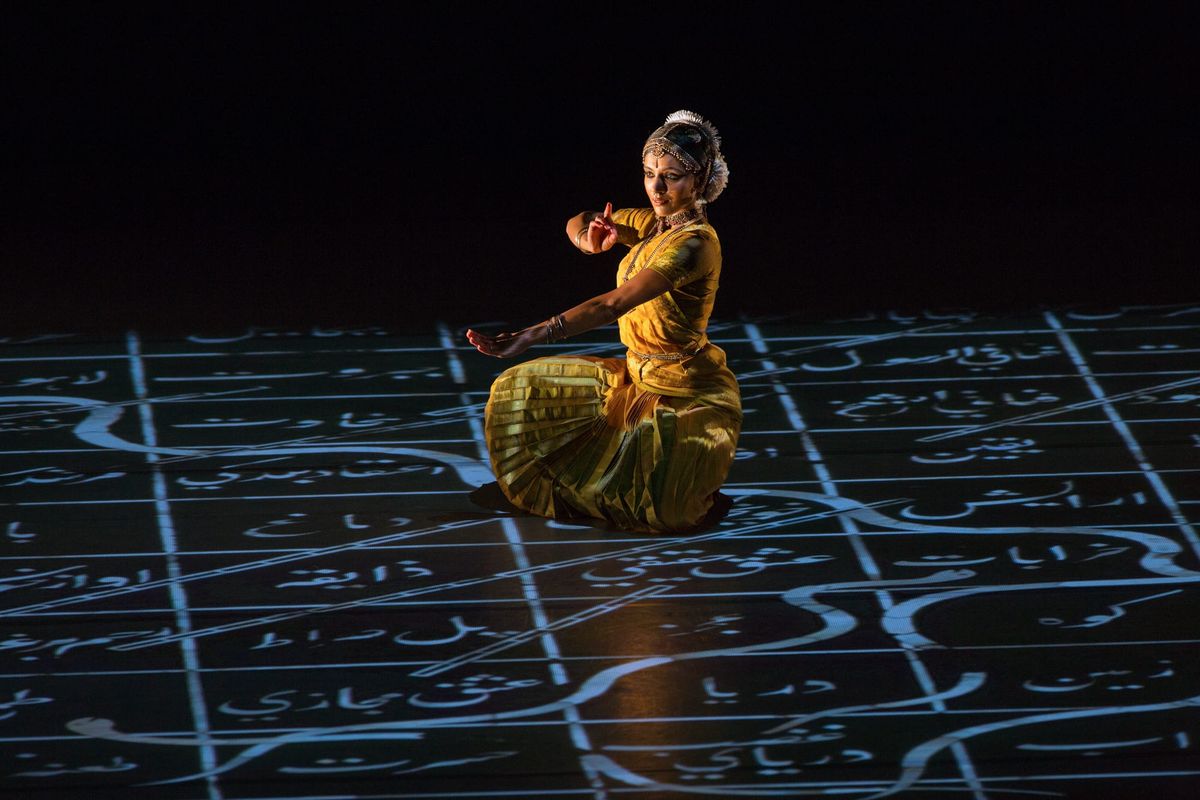
“Written in Water” focuses mainly on the individual journey of each dancer to achieve union with the divine. This theme is portrayed by a human-sized version of the traditional Indian board game Paramapadam, which Americans may more easily recognize as Snakes and Ladders. Each of the five dancers performed separate movement to start, making the beginning of the show a lot to take in with an array of different colors, rhythms, and movement phrases. All of the dancers employed a wide range of performance qualities from teasing and playful to serious and mournful. These emotions were most clearly exemplified by the clarity and decisiveness prevalent in their facial expressions.
Under the direction of Ranee and Aparna Ramaswamy, Ragamala Dance Company practices the South Indian classical dance form, Bharatanatyam, which was originally performed as a solo dance, and has since evolved. Mother and daughter diverge from the customary to bring Bharatanatyam to the stage in a dramatic group format. A highlight of “Written in Water” is the company’s incredible unison execution. Each dancer’s body retains consistent alignment, from the tip of each figure to the diagonal, perched placement of each heel, their rhythmic stomping and stilted jumps ideally synched, showing their confidence and exactness with every step.
Very few are able to perform Bharatanatyam quite like Ranee and Aparna Ramaswamy. Both mother and daughter were taught the classic dance form by legendary dancer and choreographer Alarmél Valli in Chennai, India. Their refined ability and control over the dance style were clearly shown throughout the performance during bouts of gestural storytelling, utilizing intricate hand gestures and distinct expressions to convey the story. They moved their hands in a variety of different ways, with shimmying shakes, energetic, rigid lotus positions, and waving ripples, which made their hands look more like reflections in water than real solid flesh.
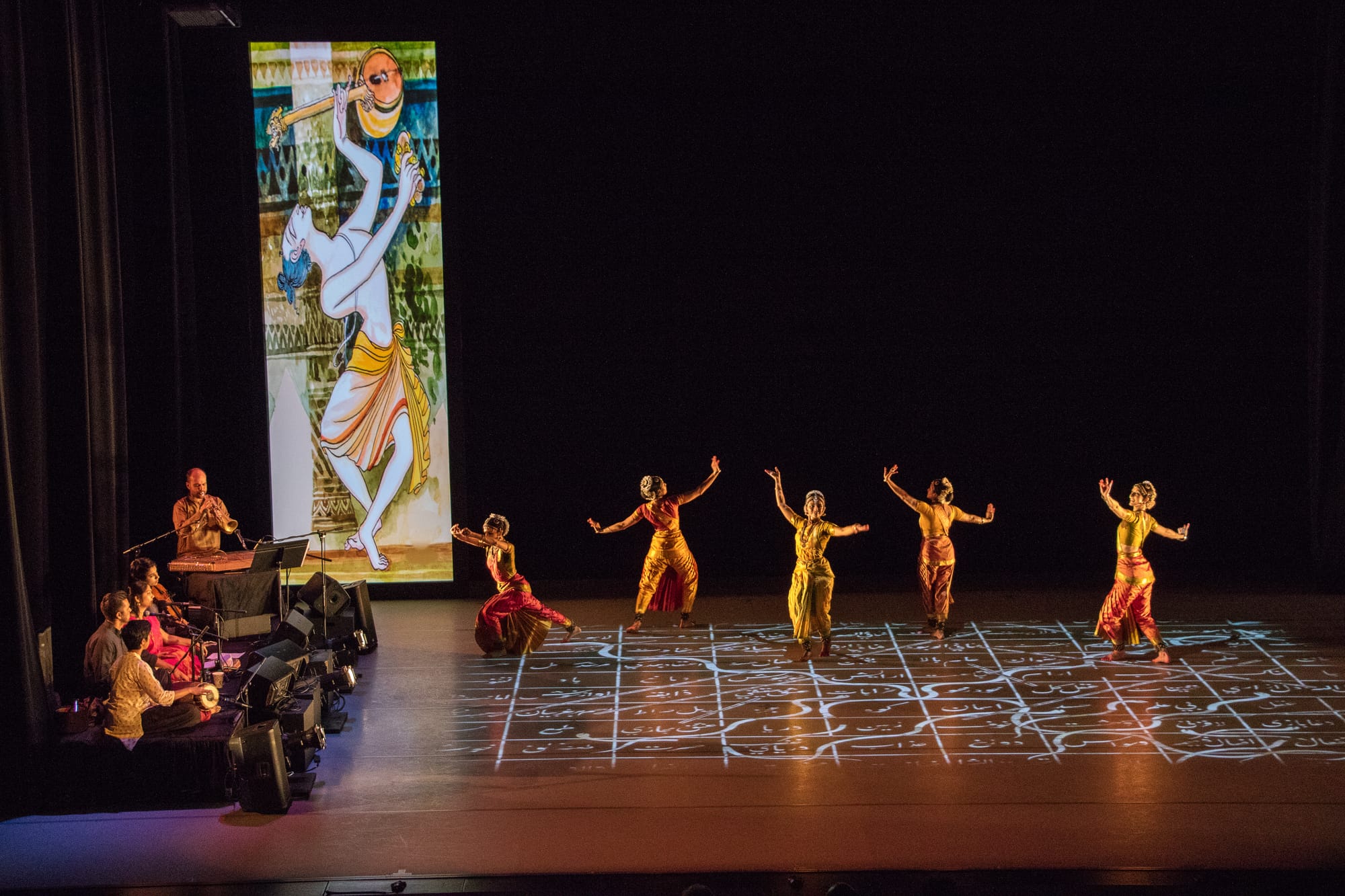
The performance was broken up into three sections to frame a story inspired by “The Conference of the Birds,” a Sufi epic poem that details an expedition traveling through various human states of being, the ultimate goal being a unity with the divine. Segments of the show were punctuated by moments where the dancers left the stage completely, continuing on their journey while the musicians alone entertained the crowd with complex beats interlaced with hints of jazzy improvisation and impressive traditional vocals rolling effortlessly off of Preethy Mahesh's trained tongue. The composition itself was developed by Amir ElSaffar and Prema Ramamurthy, specifically for “Written in Water,” in collaboration with Ranee Ramaswamy and the rest of the musical ensemble. Additionally, artwork depicting various human and animal forms as well as abstract, spiraling shapes were incorporated into the show through projections on the floor and on a skrim backdrop. They were created by V. Keshav, a Chennai-based painter, and Nathan Christopher.
“Written in Water” was as dynamic as it was refined, and as bold as it was enlightening. Each dancer performed with such surety and ease, making the show a beautiful, engaging spectacle full of warmth and light, celebrating both the cultural philosophy from which this work took shape as well as the dance itself.
copyright © 2018 by Arielle Ostry



