Statuesque
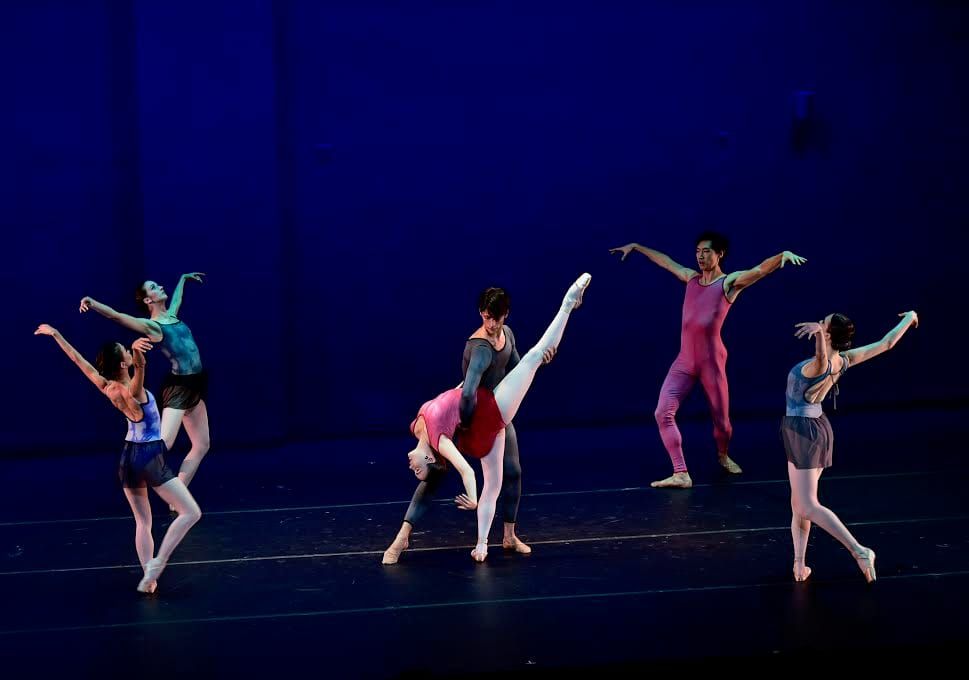
"Apparatus Hominus"
Tom Gold Dance
Florence Gould Hall
New York, New York
November 9, 2018
Tom Gold, the former New York City Ballet soloist who now has a small company of semi-regular dancers, many of whom also work for other companies, presented what was billed as his inaugural fall season with an hour-long work originally choreographed for the TurnPark Art Space, an outdoor sculpture garden in the Berkshires. The printed program included pictures of some of the artwork which had originally inspired his choreography, though the dances themselves evoked rather than imitated the sculptures. The abstract, outdoorsy feel was helped immensely by the lighting (designed by Jacqueline Reid) which occasionally project hints of three-dimensional shapes on the backdrop but more often bathed the dancers in rich, pure colors – red, purple, or green – which reflected the shine of the simple but effective costumes (by Gold's frequent designer Marlene Olsen Hamm) and gave their skin a metallic tinge.
The live and recorded music was by Nico Muhly, mainly selections from his "Drones" series. Unlike many of Gold's works, the music had no really melody or rhythm, as the droning background ebbed and flowed. It was quite a challenge to maintain and hour-long work with few dramatic or emotional highlights but Gold's work was assured and confident.
The six dancers (Tiffany Mori, Mary Elizabeth Sell, Shoshana Rosenfield, Stephanie Williams, Barton Cowperthwaite, and James Shee) looked confident and cohesive despite their varied backgrounds. Gold uses smaller, delicate steps in unexpected ways without exaggerated extensions or flashy poses and the work flowed so naturally that the audience, despite the pauses in the music, never interrupted the dancing with applause. And despite Gold's New York City Ballet background, his choreography uses an understated yet elegant upper body, as the arms and legs moved in a graceful and continuous flow, echoing and amplifying each other. There were lots of unexpected balances, which, because the arms continued the movement, didn't stop the momentum.
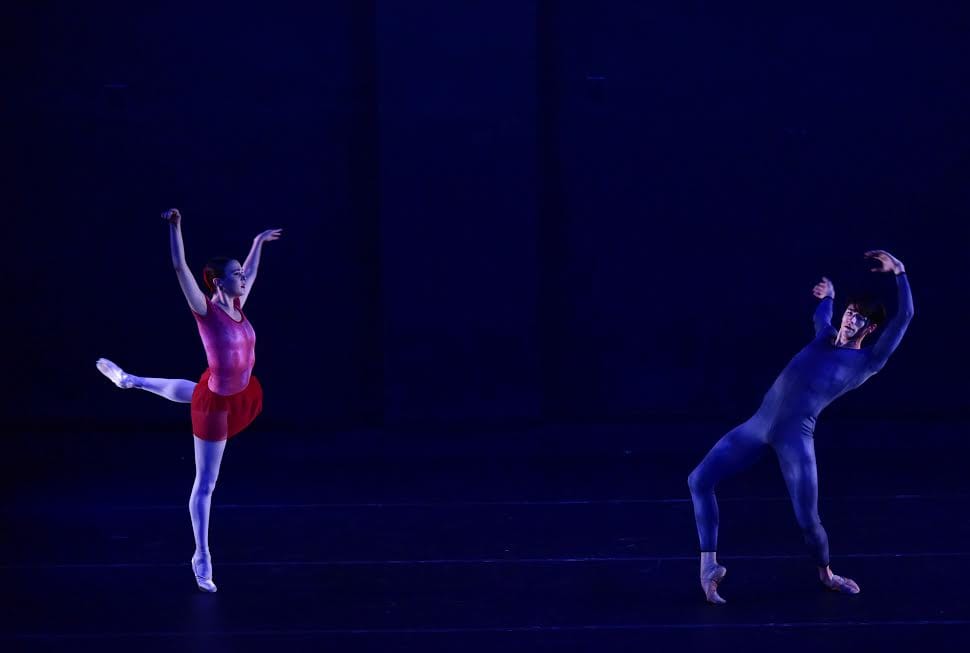
The dancers all made fine individual impressions without imposing a superfluous drama. Williams stood out for her lush quality of movement, as did Mori for her sunny demeanor. The two men had an unusual softness to their dancing, as they flowed from shape to shape, seeming to echo each other without competition. It was an understated and imaginative evening.
Copyright © 2018 by Mary Cargill



