Statement Pieces
“Embattled Garden,” “Histoire,” “The Legend of Ten”
Martha Graham Dance Company
New York City Center
New York, NY
April 11, 2018
Martha Graham Dance Company opened its season at New York City Center by reaffirming its identity as a troupe of multitalented dancers that may have Graham in their hearts, but whose bodies belong in a whole range of diverse choreographies. The opening night gala program offered an expertly danced world premiere by Lucinda Childs called “Histoire,” a company premiere of Lar Lubovitch’s “The Legend of Ten,” and a Graham classic – “Embattled Garden.” These works were as different as could be in modern choreography style, but all seemed native to this adept troupe.
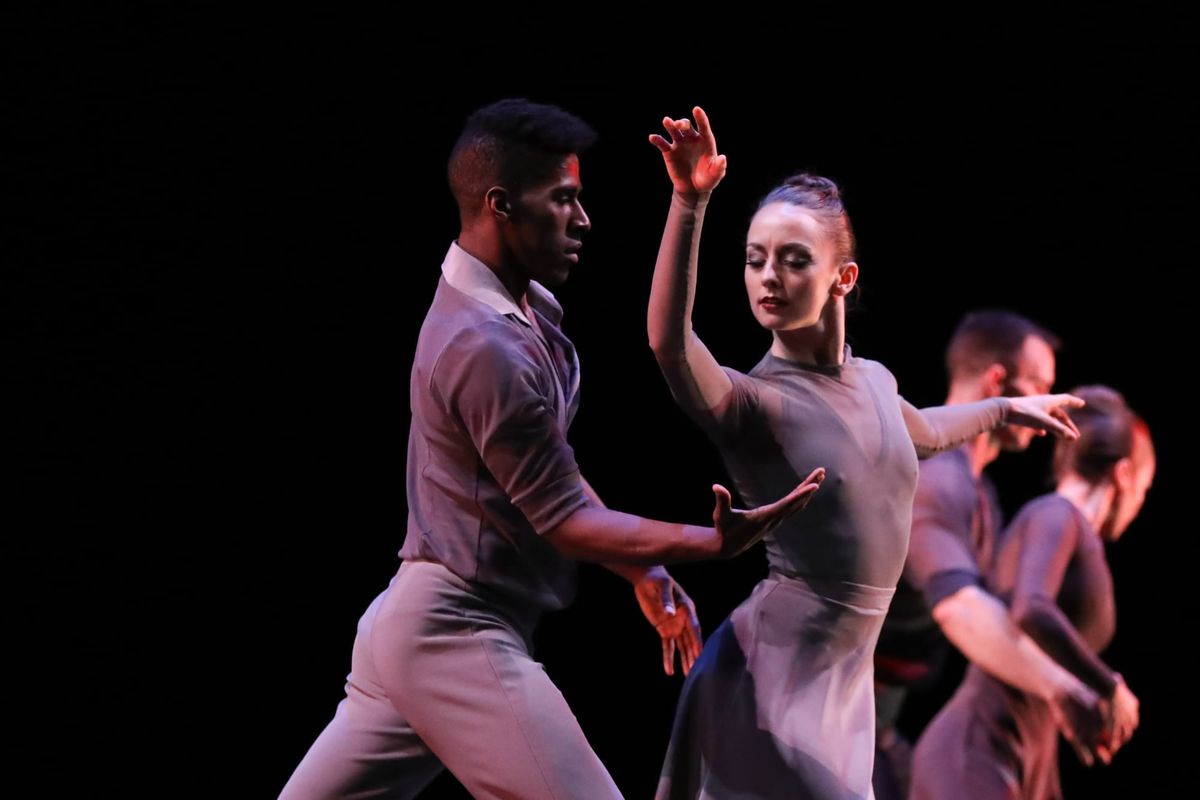
The night’s centerpiece was the world premiere of Childs’s new “Histoire,” which took as its backbone a duet with the same title that Childs made for the company in 1999, but now added to its Krzysztof Knittel music selections by Astor Piazzolla and an inspiring array of group dances. It was an enriching expansion of the work, full of great phrasing in the frequently classical ballet steps and individual touches from the dancers, and that the original 1999 duet not only remained but lead off the expanded work was a welcome and anchoring touch.
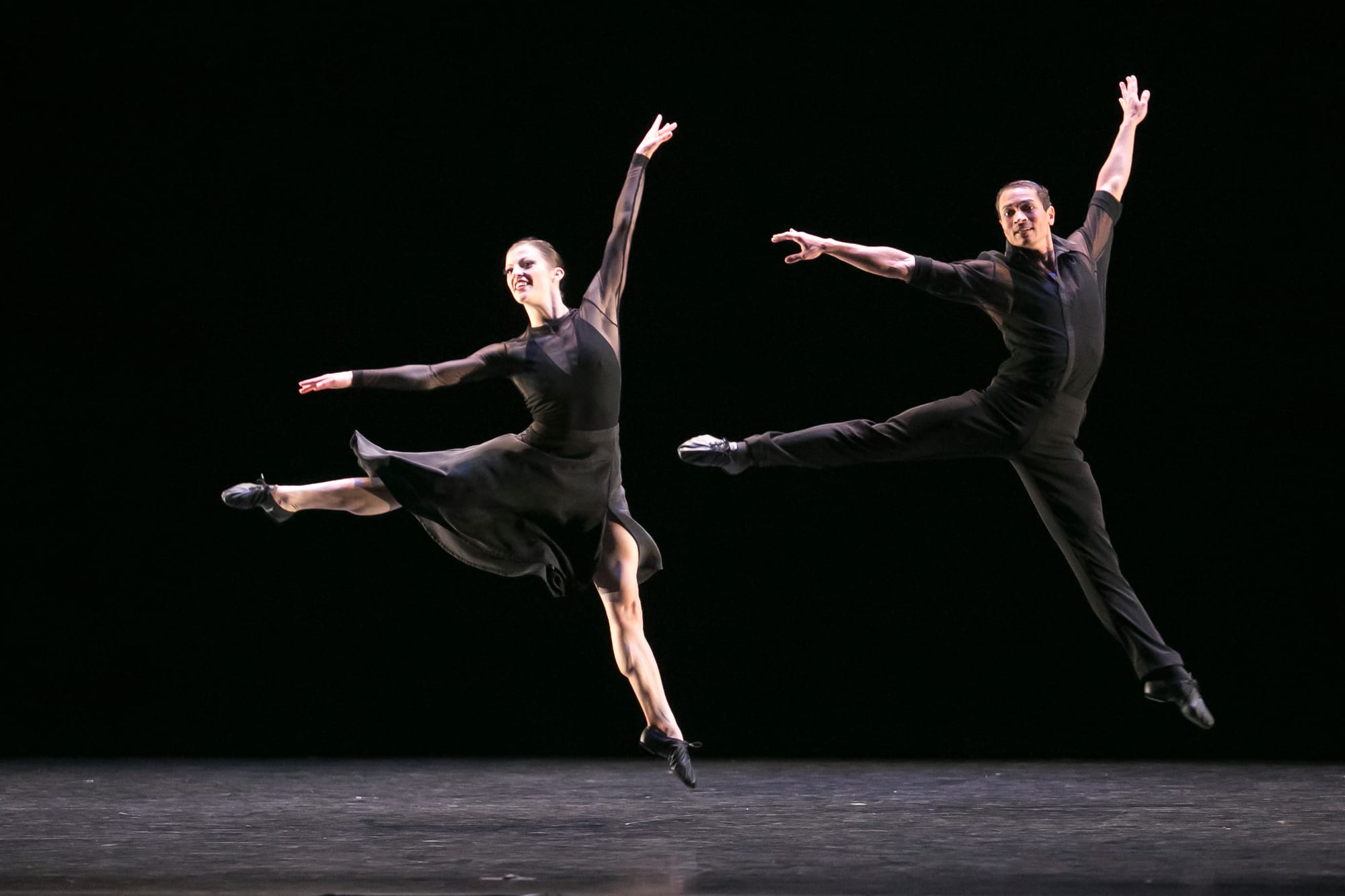
With that duet, the work began with a couple in black moving forward and back through the fourth position, before they embarked on multiple recitations of a story that started the same but each time developed into something quite different. For its first iteration, for instance, the female lead, Laurel Dalley Smith, would move rapidly around Ari Mayzick as he would walk along the stage, in an impassioned attempt to attract him and his attention. The duet repeated its opening, and by the third time around it was Smith who was the attention seeker, with the fourth retelling having the couple walk off stage and usher in three new couples. There was passion, mystery and an inviting display of how a change in step from a routine pattern could spiral a story in a different direction, and the dancers really gave their all in the expression, helping drive the point home.
The group dancing, though riddled with less of a story, was even more appealing thanks to the choreographic architecture. While the steps seemed synchronized to the music and among the dancers, the work was equal parts emotions and equal parts fun, with dancers’ movement often seeming spontaneous and, despite the uniformity, fueled by individual touch. The steps and stories may have looked the same, but they were clearly different. A separate movement following the group section, set to a beautiful violin solo, brought the audience back to the main couple in a passionate duet that seemed to have the dancers deciding whether the other was a lover or an enemy (or perhaps, which of the original duet’s iterations was the truth?). It seemed a tug of war both between the dancers and internally for their characters: in one section Smith would fall and Mayzick would catch her, but in another he would wait and then just let her drop to the floor, fueling a range of responses. The work’s finale was again danced by the full cast and with all its loveliness ended unexpectedly, without too much ado: the dancers spun off stage, perhaps ending their stories, perhaps moving on to share them elsewhere.
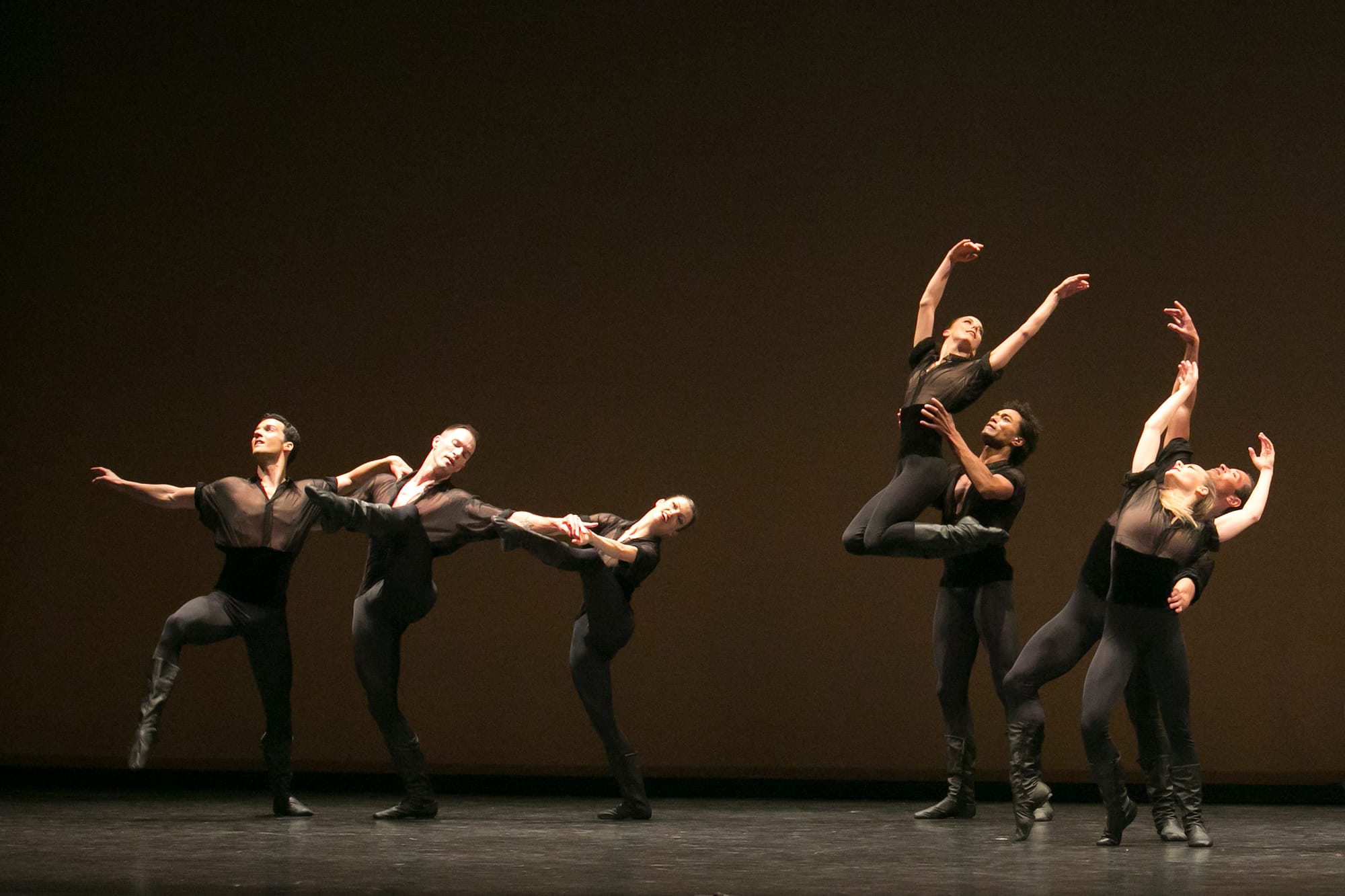
Lubovitch’s work was not new to the audience, though new to the company, but no less effective. It seemed special, also, because before it was shown right after the company presented to the choreographer the Martha Graham Award, which was reinstated this year. In a short but lovely acceptance speech, Lubovitch noted that Graham was his first dance teacher years ago, giving the award symmetry. The work itself was danced with emphasized classicism by the dancers, who focused on making the audience appreciate the inflections of the music. Even the lifts of the dancers with legs straight down in sixth position had a balletic feel. It added to both the aesthetics and the meaning of the piece, as the word “legend” in the title was meant to emphasize musical markings of the accompanying Brahms score. More so, the swings and burst of the music were echoed not only in the steps but in the steps’ inflections, and the performance was holistically musical.
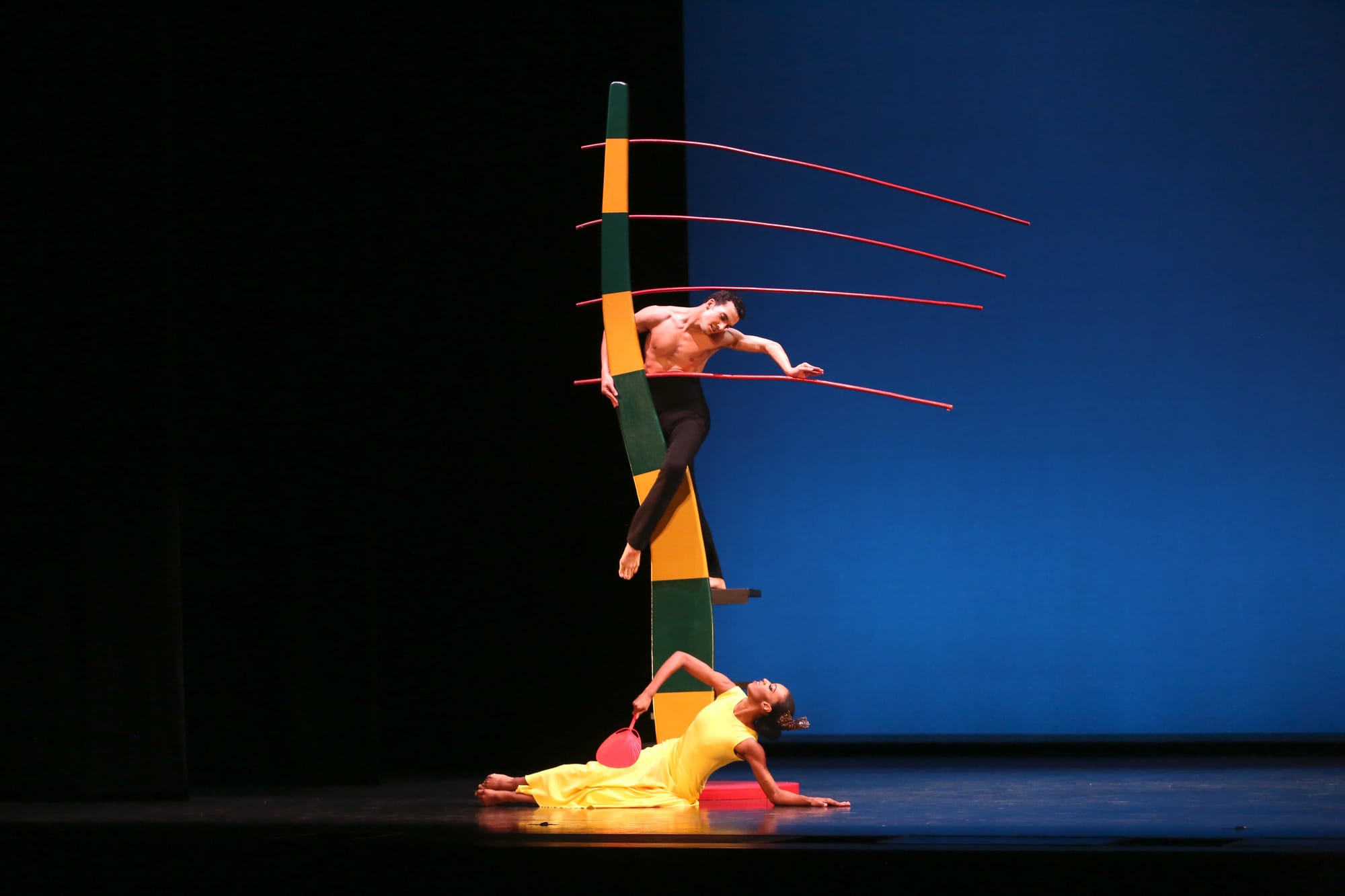
Alongside these works, it’s difficult to say if the Graham classic “Embattled Garden,” which opened the gala to live music, detracted from the newer choreographer or served as a historical marker showing the company’s evolvement. A short film with decades-old performances of the work which was shown before the dancing began seemed to suggest that the intent, at least, was the latter. Regardless though, the dancing was poignant, accentuated, with clear stylistic nuance in each role from the cast. They were true experts here, and, in their element, just as they were able embracers of the new works. For all the dancing presented and the performers’ evident proficiency in classical and other dance forms, one question lingered long since the dancers left the stage: are there modern choreographies not within their reach?
copyright © 2018 by Marianne Adams



