Spring Forward
"Jeu de Cartes", "After the Rain", "Tschaikovsky Pas de Deux", "Odessa"
New York City Ballet
David H. Koch Theater
New York, NY
May 4, 2017
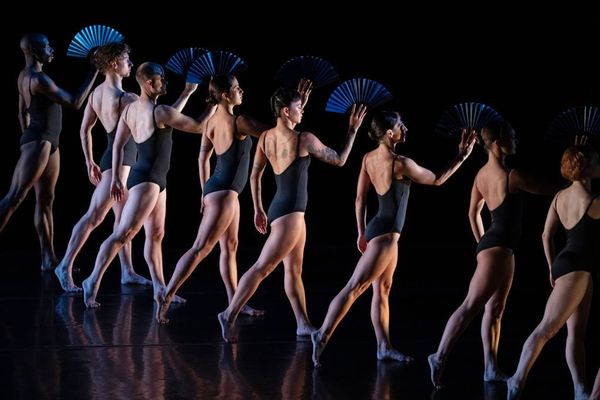
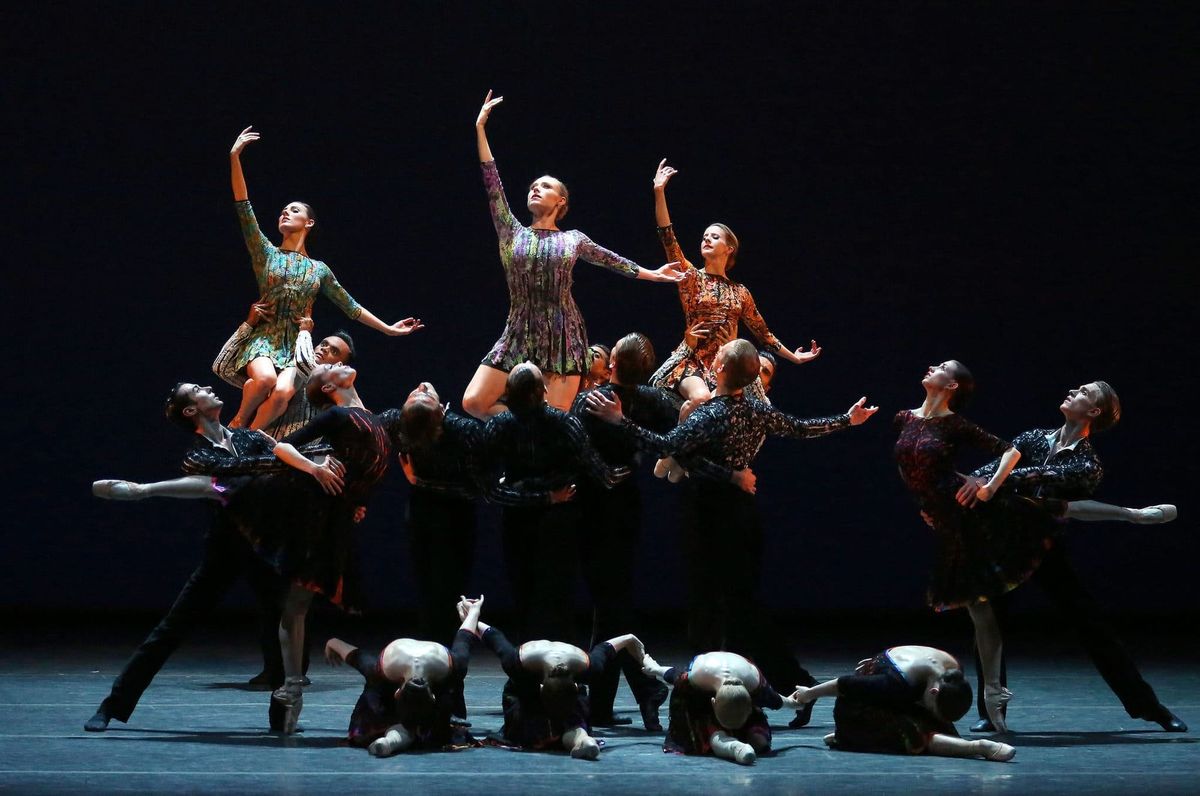
The New York City Ballet's spring gala clocked in at a crisp and efficient one and a half hours and included two complete ballets, two pas de deux, no speeches, and no intermission. The main attraction was Alexei Ratmansky's new work "Odessa", to "Sketches to Sunset" by Leonid Desyatnikov who also composed the music for Ratmansky's "Russian Seasons". This is incidental music Desyatnikov wrote for the Russian film "Sunset" which was based on a gritty group of short stories by Isaac Babel (a writer who perished in one of Stalin's purges) about a group of Jewish gangsters in Odessa during the Russian Revolution. Ratmansky's work has no narrative but the atmospheric music, full of tango and folk rhythms, and the often wary, tense moves hint at the dark origins.
Ratmansky uses three couples (Sterling Hyltin with Joaquin De Luz, Sara Mearns with Amar Ramasar, and Tiler Peck with Taylor Stanley) and a corps of twelve. The principal women wear colorful, flattering short dresses (costumes by Keso Dekker) and the men are in tight, shiny shirts which hint at a louche vulgarity; the women have bare legs but for once this irritating affectation fits the mood. The episodic music makes it seem as if the three couples belong to intersecting short stories as they weave in and out of the corps.
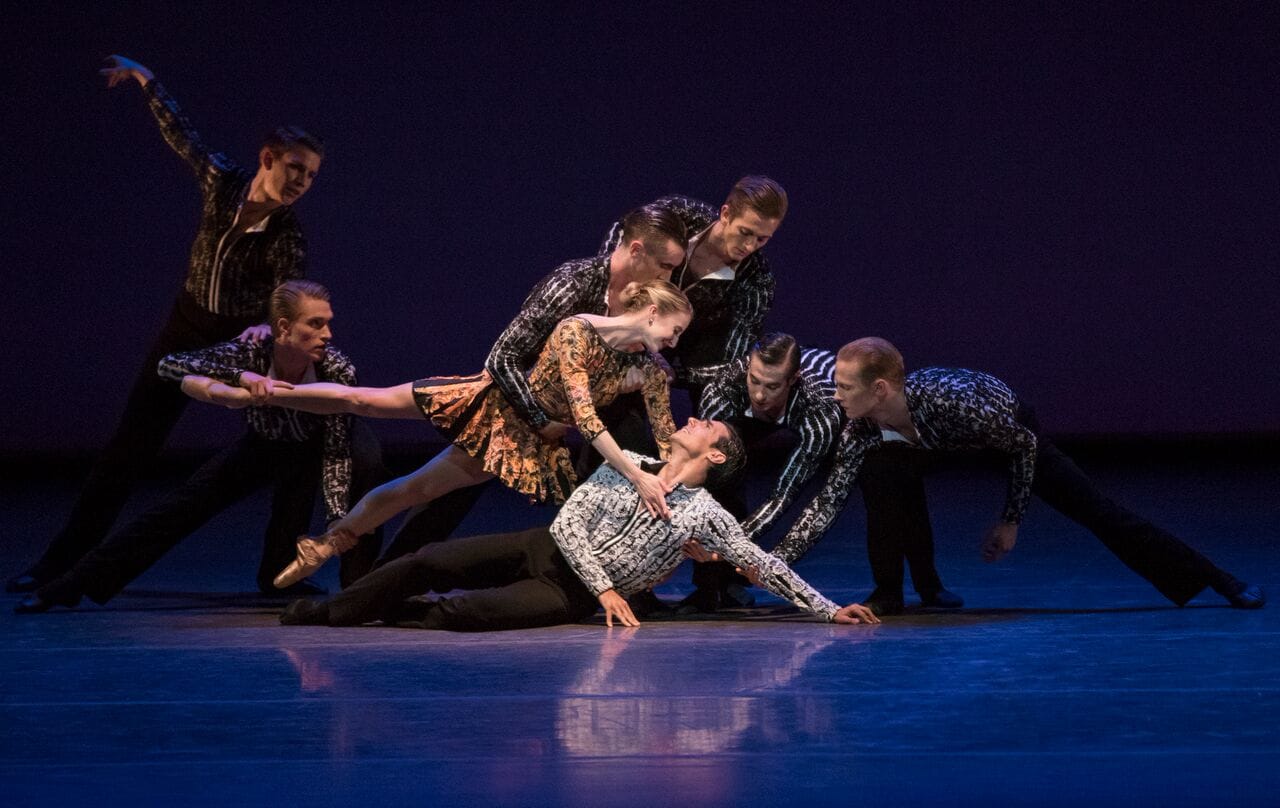
Hilton and De Luz were, for me, the most vivid couple, with De Luz combining toughness and vulnerability, yearning after an iridescent, fragile, and fearful Hyltin. De Luz, who usually gets roles that capitalize on his flamboyant and brilliant technique, was profoundly moving and I choked up watching him slowly and awkwardly reach out his hand to Hyltin. He did get a dynamic solo, swaggering on his own while Hyltin was tossed back and forth between groups of men. Her burst of anger as she slapped De Luz (for not protecting her?) was a jolt; the passive, fearful waif fought back.
Mearns and Ramasar, though their dances were powerful, did not have quite as much concentrated drama as the first couple. Mearns did have a striking solo embodying the smoldering desperation of the tango rhythm and she and Ramasar closed the ballet with some slow, haunting turns, but they remained, at least on first view, connected more by technique than emotion.
Peck and Stanley had a more familiar story--"can't live with him, can't live without him", as Peck flung herself at Stanley, who tossed her away. She seemed to recover well and got a series of spectacular turns. "Odessa" wasn't the most cheerful of gala finales but it, like many of Ratmansky's works, is a haunting, complex piece which needs to be seen several times to absorb the nuances.
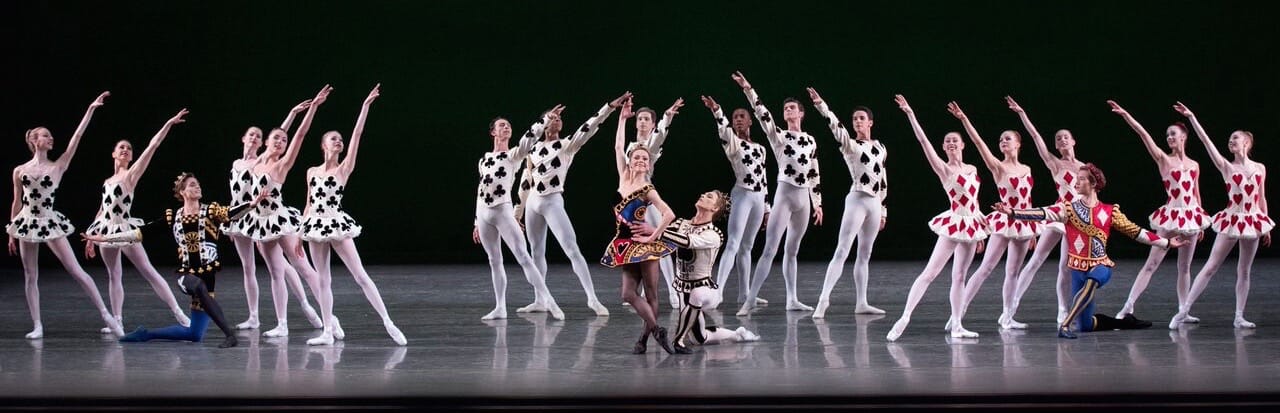
Peter Martins' 1992 "Jeu de Cartes" is cheerful, but not complex. The Stravinsky music is, unusually, a bit flat and repetitious and Martins (and apparently Balanchine as well) was not able to overcome this. Moments of self-conscious jazziness and extreme cuteness (lots of flexed feet) alternate with variations on "Rubies" and "Dances Concertante" with a great deal of repetition. Martins did away with the original idea of the Joker disrupting a poker game, but kept the conceit of the deck of cards. The choreography for the corps was the most interesting, and the sparkling groups pranced back and forth in formal groups with unexpected little flicking moves.
The four principals (Megan Fairchild as the Queen of Hearts supported by three kings (all debuts), Joseph Gordon as Diamonds, Harrison Ball as Spades, and Aaron Sanz as Clubs) danced clearly and sharply, with unforced charm. Ball, especially, made a plush, elegant King of Spades; he made standing still and acknowledging Fairchild look like gods still walked the earth.
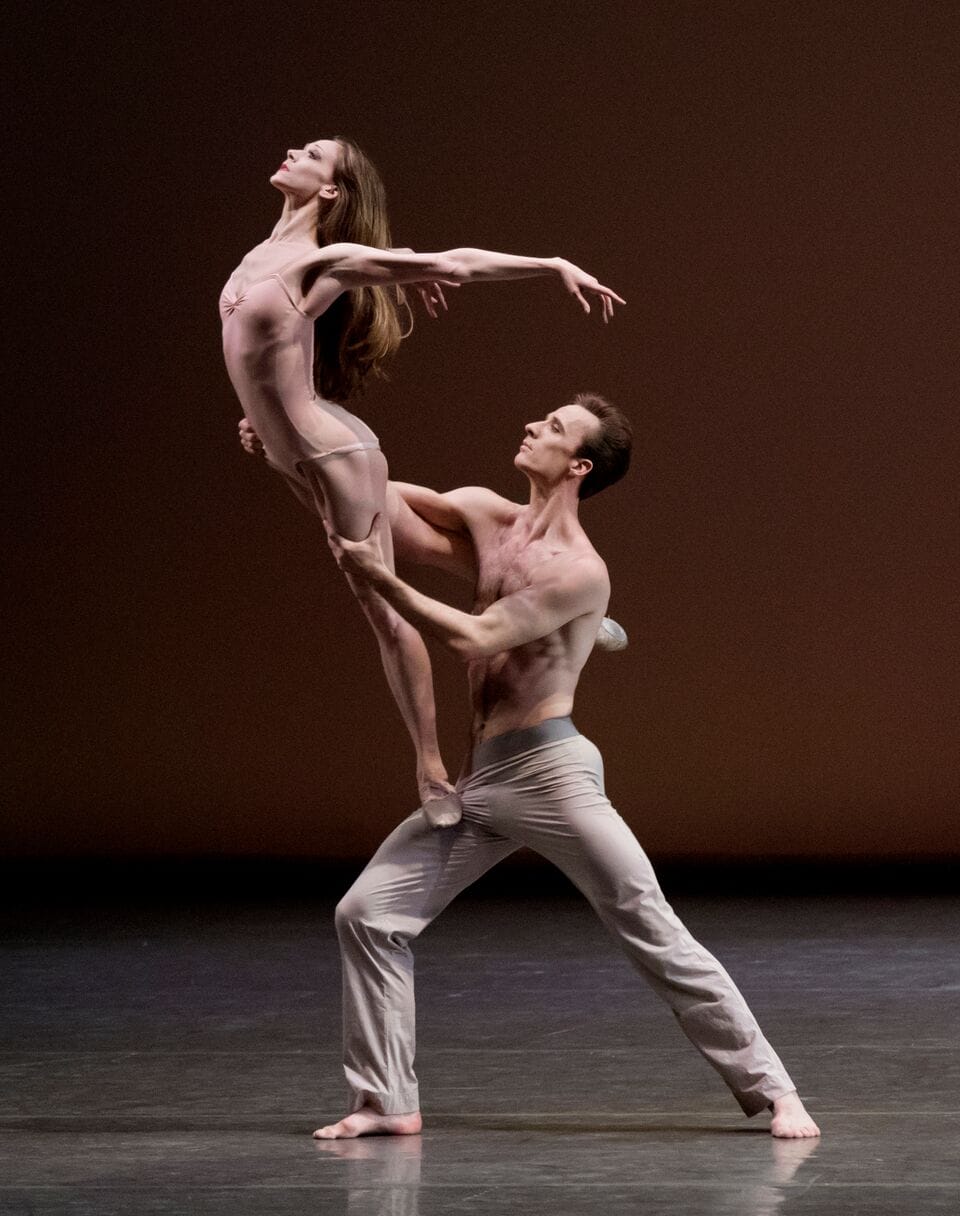
Christopher Wheeldon's pas de deux from "After the Rain", danced by Maria Kowroski and Ask la Cour in nude leotards with a great deal of bare skin and long hair, was a popular choice, but its meandering, over-heated romanticism does go on. The choreography certainly suits Kowroski's legs, which bent, twisted, and stretched into space. Ashley Bouder and Andrew Vedette seemed to enjoy the "Tschaikovsky Pas de Deux" almost as much as the audience. Boulder has a juicy daring and a wonderful ability to hold a pose, building excitement before exploding into a phrase. This pas de deux should be on every gala program, no matter how short it is.
Copyright © 2017 by Mary Cargill