Splashes of Cuban Spice
“Havana Rakatan”
Ballet Rakatan
New York City Center
New York, NY
February 18, 2015
Coming on the heels of the recent thaw in the U.S.- Cuban diplomatic relations (though not as its result), Cuba’s “Havana Rakatan” turned up the heat on the cold February night in New York with its dazzling United States debut. Composed of the Ballet Rakatan dance company and a son cubano music band Turquino which performed live onstage with the dancers, the performance presented over 500 years’ worth of Cuban dance and music, and an engaging look at this country’s unique history and culture.
Founded in 2001 by former dancer and now the company’s choreographer and artistic director, Nilda Guerra, Ballet Rakatan (“rakatan” being a made-up word designed to invoke the Cuban rhythms and power that permeate the bulk of Guerra’s choreography), sought to bring Cuba’s best performers together to create a unique experience of Cuban styles, which led to the “Havana Rakatan” incarnation in 2007. The electrifying show has since successfully toured many countries, and the fact that it is presented in association with Sadler’s Wells London and Congas Productions is a testament to its international footing.
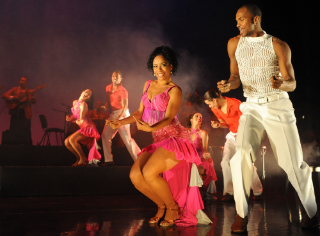
That the company can contract such a multi-century cultural and historical exposition into the span of a 2-hour program, and still remain both informative and tremendously entertaining, is one of its many geniuses, and remarkably, despite all the discoveries it offers its viewers, the exhilarating kaleidoscopic performance felt almost too short. To their credit, the talented dancers and musicians spent the night seemingly on one breath, their energy never flagging, their enthusiasm never failing to infect, and each new appearance in each new segment making them look like a different cast altogether thanks to the changes in their presentation of each dance style and epoch.
Wisely, to curate the dance exposition and its many influences the program was segmented into various time periods, with the first act containing a more historical retrospective with a lightly painted storyline of courtship and marriage, and the second taking the audience on a tour of Cuban dance clubs through the last eight decades. A short number called “Malecon,” so named after a famous sea-front esplanade in Havana, opened the night with the entire company, dressed in contemporary outfits, giving the audience a flavor of Cuban life and presumably current dance culture with reggaeton, salsa and son inspired moves.
Having raised the temperature in the hall a bit with this colorful and energetic introduction, the program began in earnest and delved into Cuba’s cultural evolution from the convergence of colonial Spanish and tribal African cultures. Ana Rose Meneses Arocha as the lone flamenco dancer represented the Spaniards, coiling her hands with all the traditional intricacies called for by the dance, but her movements were more primal in their temperament, rich with anger, assurance and passion that was complemented by the many African dancers who soon appeared onstage with their tribal styles.
This intersection explained, the next section told the story of the Cuban countryside, showing Cuban chivalry and flirtatiousness as the men courted the women and one couple proceeded to marriage. The choreography here was at its best, and each perfumed arm lift from the women and glistening shoulder tilt of the men bespoke of the passion, but also the reserve, of this culture. Amidst a number of introduced moves that stood out were the several promenades on demi-pointe done with the women partnering men, where the male dancer would maintain his leg in a passé, or extended out, and descend into a lower and lower still plié with each rotation, all with great ease and control.
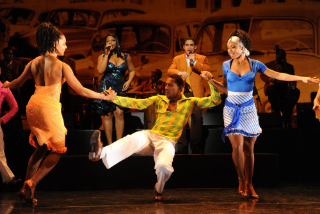
The production used the love story’s lead couple to drive the loose plot line forward with romantic dance interludes and ultimately a honeymoon trip to Havana, where the show reached its most theatrical point as the provincial couple found themselves amidst peculiar characters like drunks, pimps and street vendors, and save for a few photo-op moments, brawled and danced with the locals. Though all ended well, the encounters weren’t without their close calls, as the “husband” risked getting killed in a knife fight, and then found himself “dead” on the ground after a bewitching encounter, coming alive to do an entertaining dance with his shoulders hunched over, and spine seemingly dislocated, causing much confusion on stage and laughter in the audience.
This storyline fed into the second act only to the extent that it placed the action in Havana, where the act began with the 1940s Mambo explosion and cycled through the decades and their cha-cha-cha, bolero, jazz, rumba and other influences without a plot but with a series of dance numbers. Most of the scenes took place in a Havana dance club, where tired waiters and sexy waitresses set the room up, entertained the dapper guests, and cleared the tables.
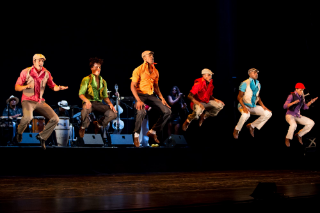
Although their Latin rhythms and expert dancing made all of the dances engaging, some worked better than others. One number, in particular, seemed overly focused on featuring the sole female lead in as many acrobatic split lifts as possible, which gave it too much of a vacation resort performance feel where the audience might be more impressed with such repeated display of extensions. But other parts, particularly the jazz and modern dance inspired “Proposiciones” done by three of the company’s more athletic and limber men, was breathtaking, and the trio’s powerful jumps, turns, and plasticity could rival many a dancer at the famous Alvin Ailey company.
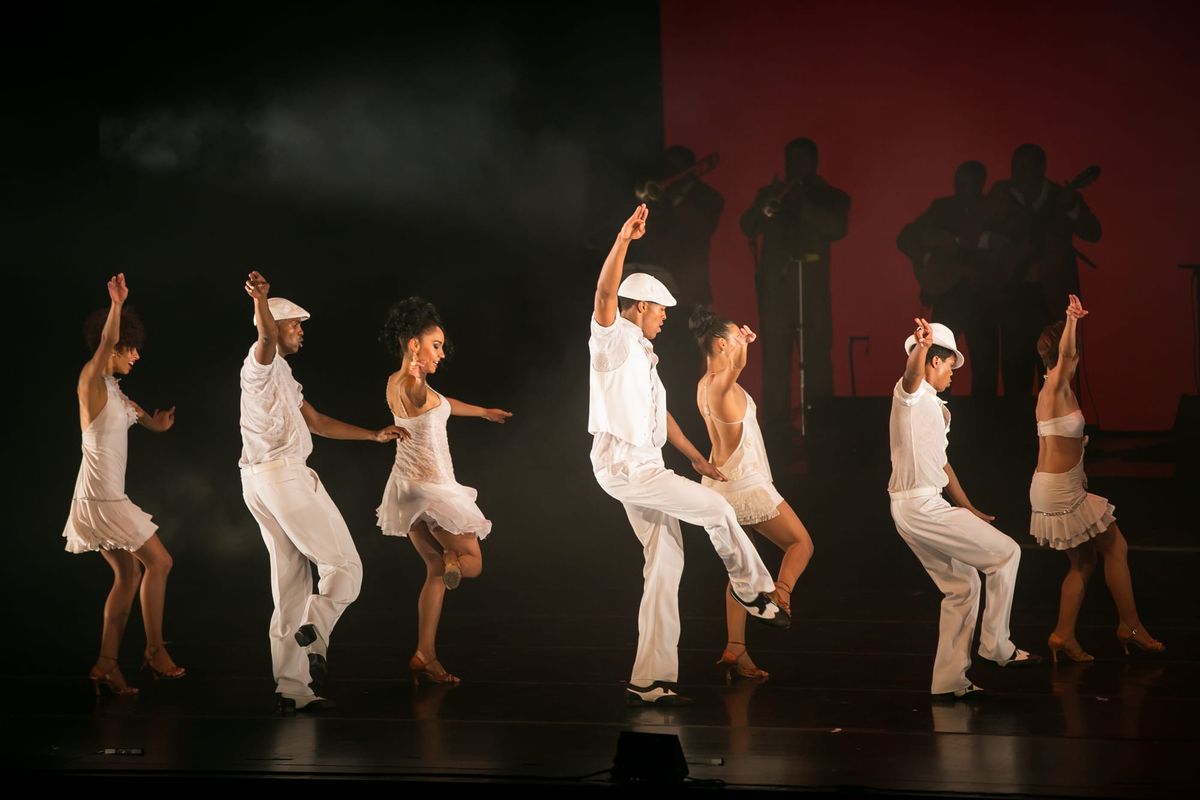
By the time the company closed the show with its dazzling “Salsa Rakatan" performed by all the members dressed in white, there was no doubt left that this cast’s performance of its native Latin dances was a special sight. The “Havana Rakatan” dances and music were these performers’ element, and they shared them happily and proudly all the way through the white-hot finale of contemporary salsa fusion dance.
copyright © 2015 by Marianne Adams



