Something Exquisite
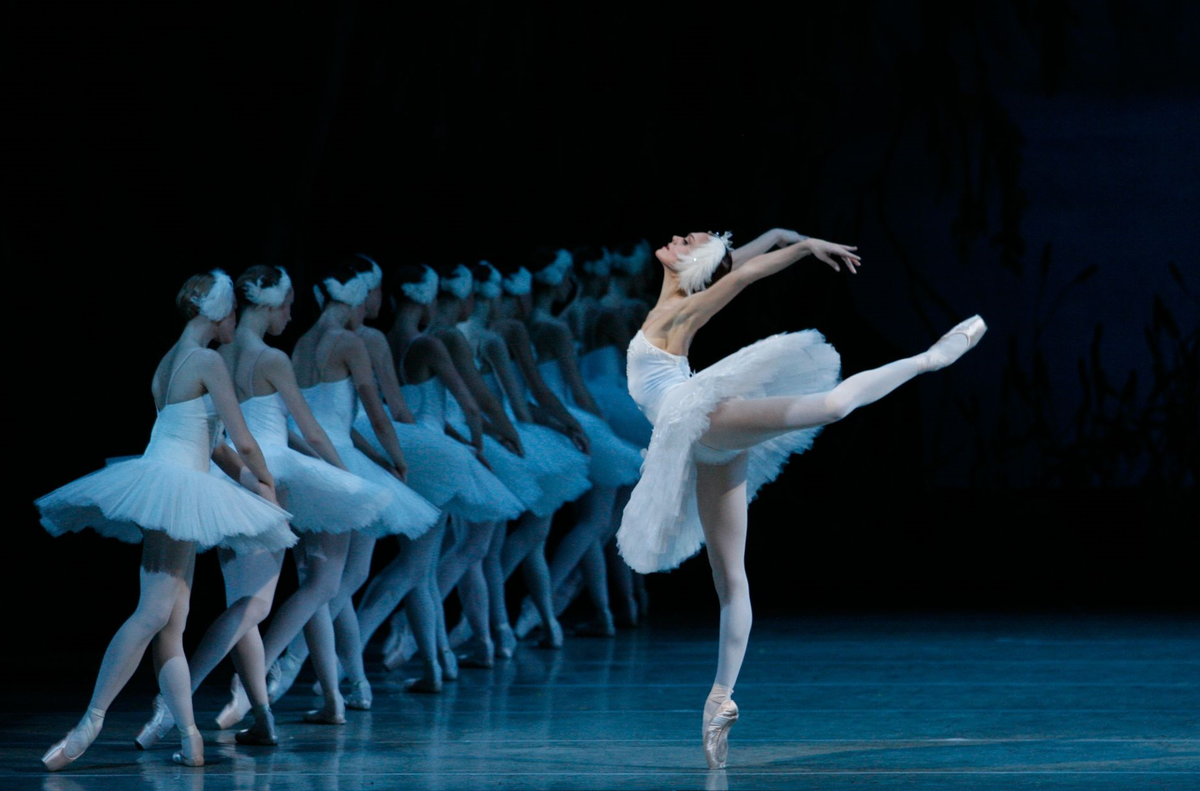
“Swan Lake”
Mariinsky Ballet
BAM Howard Gilman Opera House
Brooklyn, NY
January 16, 2015
Ulyana Lopatkina’s interpretation of Odette is largely viewed in Russia as the epitome of the role, and her single performance in the Kostantin Sergeyev’s 1950 retooling of the Petipa/Ivanov “Swan Lake” original during Mariinsky Ballet’s New York tour showed why. Not a single one of her movements was amiss, much as not a single one of them lacked detail, and to witness her performance was to be in the presence of greatness. A few flaws aside, the rest of the cast provided a worthy context for Lopatkina’s exquisite performance, despite BAM’s small stage and the erratic tempos set by Valery Gergiev’s conducting.
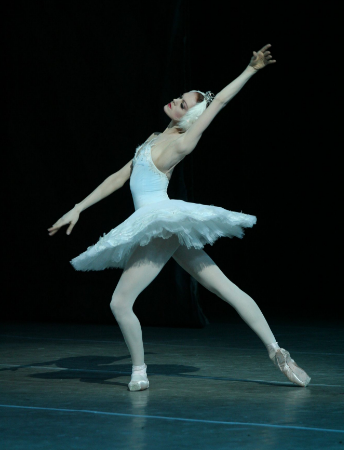
At 41 years old, Lopatkina is by most standards at the end of her career, but remarkably her portrayal of the swan princess (and her evil counterpart) was just as breathtaking as it was twenty years ago, and looked just as fresh. Her interpretation of the dual role has certainly evolved over the two decades – her Odile is no longer the confident but innocently beautiful girl she once was, but now possesses a concealed devious streak; and her distress in Act 3 when Odette arrives to tell the other swans of the betrayal is now more subdued, its pain internalized rather than outwardly projected with desperation – yet the mystical quality with which she performs it remained.
It is difficult to tell what precisely makes Lopatkina so artistically unique, but the key, perhaps, is the incredible thoughtfulness behind her expression. When she speaks, either through words or movements, she always does so slowly, finding a way to give the fullest expression to her phrasing. In dance, each of her movements is filled with a story and the emotion her character feels, and every detail of her could be examined and remain captivating: her fingers, the placement of her feet, the particular tilt of her neck: they all contribute to the greater interpretative whole.
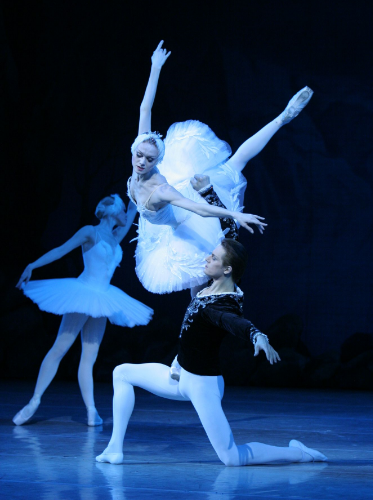
Her chosen slow tempo only works to her advantage, and on Friday she used the time to express the many nuances of her character’s feelings without wasting a single note of Tchaikovsky’s music. The impeccable artistic refinement was matched with similarly perfected technique: the suspension of movements on each turn, the perfect control of each arabesque, the filigree and speed of her battements battu and pas de bourrées suivi. During the white swan adagio, where a développé to the front transitions into a slow fall backward into a supported backbend, her fall was so controlled, and so perfectly timed to the music, that time seemed to have slowed down as the movement kept going to the very end of the musical note’s sound when Lopatkina’s fingertips stopped only as the note faded to silence.
Her Prince Siegfried was danced by Yevgeny Ivanchenko, also a well-respected dancer, who in his partnering was elegantly attentive. Unfortunately, the emotional load of the duets was provided almost entirely by Lopatkina, and during this performance in Brooklyn Ivanchenko’s Siegfried looked either anemic or disinterested, but the consistently lackluster reserve made his triumph over Rothbart in Act 3, which leads to a happy ending for the couple in this version, a difficult-to-believe surprise. Even on the technical side his movements were clean, but without much more to them; if Lopatkina was able to wow with textbook perfection of her steps, Ivanchenko’s just looked academic.
The rest of the company at first looked uncomfortable on the cramped BAM stage. The corps danced tentatively and cautiously; the Joker, performed by Yaroslav Baybordin, performed all the humor and virtuoso tricks the role demands, but very carefully, as though worried they would make a mistake or perhaps trying to fit them into the small dimensions of available dancing space. The pas de trois was most disappointing, in part because of Gergiev’s painfully slow tempo which made Yekaterina Ivannikova, Anastasia Nikitina and the former Royal Ballet dancer Xander Parish look too heavy on their jumps, and somewhat unmusical.
Ivannikova and Nikitina tried to make up for the slowness with unnecessary accents that in the context of this music looked too jerky, and introduced a few superfluous physical feats, such as full split extensions on partnered jumps that broke the gentle continuity of the music with the violent athleticism. Fortunately the trio had Parish, who showed a marked growth in style and charisma, giving the audience powerful high jumps and great control and presence, all enough to make his New York debut as Prince Siegfried later on in the tour an event to look forward to. Alas the tortured pas de trois ended with a bad fall by Nikitina during the coda, who as a result had to slip off stage and never came back, leaving the two remaining dancers to improvise a duet and adjust the rest of the act as well. Although the dancers managed, it was evident that this sudden departure rattled them.
These difficulties aside, the company came into its own in the first lake scene and delivered an unparalleled performance for the rest of the night. The corps was exemplary in maintaining lines, synchronicity, and stylistic unity, and the Cygnets were some of the best I’ve seen in years, perfectly uniform with their head placement, and showing great precision and speed on the entrechat quatres. During the ball scene, the quality of the national dances quelled any nostalgia for differentiating national detailing in character dances that can sometimes overtake a viewer during those scenes, as each dance looked as distinct as the countries it represented. Particularly mesmerizing were the Hungarian dance, with its crisp footwork, remarkably light holubetz steps, and dignified shoulder placement in the characteristic movement that places the hand under the gently tilted head; and the Mazurka, which I ordinarily find to be the least exciting of the ball scene dances, but which dazzled with the speed, contrast and transitions between the fast turning steps and the lighter walks and runs.
The happy ending of this “Swan Lake,” which according to the dictates of the Soviet powers in 1950 had the leading couple survive despite Rothbart’s evil scheming and Siegfried’s betrayal, may be unusual, but after such an exceptional performance by Lopatkina, it would have been difficult to accept anything but a joyful fate for this Odette and her Prince.
copyright © 2015 by Marianne Adams



