Soldier Boys
"After You", "Le Spectre de la Rose", "Valse Fantaisie", "Company B"
American Ballet Theatre
David H. Koch Theater
New York, NY
October 24, 2015, matinee
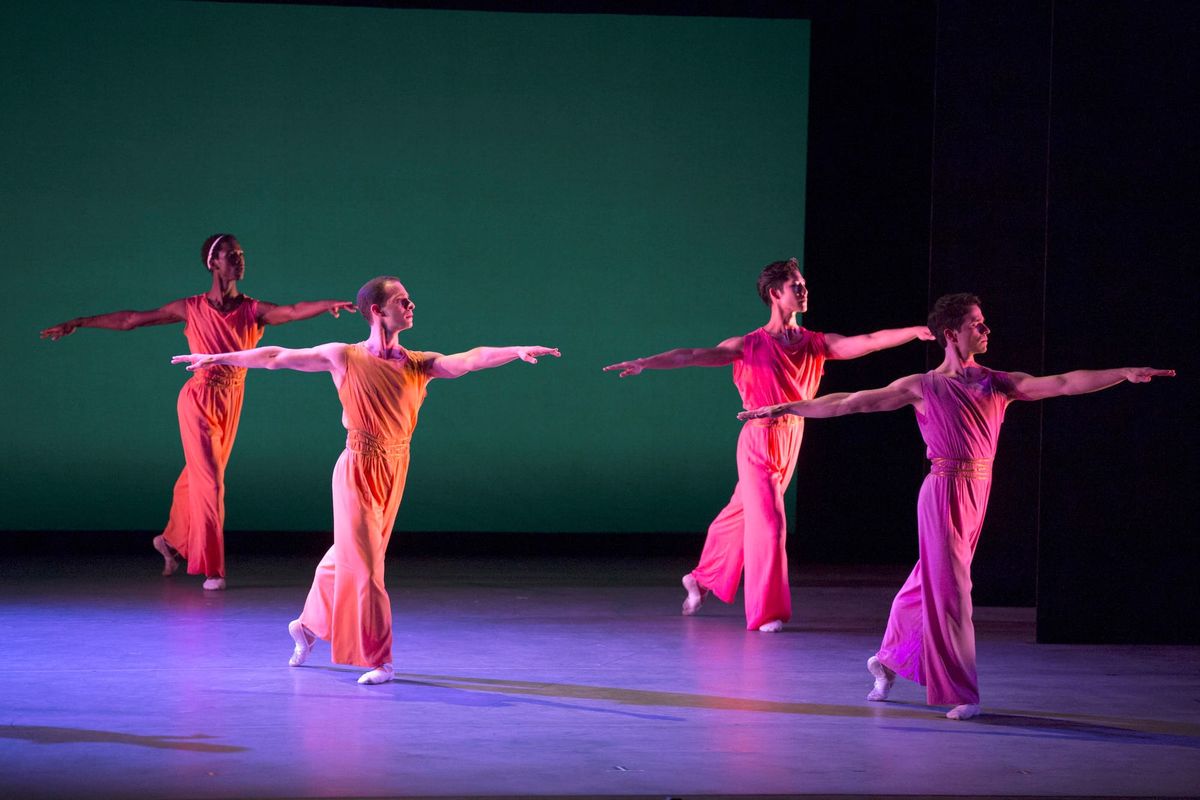
ABT's Saturday matinee sandwiched two military works (Mark Morris' new "After You" to Hummel's "Military" septet and Paul Taylor's "Company B" to World War II favorites by the Andrews Sisters) around a frothy center. Despite its martial title, Hummel's music is light, bouncy and friendly and Morris met it on equal terms. The twelve dancers (six men and six women) were dressed by Isaac Mizrahi in various brightly colored chiffon jumpsuits and the constantly shifting patterns (lots of trios) used many partnering variations. There were few couples and those that emerged didn't stay couples for long. It looked like a group of friends (there was a repeated hand-holding motif) having a witty and joyous conversation, full of loose-limbed frolicking. There were no hierarchies in the friendly group, and the "after you" gesture was repeated as the dancers kept acknowledging each other without irony or one-upmanship.
The men occasionally burst into an open-armed, bouncy Bournonville jump and the work, though there was no Bournonville petit-allegro, did give the feeling that the colorful columns were a distillation of Bournonville's happy dancers. Everyday happiness and innocent joy, without passion or conflict, is hard to make interesting because the emotions seem so, well, ordinary, but great choreographers can make the ordinary extraordinarily appealing.
There was one brief hint of darkness as Herman Cornejo began the Adagio with a melancholy solo, though he wasn't alone for long as he was joined by Thomas Forster, who echoed his movements, like two friends sharing ideas. The abrupt ending, as the curtain falls in the middle of a group dance, was unexpected but gave the feeling that these dancers would continue, like disembodied thoughts and feelings.
The second work, Fokine's atmospheric pas de deux "Le Spectre de la Rose", is also about a disembodied idea, as a young girl after a ball dreams that the essence of a rose has appeared, only to wake up and realize it didn't happen. At least that is the impression the original cast gave, according to contemporary accounts. It has become a vehicle for a male jumper with a rather saccharine anti-climax, as the girl has to awake to a burst of applause.
Cassandra Trenary and Daniil Simkin were the couple. Simkin's costume, by Robert Perdziola "after" Bakst, downplays the petals and eliminates the rosy shower cap; those Art Nouveau extravagances would be a bit much today. The lilting arms and floating jumps, though, are part of the choreography and Simkin, while a strong jumper, was a bit too perky. Trenary was a sweet and charming young girl who made it clear she was dancing in her sleep; her body seemed to shift gears when she opened her eyes, but the hint of disillusionment that the audience saw in Karsavina has disappeared and the perfume of old seems to have vanished.
Balanchine's 1969 "Valse Fantaisie" is a perfumed whirl to Glinka for a couple and four female corps. It is new to ABT and has been recostumed by Larae Theige Hascall from NYCB's pink to forest green, with dark purple bodices for the lead couple. The corps look like wood nymphs, making the ballet seem like a cousin to the "Voices of Spring" segment from "Vienna Waltzes". Devon Teuscher and Joseph Gorak looked like windswept, elegant irises tossed on the crest of the music.
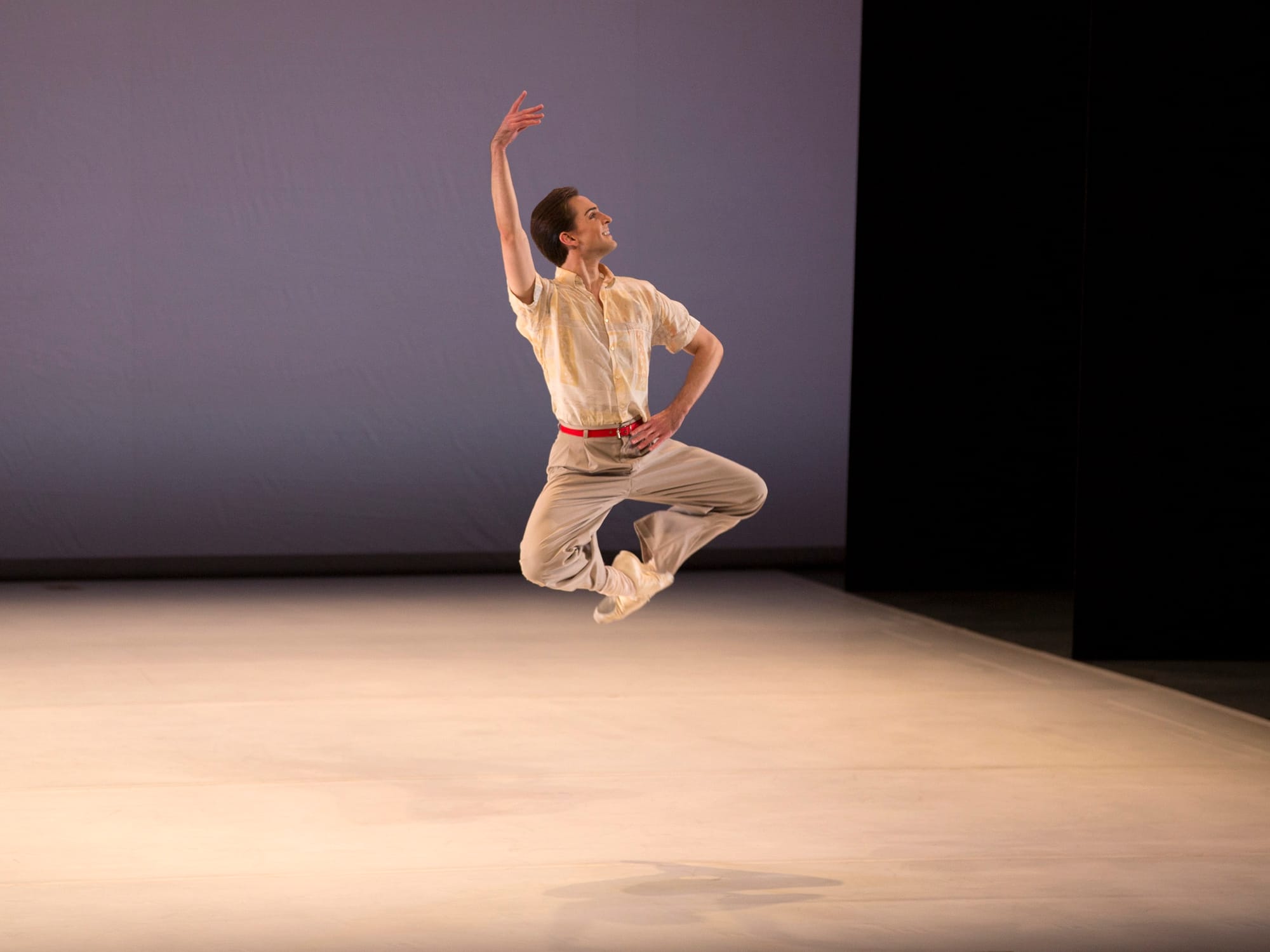
Gorak also danced the energetic Bugle Boy in "Company B". He is an extraordinarily beautiful dancer, but not earthbound enough for Taylor and his pointed feel and light, effortless split jumps made it look like he had his white tights in his back pocket. The other dancers, though, looked right at home, especially Arron Scott as the doomed soldier in "Tico, Tico". In 2008 he electrified the City Center audience with his power and musicality and he has become even stronger, making his solo a searing vignette of a boy dying too young. Craig Salstein was sharp and incisive as the dorky Johnny and Misty Copeland's "Rum and Coca-Cola" had an innocent yet knowing sensuality. Roman Zhurbin was a more vibrant "Another You" than the usual elusive memory so his slow march to the grave seemed more shocking. Christine Shevchenko, the girl he lost, as a wonderful quality of stillness which made her the grieving center of the finale, until she recovered and joined the throng. Life must go on, Taylor seems to say, though the ghosts of those soldier boys will remain.
copyright © 2015 by Mary Cargill



