So Pretty, So Twisted, So Cruel
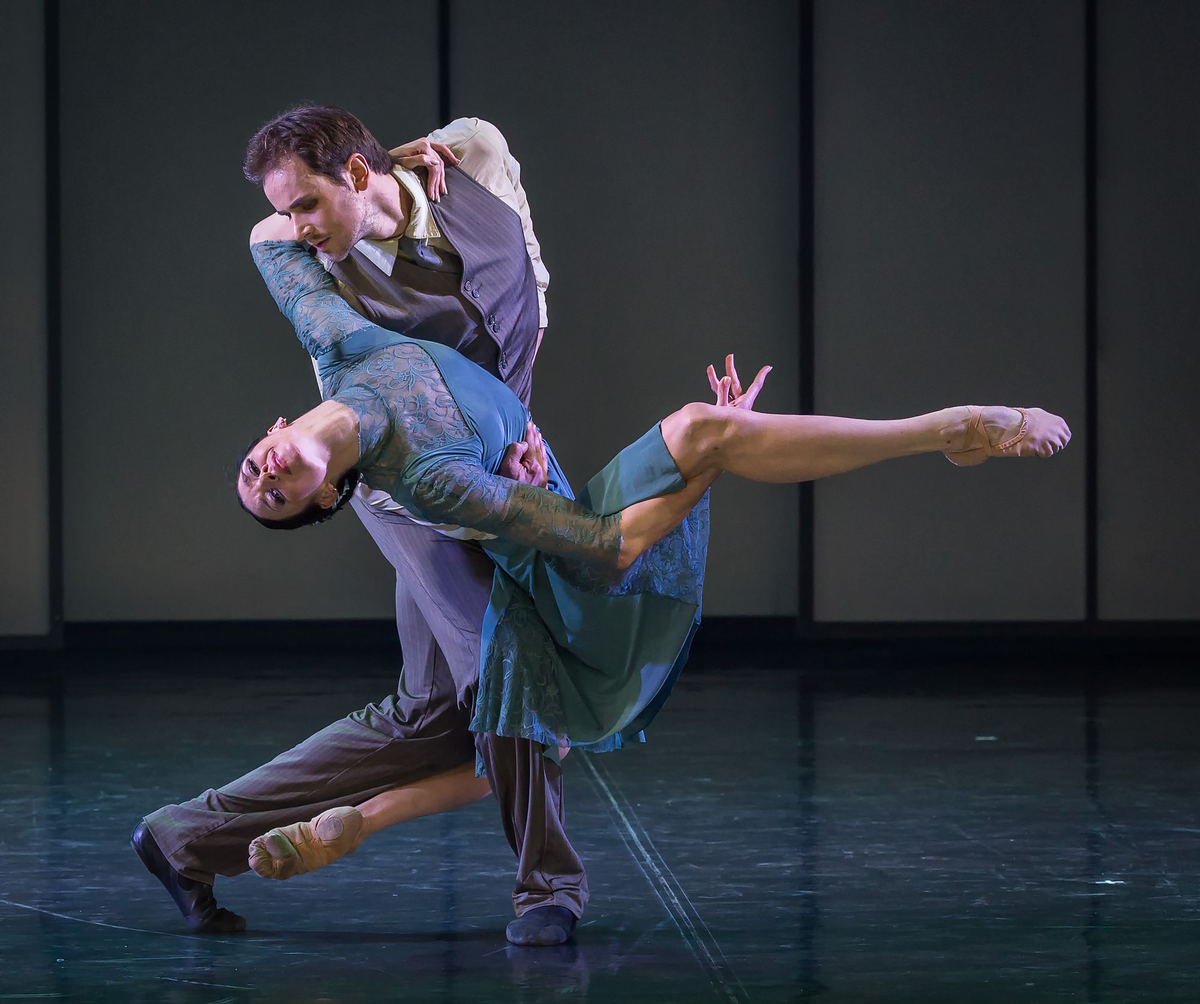
“Up and Down”
Eifman Ballet of St. Petersburg
New York City Center
New York, NY
May 22, 2015
How do you put psychology in dance form? For Boris Eifman, the recipe calls for one part of the Roaring Twenties setting, one part of psychological drama loosely based on F. Scott Fitzgerald's "Tender is the Night," several parts of different music ranging from George Gershwin to Frederic Chopin, one part an incredibly limber, tall and expressive dancing cast, one part creative choreography that capitalizes on the dancers’ gifts, and a dash of recklessness. Combine all and stir, wildly, and if all goes well, as it did during the New York premiere of “Up and Down,” watch the audience rise to its feet.
In Russia, and arguably beyond, Eifman is one of a kind. First to take the great Russian traditions of literary drama and ballet and merge the two back in the 1970s, Eifman has been creating to his own tune, and in his own style, ever since. What he has to offer may not be a dish you’d long for often, but the modern offerings are distinctly his own, distinctly daring and in that, very much worth tasting again and again. This singularity of his was not lost on the star-studded audience (former and current ballet stars Natalia Makarova, Nina Ananiashvili, Diana Vishneva and Maria Kochetkova, among others, were all in attendance) of the sold out opening night of his 2015 creation “Up and Down,” which was greeted with enthusiasm and plentiful discussion of its many layers in the halls after the curtain’s drop.
The new ballet, where Eifman for the first time focuses solely on the subject of human psychology in its various incarnations, admittedly is imperfect – some of its moves are repetitive, some character and story development sequences too rushed, and the corps is often so conspicuously removed from the main plot lines that their frequent appearances to dance Jazz Age numbers can feel like necessary but nonetheless annoying dance breaks in a song of decent verse and melody. But where the ballet shines, it dazzles, laying bare all of the psychological weaknesses, quirks and shortcomings of its heroes, and making their descents to various psychological depths nuanced, reprehensible and yet, somehow, understandable.
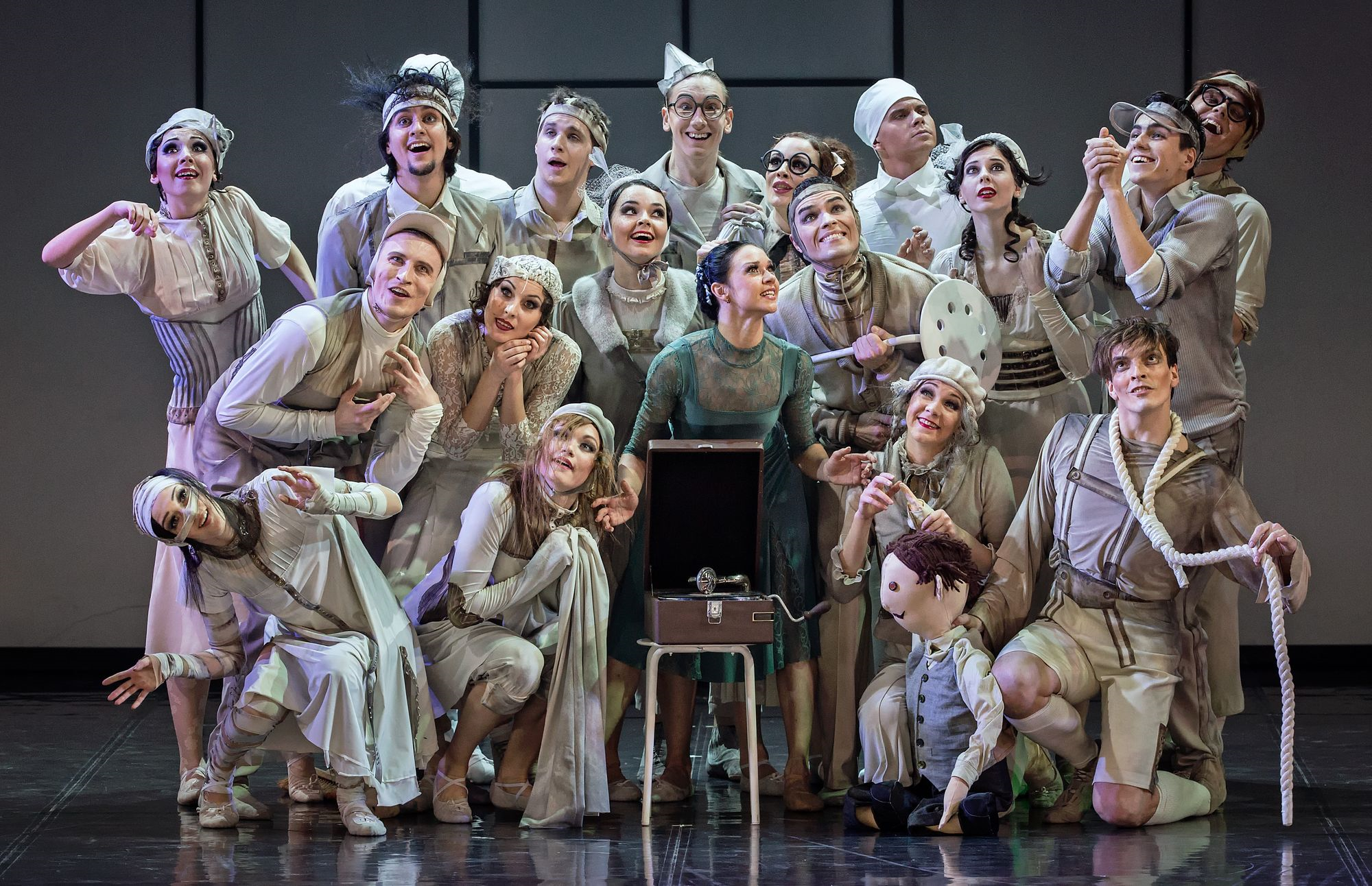
The opening scene, set in a psychiatric clinic ward, served as a perfect introduction of this most delectable aspect of the work, as the many troubled inhabitants sat twitching and clinging to dolls, chairs, their own suspenders and, of course, their heads. These patients of the protagonist Psychiatrist, danced by Oleg Gabyshev, who in the ballet, like the rest of the characters, doesn’t get (and really doesn’t need) a personal name, received tender care as he attentively sought to easy their obsessions. The arrival of the Patient, danced by Lyubov Andreyeva, at first didn’t signal much besides the deeper sense of the Psychiatrist’s love for his job, but soon it became apparent that his vocational attachment just made him more likely to fall for this beautiful daughter of a wealthy father whose incestuous proclivities toward her landed her in the institution.
Choreographically, several moves recurred in the ballet to signal the characters’ emotional states. The bent toward each other knees and turned-in feet, both while on the floor and particularly during lifts, with one foot sickling sharply inward, seemed symbolic of the dancer’s discord with reality, and frequently appeared in the Patient’s, and other patients’, dancing during their more troubled scenes. The more airborne moves that ran contra gravity, such as in jumps or prolonged lifts, represented attraction, and first appeared in the Psychiatrist and Patient’s treatment scene pas de deux where Gabyshev couldn’t seem to help but alternate between throwing himself and hoisting his discovered love interest up in the air. The romantic duet was not devoid of Eifman’s discord language, however, with some turned-in leg positions coming through the choreography every now and again, suggesting that their wholehearted love was also its form of madness.
If the first act was used by Eifman to move the characters toward love and stability of sorts, Act 2 followed the opposite pattern. Starting with a display of a dazzling and glittering world of richness in a Jazz Age where the Psychiatrist and the Patient are married and enjoying the wealth the Patient’s father conveniently provides, Eifman wasted little time to show that all that sparkles too much could well be blinding. The turned-in leg moves quickly recurred here as well, but this time seemed to mean a different type of divorce from reality, one that slowly but surely lead to a separation between the Patient and the Psychiatrist, which happened, predictably enough, courtesy of a movie star, a wandering eye, debauchery and some jealousy.
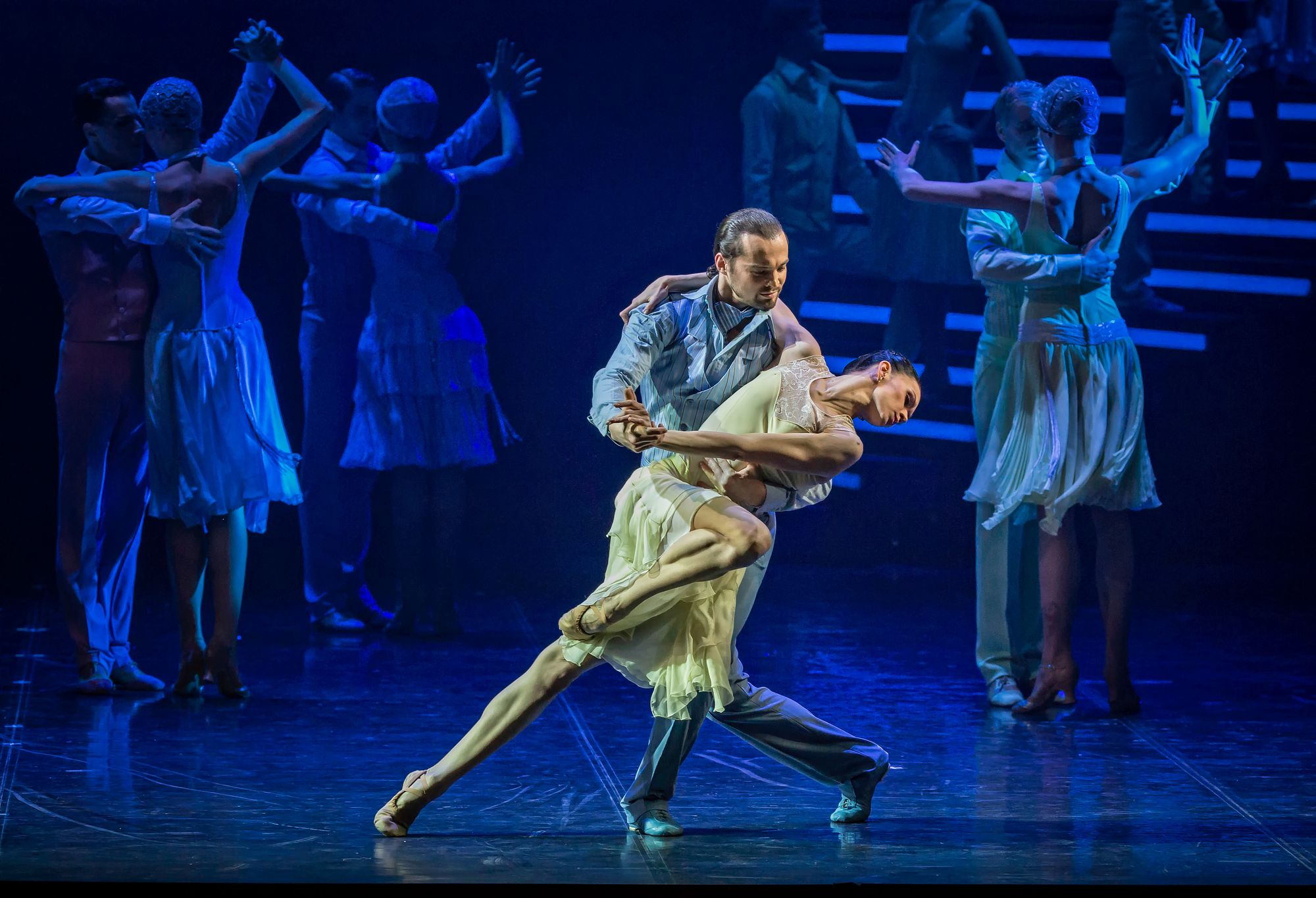
Troubling though it may have been throughout, the scenes nonetheless were very beautiful, particularly the very moving solo by Andreyeva to Chopin’s Prelude in E minor in Act 2, where the formerly broken Patient tries to stay upright amidst all that was dragging her down. And so, even though the ending for the leading characters may have been discouraging and cruel, with the Patient ending up cold and detached and the Psychiatrist, now himself a broken man, back at his clinic as a patient, Eifman’s ushering of this conclusion was so seamless and elegant that the characters’ trajectory culmination seemed logical, inevitable and almost welcome.
Not all credit could go to just Eifman himself, of course, and like so many ballets, this one benefited greatly from the quality of its dancers’ performance. Eifman’s core criteria for joining his company has long been that the dancers be tall, elegant and extremely talented at dramatic arts, but this cast, particularly Garbyshev and Andreyeva, seemed to define those standards. Possessing remarkable physiques and acting skills, their delivery of their scenes, under the careful and watchful eye of Eifman, who sat in a lone chair at the back of one of the orchestra isles throughout the ballet, consistently combined physical precision and authentic, but expertly projected, dramatic exposition. The world of the likes of Freud and Jung may be a daunting labyrinth, but in the hands of Eifman and his troupe it never failed to look beautiful.
copyright ©2015 by Marianne Adams



