So Much, So Rich, So Swiftly
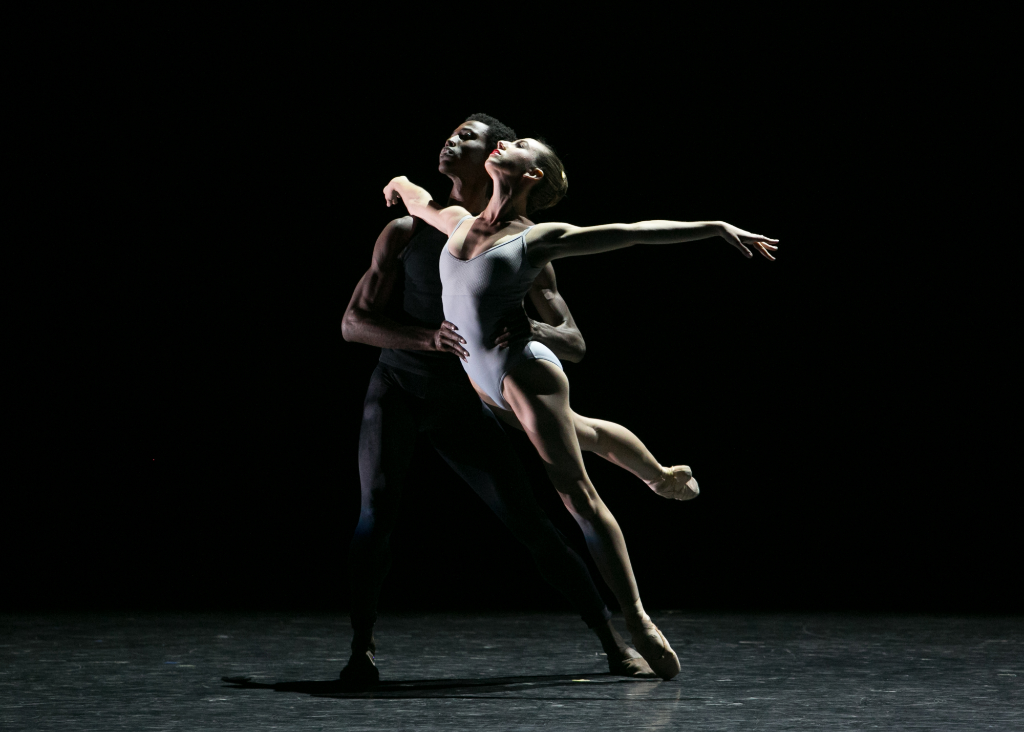
Vail Dance Festival: ReMix NYC
Program 3: “Switch Phase,” “Anywhere On This Road,” “Suite From Mazurkas,” “First Fall,” “Liquid Velvet,” “This Bitter Earth,” “Universe,” “Tabla-ture,” “IFE/My Heart,” “Divertissement Pas De Deux,” “Canvas”
New York City Center
New York, NY
November 7, 2016
The third program of the Vail Dance Festival:ReMix NYC was a vast and rich panoply of different styles of dance and dancers. The evening moved from modern dance to classical ballet, touching on everything in between, and but for the efficiency of programming, it may all have seemed to be too much and too layered. Instead, ReMix NYC presented great dancing and a deep bench of talent both on the choreography and dancing side, all without tiring its audience out.
Matthew Neenan’s “Switch Phase” opened the night with its multihued passages of different emotional color and interactions among the four couples of BalletX. The modern and free approach to dance in this 2012 Neenan work to string music presented a sense of community and collaboration on stage, with men and women equally taking the lead in the dances. Vail Festival veterans Fang-Yi Sheu and Ron “Prime Tyme” Myles followed with their minimalist 2013 duet titled “Anywhere On This Road.” Both of these dancers/choreographers were dressed in simple black pants and white tops, and the uniformity of their dress and frequent similarity of performed steps allowed for keener appreciation of the nuanced differences in their dancing style – she seemed more suspended in the dance, and more articulate with the slower motions, while he dominated the more break-dance inspired sections of the work. Rounding off the first act was José Limón’s classical work “Suite From Mazurkas.” The 1958 ballet was performed by Tiler Peck and Robert Fairchild, and while there was a little too much classicism in Fairchild’s phrasing of pauses and accents, Peck pleasantly surprised with a very free and inspired performance, particularly in the variation.
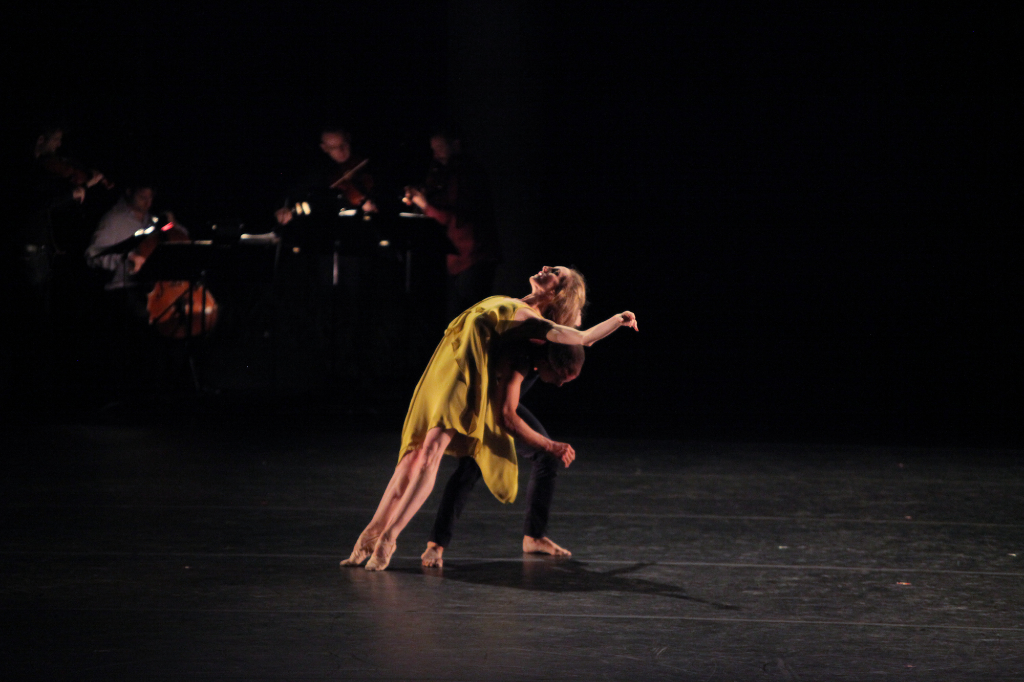
Brian Brooks’ lovely 2012 ballet “First Fall” followed an intermission and was exquisitely performed by Brooks and Wendy Whelan. The entire piece looked good, with these seasoned artists making each phrase seamlessly flow into the next. It was the very last moments though, after the Philip Glass music stopped playing, that were most moving with Whelan pausing and after looking suspended in the moment gently falling back onto Brooks’ body, and all the way to the floor, three separate times in silence. The duet that followed, Jodie Gates’ 2016 work “Liquid Velvet” danced by Carla Korbes and Jared Angle, left less of an impression. Korbes looked less certain in technique, particularly in the turns, and the work as a whole appeared to be mostly a collection of fluid lifts, with the dancers too preoccupied with making them happen to actually deliver them well. It was also bad luck that it followed the Brooks and Whelan performance, as it was difficult not to compare the dancing.
Yet another duet, “This Bitter Earth” performed by Isabella Boylston and Calvin Royal III, would have invited even more of a Whelan comparison considering this Christopher Wheeldon ballet was originally set on the retired NYCB ballerina, but the dancers here managed to give the duet a different feel. Boylston, dancing in a leotard rather than a dress as did Whelan, gave the work a more athletic flavor through both her performance and because of her more athletic physique. Where Whelan once was tender and light, Boylston was measured, purposefully channeling emotion instead of incidentally creating it through dance. The duet’s chemistry flew thicker and slower here, but it was enjoyable nonetheless and was enhanced further by the live vocals and music of Kate Davis and the Catalyst Quartet, all present on stage with the dancers.
After the three modern ballet duets, the program shifted gears to a slowed-down but sizzling tango duet called “Universe” performed by Gabriel Misse and Carla Espinoza, and ended the second act with “Tabla-Ture,” a remarkable 2014 creation by Lil Buck and Damian Woetzel to a variety of tabla music. Lil Buck would stand on a table and take cues from Sandeep Das playing the tabla, as if creating his own responses, in his unique style, with the many elastic movements to the more regimented sounds.
The three works that concluded the program after an intermission, like the opening act, combined classical dance with more modern pieces. Matthew Rushing led with “IFE/My Heart,” a very fast and free solo number that demonstrated the remarkable stamina and musicality of Rushing’s dancing. The classical interlude in the form of the Divertissement Pas de Deux from George Balanchine’s “A Midsummer Night’s Dream” masterfully performed by Tiler Peck and Jared Angle, had no slip-ups, but was without momentum: the dancers were physically perfect, but with insufficient emotional warmth. Ending the program was Larry Keigwin’s 2013 dance “Canvas.” The ten dancers of Keigwin’s company created something very special with the very pedestrian scenes – in steps and context – giving the simplicity of the duets and trios the kind of charm that one is usually accustomed to encountering in Paul Taylor’s works. And it is a statement about this work, and the program overall, that after “Canvas” concluded this evening of eleven works, the viewers likely would have been just as happy to sit through more.
copyright © 2016 by Marianne Adams



