Silver Lining
Silver Lining
"The Gift", "Songs of Bukovina", "Thirteen Diversions"
American Ballet Theatre
David H. Koch Theatre
New York, New York
October 18, 2017
ABT's Fall gala celebrated Kevin McKenzie's twenty-five years as Artistic Director with a silver jubilee. Appropriately, it was a company effort, celebrating the JKO students and the ABT Studio Company as well as the current dancers; as the gracious hosts, Stella Abrera and David Hallberg noted in their opening remarks, 63 of ABT's 92 dancers started in the Studio Company. The main event, the premiere of Alexei Ratmansky's "Songs of Bukovina", highlighted some of the most talented younger dancers (and only one principal, the recently promoted Christine Shevchenko), and there were no male principals dancing that night, a well-deserved vote of confidence for ABT's corps and soloists.
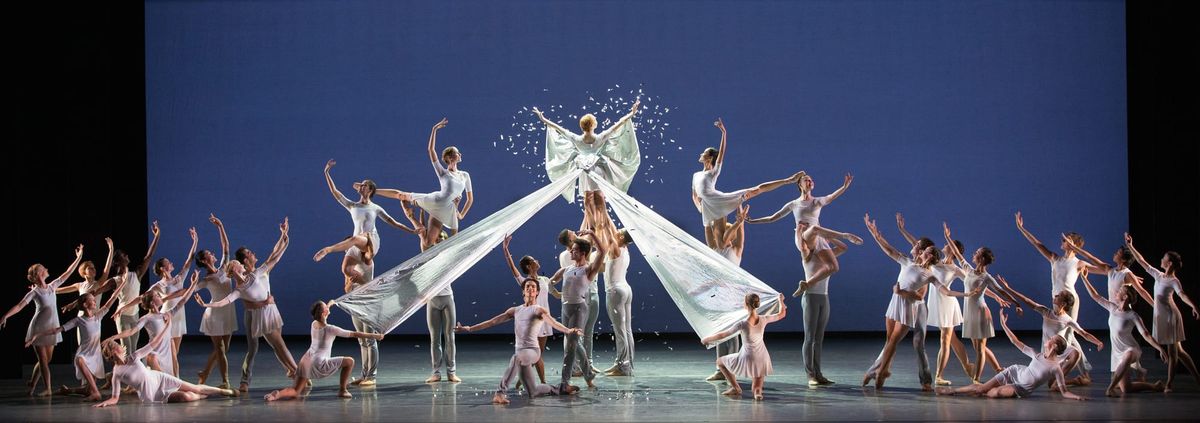
Jessica Lang's "The Gift", set to excerpts from Corelli's "Concerto Grosso" and featuring students and members of the Studio Company was a pièce d'occasion for McKenzie. It was cheerful, energetic, and impeccably danced, showing off the dancers' openhearted demeanor, unexaggerated style, and technical chops (there were a lot of jumps and some joyful batterie). The dancers romped through the Taylor-lite choreography, with lots of open-armed jumps and stiff-legged runs, but the piece lacked a real connection to the music and seemed a bit jumbled. And the poor girl who had to be carried around with a giant silver butterfly on her back and an enormous train flowing down symbolizing, presumably, twenty-five years of ABT's dancers taking flight, could only smile gamely.
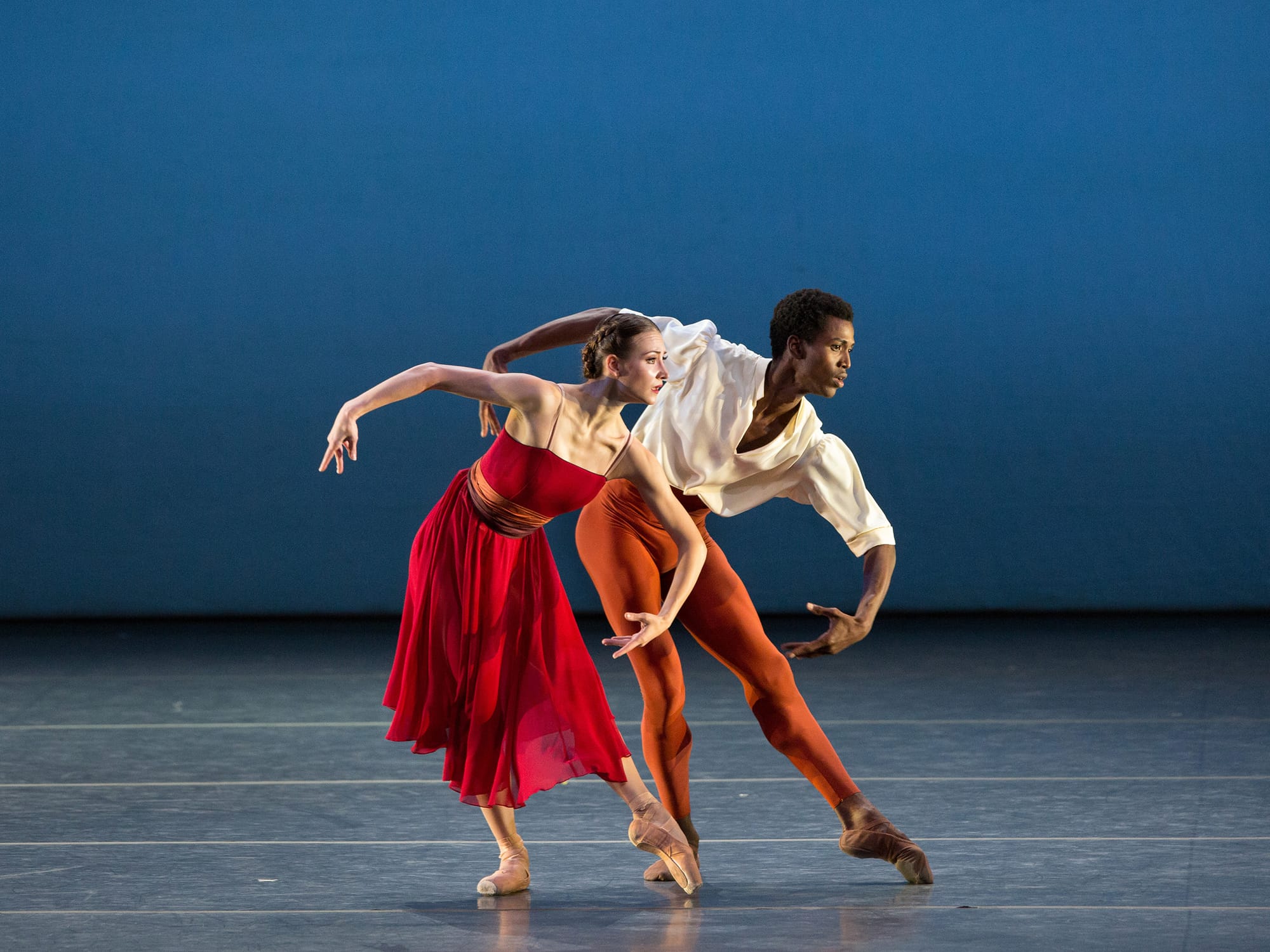
Ratmansky's "Songs of Bukovina" was set to piano music by Leonid Desyatnikov. The costumes, by Moritz Junge, with the women's braided halos and suggestions of aprons, hinted at a timeless peasantry. The episodic choreography seemed, on first viewing, to explore a small community, sometimes wary and fearful, sometimes celebratory (with some folk-inflected prancing) and sometimes communal, as the men tilled the fields or marched toward. Four couples (April Giangeruso with Marshall Whiteley, Lauren Post with Joo Won Ahn, Katherine Williams with Duncan Lyle, and Stephanie Williams with Patrick Frenette) echoed and reinforced the main couple, Shevchenko and Calvin Royall III, who seemed to be village royalty.(Shevchenko, in a warm red dress, was the only woman without an apron.) They had several solos and pas de deux, weaving in and out of the corps, sometimes leading them, and sometimes seeming to hide a secret sorrow. Shevchenko, with her beautiful and expressive face and stylish dancing, was captivating, especially in her more lyrical solos where her long but never exaggerated extensions were so expressive. Royall was confident and generous, with sharp but secure jumps. It was a dense, fascinating, and slightly uneasy piece. Despite the glorious frenzy of the group finale, there was a restless undercurrent that kept the work from drowning in a "happy peasants at play" sentimentality.
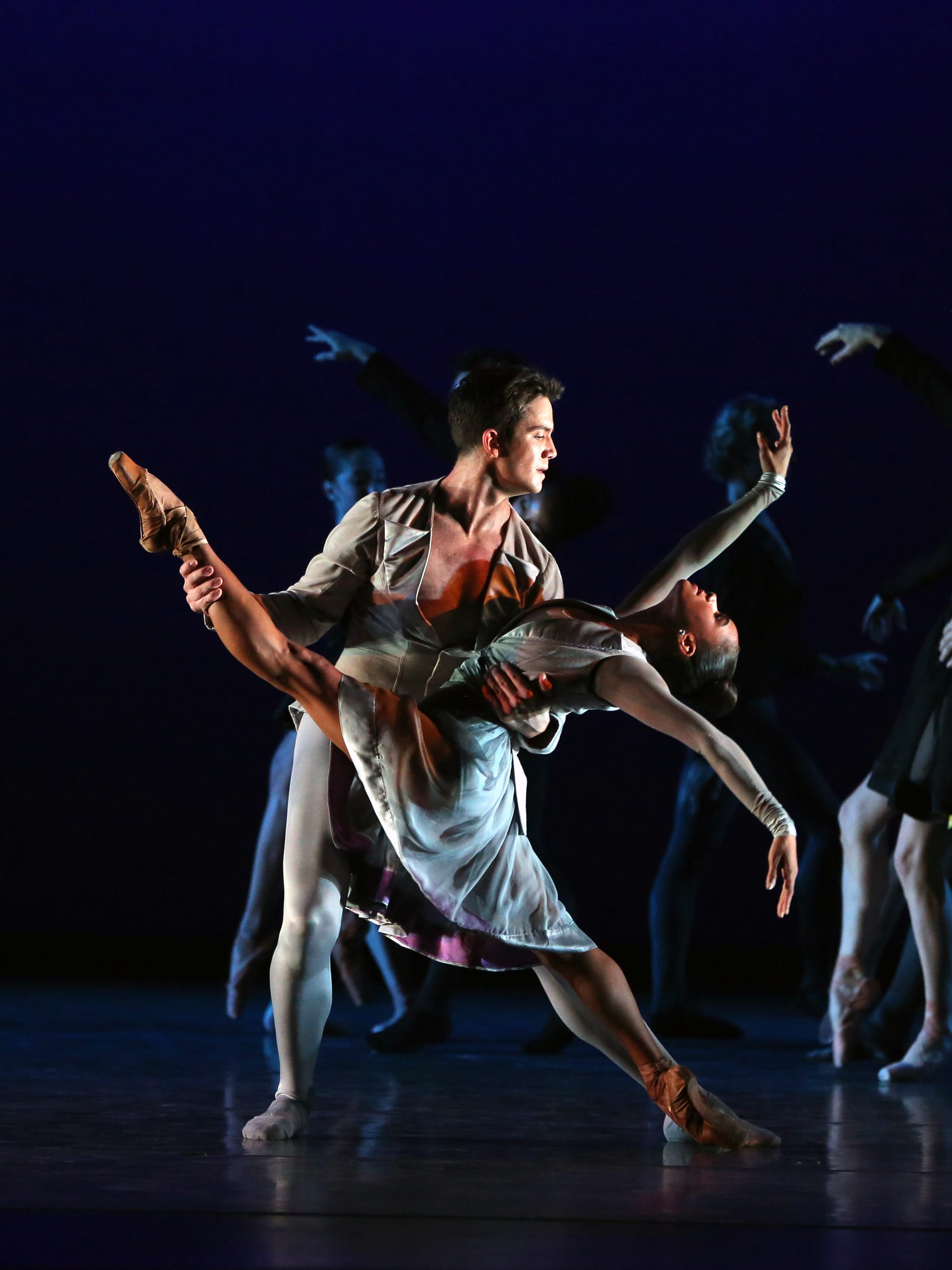
Christopher Wheeldon's "Thirteen Diversions", choreographed in 2011 to Benjamin Britten's "Diversions for Piano and Orchestra", was also restless, but much less interesting, as it seemed to be all variations without a theme. The lighting by Brad Fields, on the other hand, was stunning as the back of the stage was lit with shifting beams of color which seemed to raise and lower the black background in response to the music. But the lighting and the music tended to overwhelm the dancers and the piece would have worked wonderfully as a musical light show without the large corps in black rushing around.
The four main couples in white (Sarah Lane with Joseph Gorak, Misty Copeland with Gray Davis, Stella Abrera with Thomas Forster, and Skyler Brandt with Zhiyao Zhang) did their best with the finicky, stop and start choreography, but their dances had little flavor or individuality, though for some reason Copeland collapsed like a spineless rag doll whenever she was partnered. Other than allowing the men to show they can dominate a stage, the work was rather generic. But the dancers were pure silver.
Copyright © 2017 by Mary Cargill



