She's Alive!
"Giselle"
American Ballet Theatre
Metropolitan Opera House
Lincoln Center
New York, New York
July 5, 2023 matinee
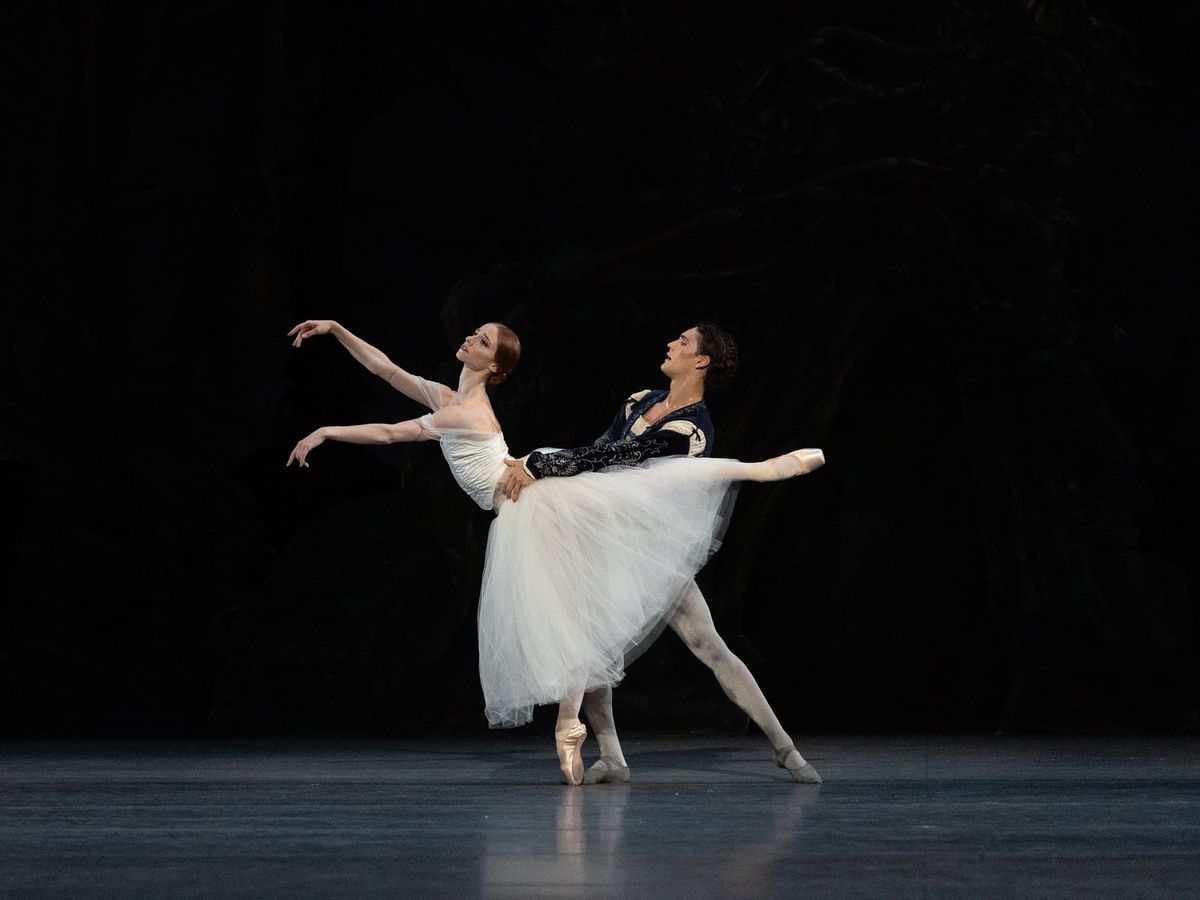
ABT's policy of giving as many principals as possible a shot at a role limits the opportunities to explore and to grow into a role--one or two performances of "Giselle" every few years makes it difficult to play around with different interpretations and also means that dancers get cast in roles for which they might not seem suited. But this policy does stretch the dancers and can provide some exciting surprises. The the red-headed, robust Catherine Hurlin is not a dancer who comes to mind when thinking of "Giselle", usually a small, dark-haired waif, but she, in her New York debut, gave a vivid and very moving performance, supported by the new Brazilian principal, Daniel Camargo, also making his New York debut.
The original Act I Giselle, we now know from dance historians, was more spunky and vivacious than we often see now, teasing her mother and flirting (decorously) with Albrecht, so Hurlin's outgoing, joyous dancing and confidence (she looked around eagerly, almost greedily, at the opening and couldn't wait to introduce Albrecht to her friends) were completely in character. She radiated happiness, and the famous hops of point were directed at Albrecht. Her mad scene was slightly less dramatic than we often see, but was certainly effective. She seemed to retain some grasp of sanity, descending into blind fury rather than complete madness; I was struck by her despair when she felt her arms growing cold, seeming to try to fight off her inevitable death. She was a Giselle, I felt, who wanted to live, which did make Albrecht's betrayal all the more tragic.
Camargo's Act I Albrecht really did not deserve such loyalty; he was slightly caddish, rolling his eyes when the faithful Wilfred (an especially concerned Patrick Frenetic) tried to convince him to leave. His Albrecht was weak rather than completely evil, and clearly loved dancing with Giselle, but once those horns sounded he tried to bluff his way out of his mess, greeting the Duke and Bathilde with bravado. Giselle, he presumably felt, would know her place and be around the next time he stopped by. This made his second act entrance, as he walked slowly on, humbled and willing to acknowledge his guilt, all the more powerful.
Hurlin's Act II Giselle hovered between life and death. She did make it very clear just when Albrecht could and could not see her in the flesh, but she hadn't yet surrendered, still fighting her losing battle for life. Her dancing had a controlled abandon, with a hint of desperation in her attempts to shield Albrecht, which she combined the delicate Romantic perfume of her soft, flowing arms and pliant back. There was plenty of strength, of course, in her dancing; her leg seemed to raise itself before she pivoted into an arabesque, and her entrechats fluttered into a blur. Camargo too, is a strong dancer, with crisp cabrioles and springy entrechats; he brought his hands to his heart as if to say it was giving out while still pushing himself higher, a theatrical and technical tour de force. His final moments, were breathtaking. He grabbed all the lilies he could find, cradling them in his arms as if to prove to himself that Giselle had really been there, then walked slowly backwards as they dropped from his hands and he was left with nothing but regrets.
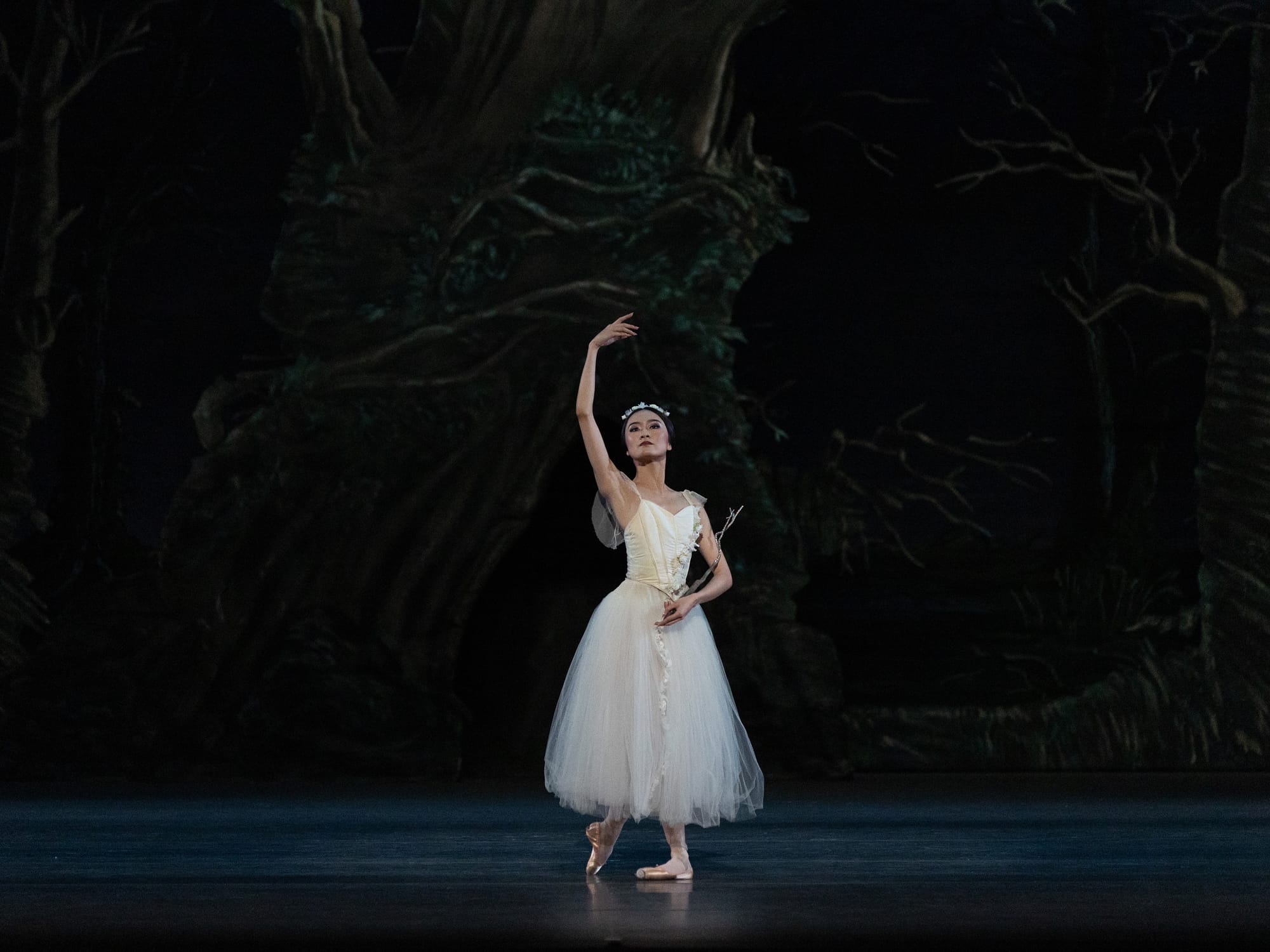
Myrta, too, has her regrets, as she disappeared in the sun without her pound of flesh. Fangqi Li, a corps dancer who joined ABT in 2018, made her debut as Myrta. She is small and slight, not a typical choice for the domineering queen, but she danced large. Her opening bourrées floated effortlessly, her jumps were high, and her arabesques secure and confident. I did miss the weighty arms of the grander Myrtas, which can seem to tear the air apart, but she danced with a bright hardness that made the point; I loved the dismissive little flick of her wrist as Albrecht begged for his life. And the overall performance proved once again that "Giselle", which has been making people cry since 1841, is still alive.
© 2023 Mary Cargill



