She Shall Have Music
"The Sleeping Beauty"
American Ballet Theatre
Metropolitan Opera House
New York, NY
June 28, 2016 and June 29, 2016, matinee
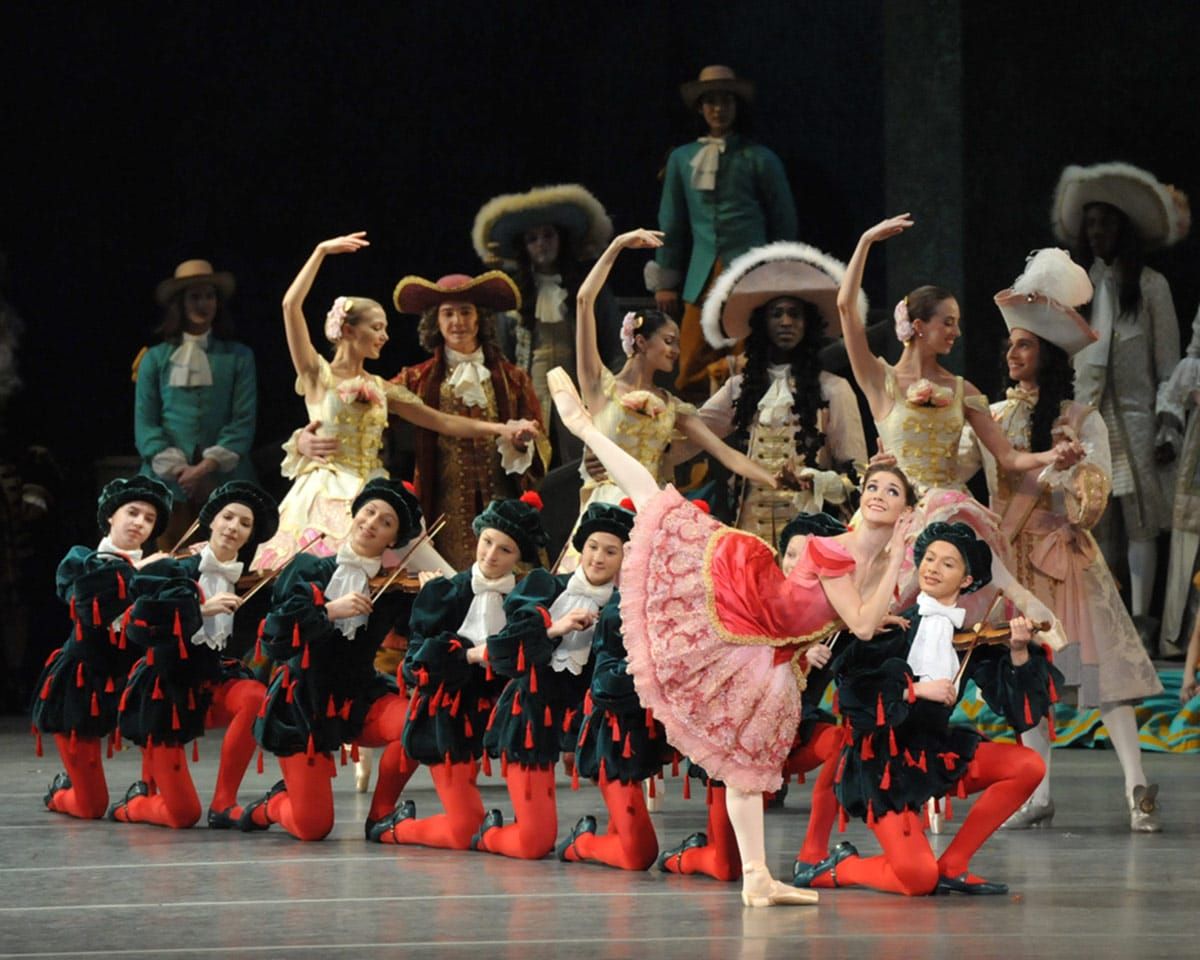
The charming moment when the 16-year-old Aurora celebrates her birthday by dancing along a line of violin-holding pages has, over the years, become a technical tour de force with Aurora rising on point, rolling down through her foot into a series of unsupported arabesque penchées while beaming at the audience. Alexei Ratmansky has returned the diagonal to a more intimate movement by having Aurora lean on the little pages as if listening to their musical offerings, turning this into a gracious and warmhearted gesture to her court. This is just one of the many generous little details that give Ratmansky's (and he would add, Petipa's) ballet emotional richness. ABT danced it with a vivid, gleaming commitment and a coherent style, full of soft torsos, épaulement, demi pointe, and lowish extensions (though they do seem to be creeping higher).
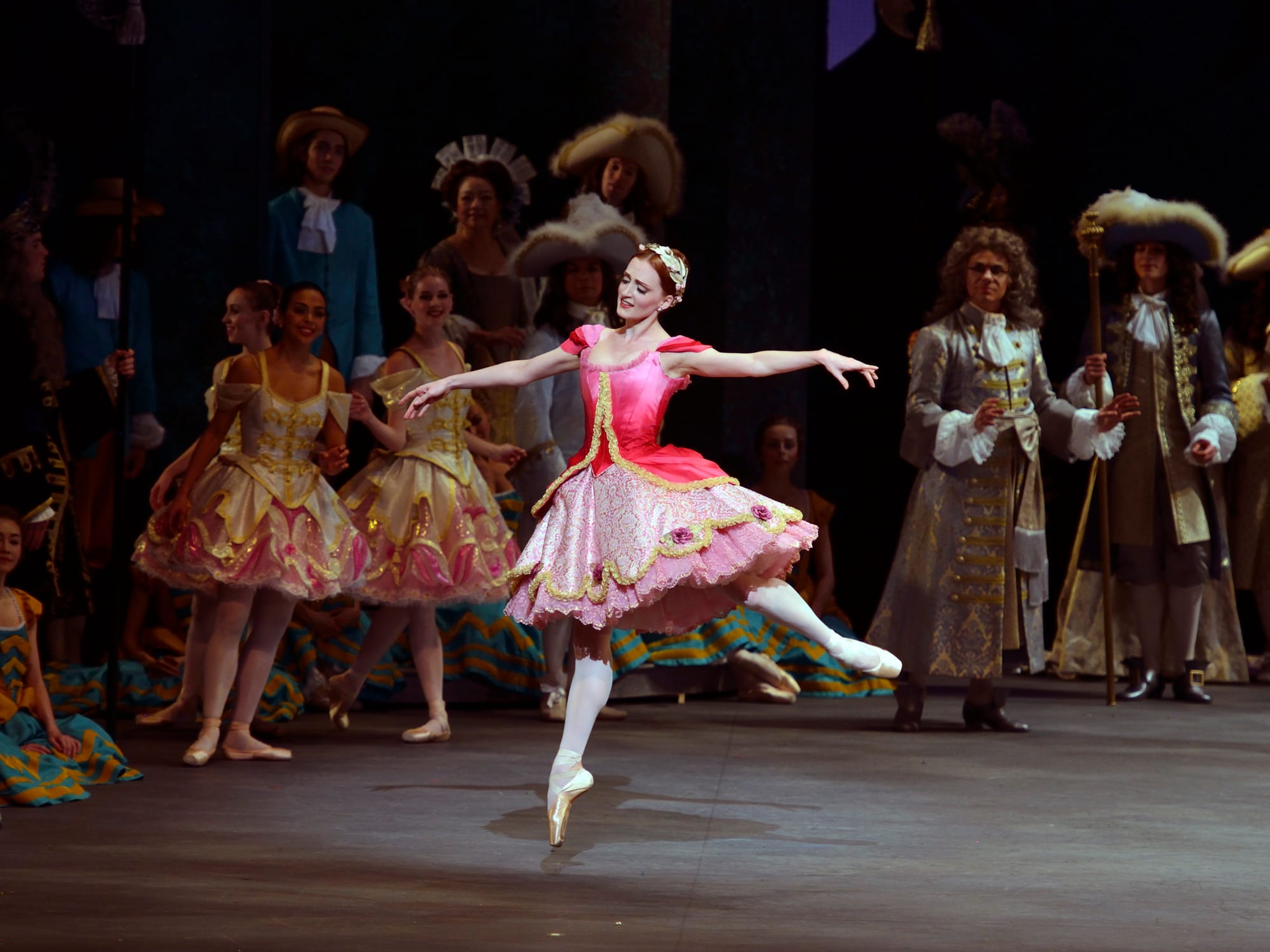
I saw two couples, Gillian Murphy with Cory Stearns, and in her New York debut, Cassandra Trenary with James Whiteside. Murphy is an experienced Aurora and the grand serenity of the role suits her. She didn't act young for her birthday party, her movements embodied a timeless youth, with her floating little jumps and soft, graceful arms. She made the Rose Adagio a true pas d'action, letting her excitement build as she seemed to grow more accustomed to her new position. This dramatic integrity carried through her performance and her final solo seemed to be danced for her prince, embracing her happiness while acknowledging her new responsibilities. Her demeanor and weight of movement in Act III was very different from the youthful, hopeful princess of Act I.
Trenary, only twenty-two, seemed more at home in the first act; as yet she was still a princess in Act III, not yet a queen. But what a princess she was! Charming, expansive, fearless and secure, she used her eyes like a musical instrument and was able to shade the Rose Adagio, pausing at the top of her balances to smile at each suitor. I loved the impetuous run to her girlfriends, as she shared her joy at the wonderful suitors she got for her birthday. It was a performance to treasure.
Prince Désiré is a comparatively thankless role, as he doesn't show up until Act II and then has to be told what to do by the Lilac Fairy, but his innate nobility must shine through the last two acts. Stearns, looking dashing in his red coat, cut a majestic figure and was a Prince worth waiting for. I do miss the heeled boots of the Kirov revival of the 1990s, which made the vision scene so magical, as the one human figure wandered through those nymphs in dazed amazement; the ballet boots turn Désiré into another dancer on the stage.
Stearns danced the difficult solo, with the fast little jumps supporting a calm, noble upper body, with a fluid elegance and the one-handed pirouettes and the fish dives (he did them two-handed) were fast and elegant. But for me the high point of their final pas de deux was the private moment when Aurora rested her head so trustingly on his shoulder as his arms surrounded her; Murphy and Sterns made it a true Hallmark moment. Whiteside, though not as comfortable an actor as Stearns (he does tend to walk brusquely from Point A to Point B), was a gracious partner and managed the fish dives with one hand.
Stella Abrera was the Lilac protecting Stearns and Whiteside got Devon Teuscher; both were in good hands. Lilac's long dress is a bit over-sequined and her feathered headdress gives her an air of 1920s chic; she does look like she should be waving a cigarette holder rather than a wand. But her solo in the Prologue is full of elegant little details (Abrera made her arms look like wings) and both danced it beautifully, holding those off-centered balances effortlessly.
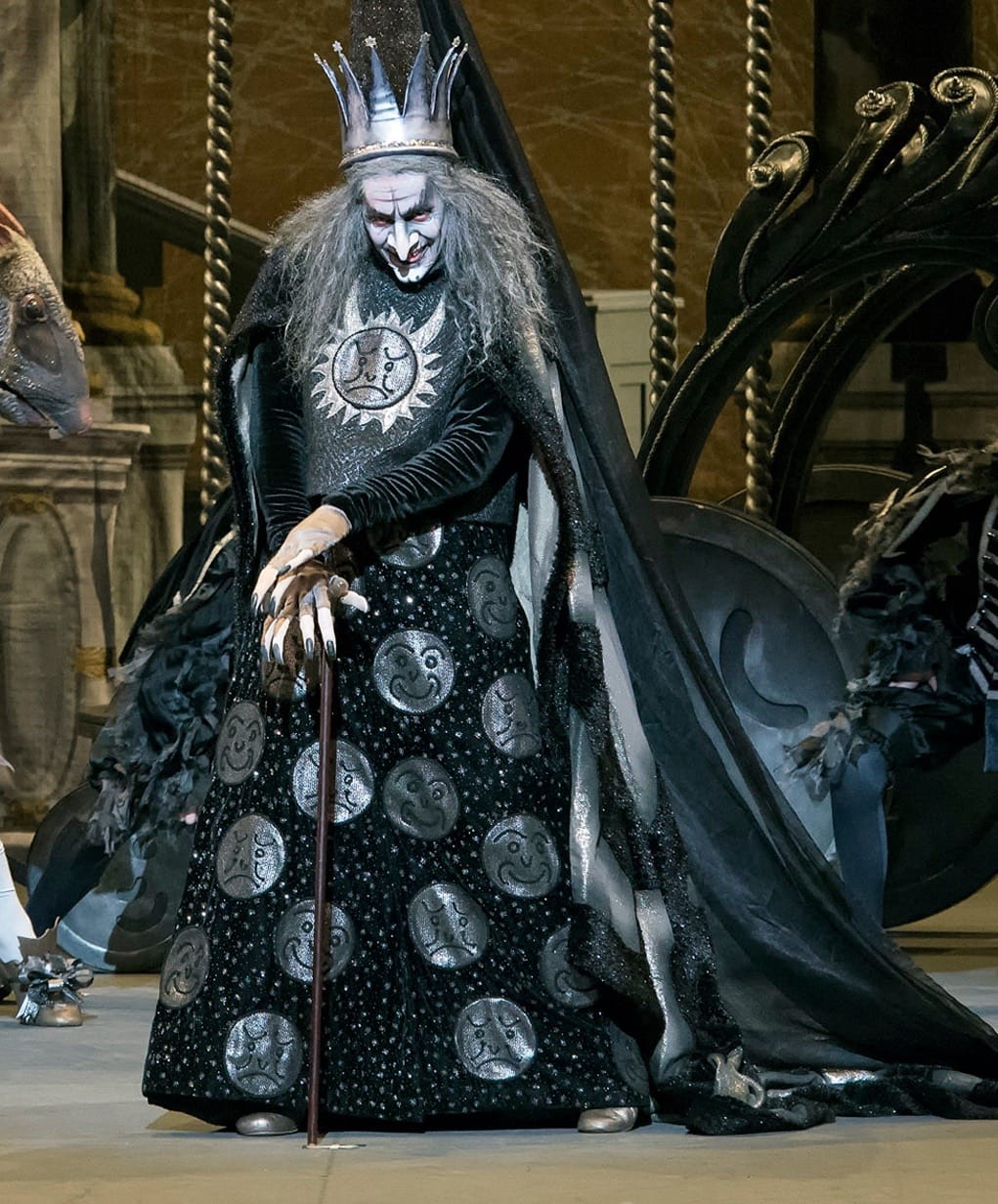
Craig Salstein, Abrera's sparring partner, was a thrilling Carabosse, mean, small-minded, and vindictive, with a number of other human qualities. Carabosse is dangerous but not the overpowering, dark and malignant force of Von Rothbart; Carabosse's faults are all too familiar ones which can be controlled and forgiven but not destroyed. Salstein, with his ironic little dance and wicked glee was both petty and powerful. Nancy Raffa was no match for Teuscher. She was a spiteful little ball but didn't have the grotesque power that Salstein's larger frame and vivid mime gave the role.
There are many working parts to "The Sleeping Beauty" and Ratmansky has created a cohesive style, soft and flowing, with unexpected changes of direction to keep it interesting. I especially enjoyed the sequence of pirouettes for the fairies in the Prologue; instead of twirling as many times as possible, they do singles, digging into the music and end with their shoulders turned and their heads to the side in perfect harmony, a softer, more gracious pose than the modern versions.
The famous "Blue Bird" pas de deux has also been reworked, with the flamboyant jump at the end replaced by a more musical low jeté. Sarah Lane and Zhiyao Zhang were impeccable at the Wednesday matinee. Lane used her soft, supple upper body well and had no trouble with the difficult little balance at the end of her solo, where she seemed to pause in mid-flight and land on one leg. Zhang's dancing showed a rare power as he seemed to hover in the air without effort. The various fairies, far too numerous to list, were all impressive and each gave her solo an individual tinge. The dancers' aplomb, from the sweet-faced walk on part of Nayara Lopes' Bluebeard's Wife to the scintillating Diamonds of Skylar Brandt and Devon Teuscher, flowed through the performances, and with luck, into the future.
copyright © 2016 by Mary Cargill



