Shallow Waters
Shallow Waters
"Swan Lake"
New York City Ballet
David H. Koch Theater
Lincoln Center
New York, New York
February 22, 2025 matinee
Peter Martins’ unique take on the ever-popular “Swan Lake” returned for a two-week visit, its first since 2020, with all of its peculiarities intact; the day-glow costumes of Act I, the drab scenery, and the general dramatic confusion were all on display. It also displayed a number of debuts, most notably a new Swan Queen in Mira Nadon, who flew in as if she were dancing in a coherent version.
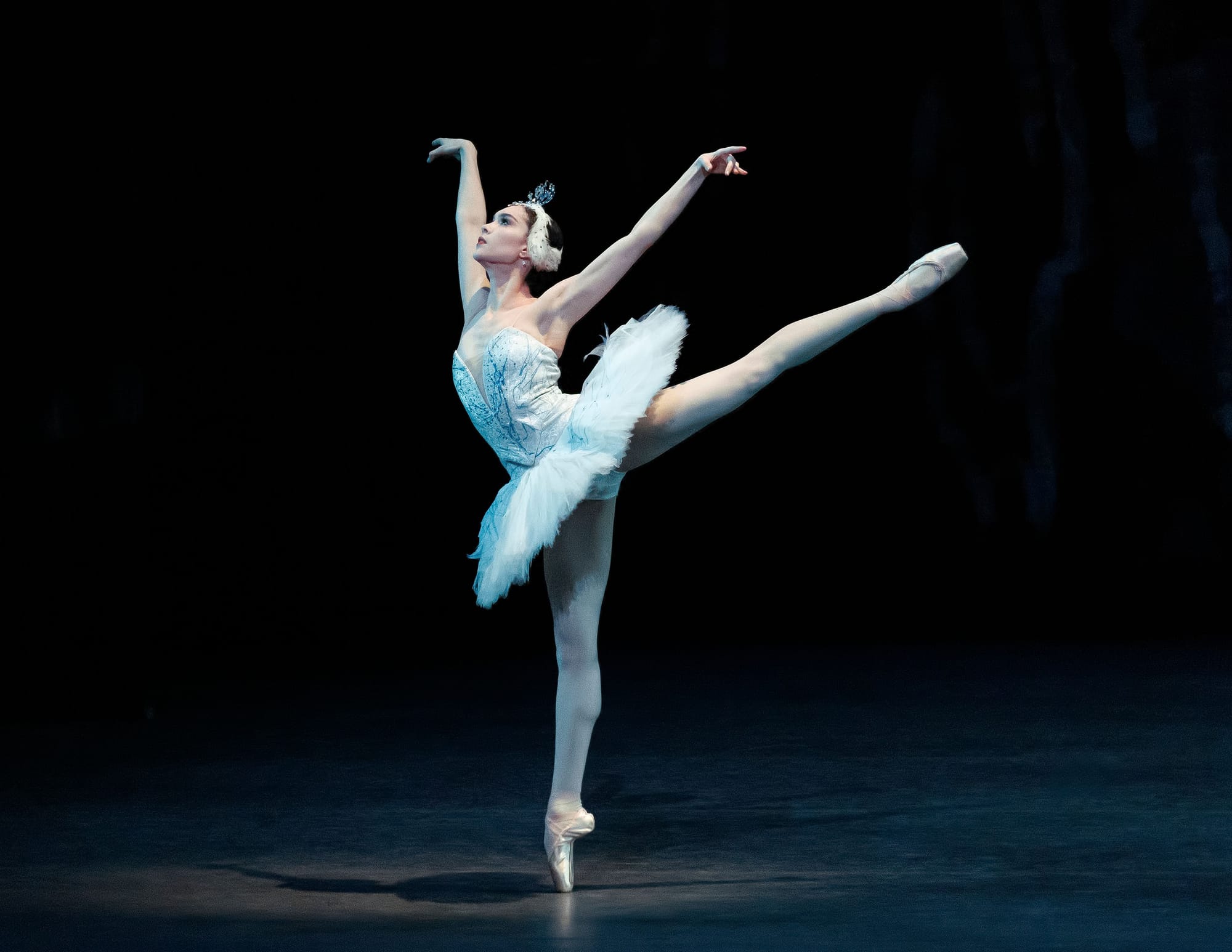
Her white act had a dramatic arc and she used her impeccable technique to tell a story. Frightened at first, she tried her best to get away using her arms to suggest wings without extraneous or melodramatic fluttering. She started the pas de deux tentatively, looking away from Siegfried and using the backward falls to show her growing trust. Her solo, too, was much more than a collection of beautifully done steps and her final series of turns seemed to be pulled from her by hope and love. Her Odette was both polished and fresh, beautifully danced while seeming to emerge naturally from that beautiful music—a tremendous debut.
Her Odile was cool rather than hot, contemptuous rather than pantingly seductive, as if she knew she would be able to fool the poor prince with the point of her foot. She used her powerful extensions like a bow, and her slow and controlled renverses were hypnotic. The notorious fouettés were fearless, a mixture of singles and doubles, though they did wander a bit, and her backward chugs ate up the stage.
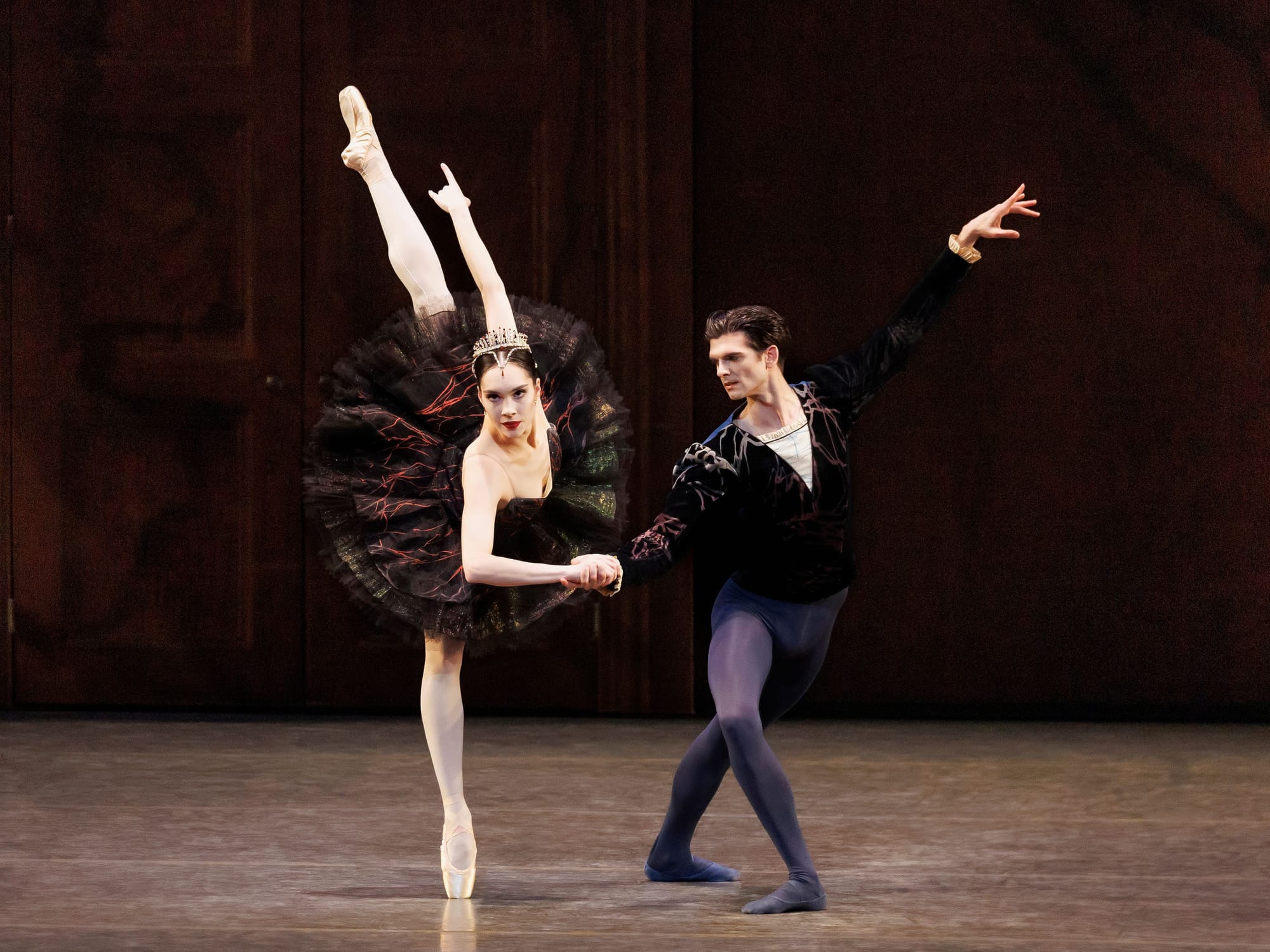
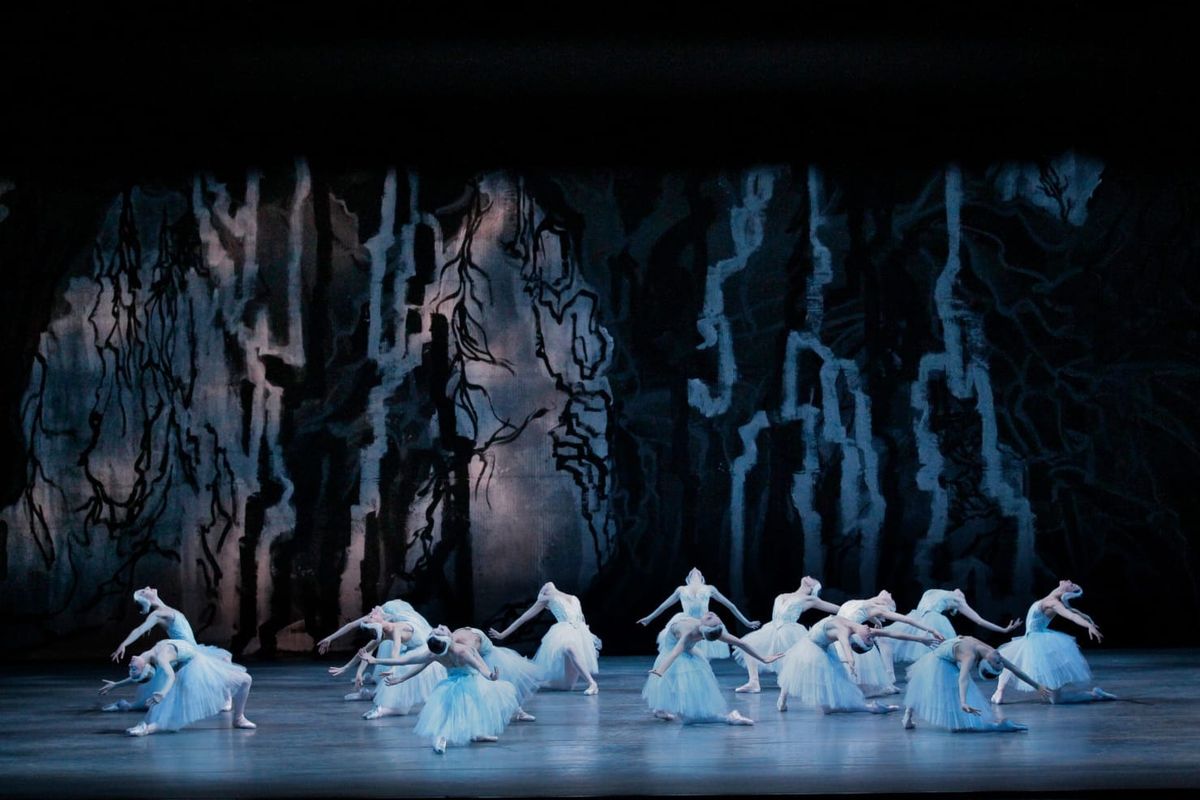
Poor Siegfried didn’t have a chance against her, though any version where the hapless prince has to fight harder against the production than against Von Rotbart shortchanges the dancer. Peter Walker fought valiantly, hampered by the dreary blue costume and meandering story which basically ignores the dramatic highlights from the get go. The opening set, a dreary beige attic populated by various Teletubbies, seems an odd place for the Queen Mother, dressed as Elizabeth I and wearing a ruff that could serve as a spare tire for a semi-truck, to stop by to drop off a Medieval cross bow. There is no way he can look to the sky to see the swans flying by, so potently described by Tchaikovsky’s music, and sense that there is someone for him; Martins has him just wander off. And once he gets to the lake, or rather the dreary backdrop of desiccated trees the modern Danish artist Per Kirkeby produced, he has no idea who Odette is because Martins eliminated the mime, so he, and the audience, is never told that he must swear to love only Odette and if he breaks his word all is lost and she will remain a swan.
The ballroom act also downplays the drama by having Odile and Von Rotbart show up early to dramatic music, and letting Odile and Siegfried run off leaving Von Rotbart to sit with the Queen to watch the character dancers who were presumably hired to entertain Siegfried for his birthday; no one seems to notice that he rather rudely disappears, only to reappear much later to start the big pas de deux. It is so much more effective to have Odile and Von Rotbart appear and immediately captivate Siegfried, having him swear his love for Odile immediately after his joyful solo. But Martins brings on the mazurka group after his solo with their bouncy, lilting music and has them dance distractingly behind Siegfried while he professes his love for Odile. Since he has no idea of Odette’s curse, his anguish when he realizes what happened can seem melodramatic and Martins undercuts the drama anyway by having the jester creep on during the scene change, mimic Siegfried’s moves, and curl up on the empty throne to fall asleep; it always gets a laugh but destroys the audience’s concentration on Siegfried.
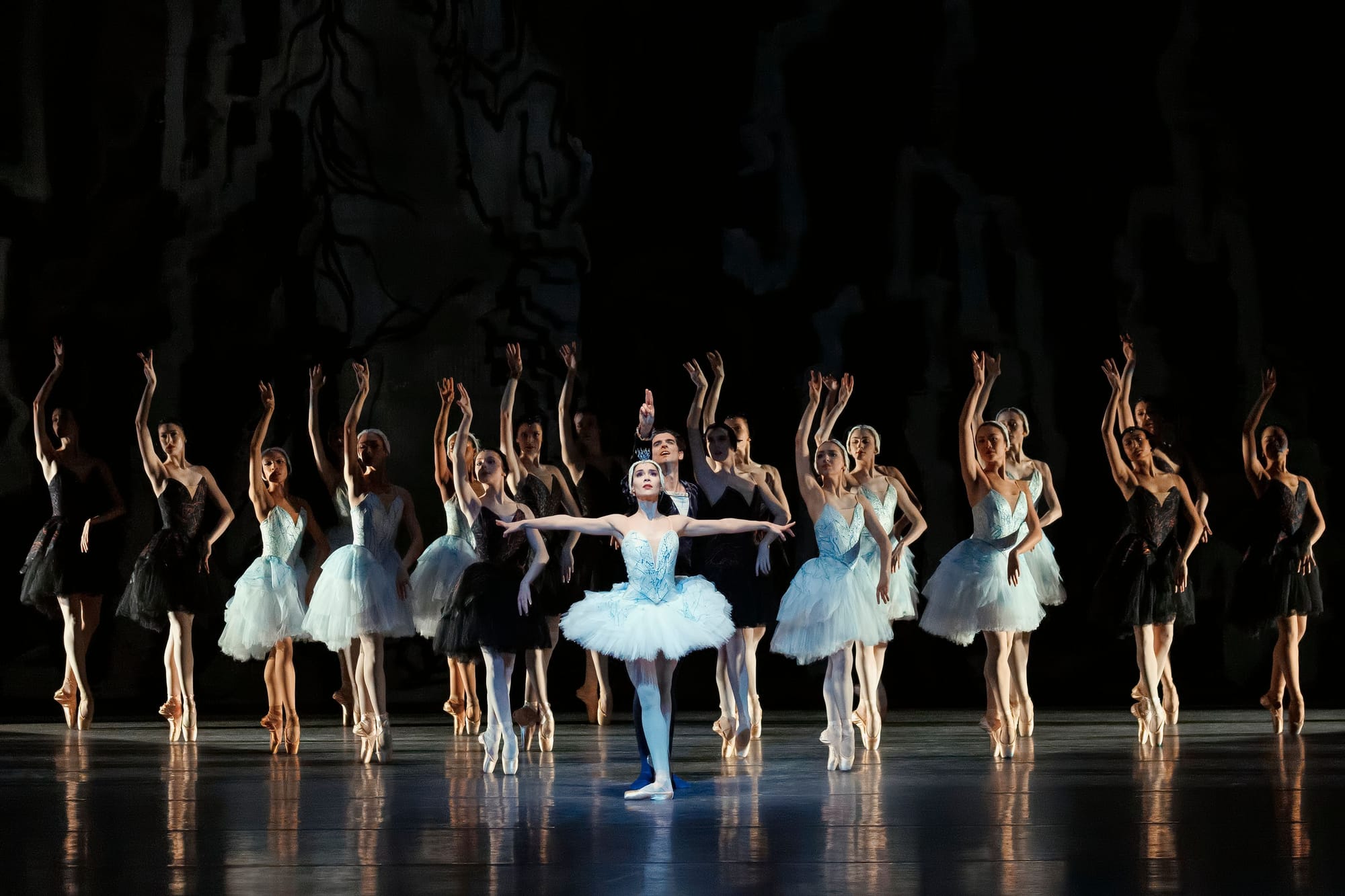
Martins doesn’t even give him his traditional triumph over Von Rotbart—Western versions usually have the power of the couple’s love demolish him with their joint suicide and Soviet versions have Siegfried ripping off his wings and living happily ever after with Odette. But in this version, he just stands behind Odette watching her protect her flock with a dramatic gesture which apparently shocks Von Rotbart so much that he shrivels up, which for some reason means that Odette will revert back to swanhood forever. Any normal hero surely would take the swan home, but Siegfried just watches her paddle off and collapses in a heap.
With all of these missing dramatic high points, it is hard to see how any dancer could make Siegfried a truly compelling figure; Martins’ hero is just some guy who doesn’t know black from white. Walker was a generous partner, letting Nadon glow as Odette. His solo in the lake scene, set to the “Sweet Rosie O’Grady” music for the two swans had a smooth flow and fine entrechats, though Walker’s long legs did have trouble with the turns into arabesque. His solo in the ballroom scene showed off his elegant line, and he finished his turns a la seconde in the coda with a fine flourish.
There was a lot of flourishing in KJ Takahashi’s debut as the energetic and ubiquitous jester. His jumps and beats were sharp, clear, and sparkling, though Martins’ “jump until the audience applauds” style of choreography did wear out its welcome. Martins’ first act pas de trois is a reasonable facsimile of the familiar version, though he did add some fussy additions. India Bradley, Jules Mabie, and Mary Thomas MacKinnon all made their debuts. Mabie’s soft arms and upper body had a distinctive elegance, and his secure turns into arabesque were outstanding. MacKinnon’s joyful solo was light and sweeping, with elegant point work, while Bradley’s solo, though enthusiastic, was a bit stringy, with too many flopping arms.
The various character dances in the ballroom scene, though muted by the dreary brown walls and many drab costumes, were vigorously danced, though the City Ballet dancers did seem to be dancing in a foreign language, carefully enunciating each phrase of the earthy, grounded folk dances. The evening, though, belonged to Nadon’s luminous Swan Queen and her radiant performance gave the awkward production moments of pure poetry.
© 2025 Mary Cargill



