Seven Hypotheses
Dance Icons’ Thesis Concert
Choreography by Rachael Alexandra,
Alicia E. Diaz de Leon, Jess Hoversen,
Naomi Lang, Mariah Lopez Solonick,
Paul Lytle and Mecca Mayers
Dance Loft on 14
Washington, DC
May 11, 2019
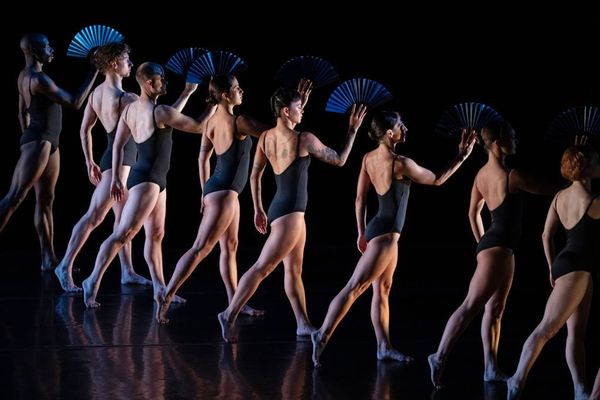
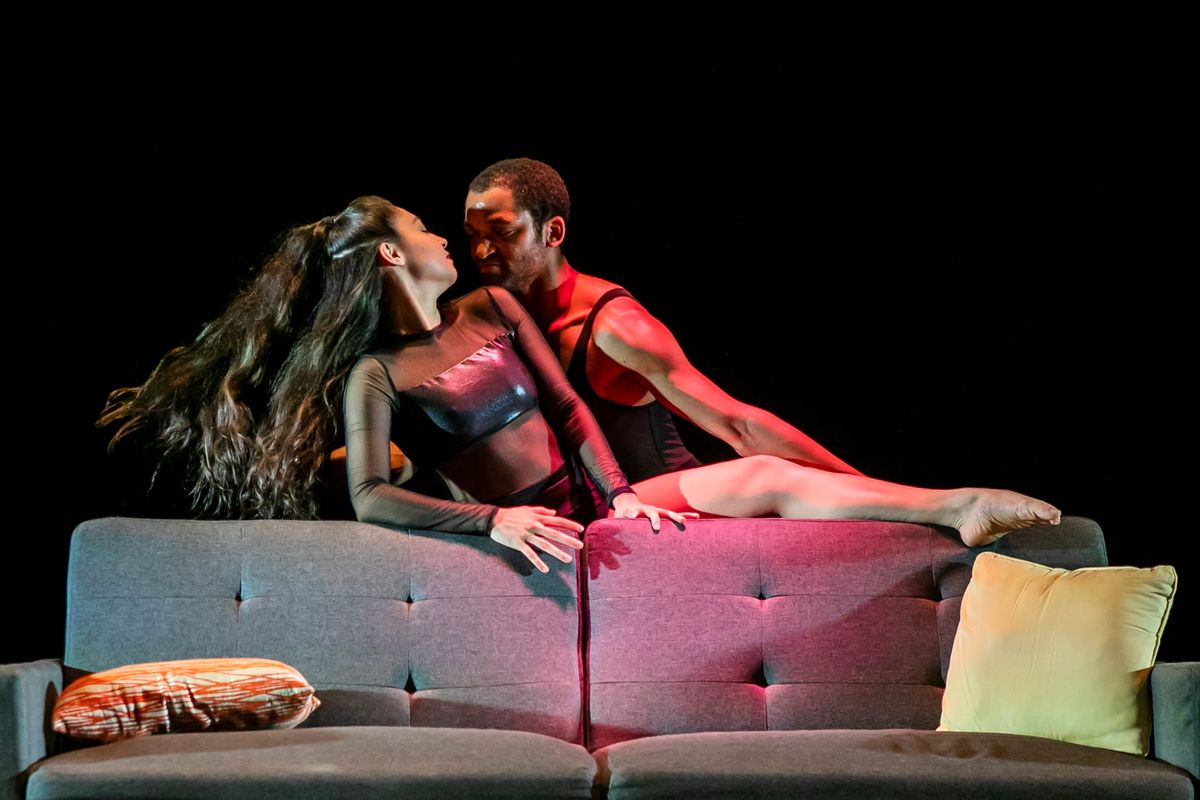
Music by single composers served the first two dance works on the program. Each of the five following pieces of choreography used several composers, from three to six. Was it any wonder that the first two dances didn’t meander? The opener, Paul Lytle’s “Trilemma”, to a Leonard Bernstein score, was about the joy of dancing and contrasted, compactly, a balletic gal who had considerable training with a pair of rawer, also female, talents. The rawer talents brought Isadora Duncan to mind. It was apparent that Lytle knew the historic dance categories and was having fun exhibiting them. In the next piece, “The Light of Slow Descent”, Jess Hoversen deployed ten dancers. She was, I suspect, being didactic as she showed us how her team can be subdivided. A trio was followed by a quintet, by a solo, and by a quartet, etc. One of the dancers was highlighted teaching others. The choice of Arvo Part music seemed apt. Next came Mecca Mayers’ bafflingly titled “Recovering Undercover Over-Lover” to about a half a dozen compositions and texts including one by The Internet. Familiar and homey seemed the living room couch carried onto center-stage by a couple (female, male). It served them both as a love seat and as an exercise bar. Another woman appeared. There was awareness of the woman by the couple and vice versa. Eventually, seven dancers, two of them men, traipsed and turned, folded and unspanned on stage. Likely, the choreographer was showing us the influence of dancers’ expression of emotions (writhing, relief) on each other. Certainly the mere presence of other people is an influence in life. Nevertheless, Mayers’ dance outlasted its welcome, as did the program’s four further works that followed.
Did “Indelible”, the title of Mariah Lopez Solonick’s choreography for seven dancers, refers to the make-up that the leading female puts on while we watch? Solonick plays with the dancers’ energy levels and shows them in oppositions. Following intermission, was a waltz ballet with sinister sections and phases of gloom - “RedMasque” by Alicia E. Diaz de Leon. Not mentioned in the printed program is Edgar Allan Poe, on whose gothic tale this piece is based. Only in this one work out of the seven was there a dancer using pointe shoes. A cast of four men and four women plus a little girl enacted and danced Poe’s scary vision. The accompanying music was by Aram Khachaturian, Bajofondo and Claude Debussy. Would tightening “Red Masque” intensify its horror?
What was Rachael Alexandra’s intent in “Songs My Mother Taught Me”? There was much tussling - catching, holding, separating – among the cast’s nine women. One of them seemed a leader and two others were prominent opponents. This piece pointed up the disproportions of energy distribution among its individuals. The music was by Erik Satie, Duke Ellington, Harry Belafonte, JoAnn Appold and LadySmith Black Mambazo. The closer, Naomi Lang’s “Ellipses”, seemed a sequel to “Songs”. Lang involved four composers (Tony Anderson, Spiffy Man, Olafur Arnalds) and eight dancers (seven women and one man) in oppositions of effort such as folding and unfolding the body and light swaying.
Admirable in all seven dances was the restraint in reiterating eye-catching dance phrases and the persistent search for pattern variety. Dance Loft’s Stephen Clapp introduced the program. Introducing each choreographer who had taken the Dance Icons choreography curriculum was teacher Vladimir Angelov. Will the seven dance makers have a chance to rework their work?
copyright 2019 by George Jackson