Searching for Meaning and Dance in the Genes
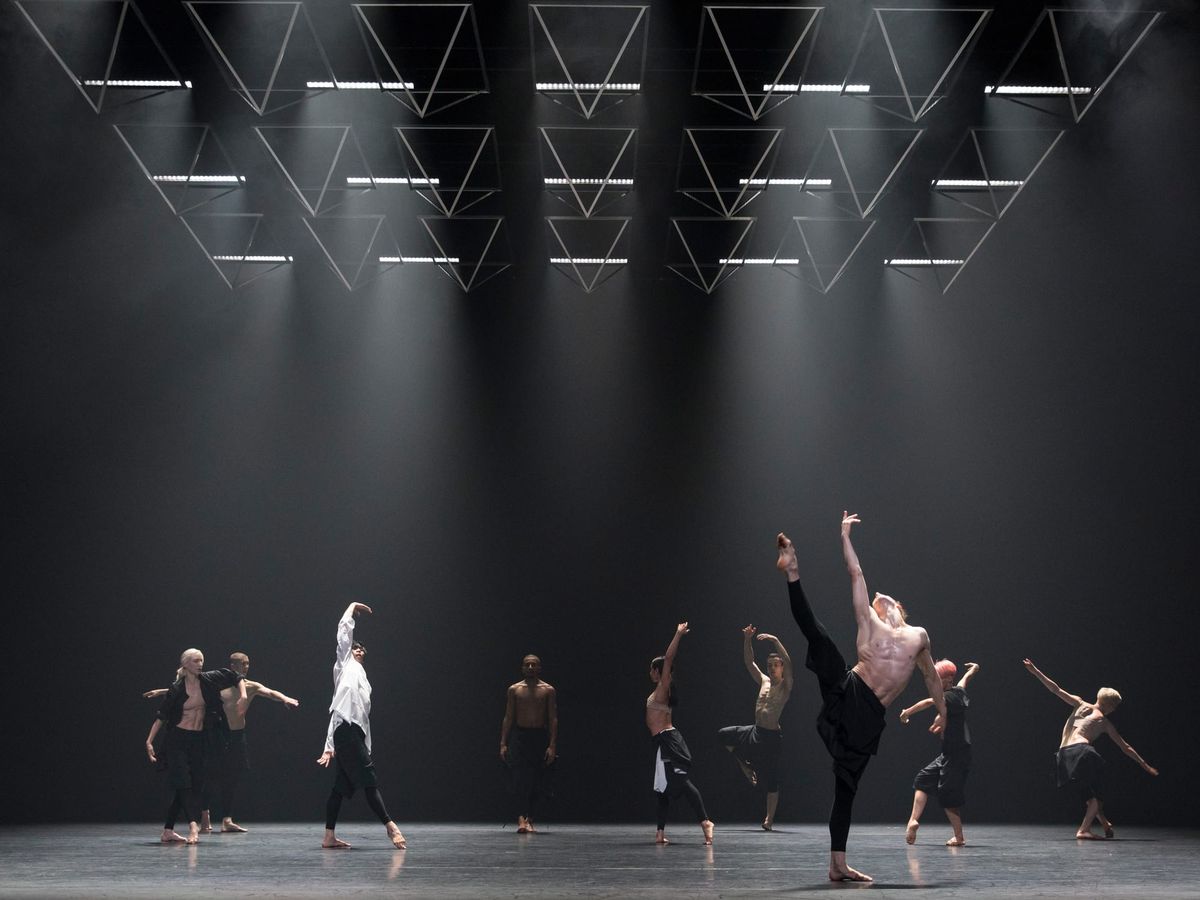
“Autobiography”
Company Wayne McGregor
The Joyce Theater
New York, NY
March 3, 2018
British choreo- grapher Wayne McGregor is known for pushing boundaries and finding unconven- tional inspirations, but the New York premiere of his uniquely personal new work showed the artist overreaching. The release of “Autobiography” came at the time of the 25th anniversary of the artist’s creative life and to craft it the choreographer sequenced his own genome, using the chromosomes of his own DNA to inspire the work’s 23 sections and tell his story. While the idea seemed promising, the final product was as difficult to read and as much of a mystery as the actual human genetic code.
Only fourteen of the work’s 23 sections were presented at the performance I attended, and of the specific sections performed, their ordering and their performers were said to be selected at random for each show by a computer, allowing for over a thousand different permutations for the work. Why there was a need for the randomization, specifically how the algorithm that dictated the selection was designed and based on McGregor’s DNA, and what all of this was to add to the work’s impact, remain questions to be answered, but they seemed secondary to the mysteries of the actual sections and their makeup.
Each segment of the work was given a numerical and a verbal title which were projected above the stage, though the numbering and relationship with the specific title was never explained and thanks for the randomization they were not presented in either numerical or thematic sequence. What made section “8” be called “Nature,” or “15” be called “Instinct” was up to the audience to figure out, though if one was to read deeper into it, it would seem that the numbers had to coincide with a particular chromosome pair, and the titles perhaps had some rooting in the nature of those chromosomes’ genes.
Following that logic, though admittedly requiring far more research than one may wish to invest in a dance performance, the numbers and titles could tell something about the choreographer’s biological propensities or maybe his views thereon. The section called “6 Sleep,” for instance, was largely erratic, with three dancers moving rapidly across the stage and dancing underneath a descending grate ceiling of Ben Cullen Williams’s design that seemed ready to crush them as Jlin’s music thumped on. Toward the end the trio lay motionless on the floor. There was nothing tranquil or peaceful about the dance, even in those moments of seeming respite, and the titling seemed completely out of place unless one considers the interesting scientific fact that certain of the genes in chromosome 6 account for sleep disorders.
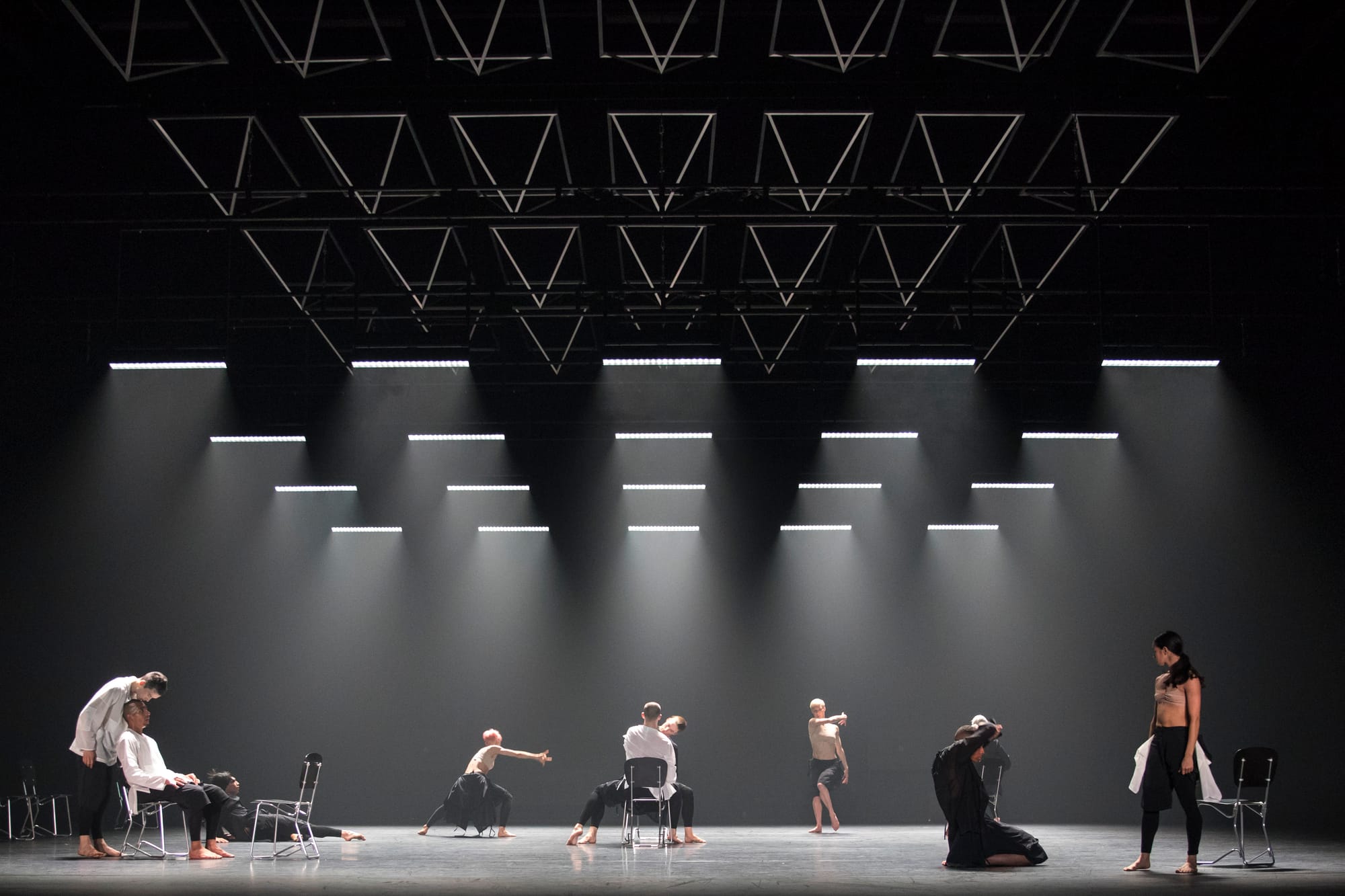
Without such inquiries into the nature of human genes, perhaps the only sections that did make obvious sense were two solos that bookended the night, with at least one of them appearing to represent McGregor. That first solo, titled “Avatar,” had a lone male dancer on the stage in a familiar for a McGregor ballet composition that somehow was reminiscent of the intro from the choreographer’s “Infra,” but with an uncharacteristic level of introspection and self-awareness. The character, enthralled in body wave exploration, would step in and out of the movement, cover his face, cower down, frequently looking up to the ceiling as if looking for direction and inspiration. It was perhaps the most emotional, revealing and poetic section of the night, echoed only by the work’s finale which featured a female solo in a similar choreographic dialect.
What came in between often seemed casually improvised and not well thought-out, but at times did present a daring for McGregor's departure from the focus on athleticism and flexibility. “13 Not I” was the first titled dance after the introduction and showed a tension between dance in true classical style and its decomposition -- dancers would step into an almost pure arabesque, but then twist and wave out of it with determination. “8 Nature” consisted of an all-female duet of engaged contrast. There, the dancing of Rebecca Bassett-Graham and Jessica Wright was contradicting and combative in some respects, but also at times attentive and almost tender, with the off-axis partnering that one would expect from McGregor here almost nowhere to be found.
In terms of the steps, McGregor moved away from the showmanship and attempts to wow with the physical, but with that by and large failed to wow at all. Considering the loud and demanding music, the over-the-top physicality and also some additional power and lateral amplitude in the dancers’ movement could have helped color in the spaces left by the lacking meaning in the work. While the dancing was consistently engaging, committed and powerful, with strong individuality from the dancers showing a personal touch and stake from each performer, it was not enough to give the work a quality that would make one want to see it again. And that may be the work’s biggest failure, as any meaning it may have in store on repeat viewing would likely remain unknown.
copyright © 2018 by Marianne Adams



