Saying Something, Meaning More
"Darl," "Seventy-Two Hours," "Two Sides Of," "Reverie," "Dialogue Dances"
The Joyce Ballet Festival, Program B
The Joyce Theater
New York, NY
August 10, 2019
Program B of the Joyce Ballet Festival, curated by The Royal Ballet’s star Lauren Cuthbertson, at first could have seemed like an odd grab bag of material, as thematically its one United States and four world premieres hardly had a connecting thread (besides the almost uniform prominence of Cuthbertson). On reflection though, the program amounted to the ballerina's expression of a multitude of angles, from humorous to lyrical, to ethnic, to dramatic, and a multitude of themes, all in the little time a night’s bill can allot. Whether these were facets of her interests, or themes she wanted to put in front of the audience, the whole was made richer by its parts, and seemed to have left a lot still unsaid upon the curtain’s fall.
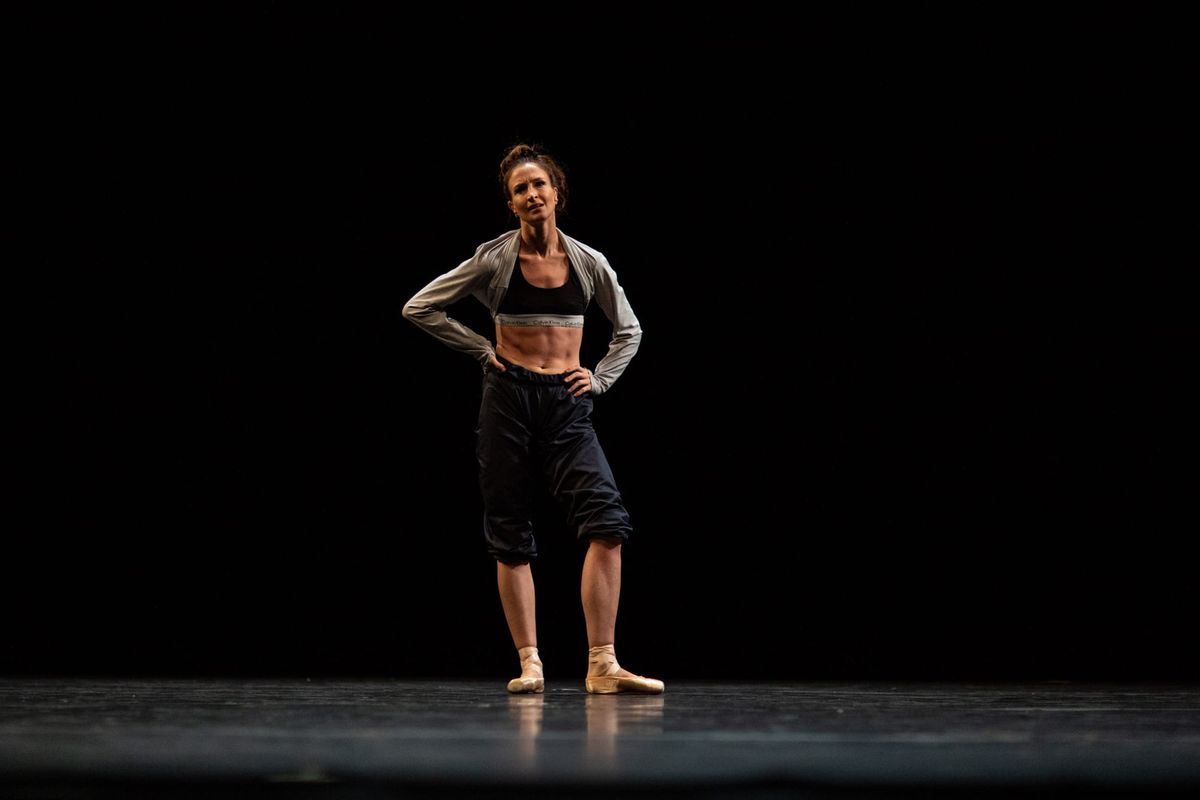
The lead-off ballet, Jonathan Watkins’ “Darl,” became one of my two favorite works of the evening. There was something about the opening scene with Cuthbertson’s staged scramble to finish tying up her pointe shoes at the bottom of the stage in rehearsal wear, and then the casual manner with which she half-marked, half-danced the steps of the short piece, that felt earnest and inviting the audience to feel like insiders. The music was “Rethinking Bolero” by Hanna Peel with pre-recorded snippets of conversation by Cuthbertson and Watkins. The audio frequently was reflected in the dancing, making an audio-visual dialogue of sorts with “Darl.” Cuthbertson mimed and danced the content of the words, with a few interspersed proper ballet steps that served mainly to fill the time between the physical inflections of the dialogue about her daily life. The ballerina’s voiceover talked about the “Swan Lake” production she was going to be rehearsing, with the expected bourrées and swan-like arms showing what she meant on stage, the plane she was going to take and rush to get to in a running fashion, and at one point telling “Darl” that she was “out,” accenting it by jutting out her hip. Originally slated for the middle of the program, it was the perfect opener and warm-up (no pun intended given the costuming) with its candor and lightness and something different from what the audience was used to.
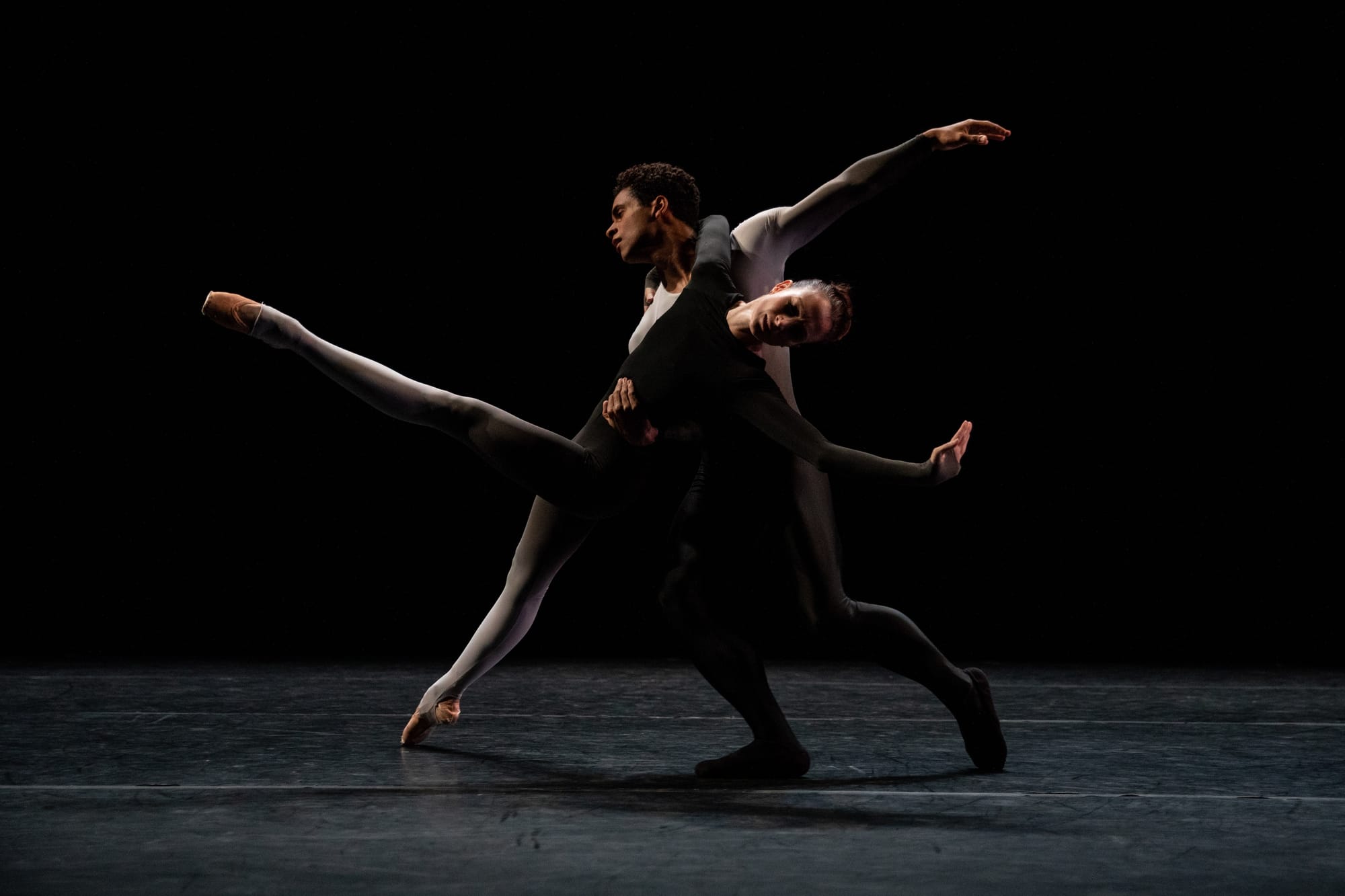
The night’s other stand-out took the third spot on the program, just before intermission. “Two Sides Of” by Juliano Nuñes was the only U.S. premiere, but it was so good that it was good sense to show this work to New York audience, rather than reach for another world premiere to fill the bill. Set to two versions of “Bear Story II” by Luke Howard – first a haunting piano performance, then an orchestral version – the ballet had Cuthbertson and Royal Ballet’s Marcelino Sambé repeat the same dance twice. The shift between two different musical arrangements showed two sides of the score and the dancers’ interpretation, as the transformed music resonated with and affected the dancers differently. Where the first rendition of the steps was dark and sustained, the orchestral interpretation added lyricism and tenderness. Choreographically some of the phrasing was evocative of Royal Ballet’s Resident Choreographer Wayne McGregor, with many split lifts and off-balance poses and highlighting of Cuthbertson’s impressive extensions, but none of it seemed gratuitous – a rare feat. Not surprisingly, the ballet was the subject of many a gushed conversation during the intermission.
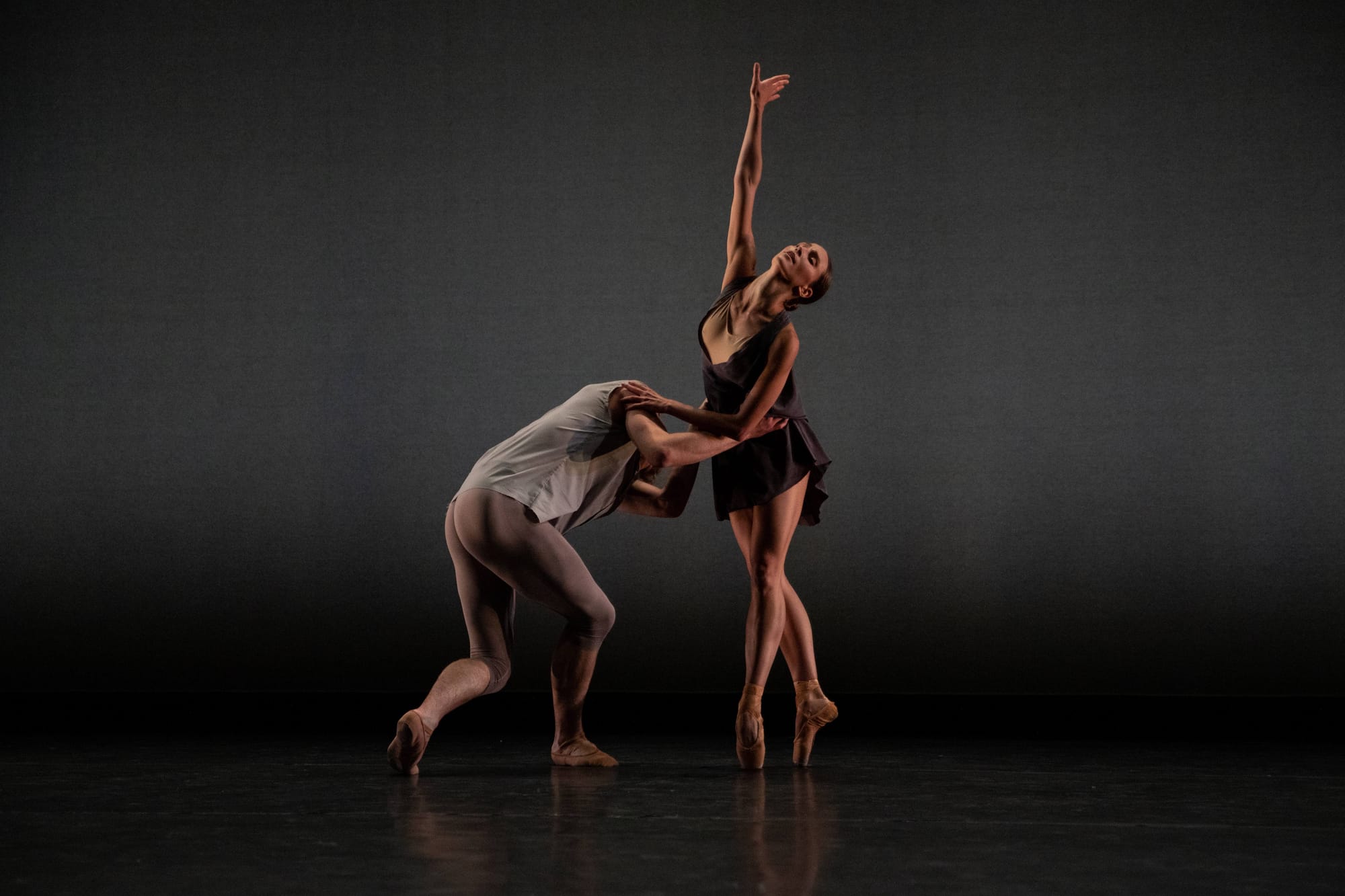
“Seventy-Two Hours” by Gemma Bond came between these two remarkable pieces and was the one work on the bill not involving Cuthbertson. The piece was a duet for Aran Bell and Devon Teuscher of American Ballet Theater set to Sergei Rachmaninov preludes, and the choreography was mostly gray, like the dancers’ costumes. The movements remained constrained for most of the dance, and given the tall stature of the two perfromers a bigger range of motion and more stage-filling sentences would’ve said more. By the final section the dancers’ steps finally were given some scale, but it was not enough to give real impact to this drama piece that ranged from solemnity to angst. While it was difficult to tell who in the couple was the instigator and who was in greater distress, whatever happened to these characters, it had to have been a tough three days indeed.
Post-intermission, another solo work for Cuthbertson, “Reverie” by English National Ballet’s Stina Quagebeur to Debussy’s “Reverie,” sought to give the music a non-traditional spin. This was not the peaceful dream that Debussy’s music suggests, and instead was a dance of significant floor work, with Cuthbertson rolling, and lifting her limbs up, sometimes in a rash, jerky manner. Choreographed just days before the performance, it was an interesting idea that could have benefited from a bit more time in development.
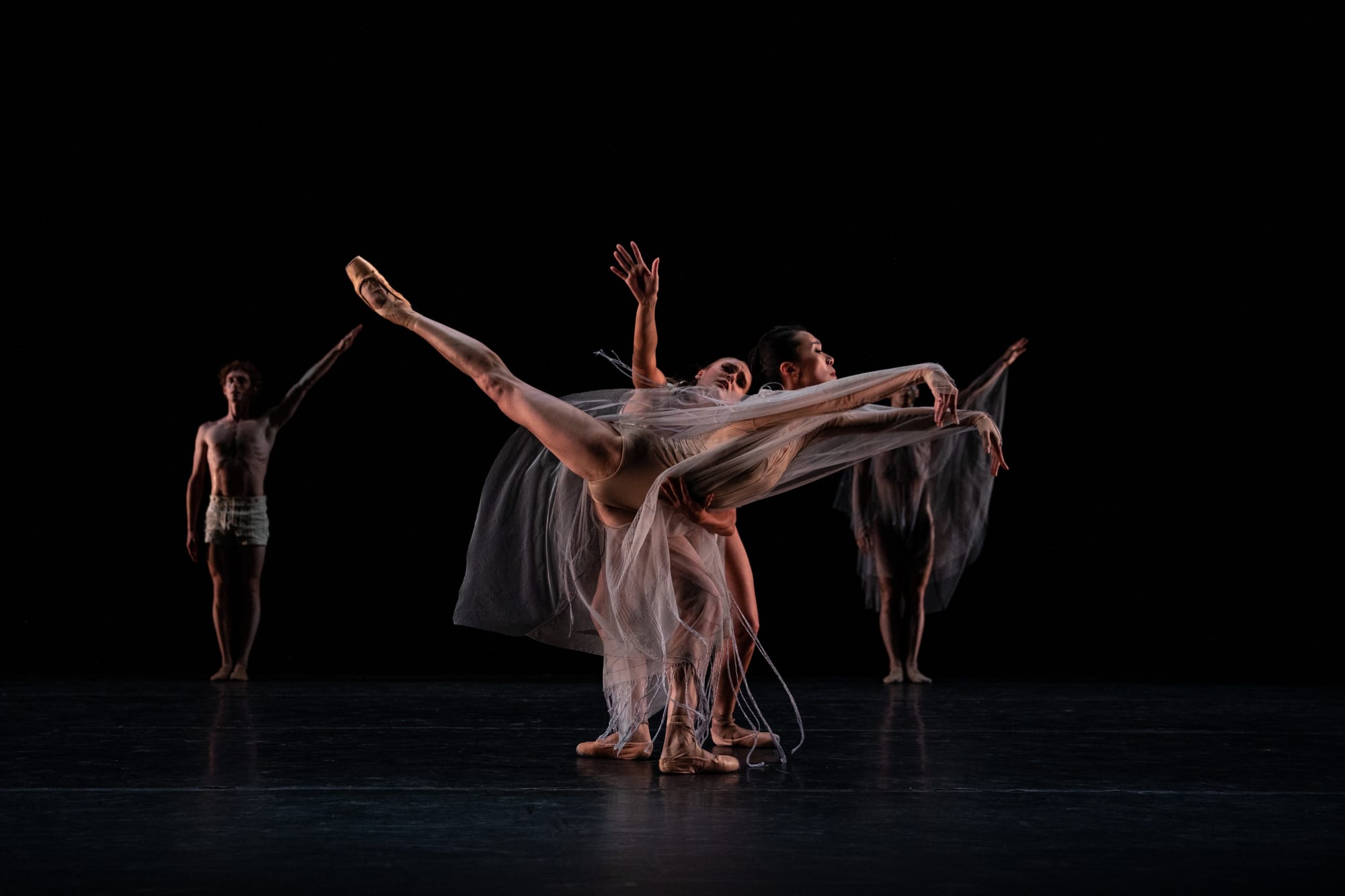
The last work on the program was “Dialogue Dances” by Robert Binet, and was a tribute to Canadian First Nations people, with a personal tribute message spoken by each dancer before the piece began. The music consisted of selections from “Wolastoqiyik Lintuwakonawa” by Jeremy Dutcher, a rearrangement of traditional songs of the First Nations people. Cuthbertson and members of the National Ballet of Canada explored the songs as three couples: one in flowy, spirit-like costumes, one in modern garb, and one in identical black cutout dresses. The sequences ranged from duets to group dancers, and most striking was the spiritual and communal exchange evoked in the interactions between the dancers and the moments when performers did different steps to the music, as though hearing and reacting to different elements of the song. There was a palpable layer of improvisation in this performance, and a very live, in all senses of the word, delivery of what was heard and felt by them in the music.
copyright © 2019 Marianne Adams



