Saved by the Bell
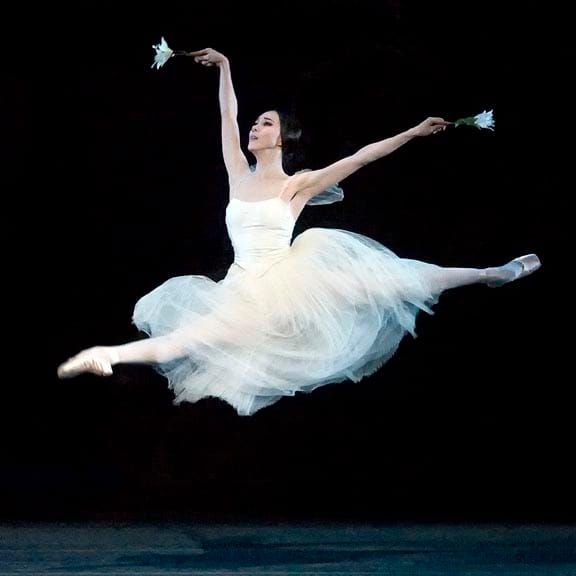
"Giselle"
American Ballet Theatre
Metropolitan Opera House
May 16, 2012, matinee
ABT's sturdy and vivid production of "Giselle" featured a young cast for the Wednesday matinee; two soloists (Hee Seo as the poor wili and Simone Messmer as Myrta) and a youngish principal, Cory Stearns in his New York debut as the duplicitous Albrecht. These dancers have only performed their roles a few times, but imagination, understanding, theatrical intelligence, not to mention technique to burn, gave this performance a coherence and dramatic intensity that was very moving. Stearns' first act Albrecht was young, impulsive and a bit petulant; he did not like Wilfred's plea to remember his station, and almost stamped his foot in exasperation. But he was genuinely in love with Giselle, gentle and attentive, as if he were afraid of frightening her. Stearns was able to make it clear that this was a very young, thoughtless boy, who thought that he could bluff his way out of things, and he was shocked when everyone, except the loyal Wilfred, blamed him.
He was able to show, in his slow, sad walk in the beginning of the second act, that the boy had grown up, that he knew that he was at fault, and was willing to take responsibility for his actions. His gestures were stylized without being stilted, and he gave them, especially the kneeling, hand on his head one, a weight and a nobility that condensed and distilled emotions much more clearly than more melodramatic chest beating. Stearns also used his dancing as conversation by other means, growing visibly more tired and sloppy during his last gasp, before the morning bells rang and Myrta faded away. He seemed to grow during the final scene, opening his chest, as if accepting his guilt, yet standing up to acknowledge that he knew he had been forgiven and was determined finally to live up to Giselle's belief in him.
Hee Seo's Giselle was equally nuanced, and full of glorious details. I loved the way she carefully selected the prophesying daisy. She was spunky and fun-loving, hiding from her mother (Nancy Raffa, who gave a chilling version of the wili's story) and gently teasing Albrecht, but there were hints of fragility, too. During the confrontation between Albrecht and Hilarion, she hid her ears, as if she couldn't stand any conflict, prefiguring her final breakdown. Her mad scene, too, was very effective. She was quiet and still at the beginning, her face frozen and white, and gradually she lost control, cowering away from everyone until that last final run.
Her dancing has an especially feathery quality, and her opening skips seemed to float. Her second act had a flow, and she didn't pause to show off her quite wonderful extensions but used the steps to show Giselle's loving and determined heart.
She got fine support from the group of wilis, who looked well-rehearsed without being over-drilled. These were ruled over Simone Messmer, who is a very effective and unusual Myrta. She used her arms as if she were casting a spell or weaving a web. Her final pointed finger at Albrecht, as he lay on the ground, seemed to create lightening, and then, when at the last minute she heard the church bells ringing in the dawn, her arms seemed to go flat, and she shrank away (actually, she just went off point, but the effect was magical). And so was the rest of the performance.
Copyright 2012 by Mary Cargill



