Room to Grow
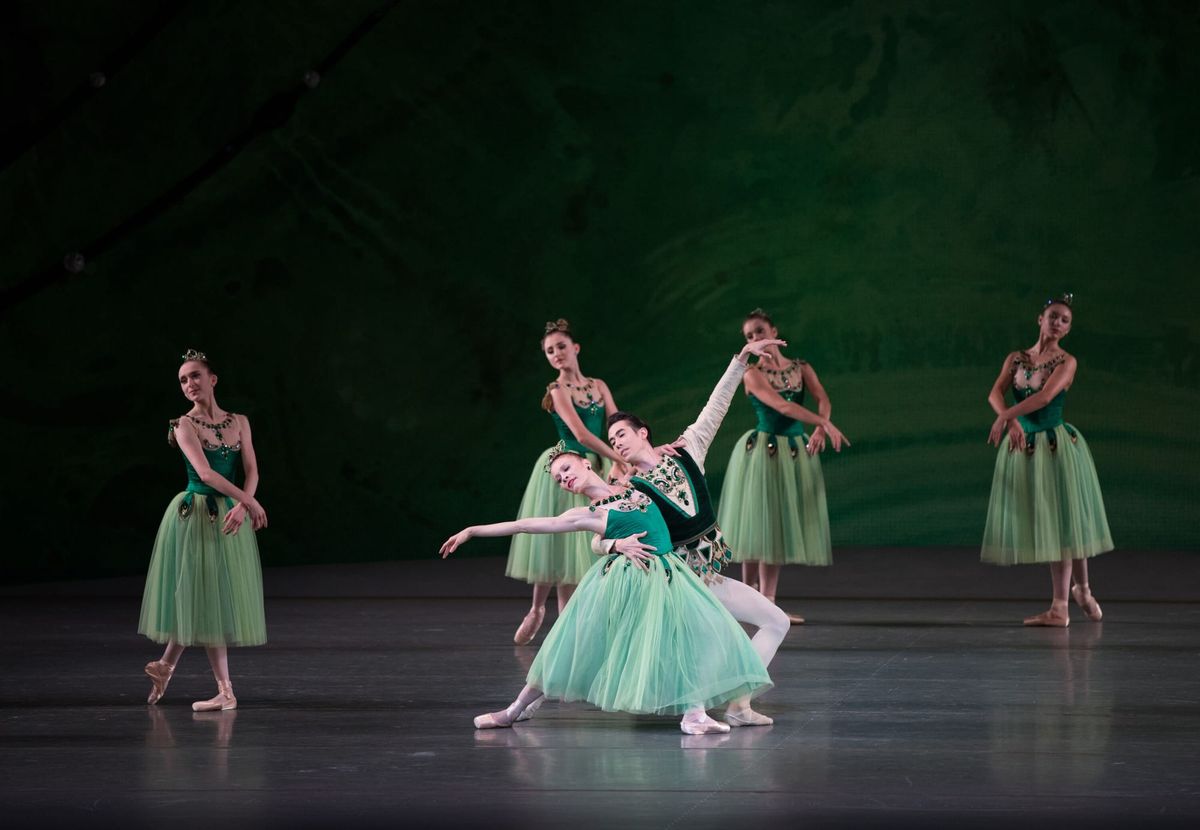
“Jewels"
New York City Ballet
David H. Koch Theater
New York, New York
September 21, 2019 evening
George Balanchine's "Jewels" is now fifty-two years old. A hit from its first performance, it still reliably fills the house, for several reasons. It has sets (of varying degrees of success over three iterations) and costumes and lasts a full evening, all of which is counter to the generally held assumptions about the New York City Ballet's repertory. It has all the trappings of a "traditional" ballet except a plot. There is variety in the scores (Fauré, Stravinsky, Tchaikovsky) the norm at NYCB, and, if one cares to see it, a lesson in ballet history and style with a nod to the places that sheltered and influenced Balanchine himself (France, America, Russia). But here, lesson learned was how a ballet can offer opportunities for dancers whether debutants, yearlings or veterans, and in consequence, not only survive but thrive.
Of the three sections of "Jewels', 'Emeralds', quiet, serene and remote, is the most difficult to immediately grasp. The dancers – certainly the four leads – have to lure the spectator into their world while appearing not to do anything of the kind. They also have to locate and convey the pulse of a score that seems all tone and color. That's a lot to ask of any performer, even an established principal. To field a cast of soloists and corps members, three making their debuts here while the other four did so only a year ago, only increases the challenge.
Rachel Hutsell and Olivia MacKinnon made their first appearances in the trio. Hutsell has a light easy jump and enviable ballon. MacKinnon started too quickly and never quite settled into the music. A year ago, Daniel Applebaum, Andrew Scordato and Spartak Hoxha hadn't quite settled in either. Now Applebaum has the authority of a true cavalier, Hoxha has turned steps into dancing – part of a rhythmic continuum rather than an end in itself – and is more at ease partnering two women, while Andrew Scordato with his new partner is now not just a necessary prop in the walking pas de deux but as in thrall to the quiet and mystery as she. That partner, Emilie Gerrity, gave the breakout performance of the evening, tiptoeing through a shaded glade as if on moss, engrossed in this time and place (one could almost smell the damp air). Lauren King, also a yearling, in the Verdy role was at her best in the opening ensemble, her bourées smooth, fast and clean in contrast to her upper body, which seemed to sway with the breeze. She still hasn't found her way into her great solo in which a woman, seated at her dressing table takes stock of herself and her jewels, glittering with each flick of the wrist, with almost childlike pleasure, even glee, which stops just this side of self-absorption.
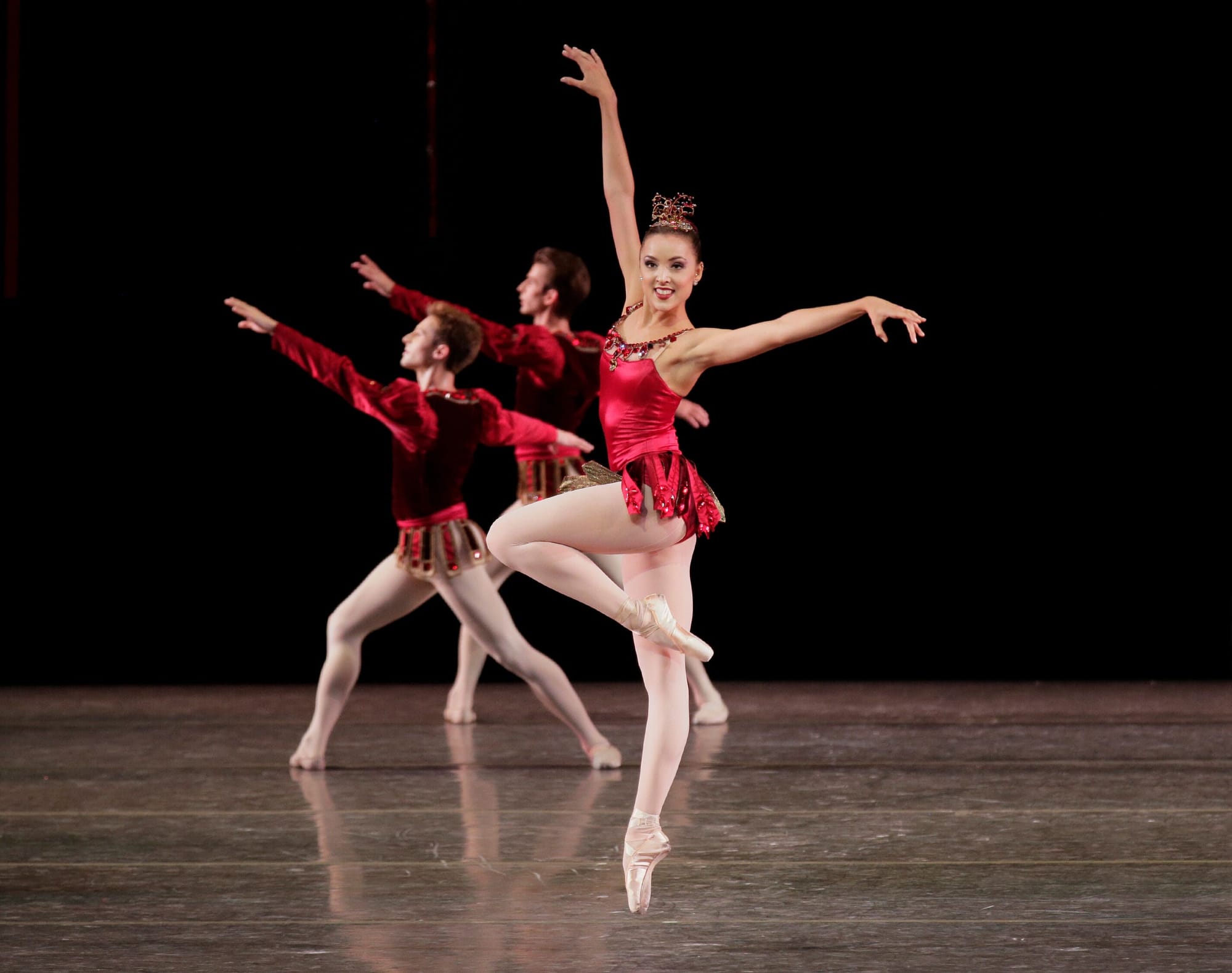
Emily Kikta -- tall, long-limbed, strong, imposing -- must have known from her first day at the School of American Ballet that the Tall Girl in 'Rubies' was in her future. She dances it to the manor born, knowing the path of the entire role from its first step, with personal decisions throughout. The role is shot through with space gouging extensions of the legs, the bigger the higher the better which Kikta can certainly deliver. Instead, several times, she stopped her leg short of 180 degrees, with that slight abbreviation acting as a little syncopated accent within the full phrase. Or, oppositely, she chose to make the poster moment of the part, an impossibly scooping attitude back, usually shown off in isolation, into only one moment of a larger phrase as the leg returns forward and she make both choices fit organically into the score. That's how you make a part your own and envigorate a ballet as a whole.
Sterling Hyltin and Andrew Veyette have been dancing the leading roles in 'Rubies' for years. A year ago, Hyltin looked all at sea in her part. Veyette, who from the age of sixteen, made ihs mark as a virtuoso, is no longer that young and recently came back from an injury. Perhaps that's why they came across as two buddies hanging out. The competition, the daring, the risks with balance and gravity (see the moment when the woman should stretch far from her partner like the prow of a ship about to snap its mooring) were absent. Lacking those qualities, 'Rubies' was nice but bland – about as edgy as a glass of milk.
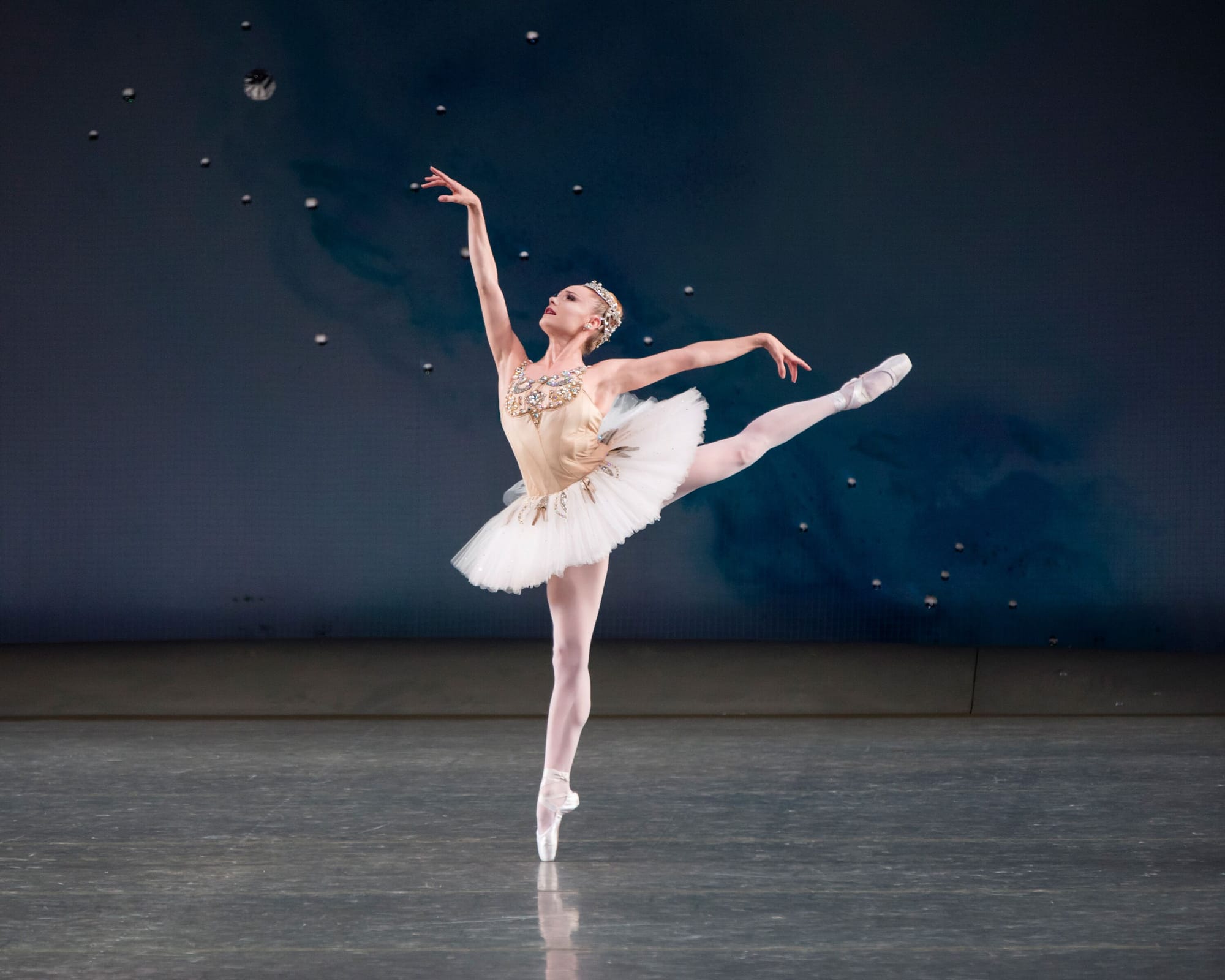
The ballerina in 'Diamonds' may be a diva, a tsarina, or a first cousin to Odette. In her long experience of the role, Sara Mearns has been all three in whole or in part. So perhaps it was not a surprise that she has re-examined her part again. What was surprising is the result: a performance, particularly in the adagio, with privileged softness, quiet and intimacy, rather than force and drive, all without any loss of scale, a first cousin of the woman of the walking pas de deux in 'Emeralds'. Particularly noticeable was Mearns' use of her head, cradled against her partner's shoulder in trust and safelty or showing with precision the direction of her gaze. What brought on this almost about-face is anyone's guess. Mearns' own restlessness and curiosity? Coaching from Suzanne Farrell who originated the part? Mearns' work in dance other than ballet? The right partner? For in Russell Janzen she seems to have found the right partner for 'Diamonds". Janzen can partner, can immerse himself in a world (once as Prince Siegfried, he conveyed the story, not his Swan Queen) and he can reel off the tours à la seconde his solo required.
"Jewels" looked well able to survive 'til its centennary.
copyright © 2019 by Carol Pardo



