Roll Over, Beethoven
"Walpurgisnacht Ballet", "Flower Festival in Genzano Pas de Deux", "The Wind-Up", "Opus 19/The Dreamer"
New York City Ballet
David H. Koch Theater
New York, NY
January 29, 2026
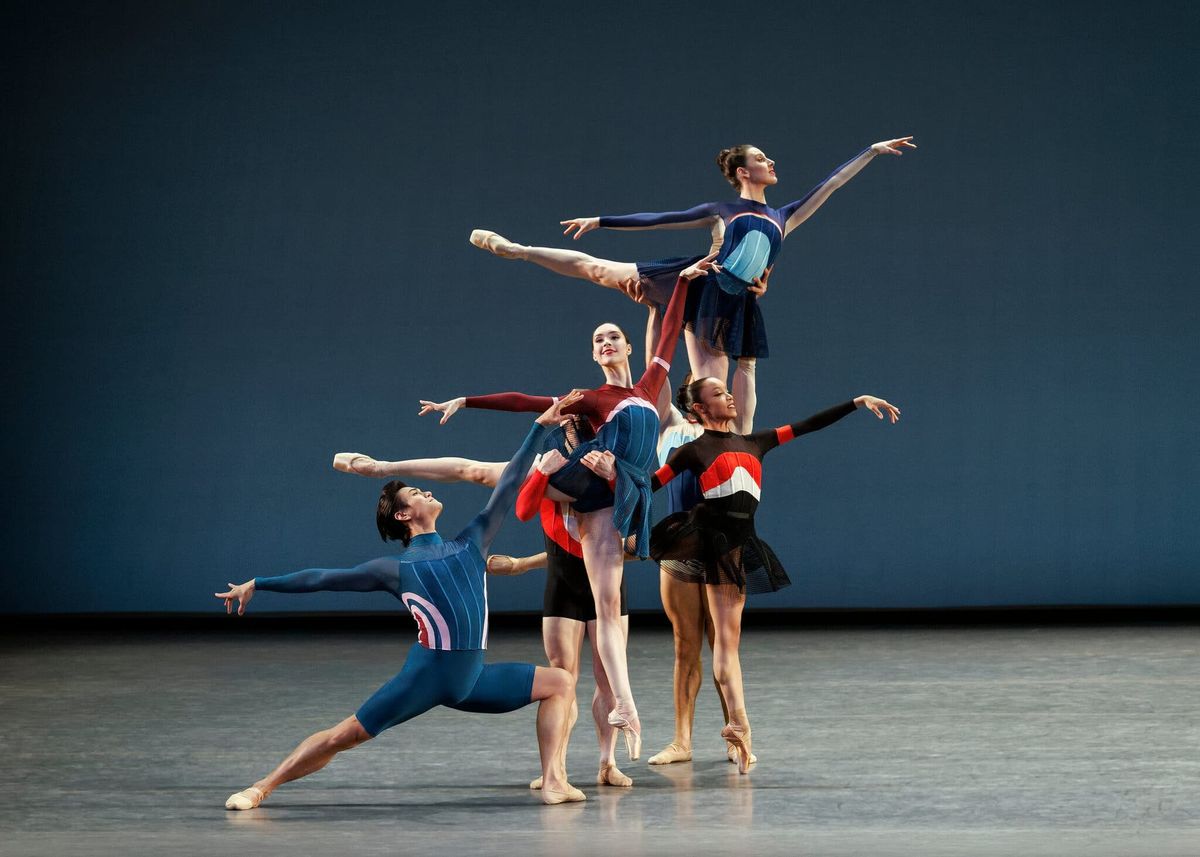
The premiere of Justin Peck’s new ballet “The Wind-Up”, was the centerpiece of this program. He used the first movement of Beethoven’s “Eroica Symphony” and a cast of six of the most interesting and vibrant of NYCB’s currently packed roster. Balanchine’s “Walpurgisnacht Ballet” which is set to spun sugar music by Gounod, opened the program, followed by Bournonville’s “Flower Festival” pas de deux, set to the eminently danceable but trivial music of Edvard Helsted. Then came Beethoven, followed by Jerome Robbins' "Opus19/The Dreamer" set to Prokofiev; it was somewhat disjointed evening of diverse composers. The program’s preview article says that Balanchine thought choreographing to Beethoven was “impossible”, but quotes Peck as saying he welcomed the challenge, and felt that Beethoven’s despair at his approaching deafness could be connected with a dancer’s struggles. It was as if he were saying to Balanchine “I will see your Gounod and raise you my Beethoven”. Unfortunately, Peck lost the bet—he wasn’t completely bluffing and but he didn’t have all the cards he needed.
The cast (Mira Nadon with Chun Wai Chan, Tiler Peck with Roman Mejia, and Mia Williams with Daniel Ulbricht) wore colorful sporty outfits designed by Reid Bartelme and Harriet Jung, and they did get a workout as they barreled through the packed, energetic choreography. The women’s costumes were quite flattering, though their bare legs made it look as if they hadn’t bothered to finish dressing, but the men’s biker shorts (Mejia’s were very short indeed) made them look stocky.
The work opened and closed with Ulbricht dancing by himself, turning with his usual power, as his neck and arms moved with a rapid and impressive control. His dancing has apparently lost none its height and power over the years, but he has developed into a rich and complex artist, as his performances in Ratmansky’s “Solitude” and his moving Prodigal have shown. Peck has just treated him like a wind-up doll, spitting out turns a la seconde until his battery stopped. Much of the choreography was similar, all flash and fidgets, with little variety or development. Despite some interesting geometric formations, most of the ballet consisted of repetitive and non-stop solos and duets, and the dancers had little chance to even listen to the music, much less illuminate it. Watching it was a bit like sitting next to someone at a concert who wouldn’t stop talking.
There were a few hints at individuality; Chan let Nadon gentley flow between his arms, showing off her leggy control. Peck and Mejia had a series of low lifts across the stage, until Peck disappeared, leaving Mejia holding air and looking confused until she returned--it was supposed to be a joke. He gave them a similar goofy non sequitur in his "Dig the Say"; Beethoven has been many things but he has not to my knowledge been goofy. The constant and repetitive high energy moves, with some pauses to allow the audience to applaud (and interrupt the music), quickly blurred, and the piece only gave the dancers a lot to do and little to be; it seemed a wind-up to applause and had no secrets or poetry.
There aren’t many secrets in “Walpurgisnacht Ballet”, but there is a lot of poetry. Though the music is from Gounod’s opera “Faust”, Balanchine’s poetry is not Goethe’s, and Mephistopheles and his dangerously seductive demons have been banished for liltingly energetic pastel beauties. Balanchine choreographed it for Suzanne Farrell, with daring, off-center balances and she was an explosion of femininity. Miriam Miller made an unexpected debut with Tyler Angle (she was scheduled for the following night with another partner).
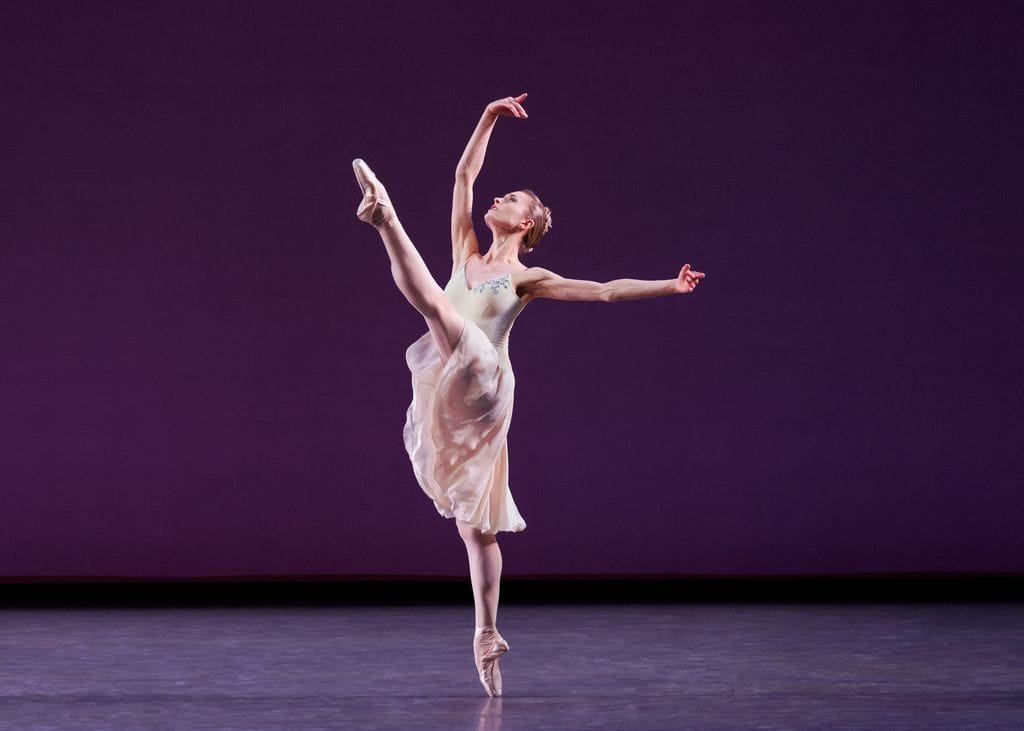
Miller’s opening adagio was especially lovely, as she tiptoed through the music, lost in her own world, bending into the music. Though Angle is a bit short for her, making some of the holds a bit awkward, they danced with an impressive cohesion. She has a powerful though delicate stage presence.
Her later solos did lack some of the slightly wild spontaneity that can build the excitement (flying hair can only do so much). Her upright control and flowing arms, though rivetingly beautiful, made the dances seem a bit careful. Olivia MacKinnon too, in her debut as the soloist, danced with a scrupulous precision, but seemed a bit too smooth and careful for the luxurious music. The two demis (Claire von Enck and Allegra Inch, in her debut) were irresistible, bouncing through the lilting music with an infectious joy.
There is a great deal of joy in Bournonville’s pas deux from his lost ballet,“The Flower Festival in Genzano”, which served as a brief addendum to Gounod’s nineteenth century romanticism. Isabella LaFreniere and Ryan Tomash made their joint debuts—Tomash joined the Royal Danish Ballet in 2017 so is familiar with the style. He certainly looked comfortable dancing the cheerful little jumps, his head constantly turning to look at his working leg. I did miss the old Bournonville black shoes with the white throats, which make the men’s feet look like they have little spotlights, since his stop-on-a-dime landings in fifth were delightful little exclamation points and deserved highlighting. The famous pas de deux starts gently as the couple seems to be walking in a park, and Tomash gave his performance a youthful and natural charm, focusing on LaFreniere.
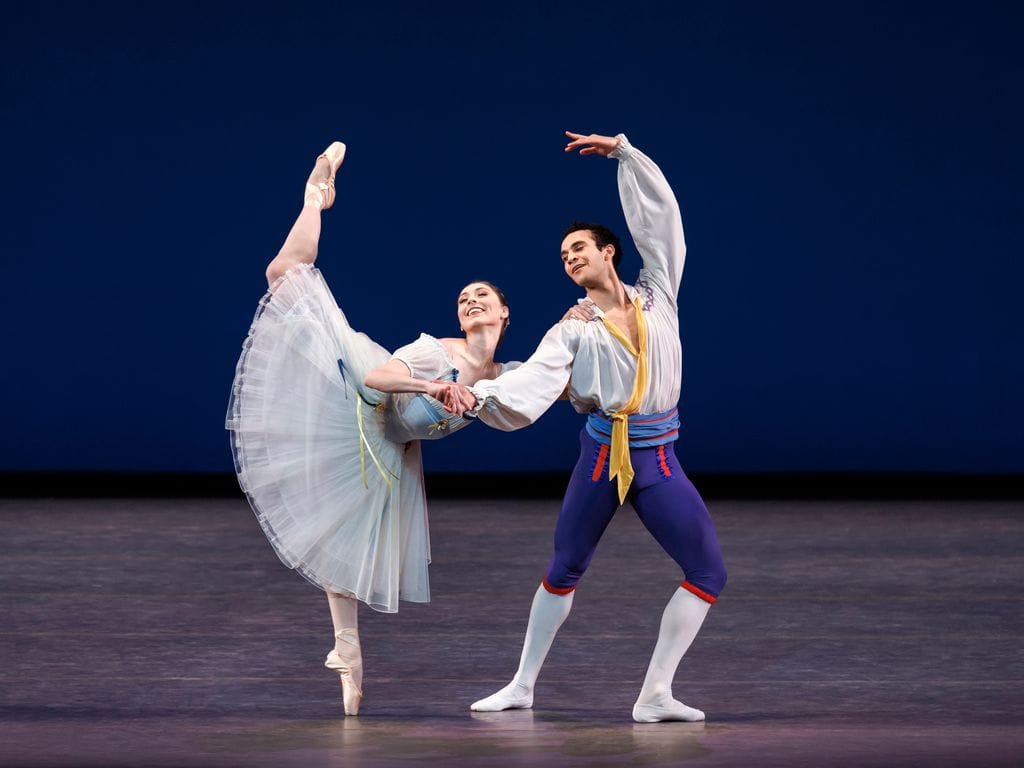
LaFreniere seemed a bit more uncomfortable with the Bournonville style and her fixed smile and exaggerated extensions didn’t exactly telegraph “radiant innocence”. Her bouncy footwork and little jumps had a nice juiciness but Bournonville needs atmosphere as well as steps.
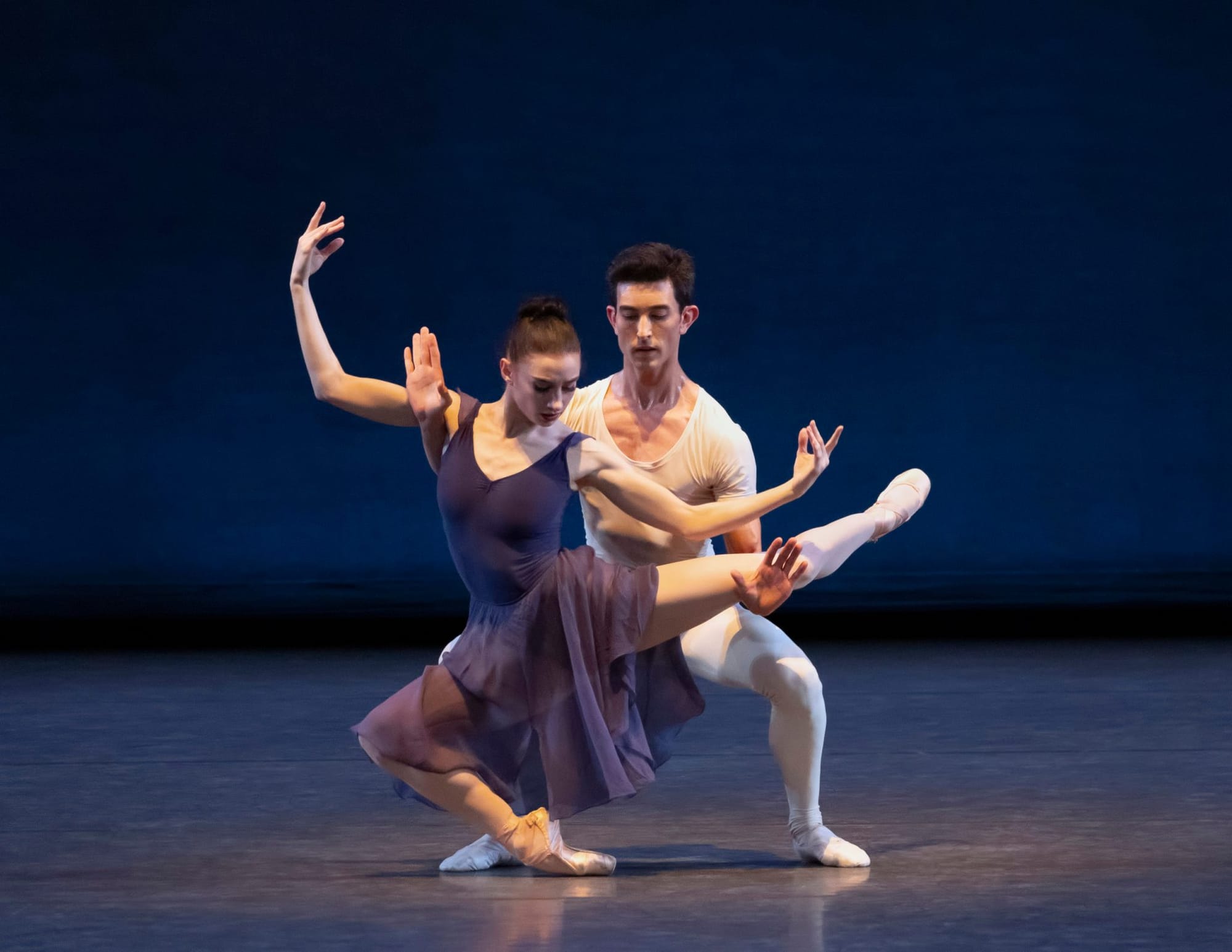
There is a lot of atmosphere in Jerome Robbins’ “Opus 19/The Dreamer”. Robbins set the ballet to Prokofiev’s Violin Concerto No. 1, his Opus 19, and it features a man in a white leotard (originally Baryshnikov), who is apparently a dreamer. Anthony Huxley was the rather subdued lead and Alexa Maxwell was his companion. The work can be a bit overwrought, as the man seems to navigate through various nightmares, but Huxley, with his pristine dancing, gave it a stylized distance as Maxwell wove in and out of the corps, sometimes comforting him, and sometimes leading him. Coincidentally, Huxley, like Ulbricht in “The Wind-Up”, began and ended the ballet alone, but Robbins had the confidence not to compete with the music, and the haunting, plaintive violin soared around and through the steps, propelling the atmosphere. Robbins did not have to roll over Prokofiev.
© 2026 Mary Cargill



