Rigorous and Refined
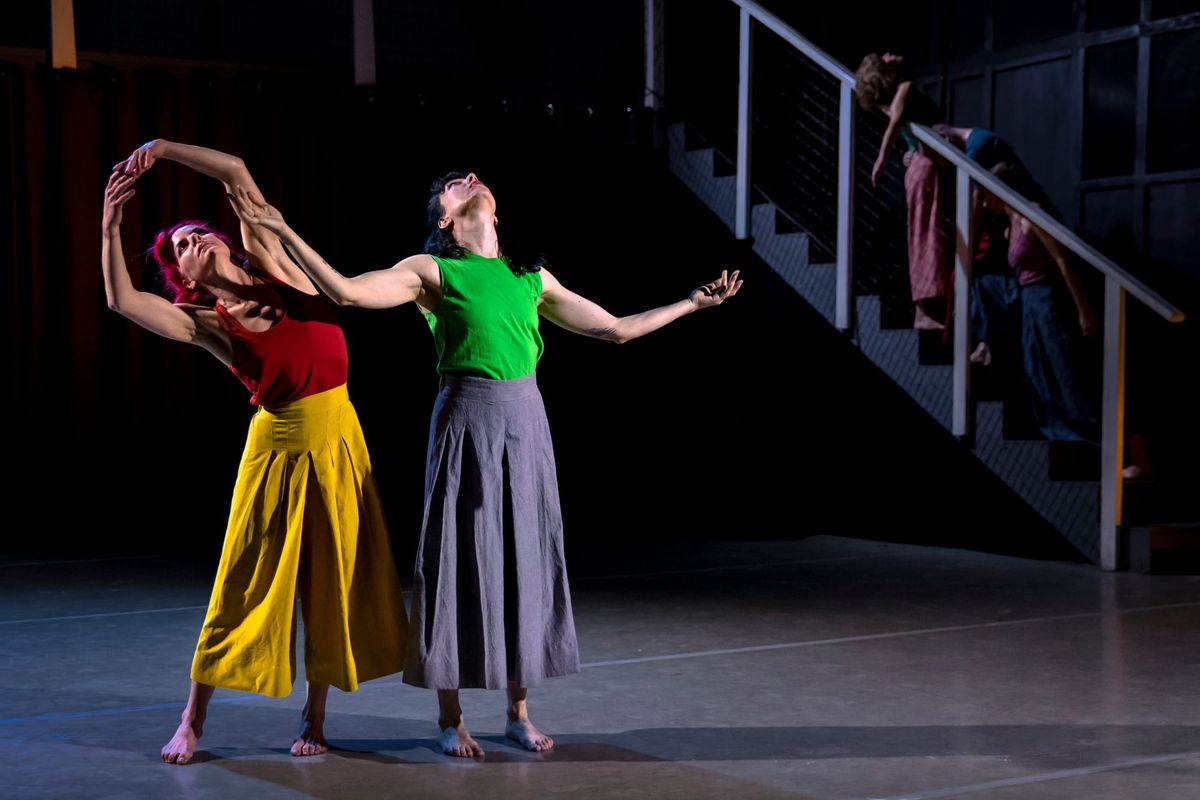
“piano piano”
Nancy Karp + Dancers
Paul Dresher Sound Studio, Oakland, CA
Video of world premiere February 27, 2020
Filmed by Rapt Productions, Oakland
Ever since she started making work in the mid 1970s in San Francisco, Nancy Karp has concen-trated her choreo- graphy on dance’s most basic elements—sound and movement. Remarkably, in a Bay Area environment that favors dance theater, social and personal identity issues, she has remained focused on those two ingredients. Rarely has she stepped outside her parameters of choice. The 1995 “Kristallnacht", a haunting contemplation of that insane event, is very much the exception in her oeuvre. It certainly helps that Karp has an acute and sensitive understanding of what these days is often referred to as classical contemporary music. In her latest work, “piano piano” seen in a video version, she follows her by now well-known way of working. The piece derives its name from the Italian expression “take it easy.
“piano” is an exquisite piece, apparently slightly edited for the video. In spite, or perhaps because of, its plain-in-sight embrace of formal structure, the work resonates with the human spirit. Bringing the choreography to life were mature and experienced Bay Area dancers Chris Black, Nick Brentley, Sonsherée Giles, Katie Kruger, Amy Lewis and Nol Simonse. They performed in a darkly lit studio space that on one side features a staircase leading to a balcony. Jay Cloidt composed the music for the astounding pianist Marja Mutru who played against an electronically modified version of the same score. It made for a fascinating aural environment in which the musical strands both co-operated and spun off into individual strands that again expanded and coalesced. The dancers were at home in this musical space, both responding to and sometimes challenging the “duet.” My only reservation with this engaging experience during these isolating days was that you had to follow the camera’s, eye, eliminating one of the great gifts of live performance.
As is her way, Karp employed a clear unadorned vocabulary, often reminiscent of pedestrian steps. Walking, striding, loping, passing interjected with hops, kicks and runs. Dancers met, separated; solos evolved into duets, trios and a whole only to dissolve again. An easy grace flavored stretching and descending lifts. Arms floated, curled and connected. All looked so piano/at ease yet was presented with immaculate control. The solos felt airy even as they swallowed space. Simonse’s backbends looked like bamboo in the wind; Giles’ arabesque finally reached into a plumb line with curled fingers barely touching the ground.
For some reason “piano’s” five contiguous movements reminded me of a sonata where in the first movement the dancers encountered each other and made the space their own. In the second they individually climbed the stairs—difficult to catch because of the penumbral light — with Lewis and Simonse skating along the top pathway. Brentley finally slithered down the handrail like a naughty schoolboy or yours truly a long time ago.
What might have been a scherzo came us a surprise with the dancers pushing themselves against and peeling off a lit wall. The structure gave solidity to the previously vague space. The music exploded into a jazzy, rhythmic pointillism, calling up the clanging peels of Berkeley’s Campanile. It encouraged unisons and Simonse and Lewis into a fine swing.
Karp plans to reprise “piano piano” in saner times.
copyright Rita Felciano 2020



