Reveling in Ravel
"In G Major", "Sonatine", "Pavane", "Errante", "La Valse"
New York City Ballet
David H. Koch Theater
Lincoln Center
New York, New York
May 15, 2025
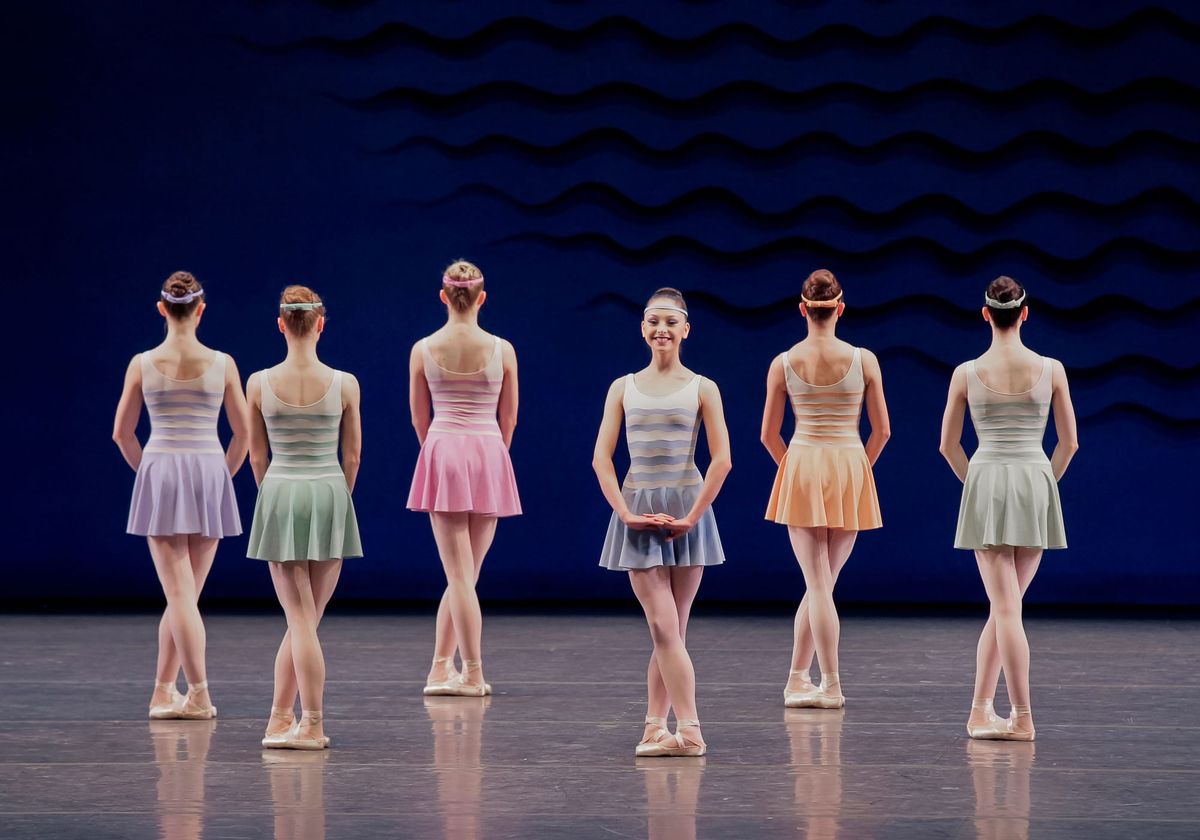
To commemorate the 50th anniversary of NYCB’s Ravel Festival, the company has put together a program of five ballets set to the composer’s music, one by Robbins (“In G Major”) and four by Balanchine (three rarely seen brief works, ”Sonatine”, “Pavane”, and”Errante”, and his stylish 1951 “La Valse”). The music used for these works were written for the concert hall, which the exception of the second half of “La Valse”, which was commissioned but never used by Diaghilev, and the audience could certainly have enjoyed the evening with eyes closed, though no one would have wanted to miss the number of impressive debuts.
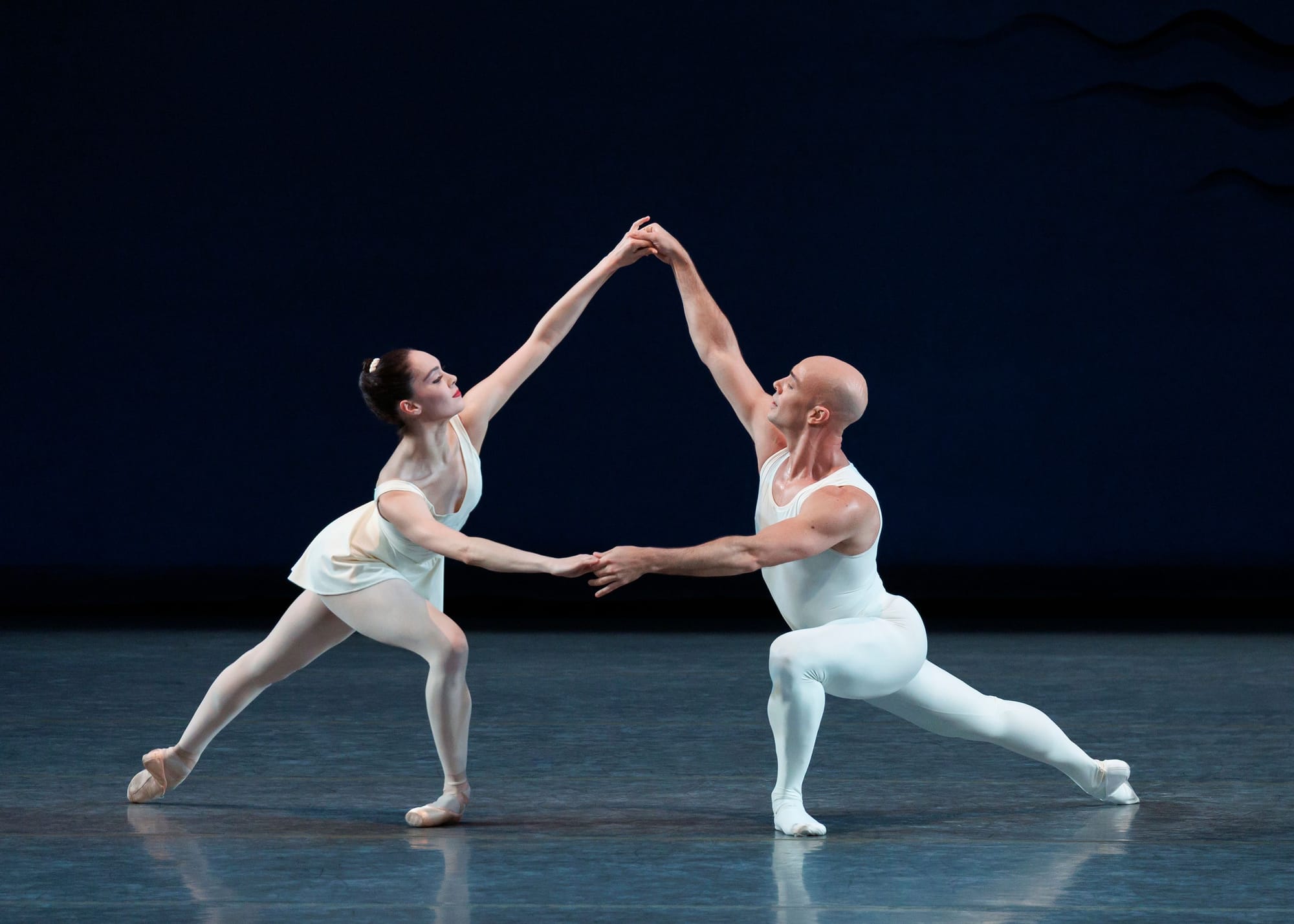
Mira Nadon’s debut in “In G Major”, choreographed in1975 for the Ravel Festival, was certainly impressive; the much-praised dancer seems born for the stage. She is a natural performer and has the ability to create a vivid world just by entering, a world she can share with the audience without seeming to court them. The world of “In G Major” is typical Robbins, with lots of perky, youthful dancing, complete with jogging and somersaults. The vivid Erté costumes and decor suggest a beach party and the music, the “Piano Concerto in G Major” with its occasional jazzy swing, suggests the 1930’s Riviera. Nadon, in a luminous white leotard, entered the group, accompanied by the sparkling piano, and flirted with the male corps; it looked as if the tall girl from “Rubies” were visiting the shore as she showed off her luxurious extensions and solid balances. She danced with a languid and slightly sultry lyricism that perfectly caught the bluesy air of the music. There was more flirting when Tiler Angle entered to dance with the female corps, though he hinted at an emptiness, which disappeared when he eventually met up with Nadon.
The heart of the ballet is the middle slow section, with its extended pas de deux for Nadon and Angle. It started slowly, as they walked hesitatingly towards each other, suggesting missed opportunities. The dance was full of floating lifts and delicate rippling arms, as the couple seemed to dancing only for each other, until some mysterious melancholy separated them again, only to end in one of Robbins’ flamboyant high lifts traveling off stage. They got together again in the bright finale, as they joined the throng of bouncing dancers, holding hands in a wide semi-circle, as the bright and happy, if over-long, salute to youthful joys came to an end.
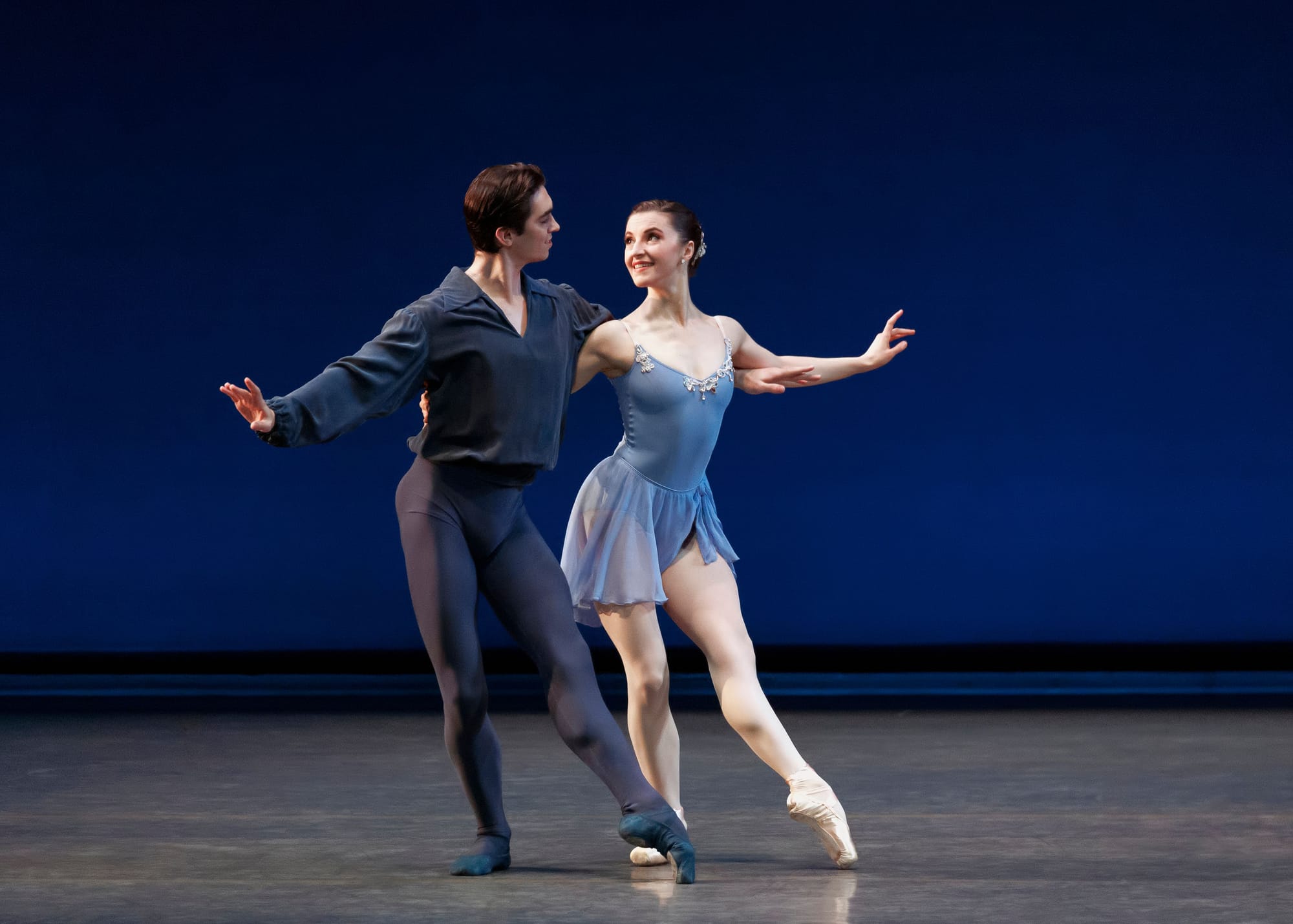
“Sonatine”, which opened the Ravel Festival, is an extended pas de deux to “Sonatine for Piano” (the pianist, Elaine Chelton, shared the stage). The couple, Indiana Woodward and David Gabriel (a debut), do get to rest a bit while listening to the music, but soon begin dancing, or rather moving, with a private, hushed rapture. Woodward used her upper body so beautifully, twisting and turning with rippling little grace notes, and her point work picked elegantly through the delicate steps.
Gabriel was a devoted and confident partner; they had a performance of gauze and perfume, with some energetic folk steps thrown in. Gabriel seemed to enjoy slapping his knees, and Woodward’s little mazurka hand gestures augmented her smooth, luxurious arms. It was like watching a devoted couple walking through an elegant park sharing each other’s thoughts.
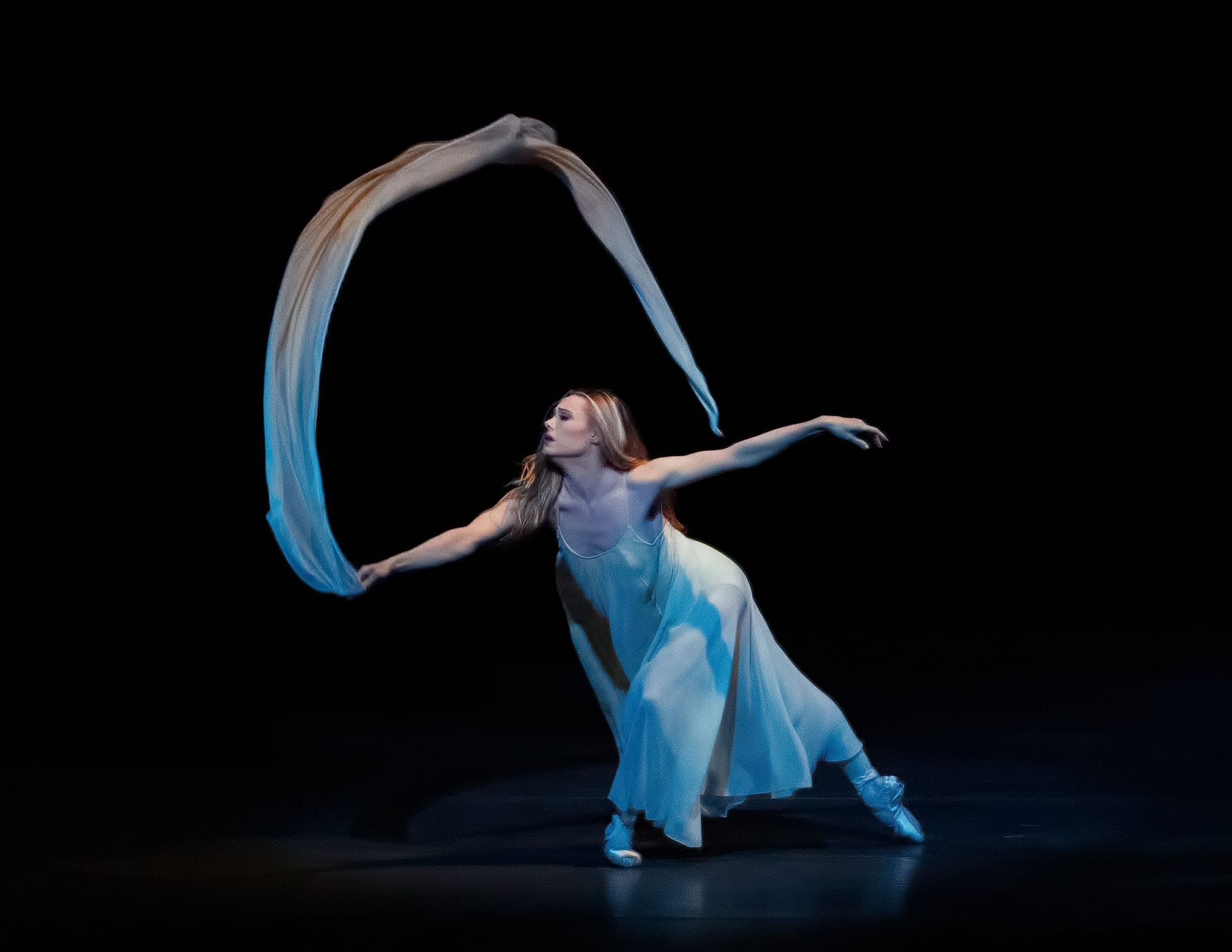
This was followed by another mood piece, “Pavane” (also created for the Revel Festival), set to the stately and well-known “Pavane pour une Infante Défunte”. Sara Mearns, veiled in white and covered with a large scarf which moved gently in the breeze, gave a solemn and haunting performance. She used a tense stillness to suggest an eternal grief without resorting to facial tricks—even her long hair seemed to be in mourning. There was a sculptural quality about her movement, a weight and dignity that suggested a Greek statue, Niobe, perhaps, remembering her children. Her performance had a powerful simplicity, both immediate and eternal.
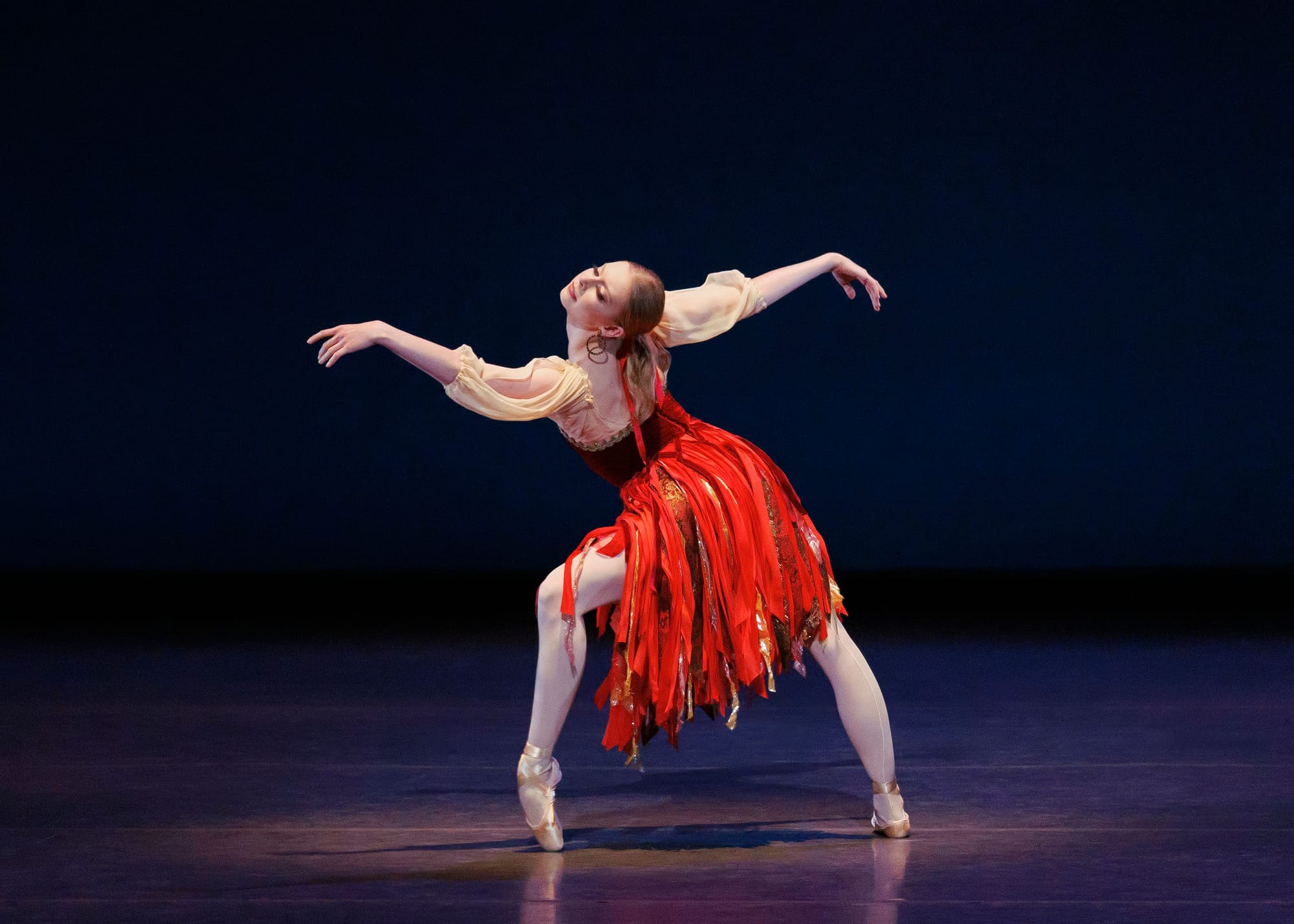
“Errante”, which also premiered during the Ravel Festival (when it was called “Tzigane” after the music), is not a solo, but the powerful opening dance of the gypsy woman (Dominika Afanasenkov in her debut) dominates the ballet. Afanasenkov was a hypnotic combination of cool and hot, fiercely independent, slightly mocking, yet proudly free. She seemed to let the music pull the odd, angular shapes out of her, almost daring gravity to force her down. She wasn’t a sultry seductress, and when the man (Chun Wai Chan, also debuting) joined her, she kept her edge; it was a confident, impressive performance. Chan was captivated, focusing on her, but never quite sure of his victory. His dancing was strong and clean (such beautiful rich pliés), though the man’s role is basically secondary, as he supports her while prancing enthusiastically through some gypsyish steps.
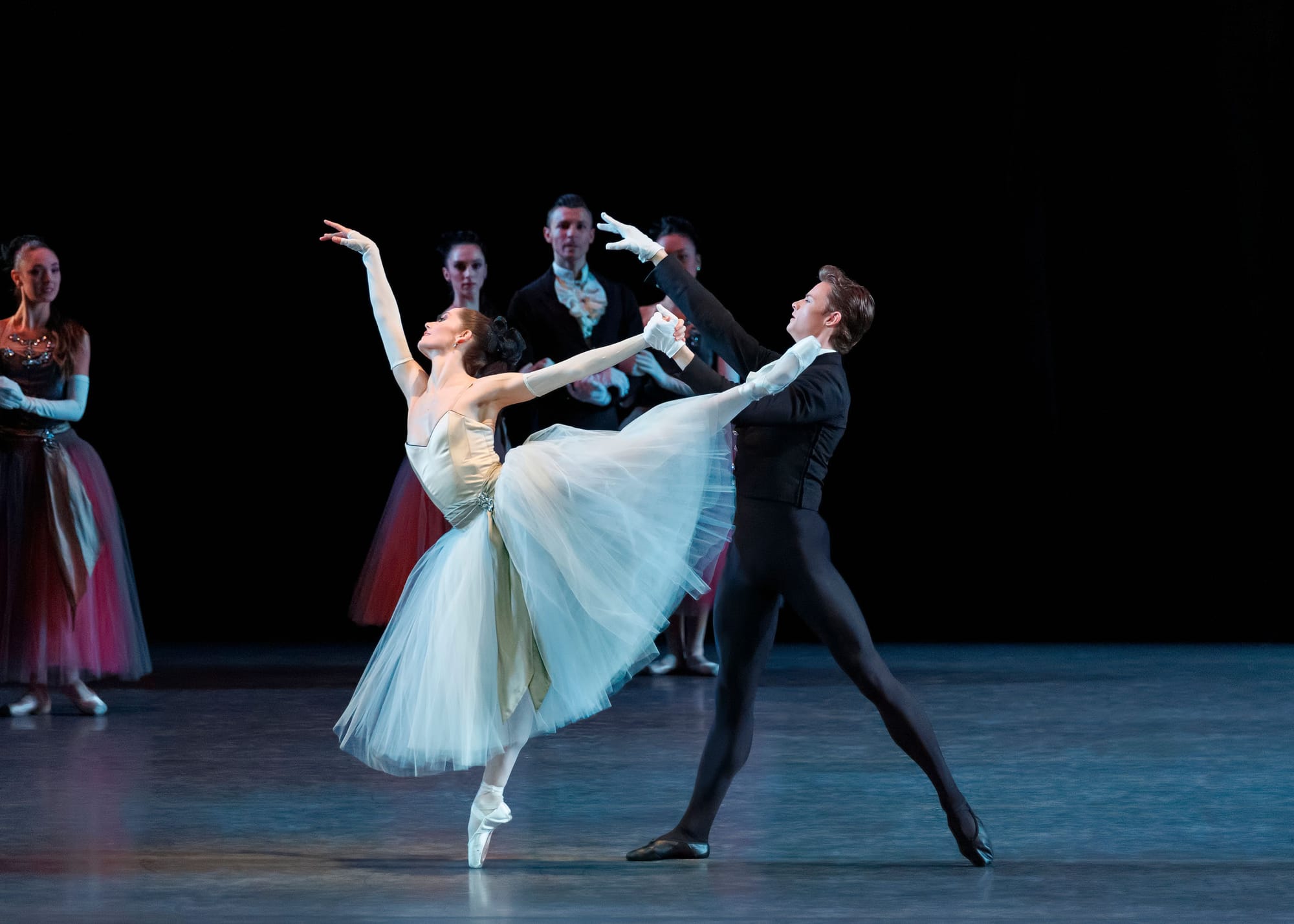
The man in “La Valse” plays a secondary role as well, but Jules Mabie, in his debut, gave him an innocent intensity that was extremely moving. Unity Phelan also debuted as the anonymous girl who looks for love, jewelry, gowns, and gloves in all the wrong places. Phelan’s calm, patrician aura was not a good fit for the poor victim’s greed and daring and though her dancing was clear and beautiful, I missed the restless eagerness of the music and the dangerous pull of the unknown; she put on her gloves and black dress as if she were heading out to a debutant ball.
The opening trio, Christina Clark, Savannah Durham, and Malorie Lundgren, did capture the slightly ominous undertones, as the flicked their hands in perfect unison. Their odd haute couture arm movements had a mechanical, threatening air, and a stultifying air of decadence and danger especially as they surrounded the male from the third couple, Eli Raphael Gruska, in his debut. Like Mabie, he had an innocent confusion, which emphasized the maelstrom of evil presided over by a menacing Andrew Veyette. The whirling finale as always cast its spell, as Ravel’s music (he described it as “dancing on the edge of a volcano”) told its own mysterious story.
© 2025 Mary Cargill



