Resultant Effects
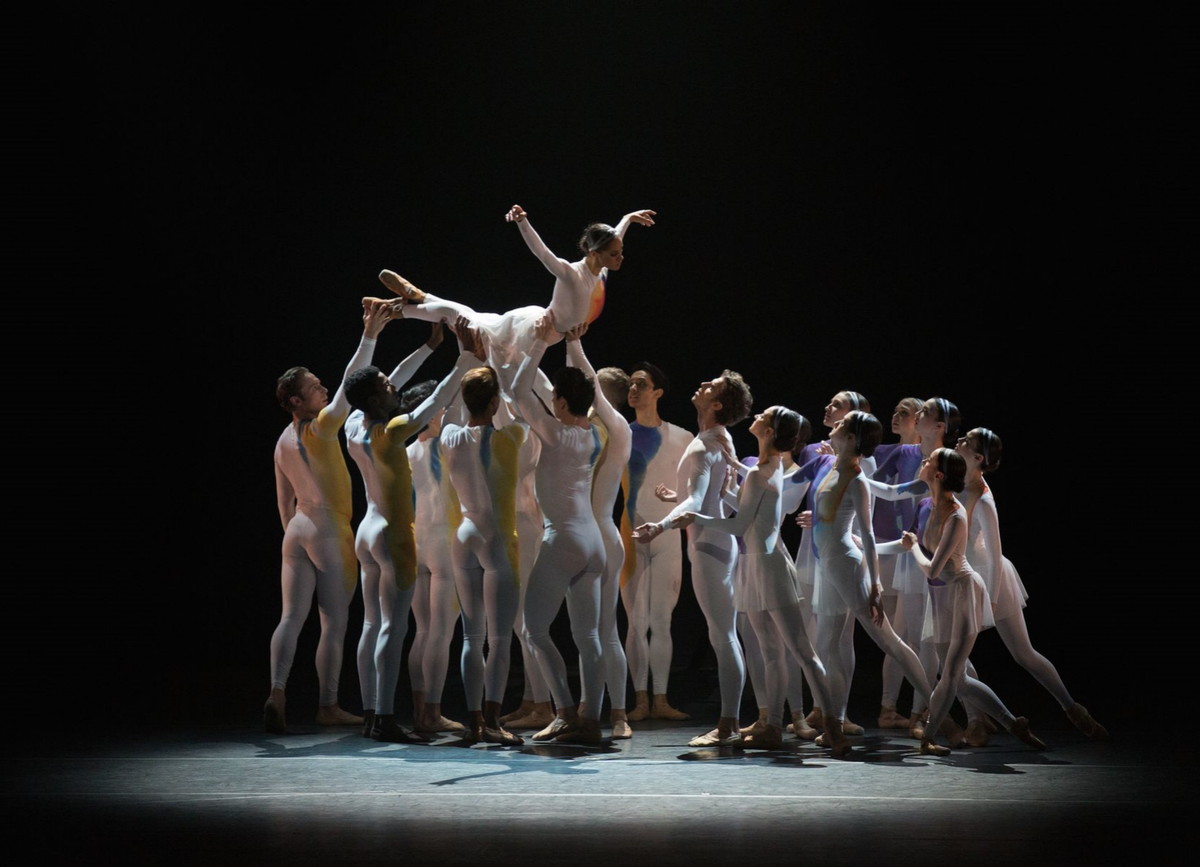
“AfterEffect,” “Company B,” “The Green Table”
American Ballet Theatre
David H. Koch Theater
New York, NY
October 28, 2015
In its second week, American Ballet Theatre presented a world premiere of a brand new work by one of its own – principal dancer Marcelo Gomes. The ballet, curiously titled “AfterEffect,” was ambitiously set to Tchaikovsky’s string sextet “Souvenir de Florence.” Alas, even the slim flourish it possessed quickly faded against the more effective works that followed, Paul Taylor’s “Company B” and Kurt Jooss’s “The Green Table.”
“AfterEffect” is dedicated “to those who have fallen… and those who prevail,” and while it certainly tries to live up to its ambitious and seemingly limitless and undefined dedication, the work itself manifests in precisely those terms: limitless and undefined. Gomes, a well-respected artist and one well-acquainted with grand old choreography and new and relevant works, some of which were set on him, approached his creative task with all the colors and palettes afforded to him by his rich experience. But the resulting work is little more than a collection of emotions and movements set verbatim to the music, without much of a trajectory, story, or a truly uniting theme. It may be portraying an aftereffect, but as the choreography trudges through Tchaikovsky’s music it’s easy to wonder what could be the cause of such a meandering consequence?
The ballet's beginning featured The Man, danced by James Whiteside, appearing concealed by a fog on a dark stage with nothing more than a dim spotlight to illuminate him. As he moved, clearly tormented by something, other men joined him, including the second male lead, His Hope, danced with beautiful refinement by corps member Zhiyao Zhang. The whole first movement – a familiar piece to some of the audience who might have seen it as a stand-alone work titled “Aftereffect” in 2013 – showed some attractive dancing thanks to the careful and athletic execution by the cast. Still, with steps falling exactly on the accented notes, leg reaches extending from start to finish of musical phrases, and jetés from side to side reflecting the busier sections of the score, even the best performance wasn’t going to be enough to choreographically fill or give suspense to this voluptuous section of Tchaikovsky’s piece.
The work improved in the second movement, where Gomes presented a duet between Whiteside and Misty Copeland, dancing His Loss. It was an aerial, spiritual piece of choreography in which Copeland seemed to float in the air even in the rare moments when her feet touched the ground. At one point she sat perched on Whiteside’s back as he leaned forward, parallel to the floor, creating a moment where Copeland appeared ghostlike, strange but also protective. The beautiful costume of a unitard with an asymmetrically attached flowing skirt helped Copeland look like a vision, and as she left the stage and other couples streamed in to surround Whiteside like flurries of similar but different emotions, the section retained that ethereal quality. To end it, Copeland was brought back by the crowd of dancers, suspended horizontally in the air by their lifted arms, and leaned forward to give the standing Whiteside a kiss. It was the highlight of the ballet, and a promising example of what Gomes could create if he allows himself to move freely within the music of his choosing, rather than act beholden to it.
The last two section of the sextet, filled with Russian motifs, were mirrored with Russian folklore in the steps. There were the traditional gestures of a hand supporting the chin by the women, varied only to the extent that here it was the full palm rather than the index finger that was used, a horovod – a traditional movement of ladies in a circle – and the last section of the ballet even featured the whole cast doing veryovochka – a move where a dancer, with knees bent and heels lifted in fifth position, continuously shifts the front leg to the back with small, rhythmical passés. These Russian moves, while musically relevant, nonetheless seemed unconnected to the ballet’s theme, characters, color-splattered unitard costumes, or anything else, and only highlighted the fact that Gomes does better when he takes a step back from being faithful to the music, as he did in the second movement. At least the viewer had something to hold on to here as Zhang’s dancing in the last section erupted prodigiously, overshadowing Whiteside with beautiful lines and elevation in the jumps. It was uplifting to watch, even if it wasn’t uplifting the ballet.
And so, alas, the aftereffect of Gomes’s exposure to various choreographers and choreography appeared in this work to be nothing more than a collection of moments and ideas, beautiful at times, odd at others, but ultimately unconnected and not following any discernible cause with any kind of particularity.
As a novice choreographer, having your new ballet followed by a work by the genius Paul Taylor is in some ways unfair, in others cruel. After an intermission, “Company B” presented a gorgeous example of just how beautifully human movement can interact with and complement music. It had its weak spots, with Elina Miettinen noticeably lacking in lightness compared to Connon Holloway’s dancing during the “Pennsylvania Polka” section, and Stephanie Williams seeming a little disconnected to the emotions of the “I Can Dream, Can’t I?” section. But even this did not detract from the ballet as a whole, and was more than made up for by performances such as that by Devon Teuscher and Gray Davis in “There Will Never Be Another You,” which had a sublimely romantic and nostalgic quality.
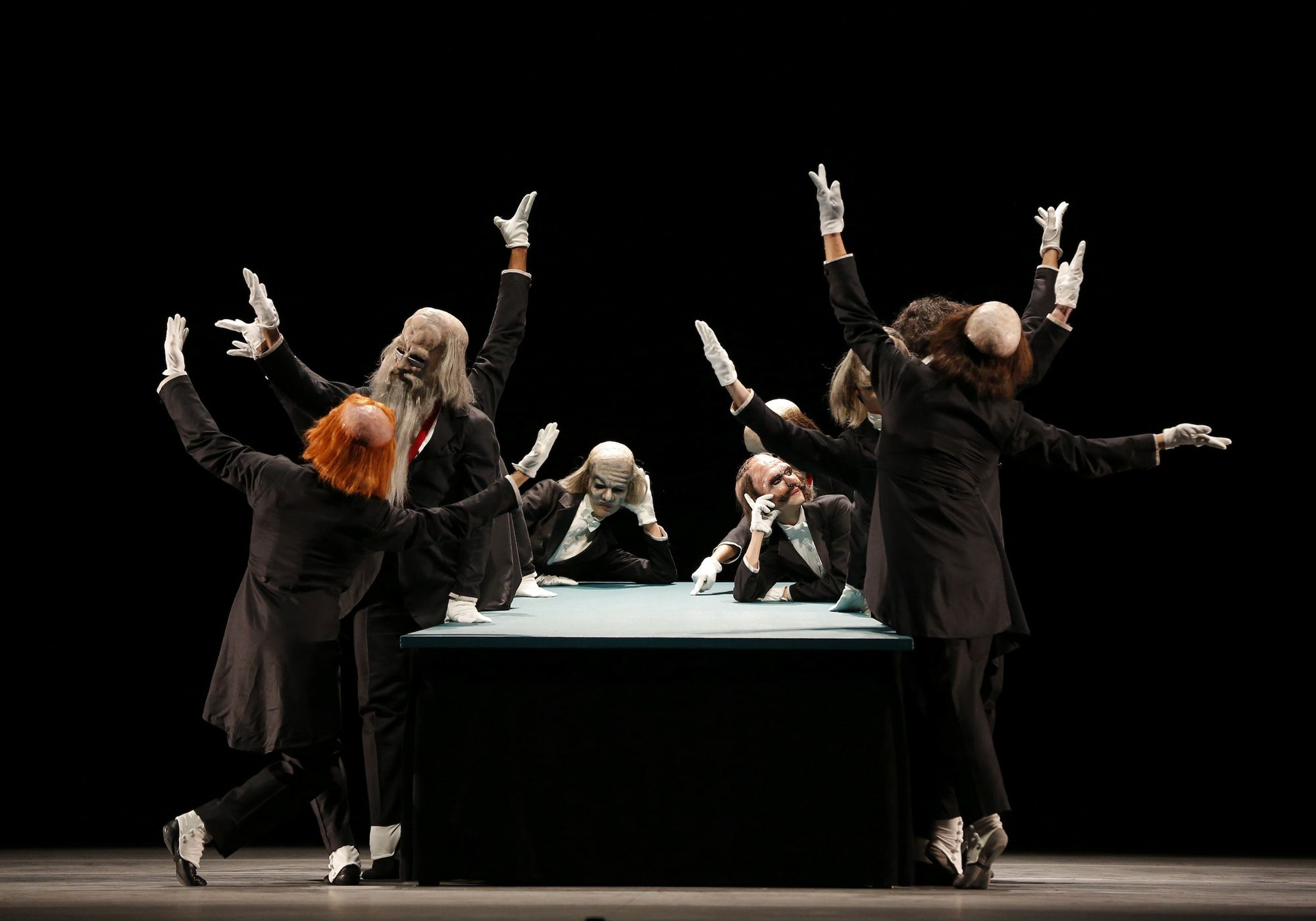
Similarly, the last act of the program, showing the second cast in “The Green Table,” offered something distinct. The lead role of Death here was danced by Roman Zhurbin, who unlike Gomes who danced Death in the main cast, presented an eerie, slithering character. Zhurbin’s dancing was less accented, less “steppy” than Gomes’s, but also more emotional: in the scene where Death cradles the Old Mother, danced here by Zhong-Jing Fang, there was a sadness to his actions as he took her in his arms and carried her away, offering her a consolation and an escape from her war-caused sorrows, rather than acting out a mere possession of her suffering. The rest of the cast echoed the overall key set by Zhurbin for the ballet. The opening and closing “Gentlemen in Black” scene was less humorous and more harrowing in nature, and even the Profiteer, danced by Daniil Simkin, looked different, possessing a less opportunistic, and more mysterious quality.
The work was moving in a subdued and complex way, and together with “Company B” caused more impact, and had more potential to affect the audience, than the new Gomes creation.
copyright © 2015 by Marianne Adams



