Promethean Craft
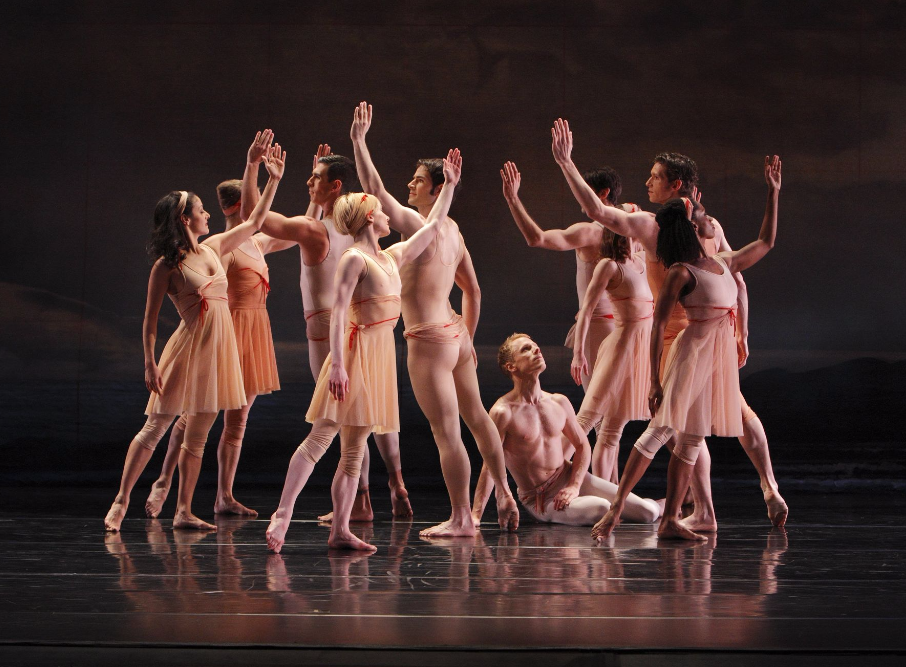
“Spindrift,” “Images,” “Promethean Fire”
Paul Taylor’s American Modern Dance
David H. Koch Theater
New York, NY
March 19, 2016 (matinee)
It is but a truly extraordinary artist who can produce remarkable art decade after decade without the creative aquifers running dry, and Paul Taylor’s works, time and time again, prove him to be one of them. With “Spindrift" (1993), “Images" (1977) and “Promethean Fire" (2002), the choreographer’s recently reincarnated company, Paul Taylor’s American Modern Dance, offered performances rooted in history, emotion, and melody, but also presented the promethean quality of the choreographer’s creative genius that has persisted throughout the decades of his artist life.
Leading off with the revival of the lyrical “Spindrift,” the company embodied the sound of the crashing waves that starts the piece, echoing it through their bodies. Their spines would ripple as they stood in the middle of the stage, then they’d take outward steps, transversing forward. As the work shifted on to collages of different depictions, emotion and movement, some feral, some court-like, some caricatured, the ten dancers perfectly captured scenes of a world going by. Lost in the middle of it all, the dance’s lead, Michael Trusnovec, looked searching, at times emotionally capsized, amid those around him.
Himself a remarkable artist, and expert at bringing Taylor's works to life, Trusnovec turned his interactions with the many distorted and sincere incarnations of nature and human character by other dancers into a painting of a man shipwrecked in his life, and longing to find himself and his place in the world. His brooding solo in particular drew out the color of Schoenberg's String Quartet Concerto, played eloquently by the Orchestra of St. Luke’s. Trusnovec’s movement in that passage against the sea background that adorned the stage, with arms swerving side to side, was able to convey multiple images at once – a more metaphorical quest, a literal interaction with water, a very Taylor-esque ambiguity that opens room for multiple interpretations. That quality resonated at the end of the piece, when after another wave of ensemble dancing "Spindrift" ended with the protagonist’s solitary state in the work’s universe unaltered, but redefined in many possible ways.
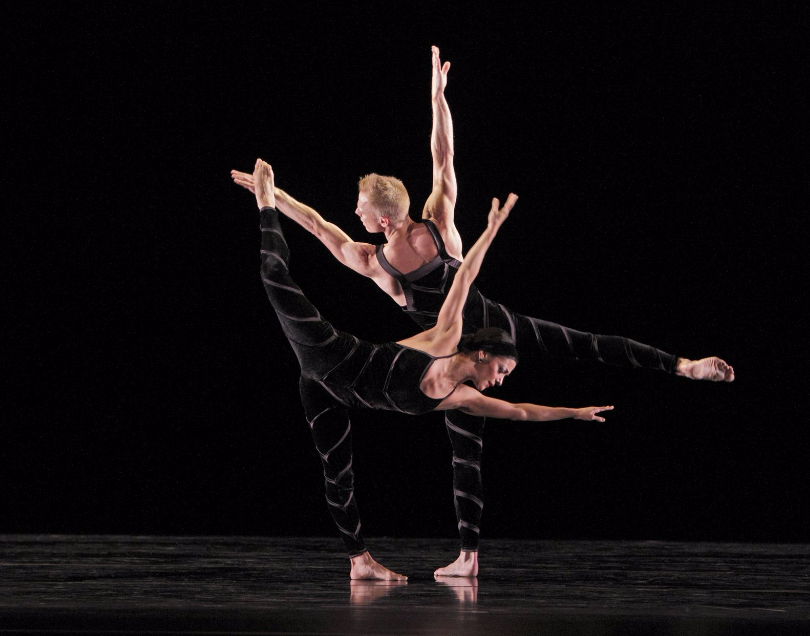
The ever-powerful “Promethean Fire” was equally spellbinding. The work always impresses with its ability to use the masterful Stokowski arrangement of Bach’s music to create sweeping chaos and liturgy, and in this performance the work seemed to have adapted to the present time and the turmoil of today’s world. The urgency of the opening scenes remained, but there was different emotion in the duet that forms the middle of the work, where, unlike a year ago, Trusnovec and Parisa Khobdeh presented a couple whose drive to reforge human connection was less hopeful and more dejectedly determined to accomplish that goal.
These dancers’ partnership is always remarkable to watch for their ability to play off of each other’s intended emotional projection and integrate it into their personal dancing, and here the pair progressively made their movements bolder, colder, and subtly lacking the yarning and conviction that gave them softness a year before. Their dancing thawed when other couples appeared, giving the finale a translucence of warmth, but the tenor they set for the work made it difficult not to think about the work’s origins as quasi-responsive to the tragedies of 9/11 (Taylor himself denies any conscious connection of the work to those events), and how the weariness in the performance echoes the aches and shell-shock of the more recent tragic world events. This context and the dancers’ interpretation gave “Promethean Fire,” and the embedded string of resilience and hope that runs through it, a new and powerful quality.
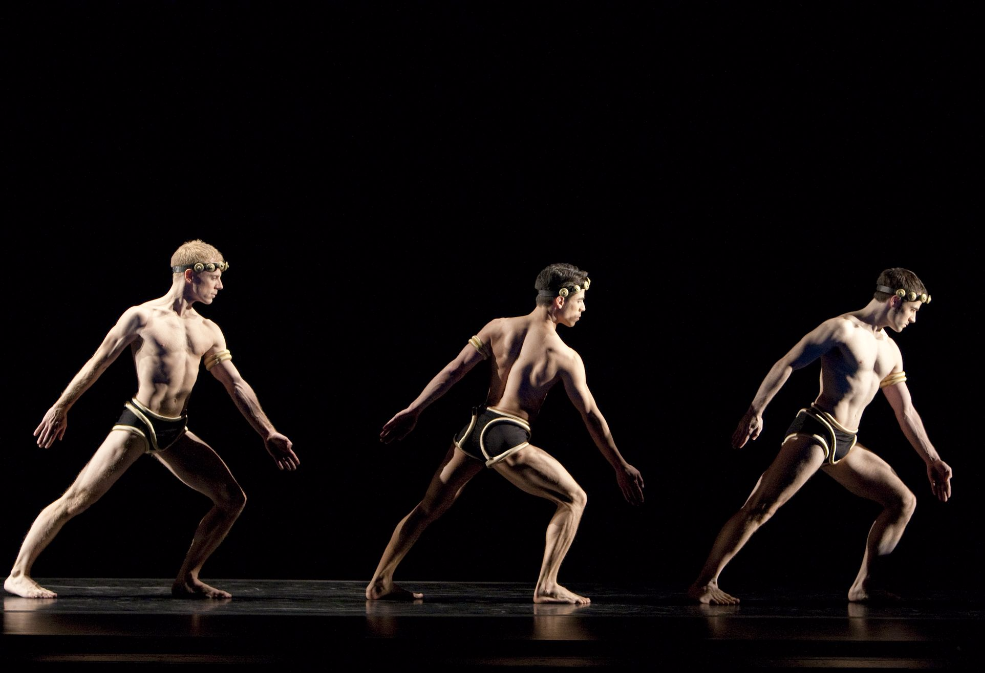
The revival of “Images,” the program's oldest work, felt somewhat out of place wedged in between these two emotional pieces, and its archaic movements not only looked, but at times also felt, two-dimensional. The totemic embodiment of human movement and sequences that looked like animation of ancient Egypt’s stone carvings, while interesting, quickly began to feel run-on, and didn’t harmonize well with the Debussy score. The sole exception was Laura Halzak’s remarkable portrayal of the Oracle, which looked possessed and shaken to the core by the visions she was conveying. If nothing else though, “Images” still looked like a daring and different work, and with its subjects and elements markedly one only a real creative mind could think up and present.
copyright © 2016 by Marianne Adams



