Pretty in Red, White, Black, and Yellow
"Rubies", "Dig the Say", "Underneath, There is Light"
New York City Ballet
David H. Koch Theater
Lincoln Center
New York, New York
May 2, 2024
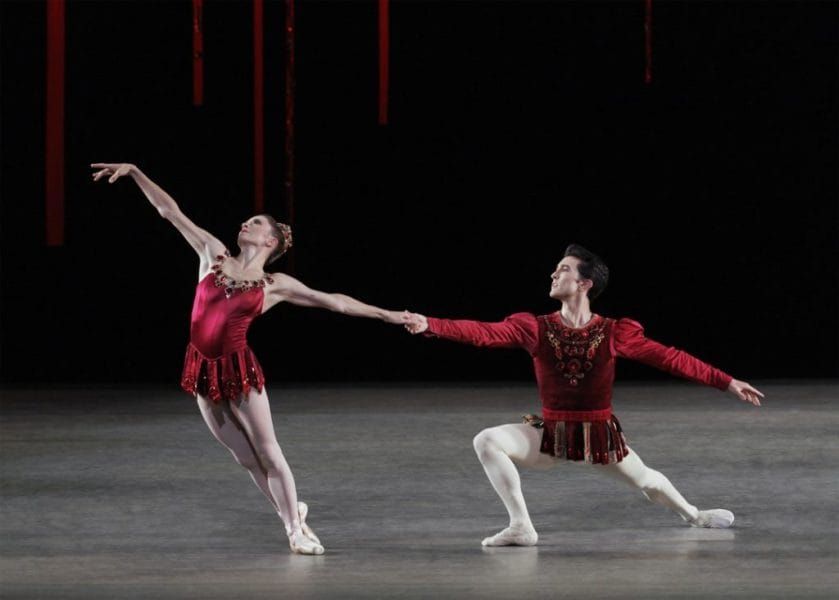
New York City Ballet’s Spring gala had one Balanchine, two premieres, three brief speeches, and no intermission and clocked in at a very efficient one and a half hours. It opened with sparkling version of “Rubies”, in all its bright red glory, danced by the veterans Megan Fairchild and Anthony Huxley, with the phenomenally talented Mira Nadon as their tall cohort.
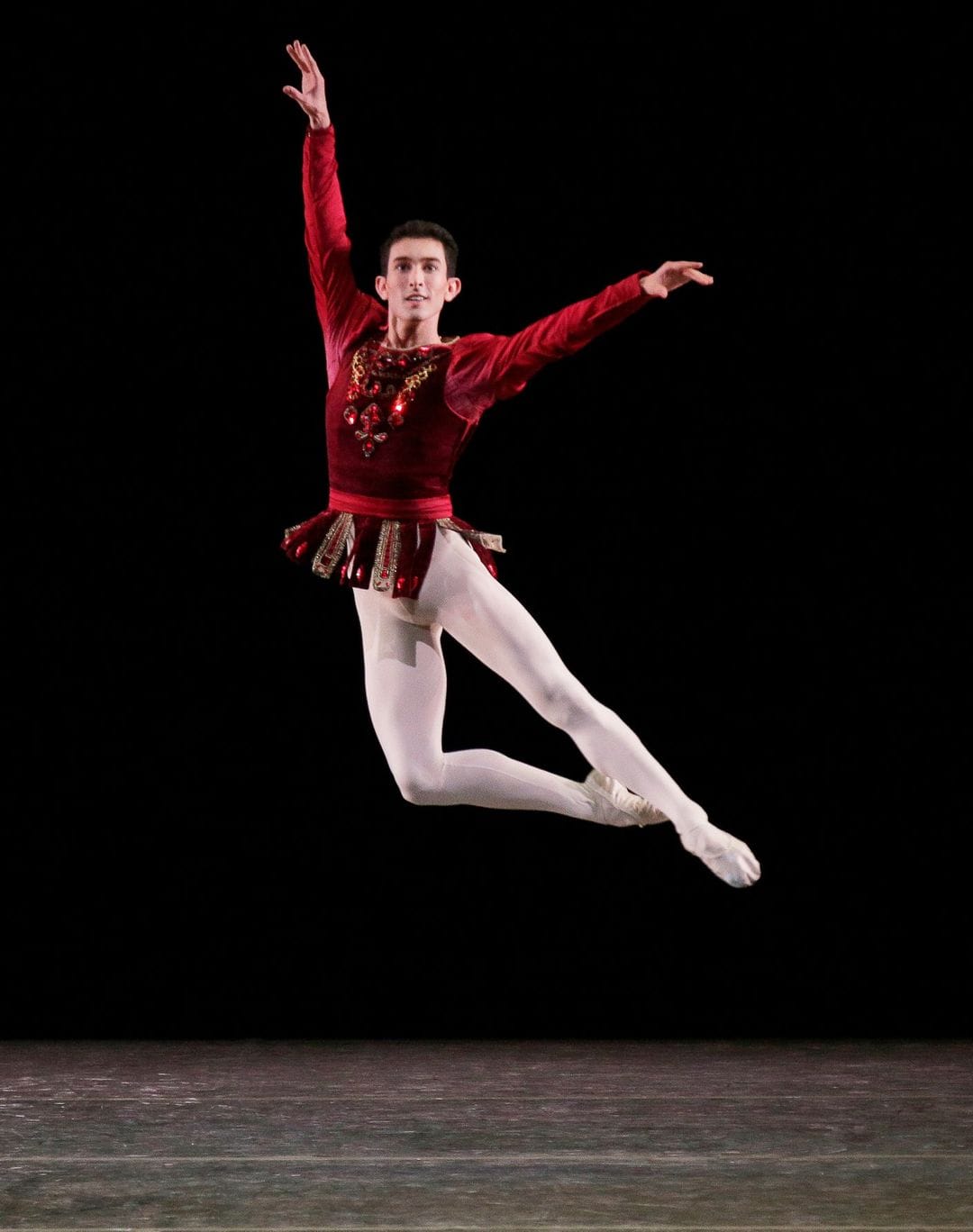
Fairchild and Huxley had a light-hearted and bouncy approach, without the slightly astringent wit that many other couple show. Though she is a forty year old mother of three, Fairchild’s face radiates an innocent, youthful joy and this, combined with her precise, clear movement and natural charm made her approach irresistible. Huxley, too, is a light, bright dancer with a brilliant, if understated, technique, which perfectly suited Fairchild’s approach. Their pas de deux had a playful, sunny tinge and started off the proceedings with a burst of energy echoed by the rest of the cast.
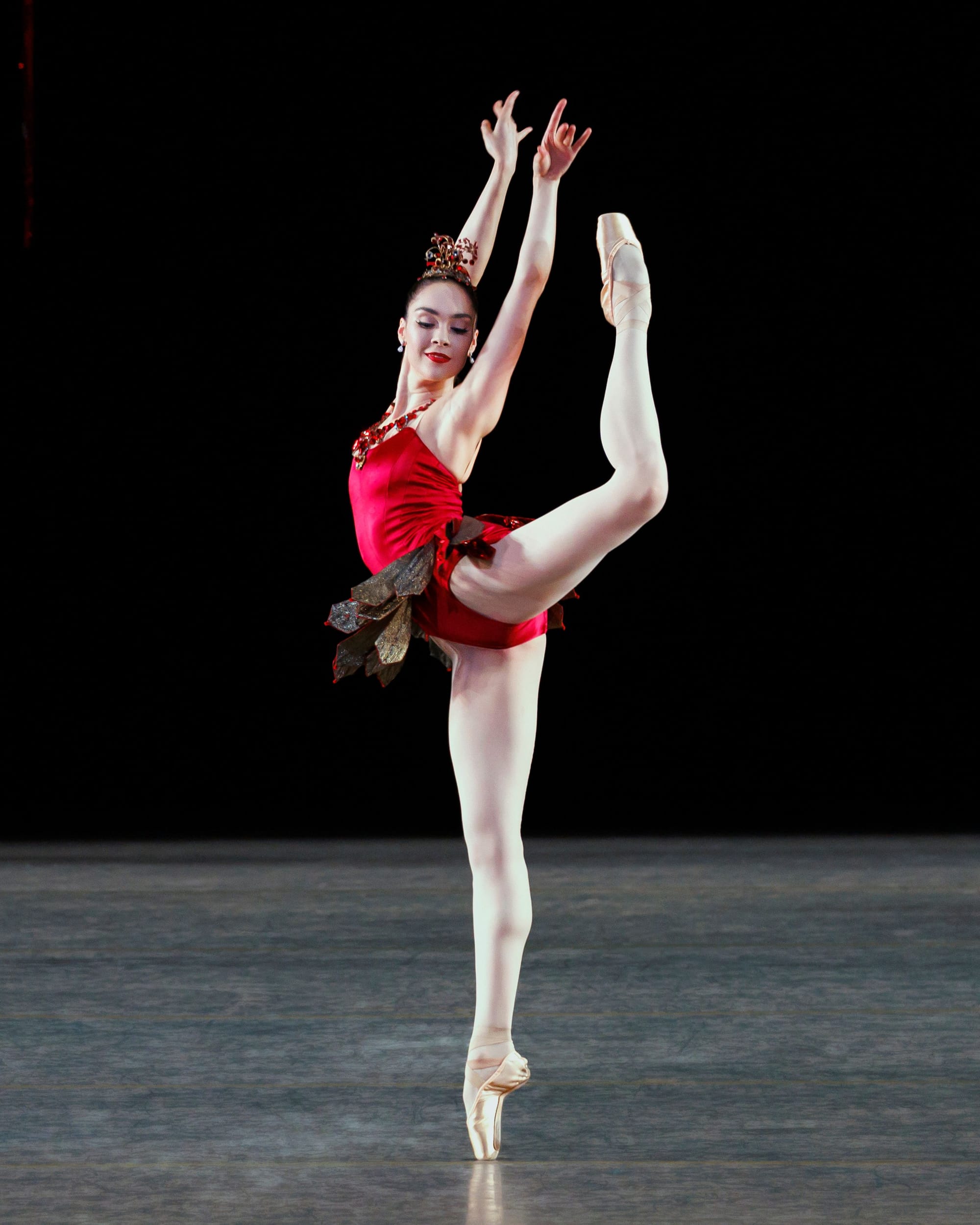
Nadon, too, gave the tall girl a playful air. She didn’t slam into her poses and her dancing had a nonchalant grace, almost teasing the four boys as they manipulated her. She held her arabesques penchée as if they were beautiful pauses during a stroll off stage, letting the audience luxuriate in her long legs and alabaster elegance.
The audience got to luxuriate in more dancing during Justin Peck’s new pas de deux for Tiler Peck and Roman Mejia. “Dig the Say”, named after the title of Vijay Iyer’s string quartet inspired by the music of James Brown (played with infectious verve by the PUBLIQuartet) let Tiler Peck and Mejia show off their technical chops. They danced in what appeared to be an empty garage or gym, with Mejia in marbled black and white work out clothes, complete with headband and Tiler Peck in a very flattering short dress (the costumes were by Humberto Leon).
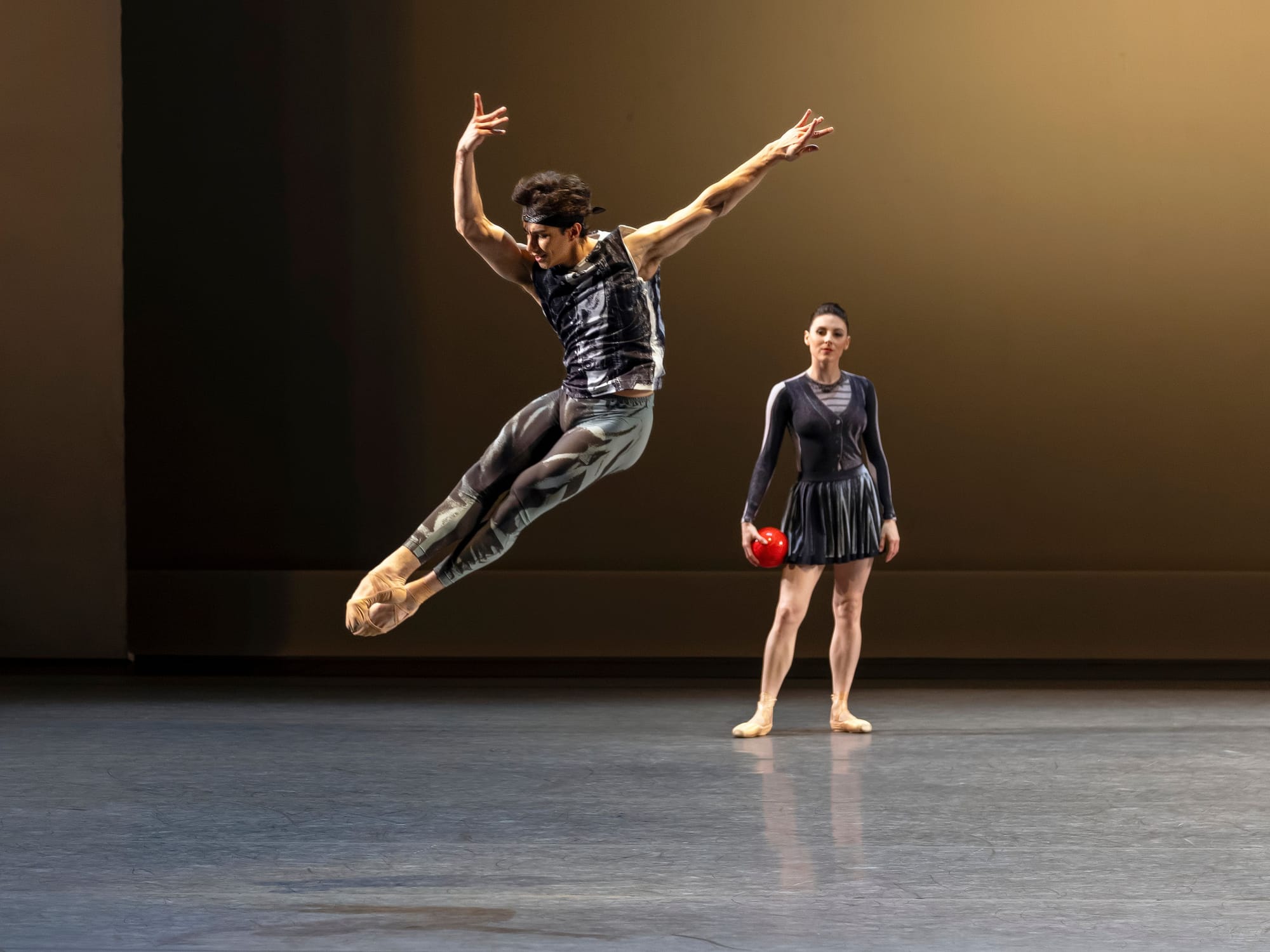
The choreography was a bit jokey—the first section of the music is entitled “I carry the ball” and the two tossed a ball to each other, letting their partner have a chance to show off; finally Mejia threw the ball off stage, only to have Tiler Peck fly back out—the move is repeated three times, then was never seen again; it seemed a gimmick, not a theme. Tiler Peck played with the music, shimmying to the rhythms and scooping into the syncopated melodies; she really does seem to be able to make music visible. Mejia got to go all Bolshoi, with flying leaps, phenomenal turns a la seconde, and a final show-off one handed lift. It was an energetic romp which the gala audience enjoyed very much but it had little structure or depth, and they gave the choreography more than it gave them.
Amy Hall Garner’s “Underneath, There is Light” aimed for both structure and depth. It was set to a combination of music from five composers and, unlike most potpourri combinations, had a danceable pulse and flow without jarring transitions, moving from the dynamic rhythms of the first half to a serene lyricism in the final scene. The opening music, “Run to the Edge” by Jonathan Dove, seems to have become the stage directions, as the large cast poured on, running back and forth, while dancers emerged to dance brief solos before being absorbed back into the cast. (The cast listed ten men and ten women, though only nine men appeared—the last minute shuffle was managed expertly.) The women wore short black swishy dresses and the men wore elegant casual, with black tights and lightly sequined tops (costumes by Mark Happel), and they danced in underneath a floating diorama of iridescent triangles designed by Mark Stanley (possibly a reference to the somewhat obscure title).
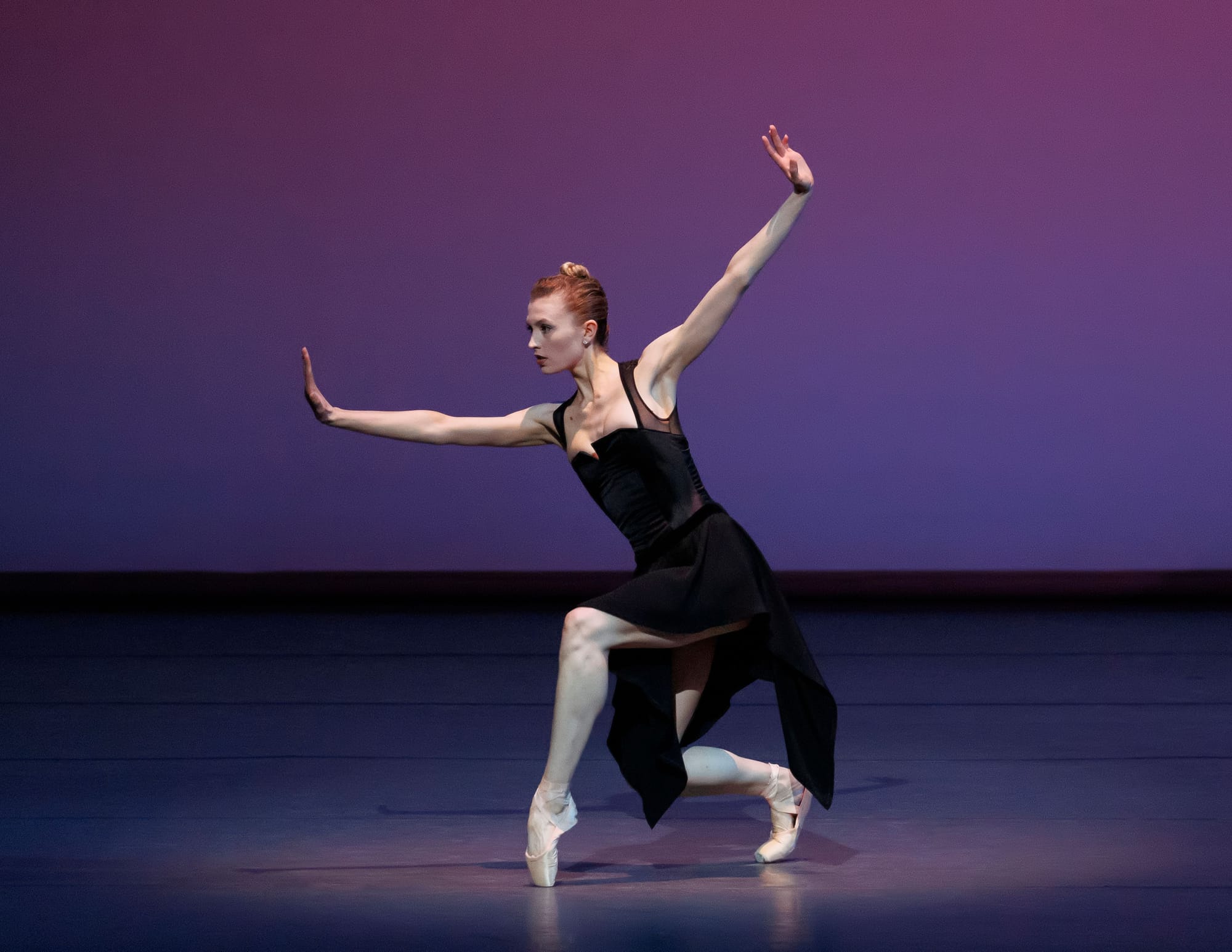
The energy and precision of the dances was very impressive; it is a shame the casting didn’t identify specific dancers, but I especially noticed Chun Wai Chan’s elegant line in his opening solo, Emma von Enck’s sharp energy, Gilbert Bolden III’s percussive dancing, Mary Thomas MacKinnon’s fierce strength, and Miriam Miller’s radiant nobility.
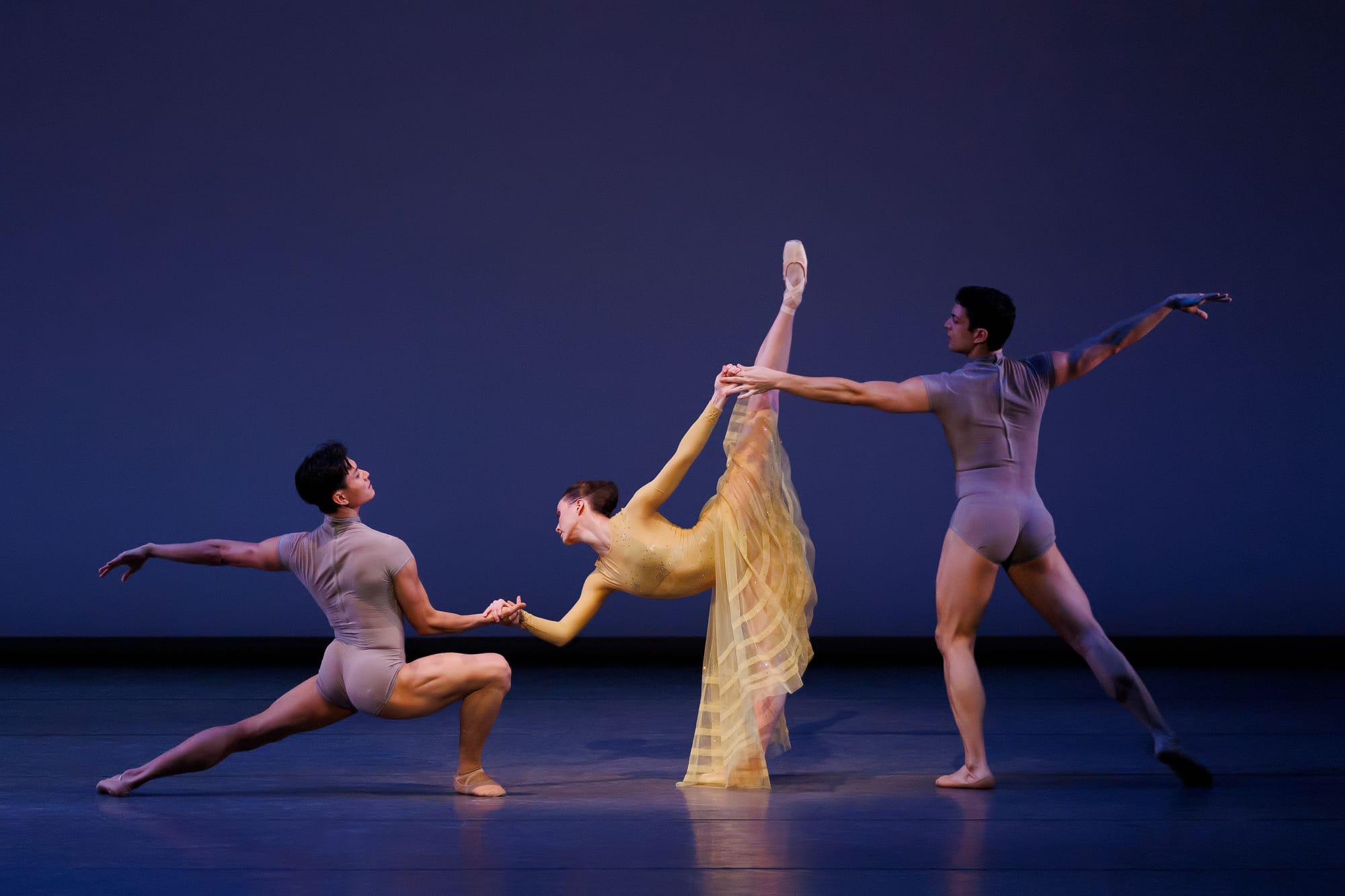
The calmer, dreamy second section opened with a group of men staring up at a large transparent triangle, which unfortunately resembled a giant bikini bottom, though the slow, elegiac music (an excerpt from Ottorino Respighi’s “The Pines of Rome”) and the lyrical choreography soon erased any questionable thoughts. The women wandered on in extremely flattering long yellow dresses, joined by men who occasionally looked like a shimmering school of fish swimming around some exotic underwater flowers: bare legs and silver onesies are not a flattering look.
Miller’s soaring expansiveness seemed to lead the group, and she danced with an impressive ease, including an unusual knee-bend to the ground while on point; she moved with such calm it seemed like a perfectly normal move as she floated down. One of the speakers noted that the gala had raised about three million dollars for the company; the dancers deserved every cent.
© 2024 Mary Cargill



