Presence and Absence
“Tree of Codes”
Company Wayne McGregor and Paris Opera Ballet
Park Avenue Armory
New York, NY
September 15, 2015
The opening scenes of light-speckled people moving on a pitch black stage wasn’t how “Tree of Codes,” the collaborative work featuring Wayne McGregor’s choreography, Olafur Eliasson's visual design, and music by Jamie xx, really began. Instead, the audience was immersed in art from the moment they streamed into the versatile and all-accommodating Park Avenue Armory drill hall, as they walked on either side of the stage and watched refracted silhouettes of themselves projected on a wall in a spectrum of multi-colored presence resembling a Richard Phillips painting.
In creating “Tree of Codes,” the artists not only drew inspiration from, but also sought to transpose onto the stage, Jonathan Safran Foer’s 2010 book by the same title, which combined literature with sculpture; by taking a nearly century-old book, “The Street of Crocodiles,” and by cutting out most of the words, Foer's book created a new work of fiction, with visual and tactile qualities, along with a new narrative. Much like the book, the resulting stage work explored the absence and inscrutable presence of core elements – words in the book, dance and dancers in the ballet – offering mystery, alchemy and multi-dimensionality of rare order for a ballet.
The choreography of the opening passage was concealed by the complete darkness of the stage, with the glowing little lights attached to the dancers’ bodies revealing only hints of what had to be extremely intricate movements. With the actual steps that bore out the celestial imagery remaining almost completely hidden, the scene worked to push the suspense and curiosity of the viewer to the point of fixation, and instill a craving for a more overt presentation of the choreography.
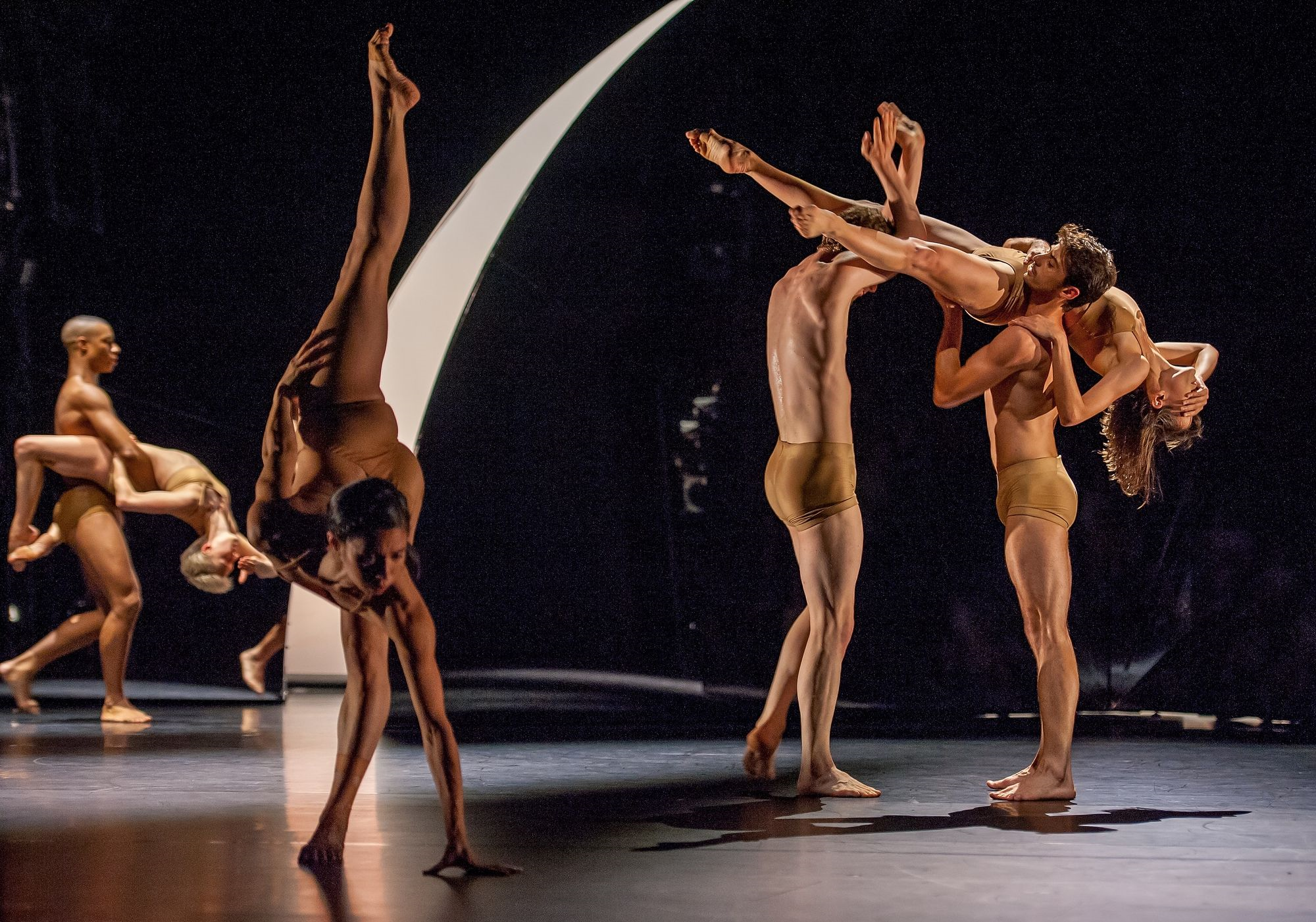
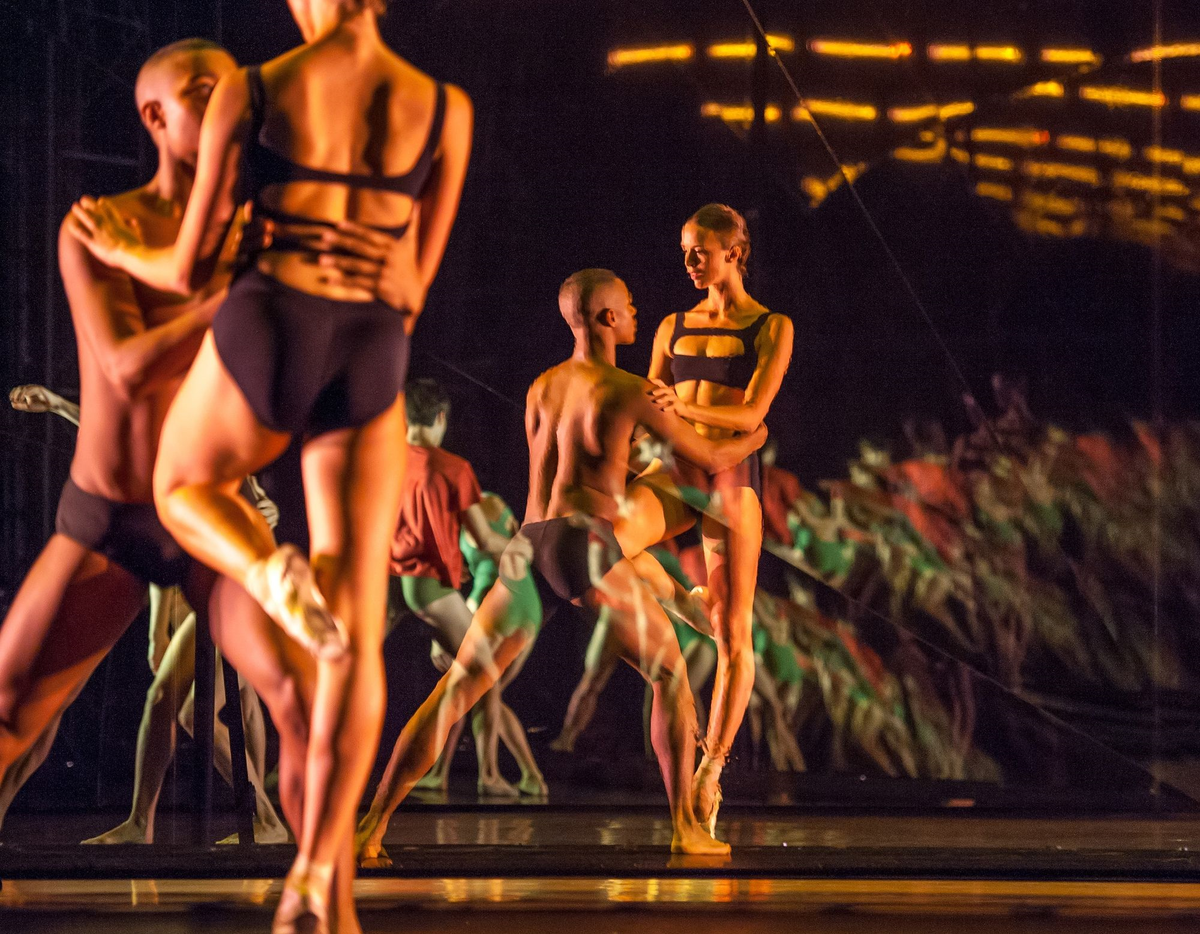
When the stage was finally illuminated, its back appeared as a mirrored surface. With dancers in slight, nude costumes returning to the stage, the mirror duplicated their bodies, creating duality and distance, and an added layer of space among the performers. It also reflected the audience, uniquely making the viewers a part of the show’s universe. The mirror moved as the work progressed, creating stage access points and shapes, and along with the added glass frames that both reflected the dancers on the forefront and revealed the dancers behind them, layered the performance with reflections and dimensions.
The stage work, like the book, was as much about presence as it was about absence, and also, importantly, about the conspicuous presence of absence in its abstract story. The dancers’ interactions with each other, their reflections, and reflections and distanced presence of others through the glass, layered the appreciation of their own bodies in the space that they occupied that extended not only to the limits of their skin, but also seemed to reach out through the reflections and multiply exponentially, only to reflect back on them. The parts of the stage from which they were absent were as important and as affected by the dancing, as the spaces where they were actually situated.
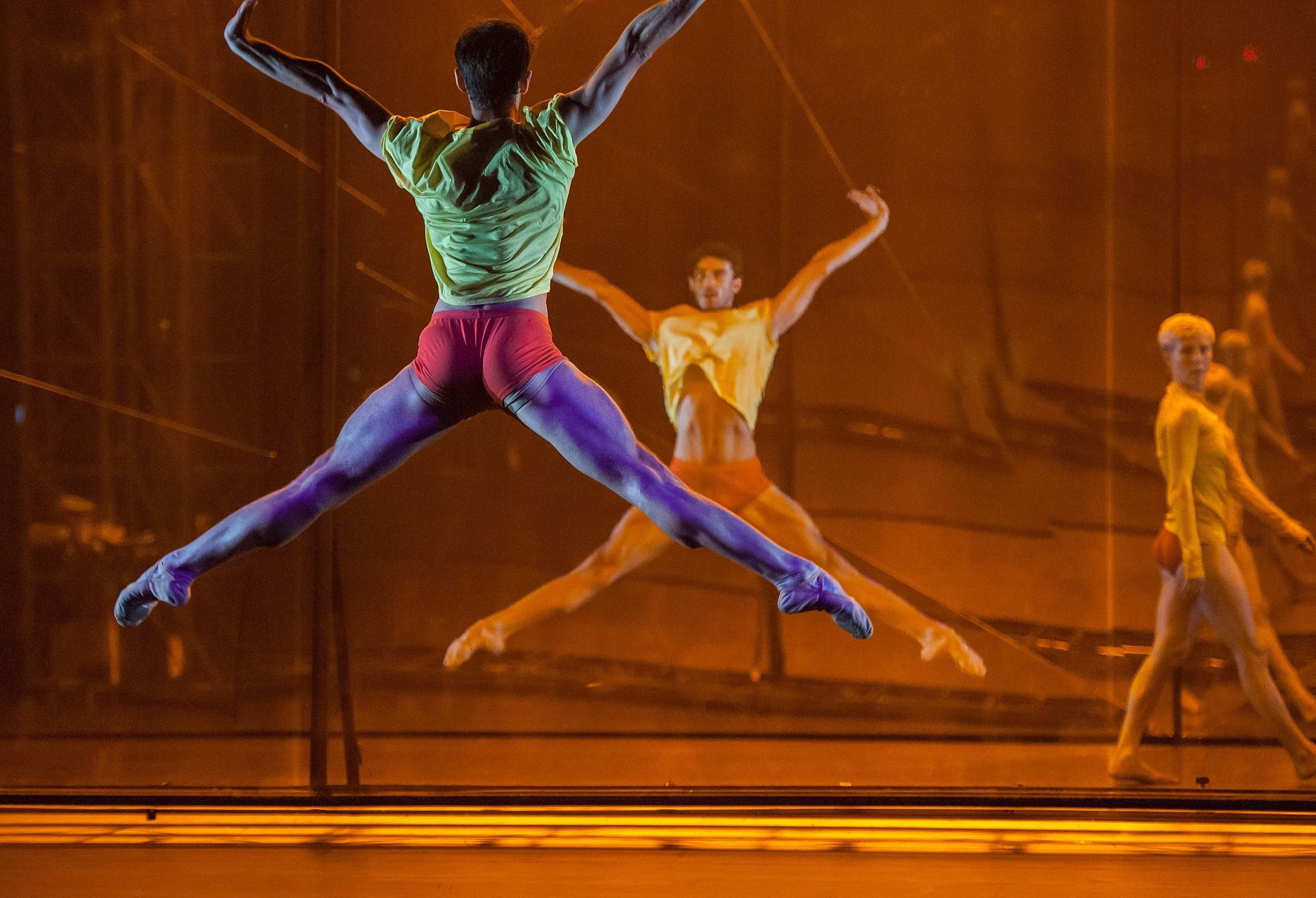
Besides this innovative spatial component, color and the music’s energy also modified and amplified various parts of the dancers’ performance. As the work moved from the beginning’s complete darkness, to a sepia-toned scene of dancers in nude costumes, to black and white and then color-filled palates, the nature of the dancers’ interactions, their expressions and the type of connections they created, also evolved, becoming more consciously interactive, and more personal as the hues multiplied. There were the happy and playful moments in the colorful scenes, but also more somber scenes where people fell into each other, wrapping limbs around their partners, holding tightly and slipping listlessly through embraces, all to refracted reflections in the background.
McGregor’s employment of a split cast with half coming from Paris Opera Ballet and half from his own Company Wayne McGregor added its own facet to the work. The dancers brought their own touches, physicality, training and approaches, contrasting each other and giving the texture of the movements and the overall imagery yet another dimension. Time and time again the dancers extracted aspects of their familiar way of dancing to fit a more classical or a more abstract way of movement.
The stars, if not the leads, were Paris Opera Ballet étoiles Marie-Agnès Gillot and Jérémie Bélingard. Gillot’s appearance in the middle of a curved mirror in a nude leotard shortly after the ballet began signaled a change in the work, and dancing her duet she went from highlighting balletic undertones in her steps to embracing a jagged edge and an anti-classical asymmetry in the poses and their connections. McGregor’s steps for Gillot felt like deconstruction of a ballerina, dissolving her classicism, taking away from her the comfort of structure, until she reacted to a kiss from her partner by falling away to the floor. Bélingard for his part imported into his role dimensions of dramatic portrayal. As he moved across the stage in a solo to the numerous reflections of himself, each reflection seemed to reveal something different by capturing the different angles of his dancing, even if the “real” man possessed only one look.
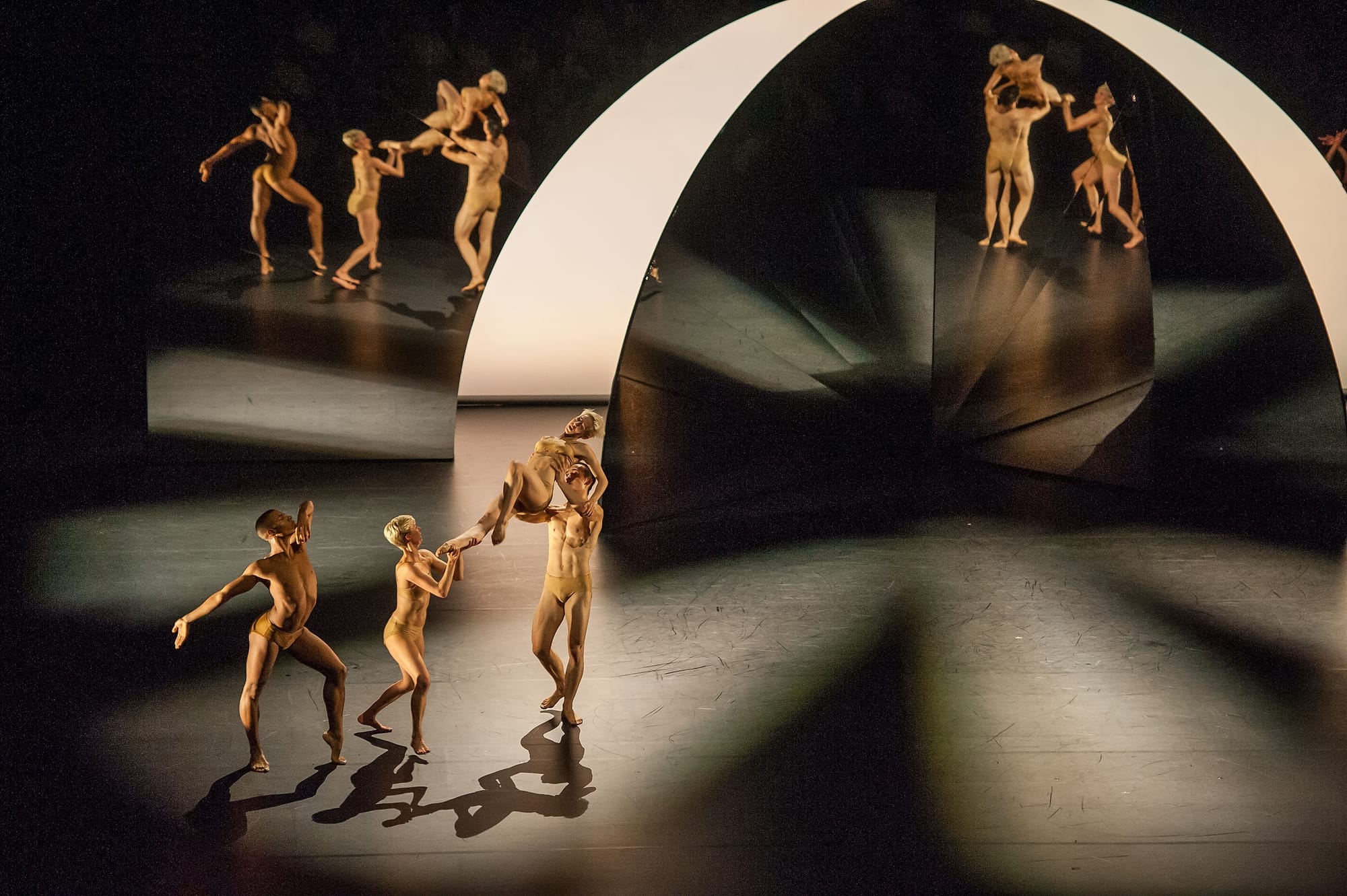
Of course, choreographically, for those who dislike McGregor’s style, the “Tree of Codes” offers a whole lot of it. There are the familiar movements: the pliés with dislocated hips, the sideways drops of women, the weaving accent on flexibility, all to the visual and musical components of precisely the type McGregor likes to contextualize his steps in. But on closer inspection, even some of his more signature elements of the choreography are diffused and refracted here, like the overall imagery. McGregor’s language is there, but it is distanced, spliced, and the choreographer imposes his own “Tree of Codes” approach in the steps, cutting predictable transitions out, replacing fluidity with strength and stern movements, adding classicism where usually the spinal rolls would have been.
The resulting work is modern and captivating, but its most important accomplishment is its successful attempt to recontextualize and reinterpret something already existing – a book with cut out words, and the artists’ own ways of expressions. It’s got creative edge, and a curious way to explore space, shaking up the familiar sense of what’s there, and twisting it in a high energy, visually inventive way. Taken as a whole, “Tree of Codes” isn’t just a modern ballet work. It’s an experience offering a sensory and intellectual rush of the best possible kind.
copyright ©2015 by Marianne Adams



