Portrait of an Artist
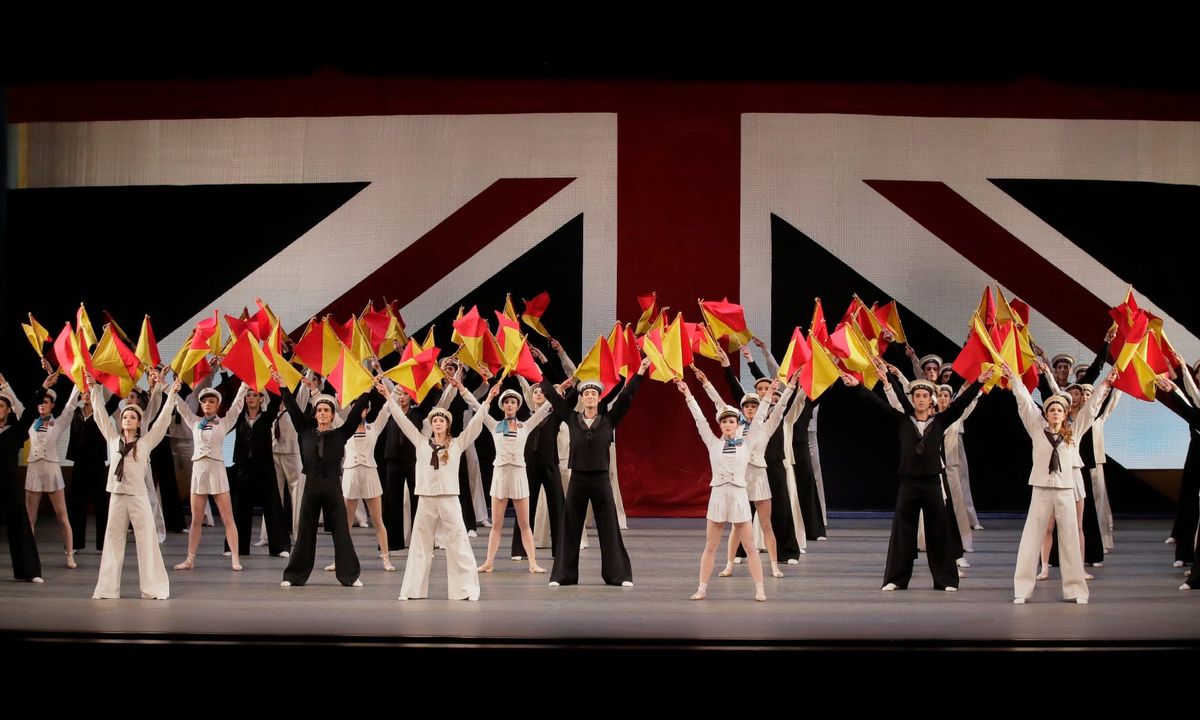
“Robert Schumann’s ‘Davidsbündlertänze’”, “Union Jack”
New York City Ballet
David H. Koch Theater
Lincoln Center
New York, New York
May 17, 2014, matinee
“Robert Schumann’s ‘Davidsbündlertänze’” is an awkward title for a subtle and profound work. The four couples represent various aspects of Schumann’s (and by extension any artist’s) feelings; the two most obvious are Clara the loving and supportive wife, and Clara the wild and slightly dangerous muse. The two other couples represent different aspects of Schumann's personality, which he called Florestan and Eusebius. There were four new couples in the matinee performance, all well-rehearsed and cogent, but the two less differentiated couples (Tiler Peck with Tyler Angle and Ashley Laracey with Sean Suozzi) made stronger impressions than Clara the wife (Teresa Reichlen with Russell Janzen) or Clara the muse (Rebecca Krohn with Zachary Catazaro).
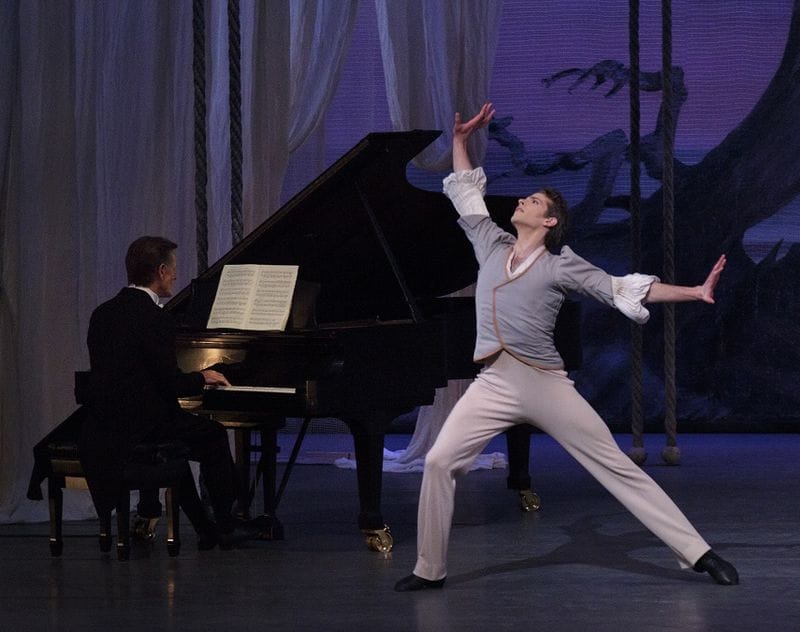
Reichlin and Janzen were clear in both their dancing and their characterization, but as yet, weren’t able to lay open their emotions—this was a demonstration of suffering rather than a recreation, and I missed the raw nerve atmosphere of some earlier couples. Janzen seemed a bit too normal for all the isolation and pain that Adam Lüders seemed to ooze, though he didn’t compensate by overacting, and his slight reticence had its own subtle power. Reichlin, too, is a cool dancer, and the emotions don’t pour out of her—the final scene, as she reaches for Schumann retreating into madness was eloquently posed, fingers just so, rather than a seemingly spontaneous cry.
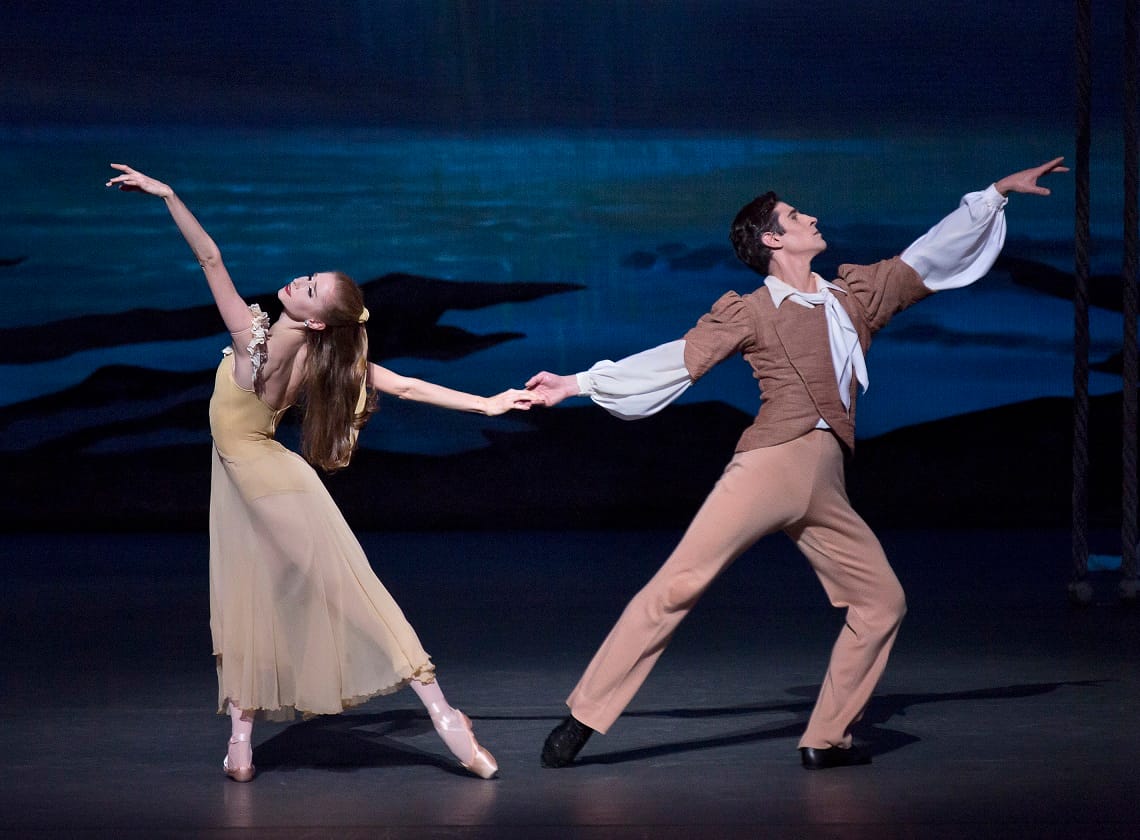
Krohn’s muse was trying to emote, and her dancing had an odd ferocity that was quite moving. But she didn’t have the implacable radiance that Suzanne Farrell gave the role, as she floated off, pointing the inevitable, lonely way that an artist must go. Catazaro, a young dancer, gave a beautifully controlled performance, limpid and elegant. Ashley Laracy is another another dancer who danced, so to say, above her station. She, with Suozzi, seemed to embody the promise of youth, its freshness and its hope. She was absolutely radiant as she swung through her pas de deux, and the pose with her arms outstretched (a brief, glancing reference to a crucifixion) encapsulated the inevitable loss of innocence. Tiler Peck, with Tyler Angle, also had several fleeting crosses in their dances, not as exclamation points, but as memorials. Peck dances as if the stage were a giant harp and the notes she creates soar directly to the audience's heart; every move she makes seems to reverberate.
"Union Jack", Balanchine's affectionately ironic Bicentennial ballet, reverberates, too, with bounding energy. The colorful clans looked well-rehearsed as they poured on. Sara Mearns led the MacDonald of Sleat. Her movements weren't as sharp as some, but she ate up space and certainly was in touch with her inner Boadicea.
Amar Ramasar and Megan Fairchild were the Costermongers. Fairchild underplayed the comedy with a light flair, and Ramasar threw himself into the hoofing, though he seemed closer to Gene Kelly than Cockney. Mearns let her hair down in the Royal Navy, flirting with Andrew Veyette, Troy Schumacher and Giovanni Villalobos. The men seemed thrilled to be able to move without worrying about technique, and the audience loved seeing all the Popeyes swaggering around. Ashley Bouder led the Wrens, a role that has usually gone to taller, leggy dancers. She didn't try to oversell it and was playful, a girl next door for the luckiest guy in the world. These two ballets, made just four years apart, are complete opposites--introspection versus exhuberance, four couples versus a cast of hundreds (well, not really, but it seems like it), complexity ("Davidsbündlertänze" will probably never be an easy sell) versus popular appeal, but they made a memorable program, and it is good to remember the art that created all the easy, bright joy of "Union Jack".
copyright © 2014 by Mary Cargill



