Portrait of a Lady
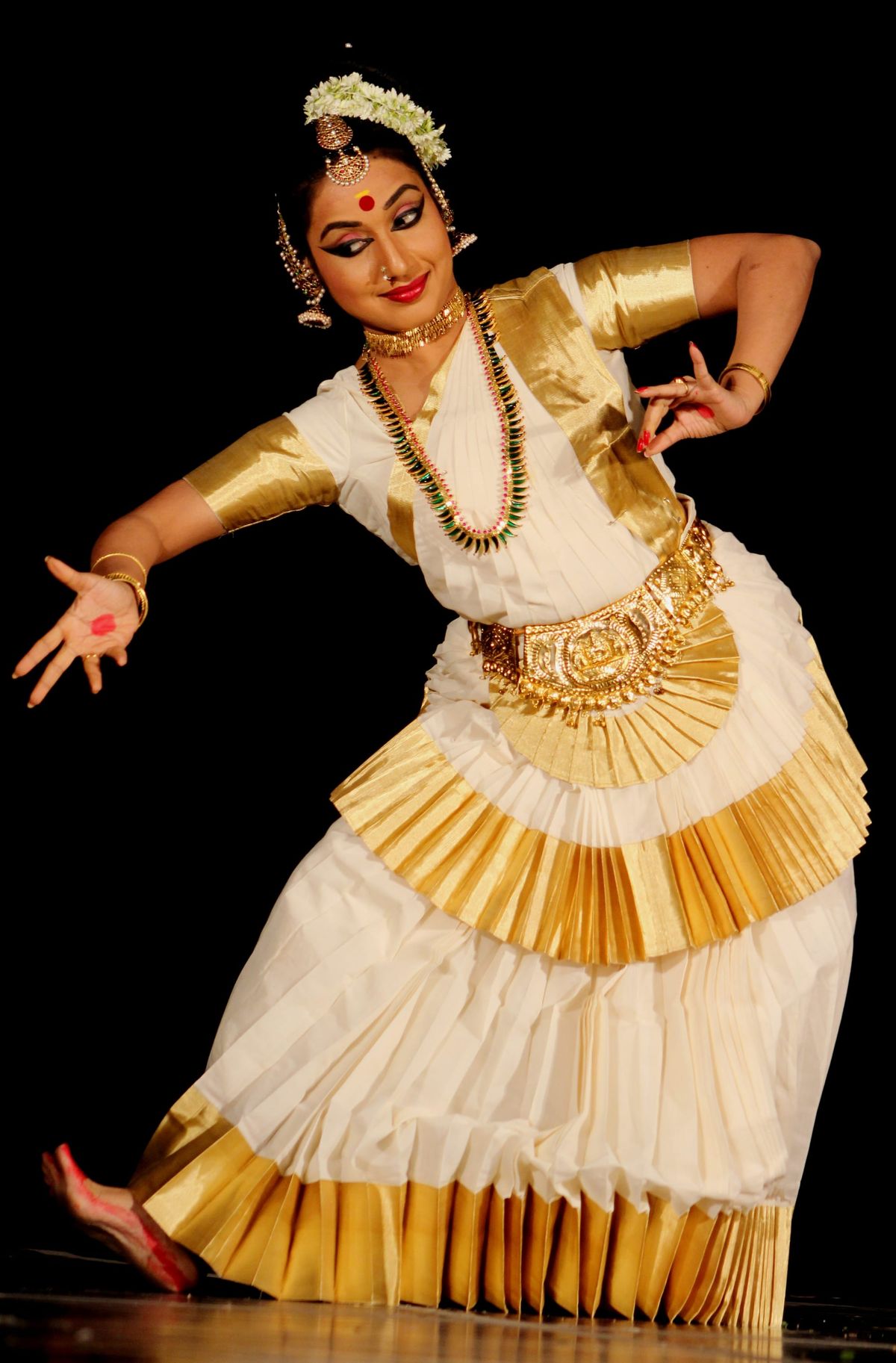
Cholkettu and Ganesha Sthuti", "Sankara Sri Giri", "Anandavalli", "Amrapali"
Neena Prasad
The World Music Institute's "Dancing the Gods"
Symphony Space
New York, New York
April 22, 2017
The World Music Institute's Dancing the Gods sixth annual festival was a two-day presentation of classic Indian dance at Symphony Space; as its curator, Rajika Puri noted, this was the only evening-length program of Indian dance with live music present in New York this year. Neena Prasad, with three musicians (the singer C. Madhavan Nampoothiri, S. P. Ananthapadmanabha on the violin and K. P. Ramesh Babu on the mridangam, a double-headed drum) gave a concert of Mohiniyattam dance. This is a traditional South Indian style for a solo female dancer, a soft, somewhat static form which is part stylized miming to the words of the accompanying song and part slow, graceful poses.
The dancer gave the audience a précis before each dance which helped make the moves more meaningful, even for those, like me, who couldn't understand the lyrics. Prasad is a vivid and detailed actress who can populate the stage with her large, expressive eyes, shifting into different characters with subtle but distinctive clarity.
In the first piece, a dance of praise for Ganesha, the elephant-headed god, Prasad used her smooth, flowing arm movements waving through the air not to imitate an elephant's trunk but magically to embody it. The second dance told the story of Shiva and his fiery third eye and Prasad used her shimmering fingers to show that eye with light blazing from it.
The most interesting work was the final one, a more modern piece choreographed by Prasad herself. It told the long, fairly complicated story of Amrapali, a courtesan who fell in love with an enemy of her country, was imprisoned, and who, after meeting the Buddha, became one of his followers. It had a powerful, stylized emotional range, from Amrapali's playful childhood (her pet parrot, through Prasad's elegant fingers, seemed to fly), through her capture where, just by crossing her arms and leaning back, the audience could feel the prison bars, to her final sublime renunciation.
Despite Prasad's open-hearted and generous performance, the Mohiniyattam style is, for a Western viewer without a detailed knowledge of the stories being danced, a bit low key and uniform. She might have been even more impressive as part of a varied evening, but her slow, gentle, and gloriously feminine flow was breathtakingly beautiful.
Copyright © 2017 by Mary Cargill



