Pomp and Circumstance
“Procession”
The National Ballet of Canada
Four Seasons Centre for the Performing Arts
Toronto, Canada
November 1, 2025
How satisfying it is when something lives up to the hype. Choreographic duo Bobbi Jene Smith and Or Schraiber have generated a lot of buzz in recent years, creating works for preeminent dance companies across North America and Europe while also crossing over into work in film and theatre. There was a lot of anticipation leading up to the world premiere of “Procession”, their first commission for the National Ballet of Canada. A full length plotless contemporary ballet is a gamble. Typically, most non-narrative works are one act pieces that can be paired with others in a mixed program. “Procession”, however, is complete on its own, an utter tour de force. It clocks in at 90 minutes (including one intermission) and has a strong energetic arc and enough to say to easily fill the time. “Procession” is modern, distinctive and already fits the NBoC dancers like a glove. Artistic director Hope Muir has been candid in interviews that the company must find ways to “stay relevant” and grow new audiences. With this new addition to the repertoire, her mission is accomplished.
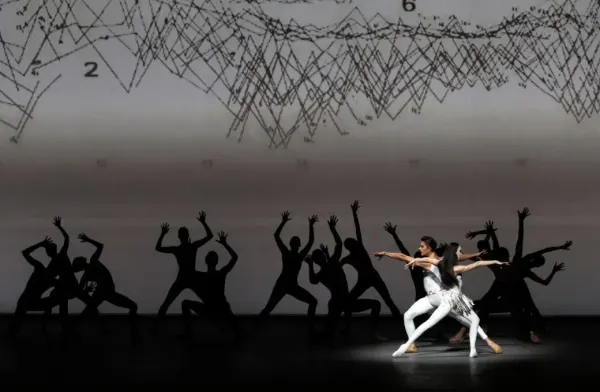
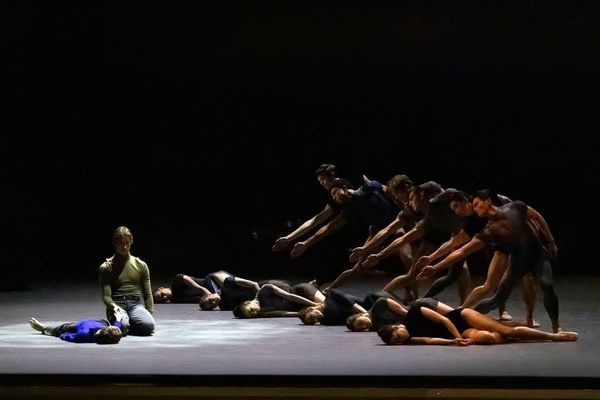
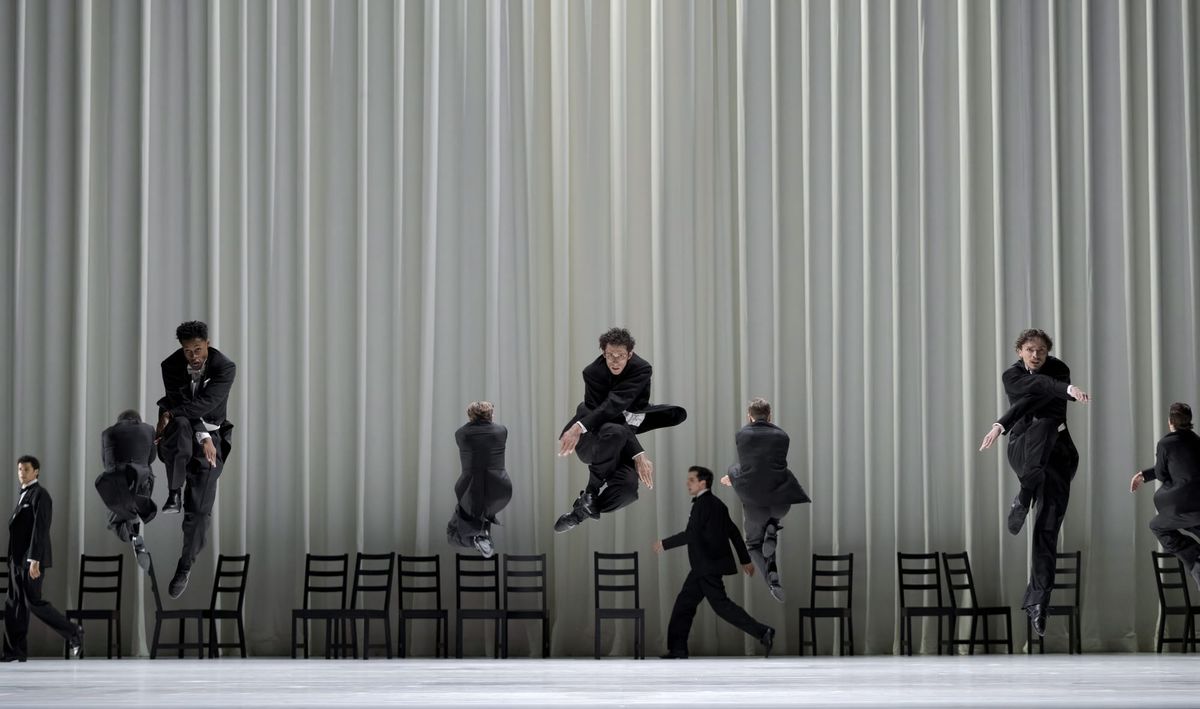
“Procession” features almost half of the entire company and has the same cast dancing every performance. There are 32 dancers, 19 men and 13 women, spanning all ranks. As the title suggests, the work centres on themes of ritual, community and collective consciousness. The dancers form a mass, moving away and then towards something, in celebration and then in mourning. There is an undercurrent of traditions and the ways they are passed down, lending a sense of timelessness and universality to the piece. Whether it references a wedding, a coming of age ceremony, a funeral or a religious rite is less important. The large and small dramas of everyday life unfold on the stage adorned with little more than a white pleated backdrop. Cleverly, the wings are sectioned off with black walls, so entrance and exits are obvious and intentional.
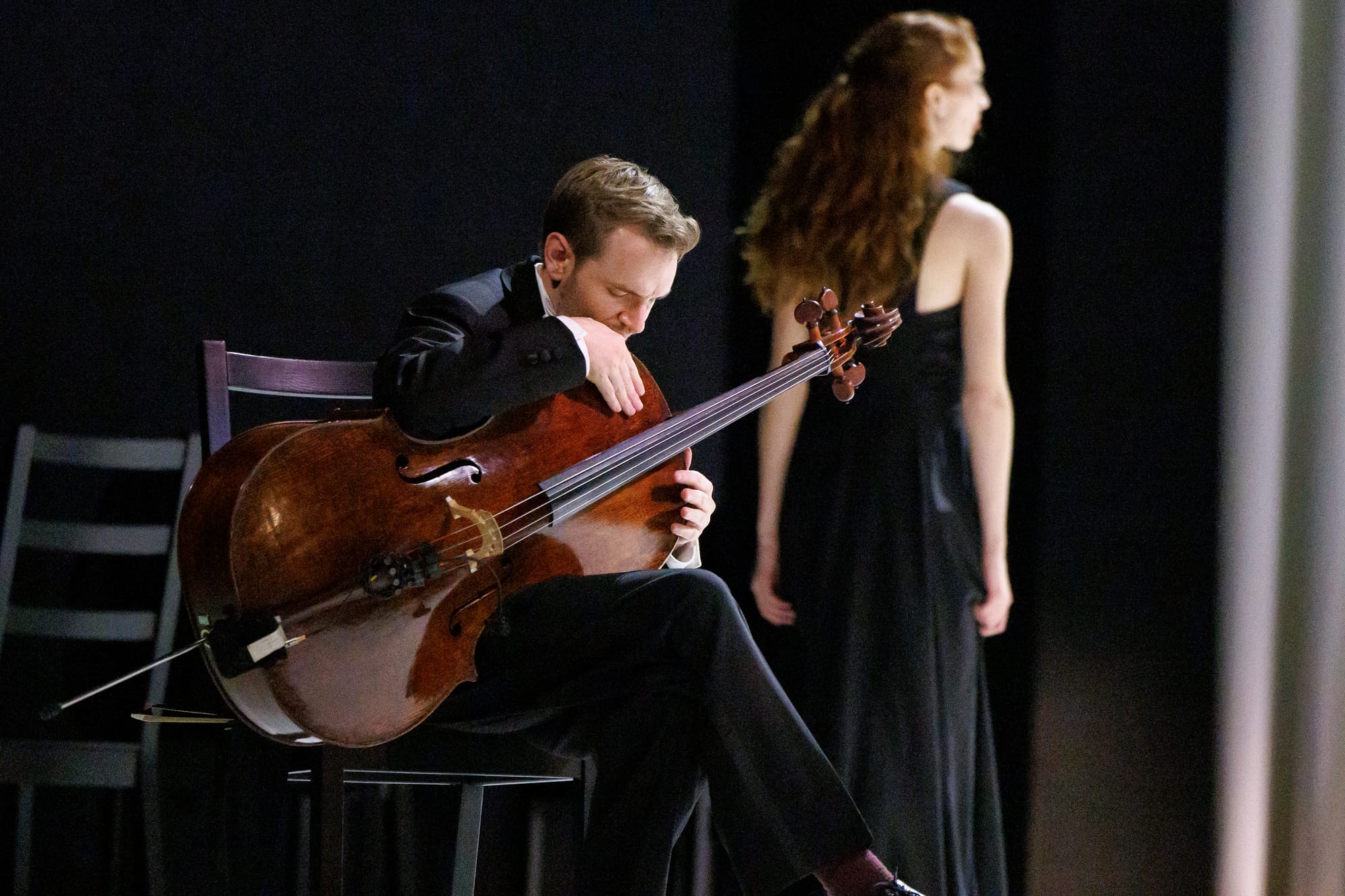
Adding to the sense of formality is the score, including works by Henry Purcell, Antonio Vivaldi, and Jean-Philippe Rameau — “Baroque bangers” as Smith and Schraiber called it in an interview for CBC radio. Works of Gustav Mahler, Maurice Ravel and Manuel de Falla provide contrast and texture. The score was arranged by cellist Coleman Itzkoff, who also performs on stage throughout the ballet, alongside soprano Rachael Wilson, creating an immersive feel. There are other ballets where musicians perform on stage, but usually they are seated on the side or at the back. In “Procession” however, they are active participants and characters in the work. Itzkoff joins the crowd and shows off his own dance moves, while Wilson struts across the stage and even smokes a fake cigarette at one point.
The palette is simple — black and white. Dana Osborne’s costumes are clean and elegant, tailcoats and tuxedos for the men and long, silk black evening gowns for the women. The dresses in particular have a luxurious weight to them and move well as the dancers glide, kick and jump. They are uniform in style but each has a different neckline or different details on the back. The men keep their shoes on throughout, whereas the women begin barefooted and later return with ballroom-style heels. In the second act, the dancers’ appearance is less formal. Long hair is let loose, a bowtie hangs undone, jackets are removed.
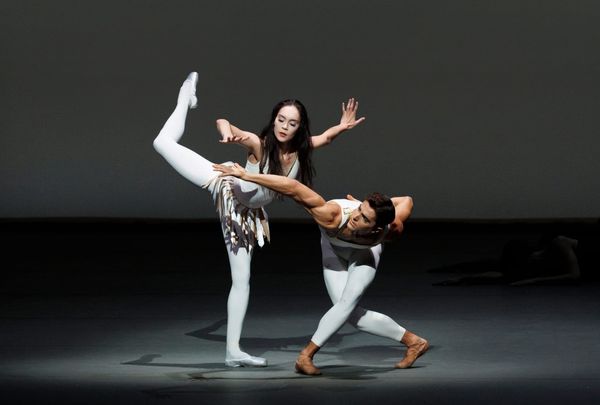
Smith and Schraiber both spent years at Batsheva Dance Company, dancing for famed choreographer Ohad Naharin. The influence of Naharin’s Gaga movement language is strongly felt in “Procession”, in the way that movements have an improvisational quality that is often unexpected and keeps the audience guessing. Gaga classes do away with mirrors and shift the focus to internal sensations and guided imagery. Massaging one’s flesh from within, using one’s bones, for instance, could be a prompt that will guide motions that manifest differently in different bodies. Smith and Schraiber speak of trying to make the invisible visible, and they succeed in this. Watching their choreography can be a visceral experience. Their creative process highlights individual dancers’ unique qualities and the dancers appear very comfortable in the movement vocabulary of “Procession”, even though it may be new to them. There are some memorable solos, duets and trios and the ensemble work is also very strong. The choreographers draw on the facility that stems from the dancers’ classical training, but also create space for whimsy and colloquial gestures usually left out of more rigid classical structures. They also draw on the familiarity and relationships between the company dancers. The NBoC really looks like a family in “Procession”.
“Procession” is influenced by more than Gaga though. There is a cinematic quality to the work, each scene expertly framed. Elements like a hearse rolled on stage by 4 dancers or moments where the dancers vocalize make the piece theatrical. Recurring motifs such as wide and deep grand pliés call to mind Jiří Kylián’s “Bella Figura”. Scattered chairs are reminiscent of Pina Bausch’s “Cafe Müller”. A growing line of dancers trailing one another snakes across the stage, like the shades in “La Bayadère” or the swans entering in act II of “Swan Lake”. There is a heavy influence of Slavic folk dances, with big jumps and drops to the knee for the men and shuffling steps with linked arms for the women. Other moments evoke circle dances such as the hora. When De Falla’s music comes on, the dancers assume arm positions and the grounded footwork of flamenco dancers. The dynamics of the groupings of dancers forming and dispersing is exquisitely musical in a way that is Smith and Schraiber’s own.
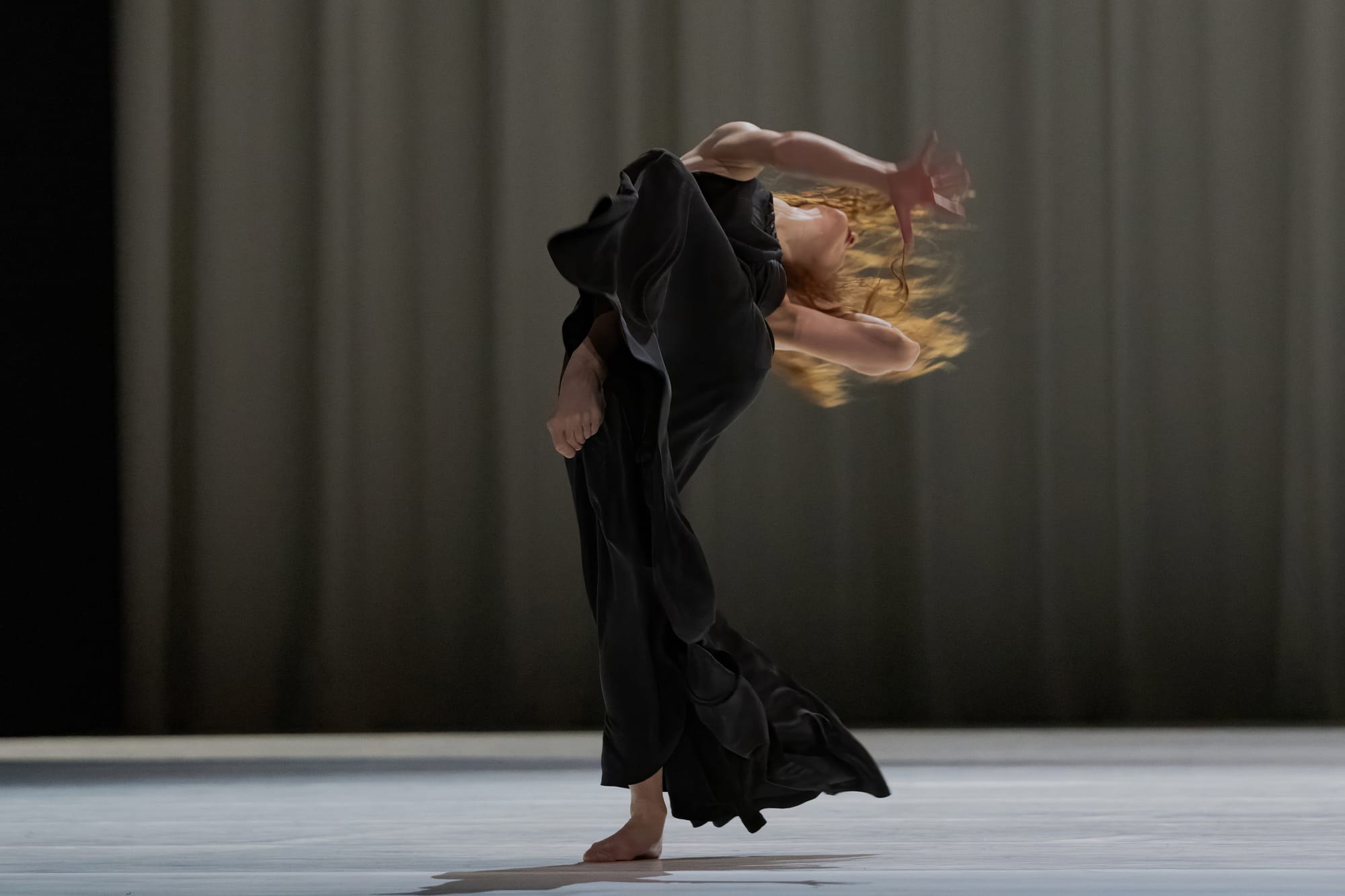
There were many memorable, stand out performances. Ben Rudisin was an imposing figure throughout the ballet. He stands alone in front of the curtain at the beginning and is the last figure to leave at the end. He oversees the procession and ushers the dancers along. There was a moving pas de trios featuring Isabella Kinch, Spencer Hack and guest artist Alexander Bozinoff. The partnering work is unusual, as they link, unlink and huddle together. Hannah Galway is one of the most adept and compelling dancers in the company when it comes to the contemporary repertoire. As expected, she excelled here, diving deep into Smith and Schraiber’s full throttle movements and owning it. In a pas de deux with Christopher Gerty, he arches back into a yoga camel pose and she climbs and balances standing on his chest like it is the most natural thing to do. Young corps de ballet member Connor Hamilton is petite but moves with tremendous reach. In her solo, she surprised us with her range and facility. She seems able to access so much within herself while making it look easy. Genevieve Penn Nabity impressed with her signature attack and clarity of movement, her limbs cutting through the air in her solo in the Vivaldi section. Last but not least, Siphesihle November’s speed, musicality and ballon were on display through many sections of “Procession”.
“Procession” is a remarkable work for the company that uses the dancers' strengths while pushing them into new territory. The results speak for themselves. It is a work with so much to offer to the audience and hopefully can be seen by many.
copyright © 2025 by Denise Sum