Polished Jewels
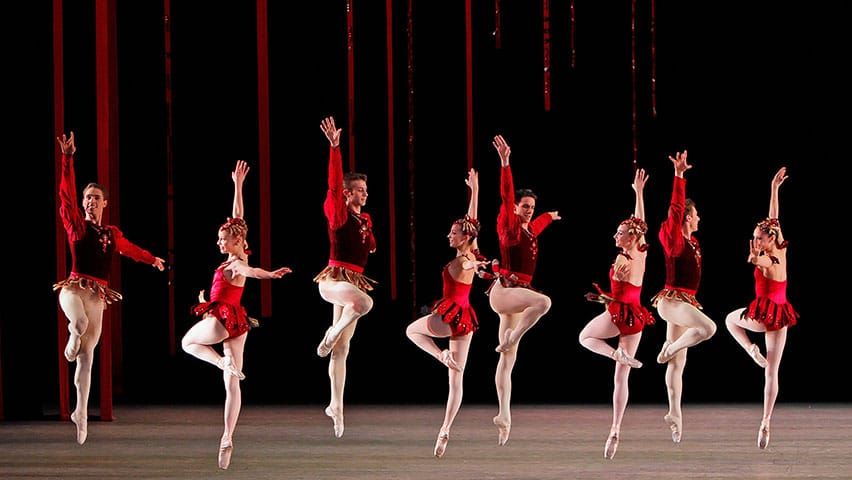
"Jewels"
New York City Ballet
David H. Koch Theater
Lincoln Center
New York, New York
September 19, 2018
The second night of New York City Ballet's fall season featured several debuts in the ever-popular "Jewels", as well as luminous performances by the established gems, Tiler Peck, Sterling Hyltin, and Sara Mearns. Though not credited, Mimi Paul, Patricia McBride, and Edward Villella provided some extra coaching, and presumably they deserve some of the credit for the delicate detail and nuance shown by the dancers.
Tiler Peck has danced the Verdy role in "Emeralds" for several years, but her performance looked fresh, without the overly polished emphasis she can sometimes give her always impeccable dancing. She seemed lost in the music, moving with an exalted isolation that avoided direct contact with the audience. There was an air of hushed secrecy and private joy that was an honor to share. Her dancing, smooth, plangent, yet with subtle changes in dynamics, had many almost unbearably beautiful moments, but I especially remember the first call of the horns as she slowly gave her hand to her partner, the air almost quivering with a dramatic undercurrent.
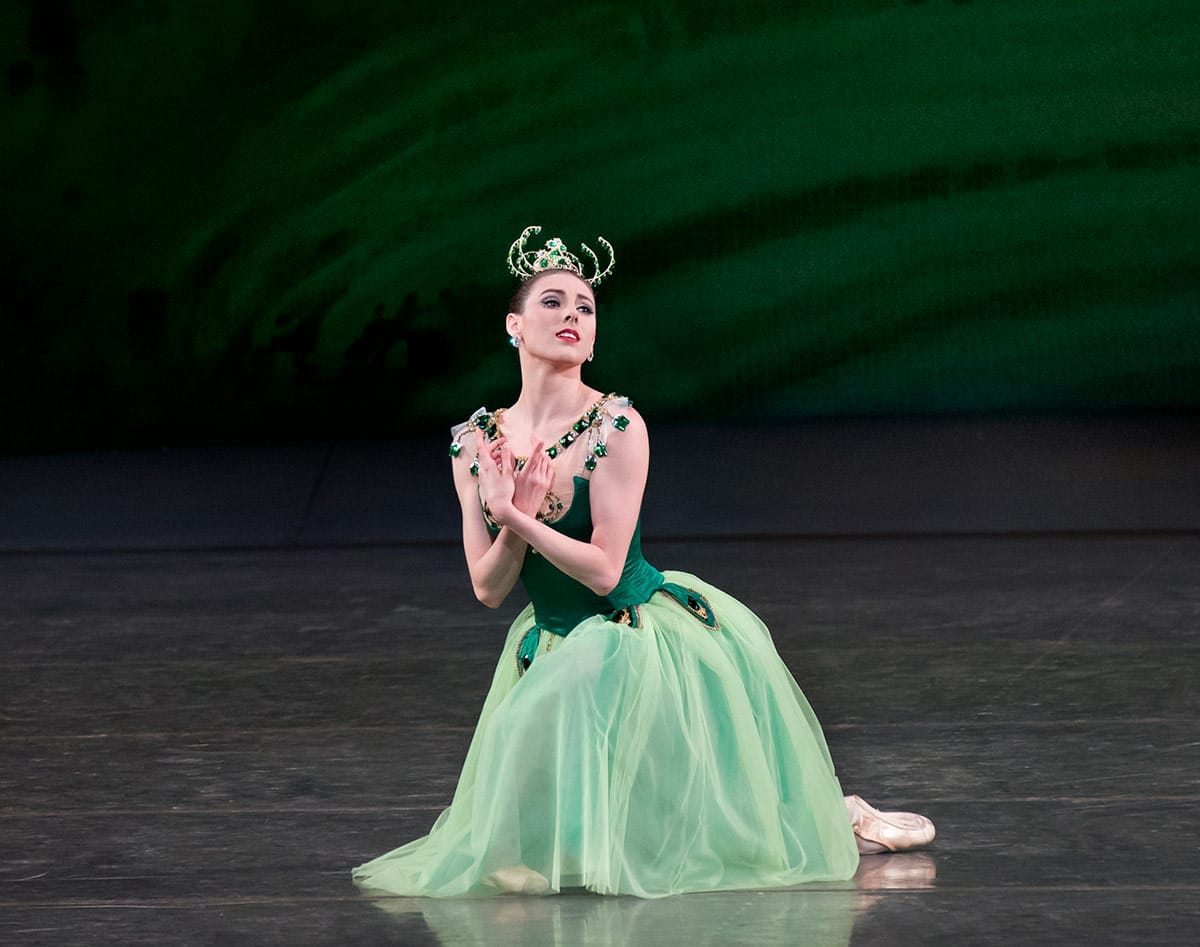
Taylor Stanley made his debut as her cavalier, dancing with a generous authority. Those little floating lifts looked magical. For me, though, his soft and boneless dancing, so intriguing in more modern pieces, did not evoke a knight from another world, a visitor who sadly but inevitably must leave; he looked completely at home in that magical world and some of the Romantic tension between two incompatible worlds was missing. (See James and the Sylph, Odette and Siegfried, Ondine, etc.)
This was a world that Unity Phelan, making her debut in the Mimi Paul role nobly supported by Adrian Danchig-Waring, inhabited completely. She danced the walking pas de deux as if in a dream, with shimmering little steps and the light unexaggerated little jumps in her solo made is seem as if she were dancing on moss.
There is no moss in "Rubies", that raucous, applause generating salute to American swagger. Claire Kretzschmar deputed as the tall girl, dancing with an emphatic confidence which avoided the sometimes overly emphasized pelvic thrusts. She treated with men with a cool, defiant hauteur that was neither brash nor vulgar. The deep penché arabesques were a bit hesitant but she controlled them well, and it was a thrilling debut.
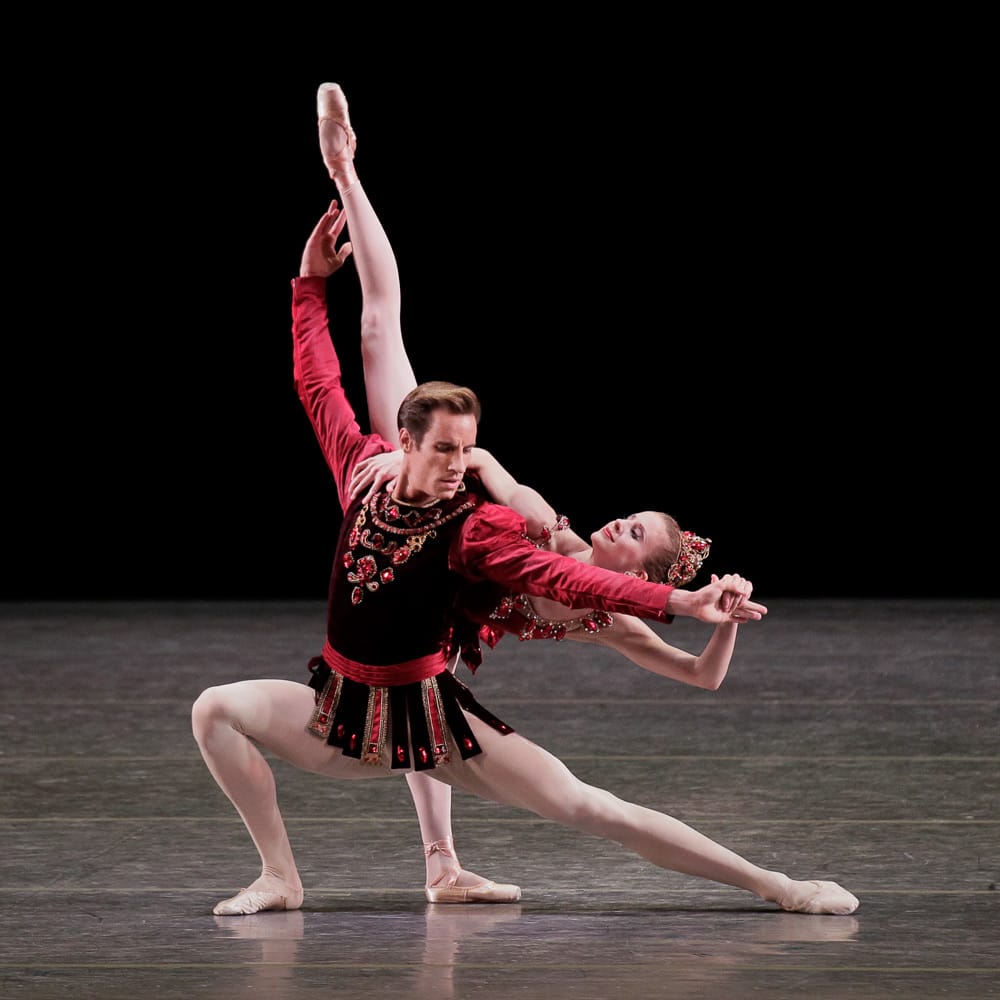
Sterling Hyltin, a "Rubies" veteran, also downplayed the hip thrusts, turning them into grace notes, not exclamation points. She danced with a refreshing sparkle, seeming to enjoy every moment, and the shapes she made were scrupulously clear. Her final series of turns, as her arms carved out those angular shapes, had both speed and musicality and well deserved their ovation.
Andrew Veyette was a generous partner but his dancing was a little heavy and, perhaps to compensate, he overdid the aw shucks strutting a bit, as if he were a comedian and Hyltin his straight man.
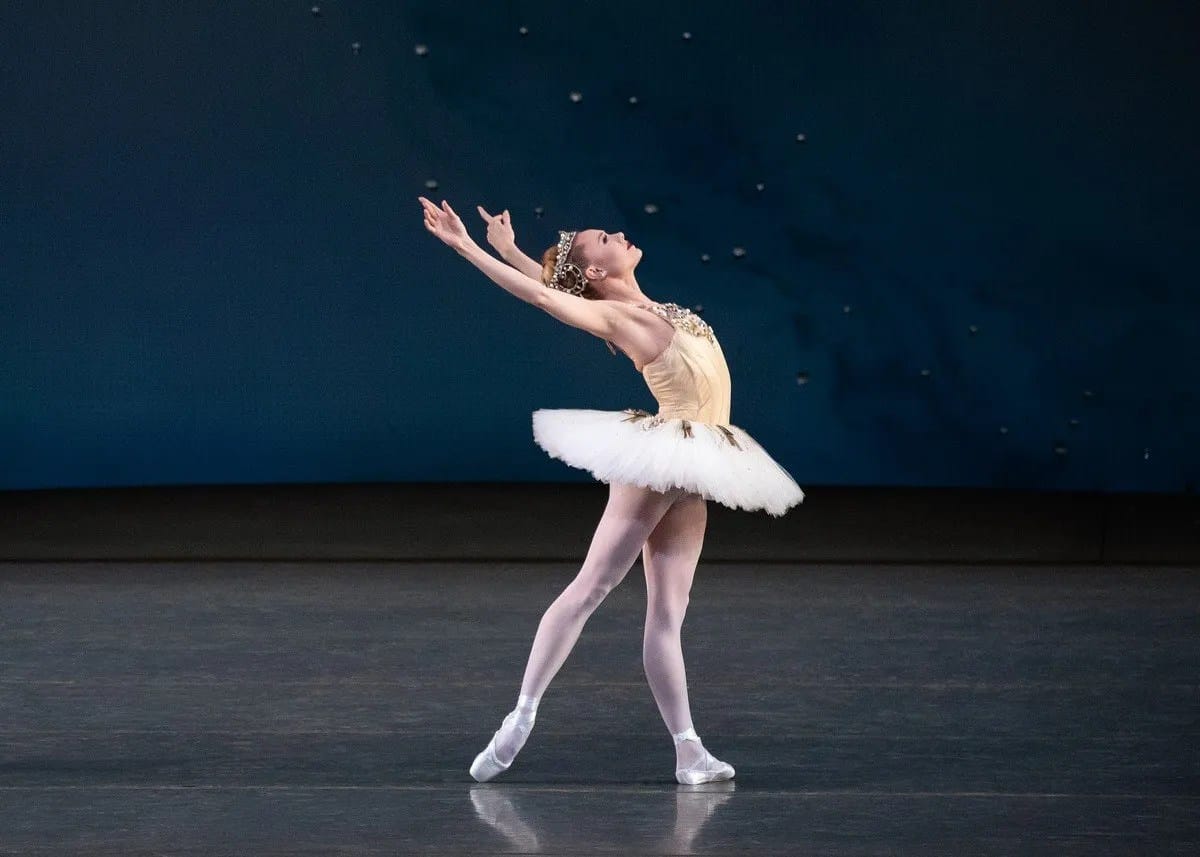
Sara Mearns was her usual dramatic, intense, and gripping self in "Diamonds" as she plunged into all the "Swan Lake" echoes of the pas de deux, her face a mask of secret sorrow and her arms pushing against her fate. Her take on the role may be a long way from the "just dance" approach, but her dancing is spontaneous and natural, without any melodramatic flourishes or overly studied effects; her dancing, not her face, told her story. That story may be unorthodox, but I will listen as many times as she can tell it.
Joseph Gordon made his debut as her partner. He is young and on the slight side, and some of the partnering was a bit tentative, but his dancing, especially his clean, crisp, and thrilling turns a la seconde, was immaculate. But Mearns could not help overwhelming him physically and emotionally, and his youthful, sweet-natured eagerness, while appealing, had none of the cool, regal mystery that the "Diamond" cavalier needs.
Copyright © 2018 by Mary Cargill



