Playing Horsey
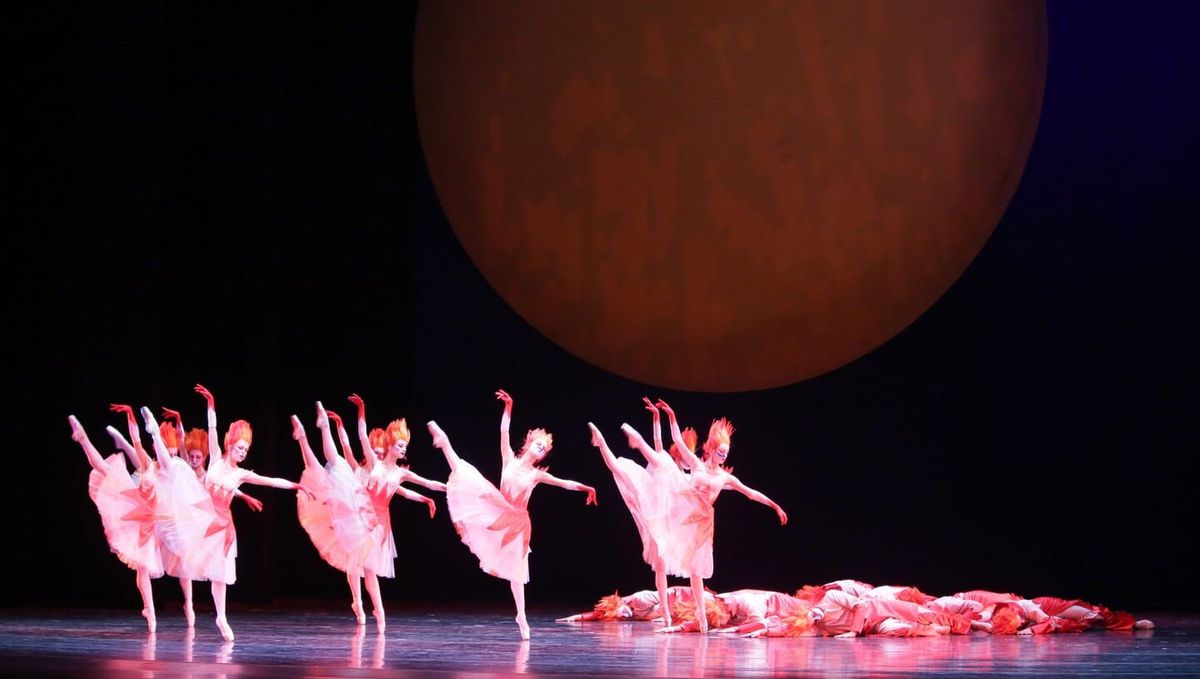
"The Little Humpbacked Horse"
Mariinsky Ballet
Lincoln Center Festival 2011
Metropolitan Opera House
New York, NY
July 12, 2011
"The Little Humpbacked Horse", choreographed by Arthur Saint-Léon to a score by Cesare Pugni in 1864 for the Mariinsky, was the first ballet based on a Russian theme. Over the years, many hands have reworked it, and the current version has only the story to connect it with the original. Pugni, et al. were replaced in 1960 by a Rodion Shchedrin score (written originally for Maya Plisetskaya) and the current version was choreographed in 2009 by Alexei Ratmansky. The story, based on a fairy tale by Petr Yershov, is packed with incident, not all of it clear without studying the synopsis, but basically "once upon a time, there were three brothers, and the younger one was thought to be a fool...". Well, the fool ends up with the Princess and the kingdom, with the help of a feather from one of the firebirds and a little magical horse (prone to turns a la second).
The villain of the piece is the Gentleman of the Bedchamber and his boss, the Tsar (a Khan in the original, which allowed for what sound like wonderfully oriental accents) who send the fool off to the bottom of the sea. Ratmansky, who has often mined ballet history so effectively, has created a new ballet; this is in no sense a pastiche or a poor-man's 19th century. The music, a gloriously bright and tuneful score with hints of folk-elements, certainly helps. The costumes are bright as well, almost cartoonish at times (especially for the town-folk in their green Mad Hatter outfits and vaguely 1920's gowns--odd that they should be ruled by a Tsar!). The sets are minimal, with some brightly colored over-sized furniture and occasionally large shapes at the back of the generally dark stage which have video shapes projected for atmosphere. This stylization gives the ballet a timeless feel, though I do have a hankering for the rich detail seen in pictures of the older productions and by the end, I had the feeling of being trapped in a children's pop-up book.
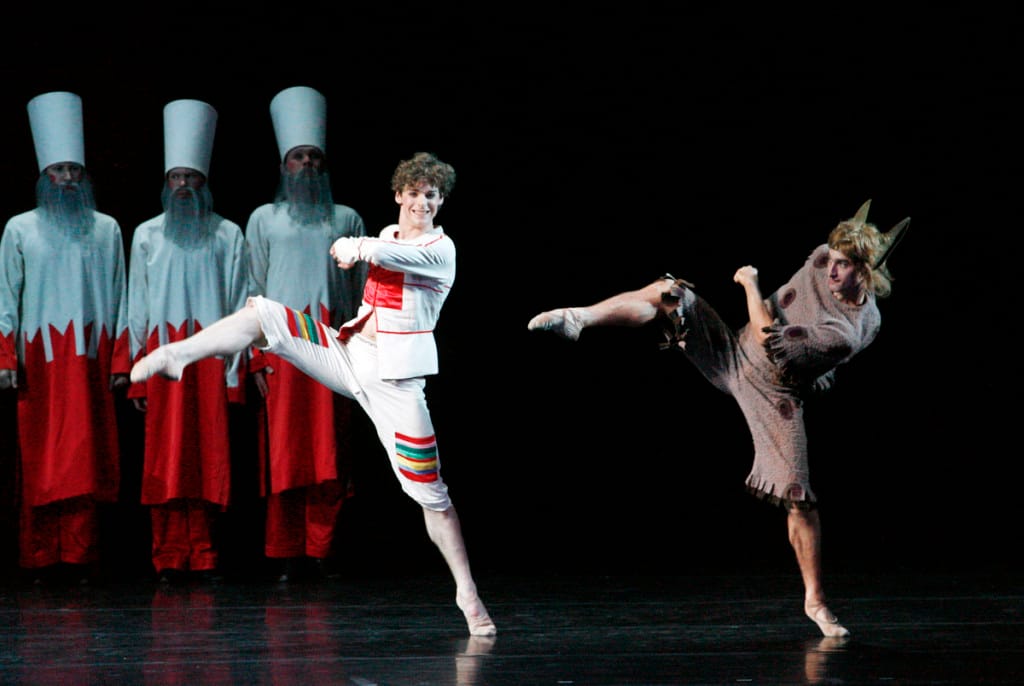
But the simplicity of the sets let the choreography shine clearly, and, though the characterizations are not on the level of Ratmansky's "The Bright Stream", the choreography was vivid, varied, and lots of fun. The fool, Vladimir Shklyarov, had a number of solos with dazzling beats. He looks about sixteen, a teen heartthrob, and the role used his charm, especially in the final dance, when he kept interrupting the flow to gesture to the audience--"just watch this" he seemed to be saying, and it came across as pure generosity, not arrogance.
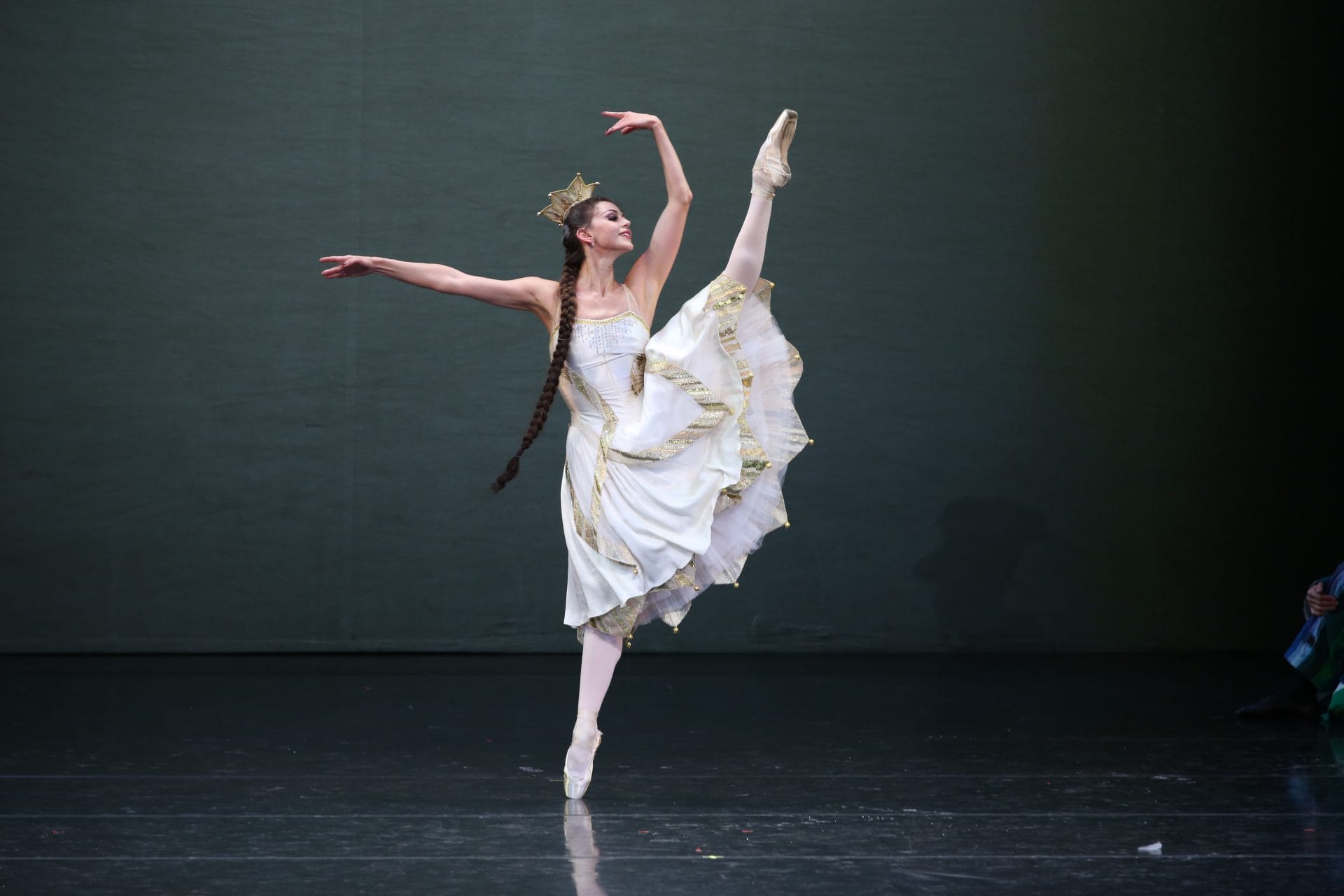
The Tsar Maiden, lusted after by the Tsar and loved by the fool, was Viktoria Tereshkina, sporting a long braid which she would occasionally brandish. This was the very model of a modern Tsar Maiden, who wasn't shy about what she wanted. She had no qualms about forcing the Tsar to find the ring she wanted (it was at the bottom of the sea, and the Tsar thought the fool would die trying to get it) before she would consider marrying him, and was perfectly happy to watch the Tsar boil himself to death in hot water. Fairy tales do not tend to be morally ambiguous, and the wicked are punished gleefully. Ratmansky gave her a signature swinging movement, modern and charming. I especially liked her first pas de deux with the fool, where they danced in tandem, echoing each other's movements, youthful and endearing.
Not all of the choreography is successful, and the large group dances for the townsfolk and the nurses didn't really relate to the story in the way the dances for the farm workers did in "The Bright Stream". The (apparently obligatory) gypsy dance, oddly costumed with surrealistic faces on their tunics, was full-blooded and musical, but again, seemed mostly padding, since it had nothing to do with the story. The under sea scene, on the other hand, was related, as our hero ventured there to find a ring for the Tsar to give to his intended. The sea creatures again were oddly costumed (the designer seems very fond of kerchiefs and swimming caps, which tend to make the women look anonymous), with the men and women wearing long skirts with more surrealistic faces, upside down this time, on their bodices. The choreography was obviously influenced by Balanchine's Goons from "The Prodigal Son", as they formed phalanxes. In the original, this seems to have been the time for one of those formal exercises in exalted geometry, but I expect that idea is probably not feasible now unless the choreographer's name is Balanchine or Ashton. The Princess of the Sea (the magnificent Yekaterina Kondaurova), flanked by two seahorses, danced a stunning pas de trois, where she seemed to be swimming, combining the feeling of fighting against gravity while floating. (Unfortunately, for the curtain calls Kondaurova changed back to her earlier horse costume, and I don't know how many people realized who she was; she got a private cheer from me.)
The true villain of the piece, the bedchamber gentleman, was danced by Yuri Smekalov, with an enthusiastic elasticity--he doesn't even get his comeuppance, unlike the Tsar (Andrei Ivanov), in a Wizard of Oz-like performance, who is tricked by the little horse into boiling himself to death. (Apparently the original fairy tale wasn't popular with the Russian officials, who banned it for a while.) This version, though too long, is a clever and imaginative updating of an old ballet--it is just a shame we can't see the original, too.
copyright © 2011 by Mary Cargill



