Play and Work
"Play"
Ballet Arizona
Joyce Theater
New York, New York
February 22, 2012
Ib Andersen, the elegant, understated, and irreplaceable New York City dancer (and for those of us with a long memory, Bournonville stylist extraordinaire) returned to New York as the director of the 35 member Ballet Arizona. Not surprisingly, these dancers embody some of his best traits; elegant, open upper bodies, modesty, precision, musicality, and the strength to make everything look easy. The dancers, from a wide variety of countries and schools, all move in a coherent and vivid style; this is a true company, and not a collection of dancers.
So, thought their New York debut was called "Play", it was obviously the result of a great deal of work. "Play", a two act, plotless work by Ib Andersen, used five composers and most of the company. The sections were distinct, so this gave the feeling of a collection of shorter works. Andersen has obviously been influenced by other choreographers, notably Balanchine. His choreography tends to be structured, and full of steps, though he does not have an overly fussy approach, and uses stillness well. And he avoids the current style of overdoing the partnering. Pretzels, fortunately, seem to be out of favor in Arizona.
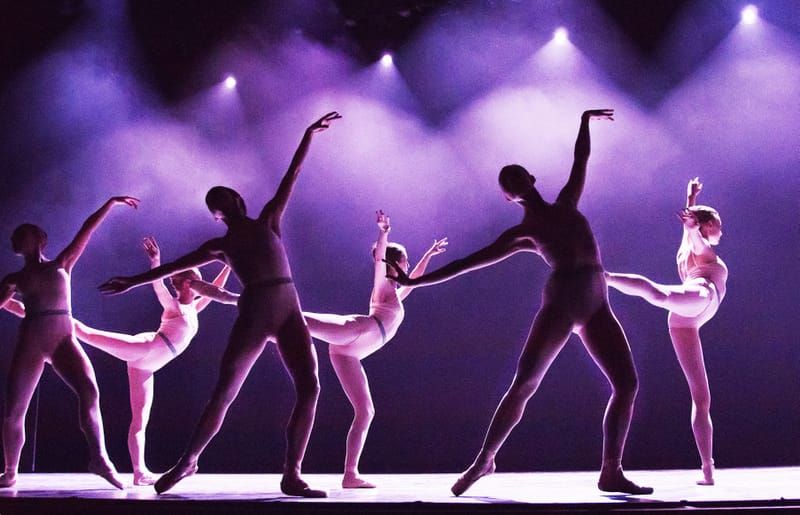
The opening piece was visually stunning, with a black background and scrim studded with little lights, obviously inspired by the music, Mozart's "Twinkle, Twinkle, Little Star". (Well, that's not really it official name, but it should be.) A group of ten dancers wove in an out, dancing various solos, showing off their impeccable placement, quick little jumps, and soft landings. These men don't clump. There was a slight air of the classroom in most of the variations, and though the dancers' techniques sparkled, the audience, at least on this first meeting, didn't really get a sense of them as performers, and I would have liked a tinge of drama or personality--a bit of that inimitable storyteller Bournonville to go along with Balanchine would have been welcome.
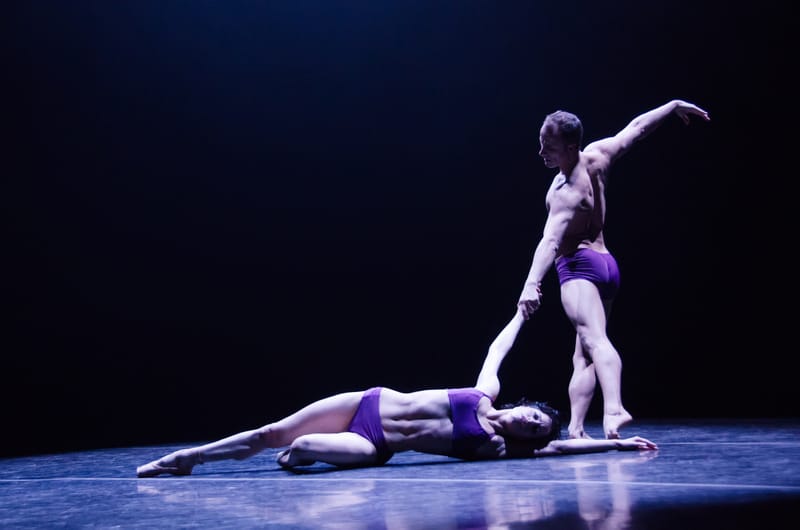
The final section of the first act, dance to Festina Lente by Arvo Part, did focus on characters, as Natalia Magnicaballi and Astrit Zejnati, both dressed in purple scanties (all the costumes were by Andersen). Though the dancers spent a lot of time on the ground, rolling around, there was a gentle innocence to the piece, a feeling of serenity, contentment, and total trust that was quietly moving.
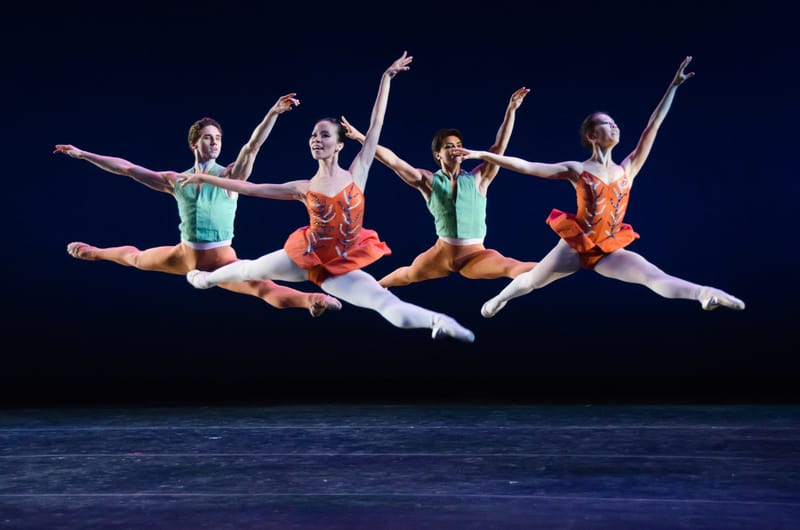
There was a lot of moving in the second act, two sections set to Stravinsky. The longer was an exploration of the Pulcinella Suite, with its rousing rhythms. This owed much to Balanchine's "Rubies" (Andersen was unforgettable in that section); with the perky orange costumes, the work could have been called "Topaz". But Balanchine's lessons were honored, and the piece had a concise and vivid structure. The ever-changing groupings showed a confident use of the stage and the delicate steps and elegant use of the upper body showed a welcome confidence in the classical vocabulary. The well-trained, engaging company is a fine testament to Andersen's leadership and he should have taken a bow--the audience would have loved to thank him for past and, one hopes, future appearances.
copyright © 2012 by Mary Cargill



