Piano Pieces
"Etudes", "Piano Concerto #1", "Petite Mort"
The National Ballet of Canada
Four Seasons Centre for the Performing Arts
Toronto, Canada
November 15, 2019
The National Ballet of Canada latest triple bill brought a balanced mix of pure classical ballet technique and more contem- porary movement. Between Harald Lander's "Etudes", Alexei Ratmansky's "Piano Concerto #1", and Jiří Kylián's "Petite Mort", the program played to the strengths of the company's corps de ballet and highlighted many principal dancers and soloists. Together, these works made for an exciting and fulfilling evening of dance.
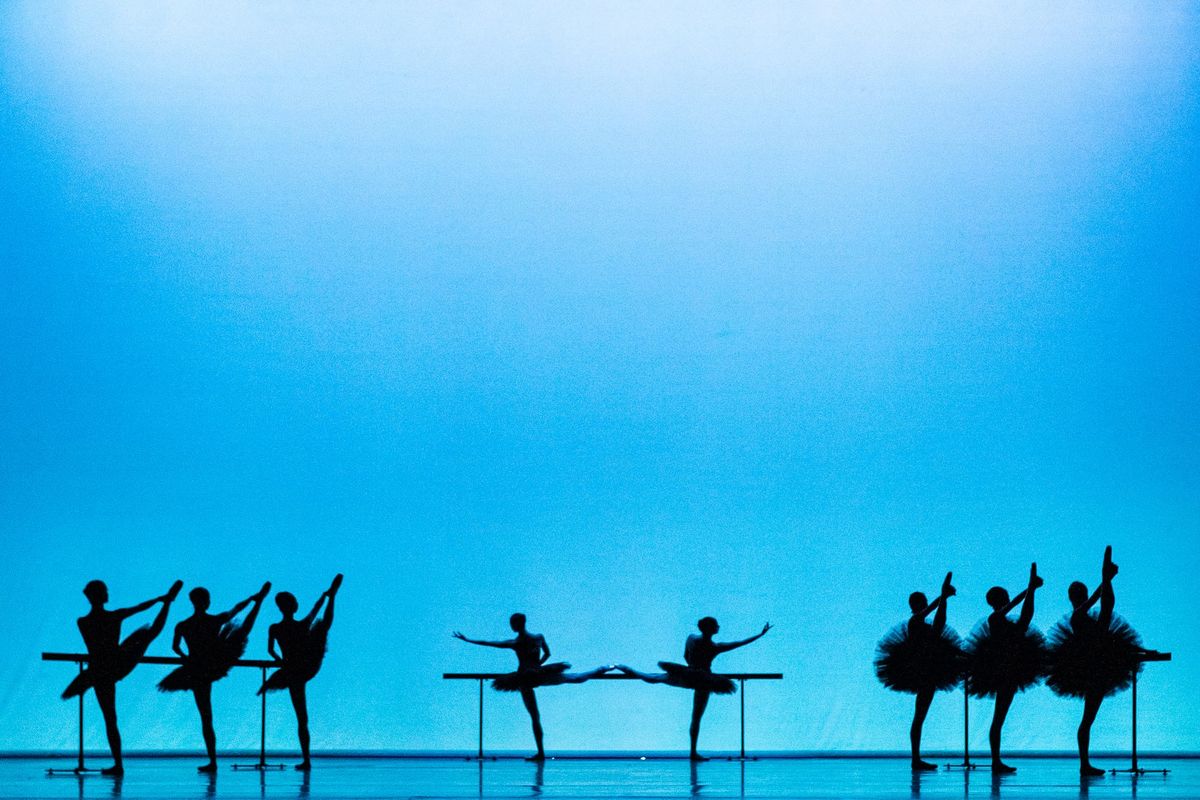
"Etudes" is a study on fundamentals of ballet technique, as well as a reflection on ballet history from Romantic sylph to tutu and tiara ballets. The music, fittingly, is a series of piano studies by Carl Czerny. The famous opening scenes turn the stage into a studio, revealing the beauty in the simplicity and universality of everyday barre exercises. Strategic lighting shines the spotlight on the controlled movements of the legs and feet in tendus, rond de jambes and petits battements and the silhouettes of the dancers. This section relies on the corps de ballet dancers being totally in sync in both timing and position to create a hypnotic effect, which they did with great precision. The ballet moves forward with increasing difficulty and complexity, mirroring the structure of a ballet class. Similarly, the traditional hierarchy of a ballet company is shown and there are variations for two leading men and a leading woman. On opening night, "Etudes" was aptly led by Heather Ogden, Harrison James and Naoya Ebe.
Ogden is one of the most reliable technicians in the company and an obvious choice for this challenging role. She was solidly on her leg throughout and has a clean, unadorned style that suits this work well. She left room for playfulness in her variation, hitting all the accents with flair. James is certainly the NBoC's leading man when it comes to classical roles. He is the quintessential prince, with a noble bearing and the technical facility to match. In the combination of grands pirouettes à la seconde, for example, he has to turn both to the left and to the right. Few ballets would ask a soloist to turn at length on his weaker side. Lander's Danish training is evident as the choreography is so exposing. Yet James turns left and right with almost symmetrical speed and control. Ebe danced the male role with all the jumps and should be commended for his stamina. His brisés-volés were textbook crisp and sharp, while he managed to create drama with his attack and musicality in a series of cabrioles and double tours en l'air. The rousing finale for the full cast of dancers is triumphant, representing the culmination of all the earlier technical exercises.
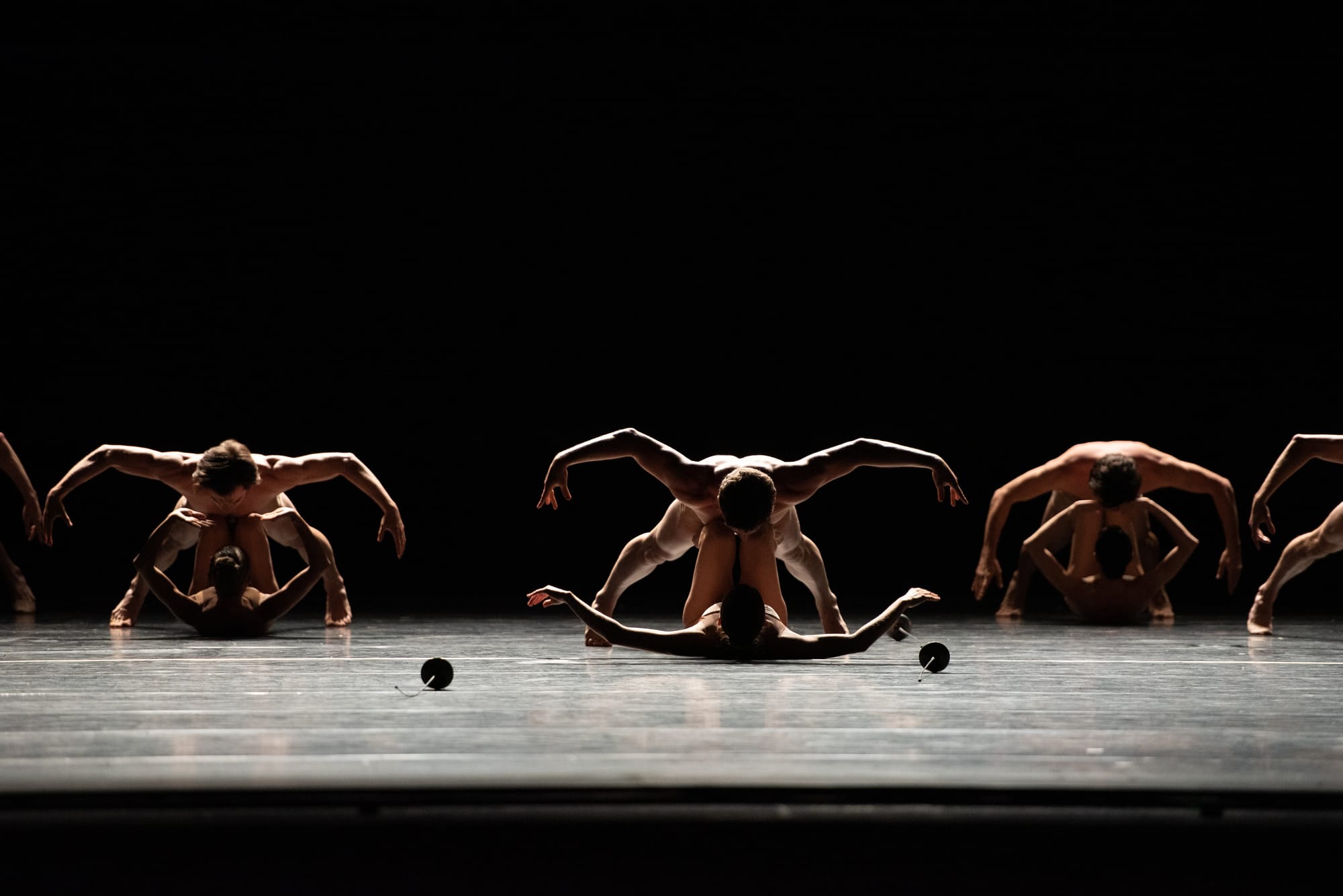
The program also included the company premiere of Kylián's sexually charged "Petite Mort", created in 1991 for the Salzburg Festival. Set to the adagios of two of Mozart's piano concertos, the ballet blends formal, ceremonial elements with naturalistic movement. The ballet is created for six men and six women who dance together and separately with props. The men dance with fencing foils, symbols of male potency and domination. However, they do not simply whip the foils around aggressively. They maneuver the foils around their bodies and on the ground with respect and delicacy. The women dance with large black period dresses on wheels that glide across the stage. Perhaps similar to the foils, the dress is their tool of defense. In a trompe l'oeil effect, it initially appears as though the women are wearing the dresses until they take a step sideways to show they are simply standing behind them. The dancers pair up in various tense pas de deux involving a lot of floor work and power struggles. All were very strong, especially Tina Pereira and Spencer Hack. Pereira's tremendous flexibility creates an extravagant line, while Hack was an athletic and steady partner.
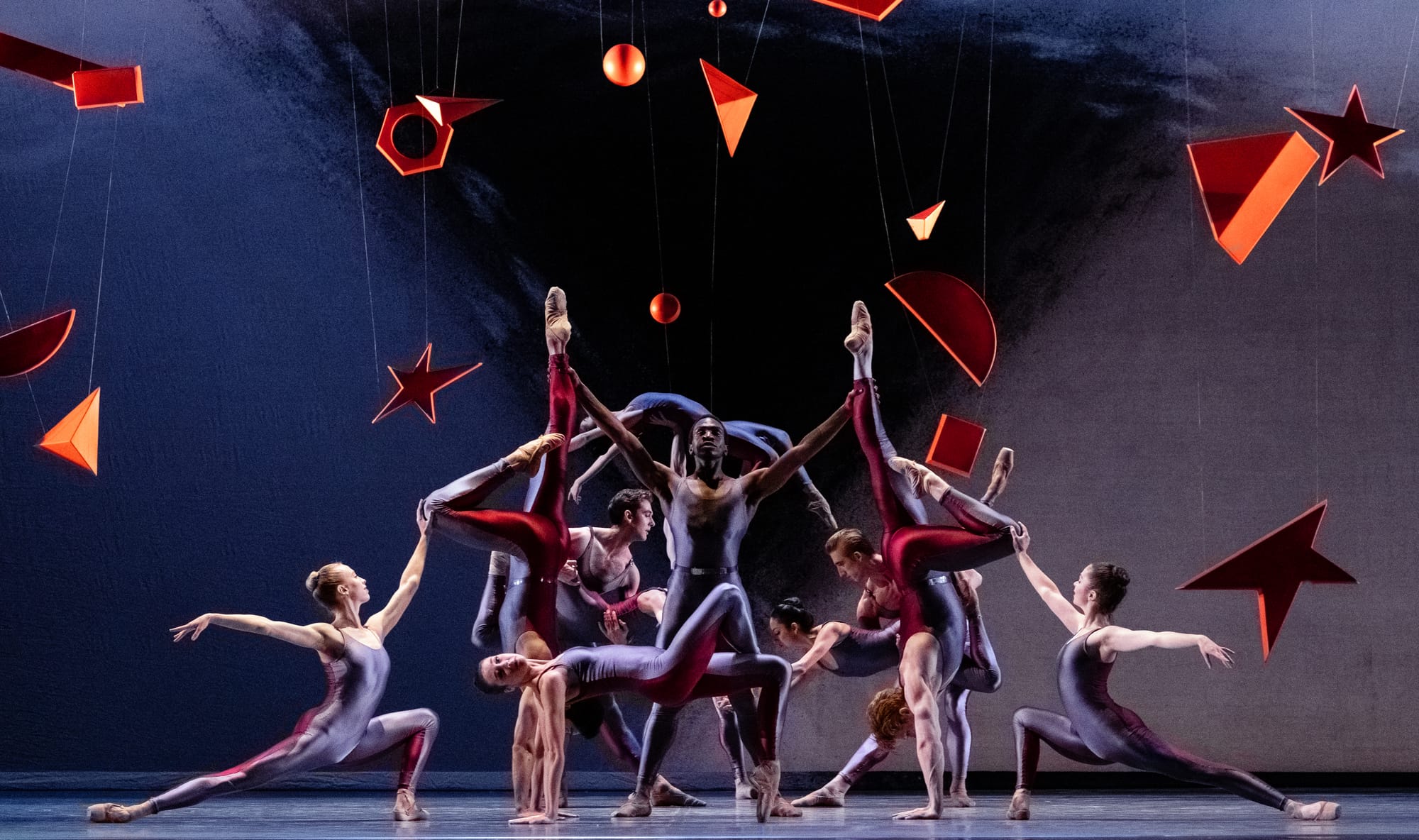
Ratmansky's "Piano Concerto #1", part of his Shoshtakovich trilogy, skillfully marries music and movement, doing justice to this sardonic and colorful piece of music. The set consists of red hanging geometric shapes, including the hammer and sickle, that evoke the Stalinist era when this concerto was written. Ratmansky's choreography draws attention to different voices in the orchestra and captures the score's varying shades and tones. A pair of dancers sprint on stage energetically at the same moment the piano soloist begins. On an extended musical note, a dancer enters pulled by her partner on the tip of her pointe shoe in one smooth slide. This ballet is music made visual.
Former San Francisco Ballet soloist Koto Ishihara, who joined the NBoC as a first soloist this season, made a strong impression in her jazzy pas de deux with Ebe. She is an extroverted performer with confident footwork and large jumps that cut through space. Ebe sailed through most of the tricky partnering, except for one of the huge throws that resembles a pairs figure skating twist lift where the exit was fumbled. Svetlana Lunkina and James danced the darker pas de deux set to the adage. It was an exercise in control and isolation, alternating between smooth, continuous movement and stillness, stopping on a dime. Lunkina and James nailed it, mirroring the virtuosity of the pianist, Zhenya Vitort.
copyright © 2019 by Denise Sum



