Pearl Fishing
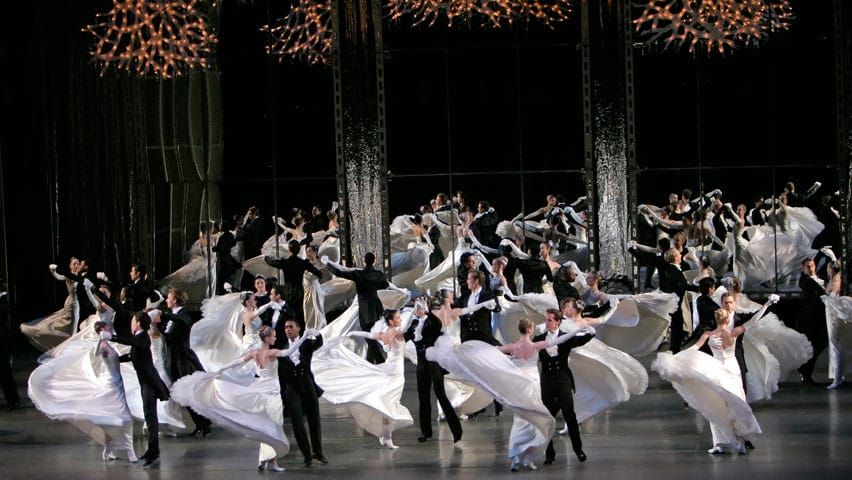
"Ballo Della Regina", "Kammermusik No. 2", "Vienna Waltzes"
New York City Ballet
David H. Koch Theater
New York, New York
May 8, 2016
The all-Balachine program opened with the pearl-hunting expedition of "Ballo Della Regina", continued with the male-dominated "Kammermusik No. 2" and concluded with "Vienna Waltzes", an extravaganza performed almost exclusively in character shoes. The stylistic range, which New Yorkers can take for granted, is astounding.
Tiler Peck is someone New York doesn't take for granted, judging by her well-deserved ovation at the end of "Ballo". She combined a fluid and controlled upper body with precise, daring, and playful footwork; Merrill Ashley may have had a sharper attack but Peck has added the poetry of her rounded arms. Gonzalo Garcia was her partner. He doesn't have the airy, floating jumps that some dancers have had but his partnering was rock-solid, making the difficult, off-centered catches look effortless, and his landings were absolutely silent and secure. He gave a gentle, poetic tinge to his dancing, wandering through those effervescent women looking for his pearl, and the first pas de deux, so full on near-connections, had a hushed mystery that made the explosive finale even more exciting.
Ashley Laracey, Erica Pereira, Alexa Maxwell, and Lauren King all showed different facets in their brief solos. Larceny with her long arms was especially impressive as she seemed to be pulled by the music; there is something translucent about her dancing that is hypnotic. King had a warmth and generosity that brightened the stage.
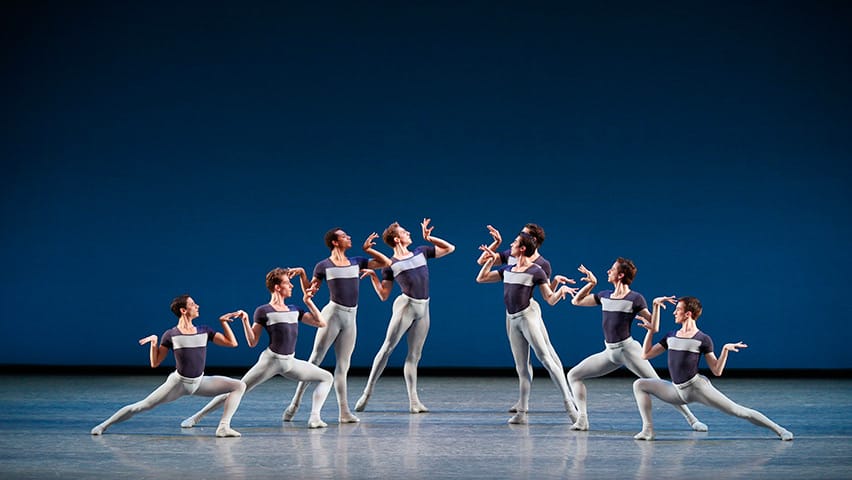
"Kammermusik No. 2" is not a bright ballet but its insistent rhythms and angular shapes can make it exciting. The all-male corps formations were clear and well-rehearsed but lacked some of the sharp urgency I remember from performances in the 1980s. The two principal men (Amar Ramasar and Adrian Danchig-Waring) gave their dancing a quirky individuality but their smooth attack lacked the slight menace found in the music.
Rebecca Krohn (with Ramasar), however, caught the impersonal tension of the choreography with her sharp angles and wary arms. Abi Stafford was more playful than Krohn; her dancing was smooth, accurate, and fluid but she didn't have the elemental energy Krohn showed. Krohn gave the spike choreography a mysterious inevitability, while Stafford made it look like fun.
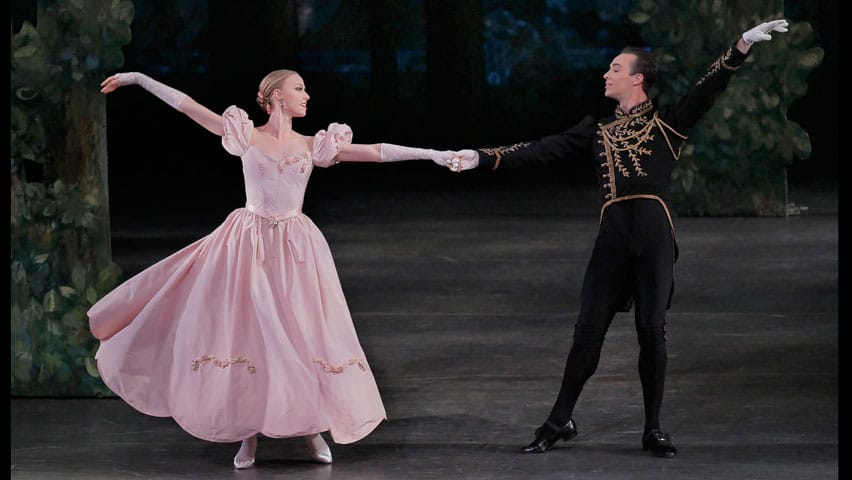
There is fun as well as an underlying sadness in "Vienna Waltzes". Teresa Reichlen and Tyler Angle waltzed through the woods with a plaintive and slightly wistful sweetness; Reichlen let her arms linger in the air as if she were trying to hold on to the moment, putting of the inevitable moment her soldier had to march away. There was nothing chocolate boxy about their performance.
The second movement, led by Megan Fairchild and Anthony Huxley, is the only one with pointe work, and the eight corps dancers flit around the woods like so many dryads. Fairchild was neat and precise and had moments of radiant purity but too often moved with a slightly staccato air which made some of her dancing look choppy, as if she were thinking about the steps and not the woods. Huxley looked perfectly at home in those woods, floating through the exuberant choreography like a happy faun; he seemed to be dancing on moss.
Erica Pereira and Troy Schumacher were properly perky in the "Explosions Polka", though this vignette does suffer from a surfeit of cuteness. There was nothing cute about Rebecca Krohn and Chase Finlay's Merry Widow waltz (or to give it its proper name the "Gold und Silver Walzer). His open-faced innocence and her black widow sophistication were a departure from the traditional take (older man meets lonely widow and they waltz happily), but their contrast created a compelling drama. Krohn eyed him like a spider looking at a particularly appealing fly and it seemed as if the poor Prodigal had left his farm to meet the Siren in the Parisian demimonde.
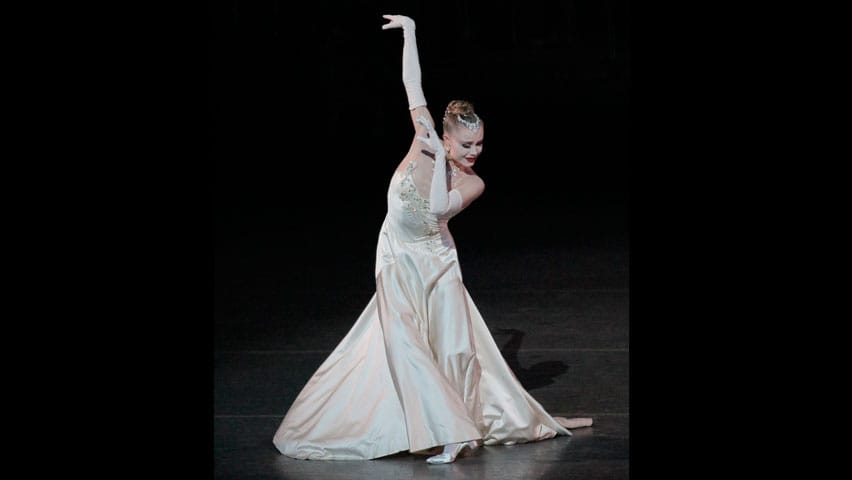
There was even more drama in Sara Mearns' solitary Rosenkavalier dancer. Mearns has an extraordinary dramatic imagination and her dance with her imaginary partner was exposed, almost operatic in its intensity, and completely convincing. Jared Angle was at his unobtrusive, supportive best as he seemed to wander in and out of her consciousness. Mearns seemed to will the lights on, as if she were trying to get back to her past happiness. The first couple dancing in the bright ballroom was Reichlen and Tyler Angle; Reichlen, like Mearns, is a tall blond and Tyler is Jared's younger brother. It seemed as if Mearns was a ghost watching her younger self and willing herself back to the past so she could have one more dance. It was a connection I have never seen before and it was pure theatrical magic.
Photos © Paul Kolnik.
Copyright © 2016 by Mary Cargill



