Painting Darkness With Bright Colors
“The Winter’s Tale”
American Ballet Theatre
Metropolitan Opera House
New York, NY
July 3, 2025
Christopher Wheeldon’s “The Winter’s Tale,” set to original music by Joby Talbot, graced the stage during American Ballet Theatre’s Met season only seven times, but it was clear that this addition to the company’s repertory is a worthy one. Set to Shakespeare’s story but danced with Wheeldon’s modern language, it is precisely the kind of vehicle the company thrives with – both in terms of the physicality the dancing demands and the level of dramatic expression it presents.
The complex tale of two royal brothers drawn apart by jealousy – with death and regret ultimately giving way to a happy ending – moved quickly and engagingly in Wheeldon's adaptation. And the compelling dancing, with period-agnostic bright costumes and whimsical set design, both by Bob Crowley, all helped to vividly color in the details.
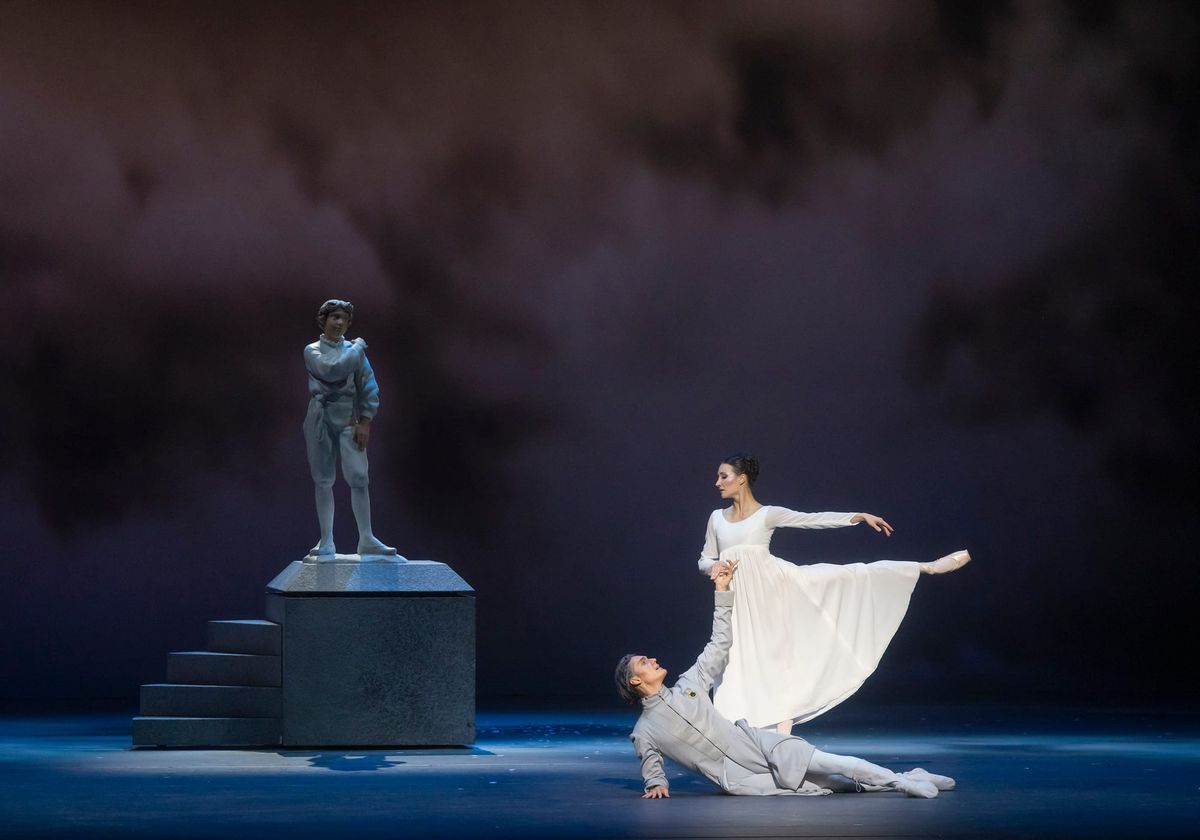
As the jealous king Leontes, Daniel Camargo was full of cold, dark fury. It came quickly after the initial scene, where, happy and in love, he gifted his wife Hermione, Christine Shevchenko, an emerald necklace. While Shevchenko’s grace and radiant, innocent smiles persisted, Camargo quickly receded into icy, psychotic madness. After witnessing Shevchenko with his buoyant brother Polixenes, danced by Calvin Royal III, his gaze turned predatory and judgmental, his eyes piercing – even as Royal carried on with a happy-go-lucky aura.
Once falsely accused of infidelity, Shevchenko displayed a growing level of terror and confusion. In her duet with Camargo, prior to a scene where she becomes incarcerated, her face flashed from trying to please this demonic man to looking scared and lost, left guessing at his whims. All the while he oscillated between kissing her and violently grabbing her pregnant stomach, with the acting being so good that the mood changes came in seamless flashes. Technically Shevchenko was impressive too, particularly in the pleading solo full of arabesques and arabesque turns, each rise on pointe a plea to rise above the situation. Alas, there was no real pantomime given to her character. It was a shame, as it was clear that she could say so much, so eloquently, if given that tool.
As the act ended with the tragic demise of both Leontes’ and Hermione’s child, danced sweetly by the young Max Tenenbaum, and Hermione herself, a warm reprieve was the dance Hermione’s maid Paulina, danced by Paulina Waski, and her husband Antigonus, danced by Roman Zhurbin. Their scene was full of love, comfort and security, a contrast to the tumultuous tides before it. Waski’s elegance and Zhurbin’s stateliness were wonderful, even if Zhurbin’s very masculine and supportive character dies soon in the story, while trying to save Hermione’s baby daughter Perdita.
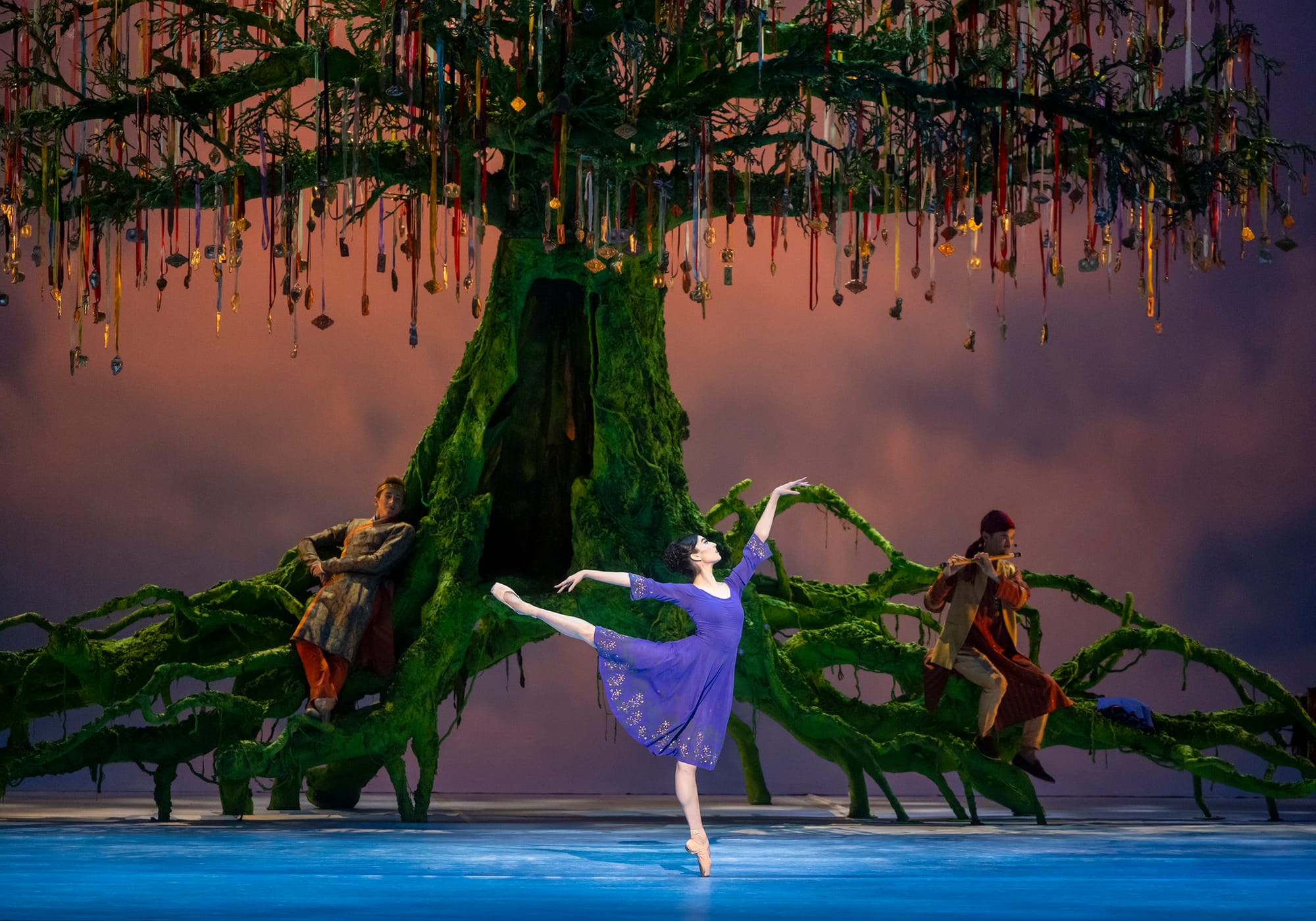
The second act brought change of energy, with grown-up Perdita, danced by Chloe Misseldine, radiating pure joy. Her two separate duets with Joseph Markey, as her beloved Florizel, finally showed the intricate partnering Wheeldon is famous for, with interesting lifts, a proper showcase of line for the ballerina, and a striking diagonal of stag jumps. In a display of my favorite quality of hers, Misseldine made this role her own. Yes, she was Perdita, but her style and form of connecting with her partner were exclusively her own and could not be mistaken for anyone else. In technical sections, she soared—so much so that in the part where she and Markey perform a jump and rond de jambe en dehors, he looked much heavier than her, despite having more innate ballon. The end of the second duet, with Misseldine wrapped around Markey in a pretzel lift ending with a kiss, was a lovely and fitting touch in this imaginative ballet.
By the third act, our couple was on its way back to where it all started, where Camargo’s Leontes was now a broken man, guided through life by Paulina. Polixenes followed them, and the reunion of the two brothers and the young lovers’ joy elevated spirits in this part of the story, culminating in a crisply presented wedding scene. So happy is this ending, that even Shevchenko’s Hermione turns out to be alive, though her final duet with Camargo, superbly danced, had an interesting ghost-like presentation. The evening's sole flaw was that Talbot's score never equaled the memorability of the performances it accompanied. Sadly, it lacked a single passage with staying power, leaving one to imagine what heights this production might have reached with music to match.
copyright © 2025 by Marianne Adams



