Out of Steppe
"Thirteen Diversions", "Apollo", "The Firebird"
American Ballet Theatre
Metropolitan Opera House
New York, NY
June 11, 2012
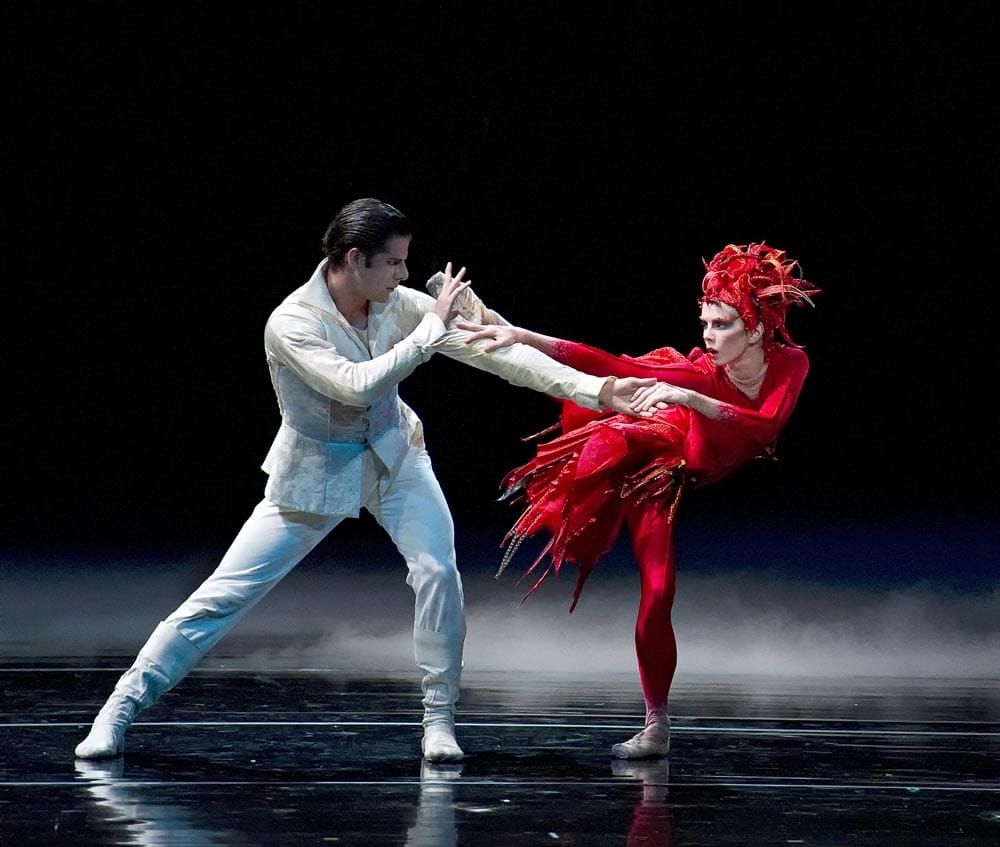
A new work must answer the question "Is this ballet necessary?", and the answer to Alexei Ratmansky's rechoreographed "Firebird" (originally, and unforgettably done in 1910 by Michael Fokine), is, sadly, no. Ratmansky has shown a rare gift for characterization and comedy in "The Bright Stream", but characterization (that is, human characters) and comedy are not in Stravinsky's shimmering, etherial score, nor in the original story, based on old Russian legends of the firebird, a creature whose feathers had magical properties, and Kaschei, the evil magician. Like all myths, Kaschei was an attempt to explain evil, to embody it in an archetype, and he should be a potent, mysterious force. (He could only be destroyed by smashing his soul, stored in an egg, a sort of a Slavic Voldemort.) The Firebird, in Fokine's version, was the only dancer on point, making her all the more magical. Ratmansky followed the original story of Prince Ivan, though Ratmansky has dropped the idea of royalty, and now just just plain Ivan, in a white Elvis suit, invading Kaschei's palace where he captures the Firebird, is given a feather to let her go, finds a group of enchanted princesses (now reduced to maidens), falls in love with the main girl, defeats the magician with the help of the feather, and frees the maidens and other warriors who have been turned to stone by Kaschei.
But the choreography, the sets (by Simon Pastukh), and the costumes (by Galina Solovyeva) work against the effects of the magical score. The opening, ominous chords (in Fokine's version) slowly reveal the enchanted forest, (a red wonderland, in Goncharova's design) with the Firebird flitting through it. Ratmansky gives the opening music to Ivan, who is lying in front of a plain grey screen with a black hole in it. The choreography, to the music intended for the firebird, is jerky and, unusual for Ratmansky, unmusical. Finally Ivan sees the door, and goes through it, ostentatiously crossing himself, almost pausing for laughs, as if he were a cartoon.
The forest, when it finally appears, is striking in a cold, postmodern way. The trees look like hunks of steel, with red lipsticks poking through the tops, and move around to show the various scenes. But there is nothing to suggest a magical Russian realm, just a mechanical tour de force. The costumes, too, are a long way from fairytale Russia. Ivan, and the other men (they certainly aren't princes) wear white, rather than the glorious multicolored tunics of the original. Ratmansky has added a large group of male and female firebirds, wearing solid red leotards with what looks like red brillo on their heads. They cavort energetically, but generically, with fussy, chicken-like movements (oh, for Fokine bird, with that apple in her mouth, and those glorious incessant jumps.) Ivan captures one (who, even as danced by Natalia Osipova, does not stand out), but Ratmansky ignores the musical cues, and doesn't have her plead so eloquently for her freedom; she and Ivan seem to play tag, and I, for one, wondered why she didn't just fly away.
The enchanted maidens then stagger in, all in green (the blocks of solid colors reinforce the cartoon effect), having come, it seems, from a Western saloon, with their dance hall dresses and pompadour hairstyles. The choreography has them chug around, ignoring the folk strains in the music (Fokine had them tossing apples in a formal round dance, a truly magical moment). The head girl (Simone Messmer) is also, despite the music, the head comedian, ogling Ivan, who responds by lifting her up in a frog-legged lift, deliberately ungainly, and by writing "I love you" on the stage--the eternal adolescent.
Koschei appears first as a huge shadow at the back of the stage, an idea that will remind those of a certain age of the Jolly Green Giant. (Judging by the giggles, there were a number of us in the audience.) Fokine's Kaschei was an old, wizened man, who crept around the stage, a truly venomous presence. Ratmansky's Koschei is the first cousin of the misconceived von Rothbart in ABT's current "Swan Lake", reducing the idea of absolute evil to a campy joke. Koschei (David Hallberg) is a black-caped intruder, with a green toupee and green gloves, which help illuminate his frequent twitching. Ratmansky again ignores the musical cues, and doesn't have him try to turn Ivan into stone, an absolutely gripping moment in the Fokine version. And for some reason, Koschei, rather than the Firebird, leads most of the infernal dance, reducing the poor bird's power, and since Koschei has no court of monsters, the dance seems a bit underpopulated and monochromatic, with only the green girls running around. The serene Berceuse is now a pas de quatre for the four leads, with Koschei trying (and apparently succeeding) in seducing the head maiden, while Ivan staggers around with the firebird. The dignified apotheosis music is now danced by the freed maidens and knights (or rather guys, since there is no nobility in Ratmansky's story or choreography), with a lot of lifts, which destroys its plangent grandeur.
The dancing was quite good of course, with Marcelo Gomes as the goofy Ivan, doing his best to not look silly. Osipova seemed a bit wasted in a role that should exploit her phenomenal gifts, Messmer wasn't able to make much of the ditsy head maiden, and Hallberg seemed to be having fun prancing around. This jokey take on the fairy tale is definitely a "Firebird" for today, which means, of course, that it will be out of date tomorrow, while the Fokine version, with its deep roots and radiant beauty, is the one for the ages.
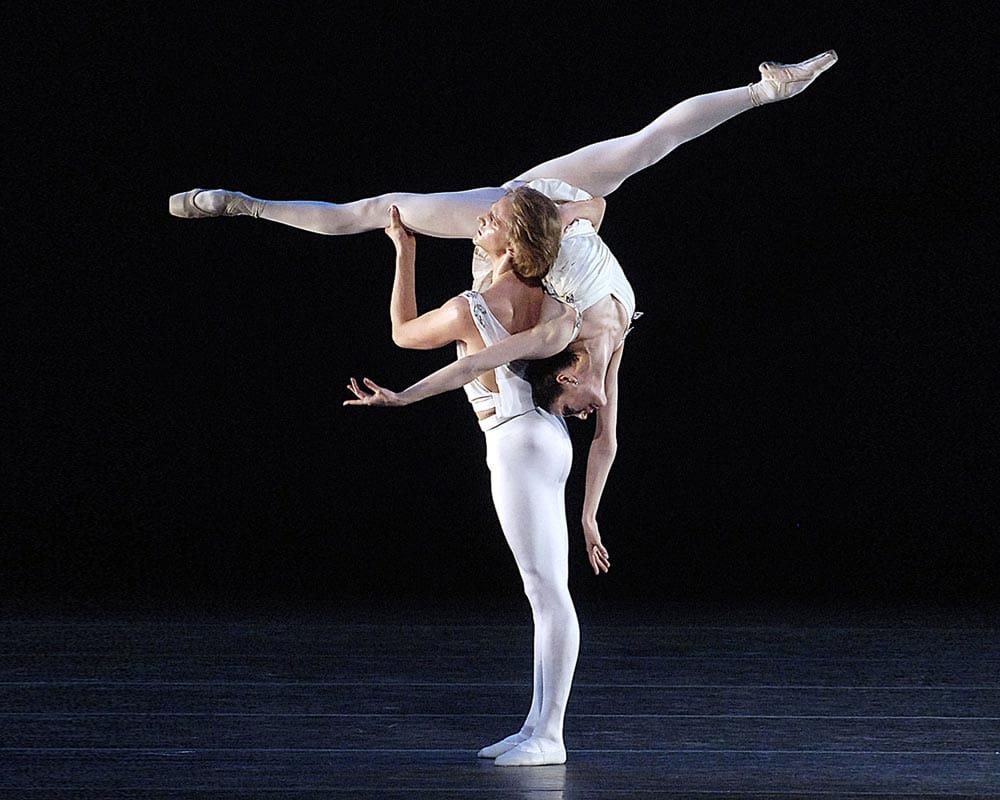
Timelessness and beauty were on view in Hallberg's "Apollo". ABT dances the complete version, with the expressionistic childbirth at the beginning, and the stair step apotheosis. This gives the Apollo more of an arc, as he begins the ballet helplessly swaddled, and we see him growing more and more confident. And the elegant, sculpted finale is magnificent. The performance, with Veronkia Part as Terpsichore, had a quiet radiance and cool formality. Hallberg was a deliberate Apollo, thinking about the gifts as he handed them out, and pausing a bit as he made his decision. He was hauntingly beautiful.
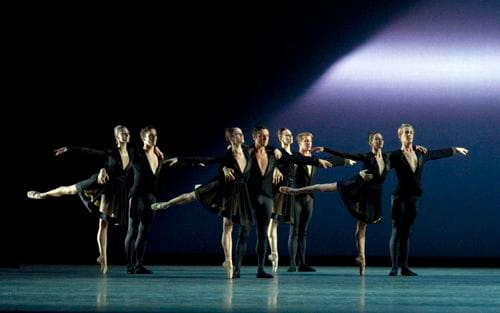
Christopher Wheeldon's "Thirteen Diversions", to music by Benjamin Britten, had its beautiful moments too, most of them provided by the striking lighting (by Brad Fields). The black background was pierced by various stripes of color, at times, looking as if it were being pealed back to let in the light. Wheeldon used his large cast (four couples, plus a generous supporting corps) confidently, bringing them on and off the stage with ease. Misty Copeland and Gray Davis were the first among equals, and Copeland moved generously and fiercely during her solos. For some reason, she seemed to turn into a rag doll when partnered, flopping helplessly. Though there were striking images, the overall piece seemed effect without content, and there was little emotional resonance.
copyright 2012 by Mary Cargill



