Other Worlds
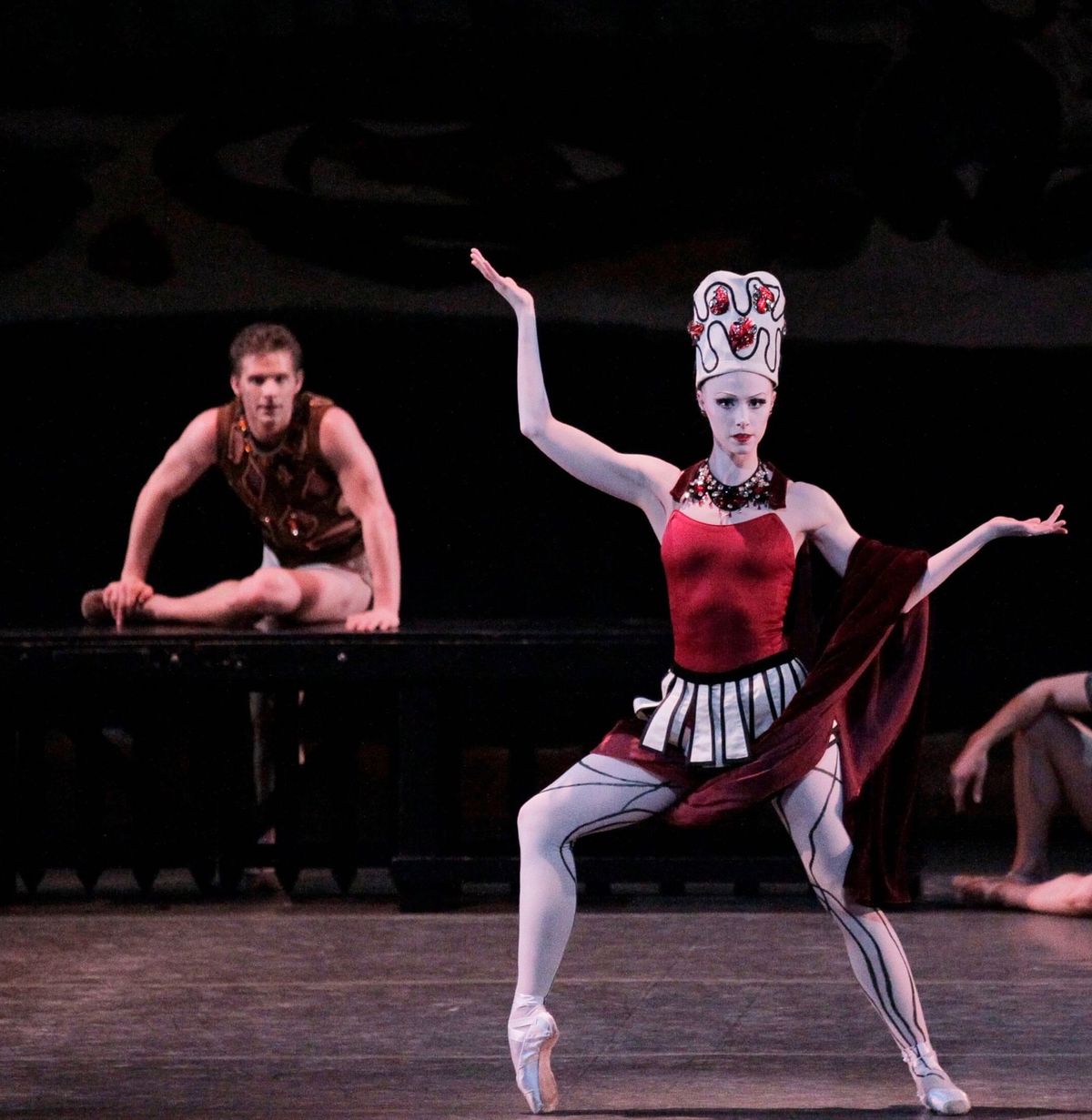
"Prodigal Son", "Liebeslieder Walzer"
New York City Ballet
David H. Koch Theater
Lincoln Center
New York, New York
February 28, 2019
The typical image of a Balanchine ballet features an austere backdrop illuminating the dancers (in leotards or pastel shifts) and their glorious formations, but the February 28th performance showcased two Balanchine ballets whose sets and costumes created distinctive atmospheres. Georges Rouault's stained glass glow helps give "Prodigal Son" the rooted, ritualistic feel of an ancient parable and David Mitchell's vision of Munich's Amalienburg pavilion sets "Liebeslieder Walzer" firmly in the nineteenth century German upper class, with its polite restraint and sophisticated manners. Transcendent as Balanchine's plotless abstractions are, there is something magical about being transported via sets and costumes into another world.
The dancing, of course, must be a part of that world and Daniel Ulbricht's Prodigal was detailed, vivid, and very moving. He was especially boyish in the opening scene, excited and curious about the outside world without the desperate rebellion some dancers show. This exuberant, innocent curiosity carried him to the goons' lair, where he had a puppy dog eagerness as he reached for their outstretched hands, so happy to be one of the gang. His naive belief that he was sharing his worldly goods with friends was especially poignant and the audience sorrowed both for his eventual physical pains but also for a lost innocence.
Ulbricht's dancing was magnificent (those centered pirouette seemed to flow effortlessly) but his ability to let his body speak was even more impressive, as he made his slow crawl home a desperate struggle, without exaggerated flailing or melodramatic heaves. It was a finely calibrated, intense performance, where the dancer disappeared into the role.
Teresa Reichlen as his siren nemesis danced with a cool, impassive stare that also avoided any overheated melodrama. Her only glint of a reaction came with a gleeful glare as she ripped off the Prodigal's necklace--she was motivated by greed rather than lust or hatred and moved with a mechanical precision. Her long, expressive legs and pale beauty created their own eerie danger, an inevitable and implacable, though her snaking hand could have had a bit more power; it was more of a pose than a threat.
The goons, too, were especially dark, throwing themselves around with demented abandon. Their skittering, bug-like moves, as they broke into those weird couples, looked like a grotesque inversion of Petipa's cheerful hand-holding groups of nymphs. Devin Alberda and Spartak Hoxha as the Prodigal's servants, though, are a bit too soft and graceful for the thuggish betrayers. Their jumps were easy and their landings pure and they didn't have all the weight that can make their fight seem so fierce.
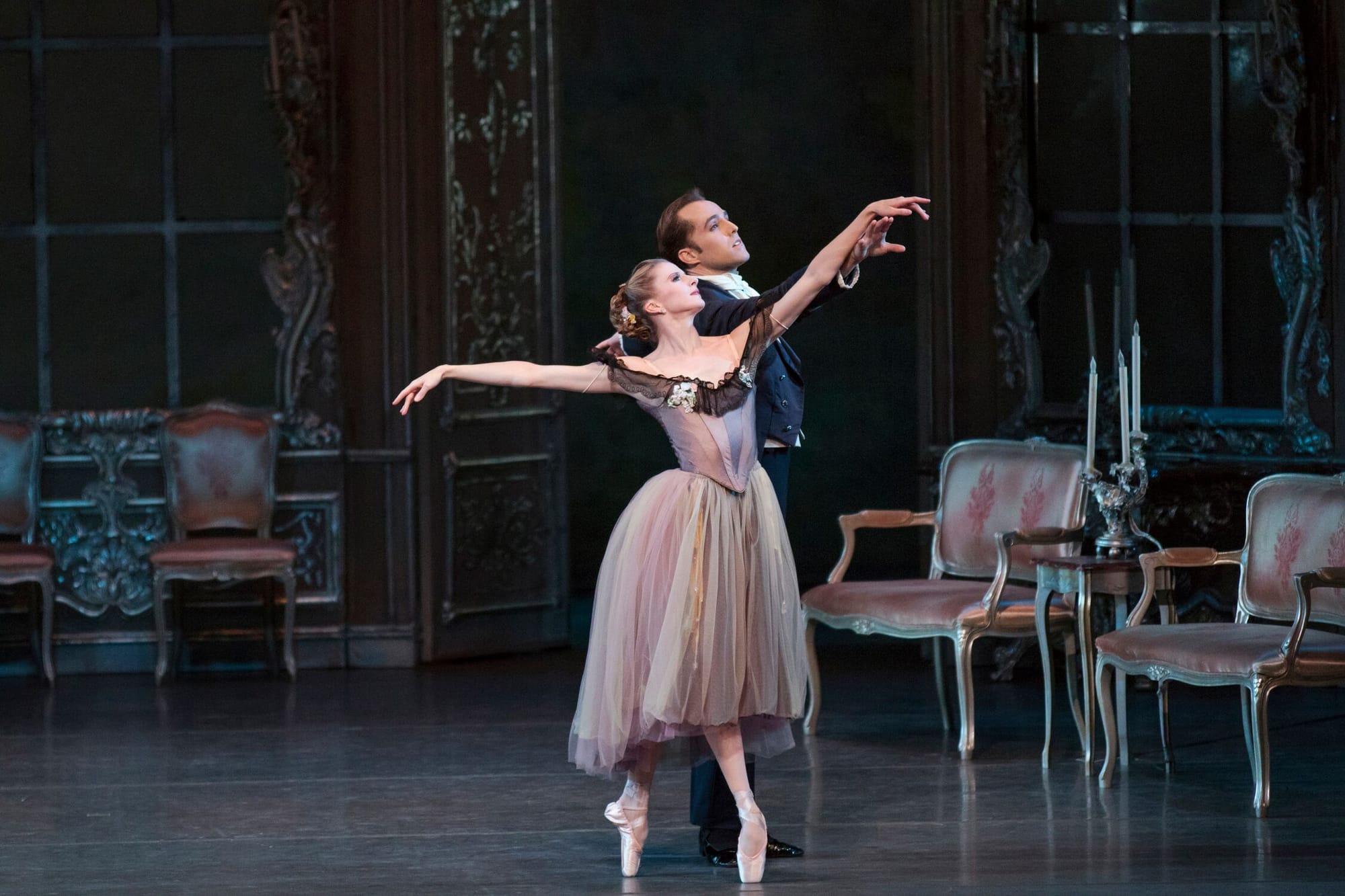
There is nothing fierce about the behavior of the four couples in "Liebeslieder Walzer", though the hour-long visit with them can certainly leave a powerful afterglow. The dancing is not especially challenging -- lots of waltzing in character shoes in the first half and a few gentle lifts once the girls get on point in the second half but everyone on stage must be alive and engaged every second, even while sitting a watching -- there is no place to relax.
This performance had an experienced cast (Maria Kowroski in the Diana Adams role, with Ask la Cour; Ashley Bouder in the Verdy role, with Tyler Angle; Sterling Hyltin in the Melissa Hayden role, with Jared Angle; and Ashley Laracey in the Jillana role, with Justin Peck) and was, with some exceptions, a cohesive and glowing, if not definitive, performance.
Laracey, with her glowing alabaster air, was gentle, moving with sculptural purity through some magically light and effortless jumps. I did miss the hint of restlessness and unease which can give a dramatic undercurrent to the role, but her piquant luminosity gave her dancing a shy urgency. Hyltin used her light, soft dancing to melt into her partner's arms with some breathtaking backbends. Her dancing in the final pas de deux, nobly partnered by Jared Angle, had a radiant serenity, as her foot seemed to caress the floor, secure and loved.
Bouder was heartier than some of the other dancers I have seen in the Verdy role, almost a tomboy in the first scene as she bounded through the social dances, which made the brief corpse-like lift where she crosses her arms as if on a bier hard to relate to, but her dancing in the second half was refined and delicate, as she seemed to drift through sylph-like poses. Kowroski, in the ultra-romantic Adams role, though, seemed a bit out of place with her lackadaisical arms and casual posture. She didn't differentiate between the reality of the first half and the magic of the second, tossing her legs up as high as she could to expose her frilly underwear to that refined and elegant gathering and sitting on her chair as if she were wishing she could check her cell phone. But thanks to the rest of the cast, that other world did come alive.
Copyright © 2019 by Mary Cargill



