Only Connect
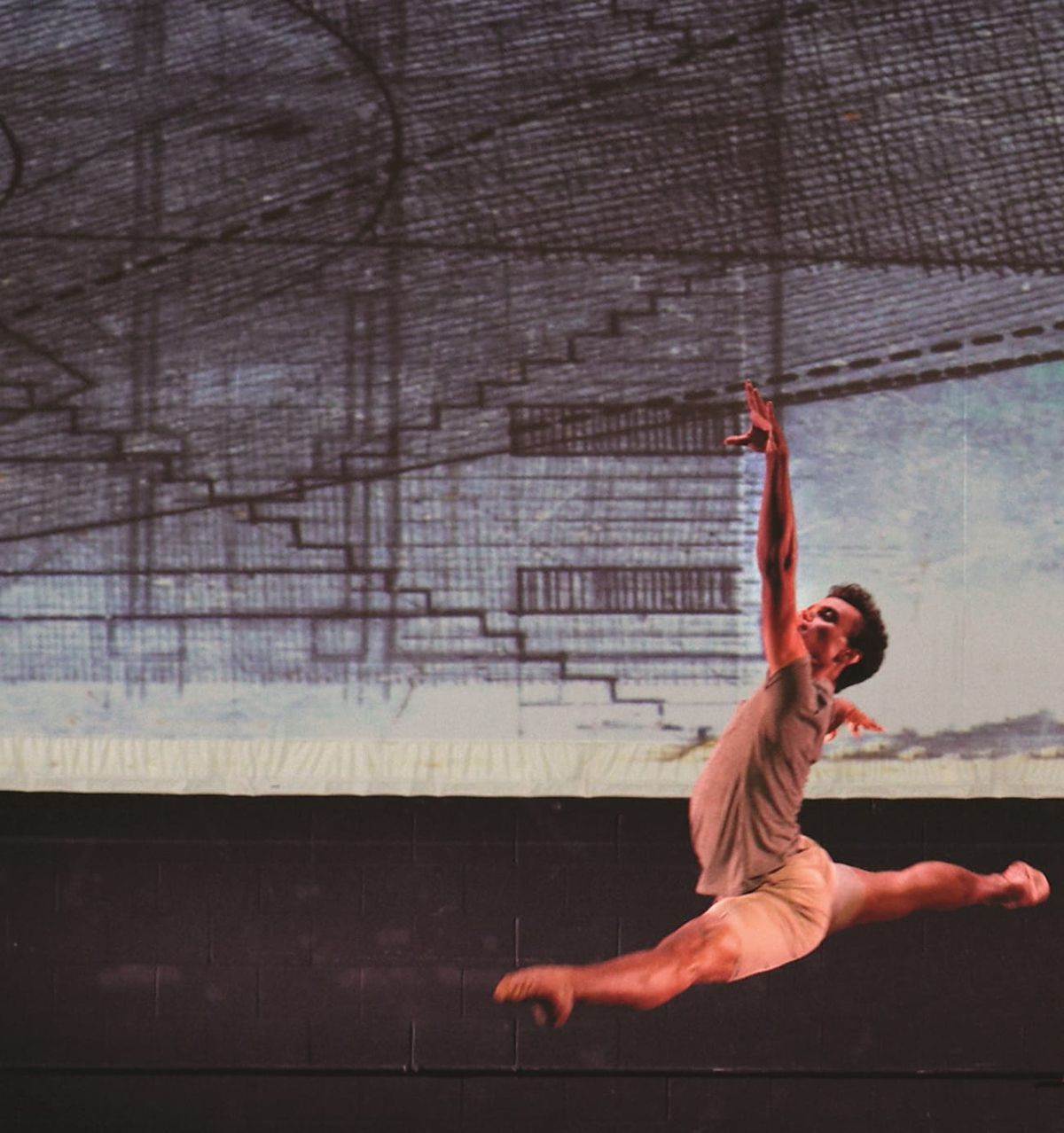
"The Impulse Wants Company", "Epistasis"
BalletCollective
Joyce Theater
New York, New York
August 14, 2013
Ballet 6.0, for those who are counting, is a mini-festival of small, ballet-inspired companies. BalletCollective (founded in 2010 by New York City Ballet dancer Troy Schumacher as Satellite Ballet and Collective), it their own words "assembles artists, poets, composers, choreographers, and designers to collaborate as equals". This Diaghilevian idea includes seven supremely talented current and former New York City Ballet dancers, live music, and, at least at the Joyce, no scenery. Instead, the backstage brick wall was illuminated to reflect the various moods, alternatively gloomy and glowing. The opening number, the obliquely titled "The Impulse Wants Company" originated, again according to the publicity, in a poem by Cynthia Zarin, the resident writer. The poem is a conglomeration of images--to quote a phrase at random--"seesaw. The green world white and blue, salt-stripped--too big, sky too far, the sweet air" and so on for two pages. This verbal meandering is easy to make fun of, and it didn't seem to have much to do with the actual performance, but its youthful winsomeness (I have no idea how old the poet is, but it certainly reads like adolescent enthusiasm) seems to underpin the work.
Schumacher has clearly indulged in Jerome Robbins, especially the Robbins of "Interplay" and "Impulse" looks like a grittier version of that work, as the dancers tend to sit at the edge of the stage observing the action. The movement is ballet-based, as the girls all wore point shoes, but was leavened with everyday gestures. The seven dancers seem to live in their own isolated bubbles, exploring their feelings and only intermittently connecting with their fellow dancers. This does give the piece an intermittent, staccato feeling, with little development or structure, but the dancers themselves explode with leggy energy and make distinctive, indelible impressions. It opens with Kaitlyn Gilliland, formerly in the corps of NYCB and now teaching at the School of American Ballet, moving with a willowy majesty. Various other dancers emerge and make statements. David Prottas stood out for his vigor and Harrison Coll for his innate lyricism. These individuals develop hints of relationships; Coll was repulsed by Taylor Stanley, who had a coiled and almost dangerous intensity, and Gilliland, the odd girl out, danced a piquant little solo with her elegant feet pushing the floor away. The work ended with a hint of transcendence, as the lighting changed to s shimmering glow and Stanley, now shirtless, danced an explosive solo, full of reaching gestures and urgent jumps.
The same seven dancers with their intriguing personalities appeared in Schumacher's 2011 "Epistasis". (According to wikipedia, epistasis "is a phenomenon in which the expression of one gene depends on the presence of one or more "'modifier genes'." I have no idea is this is relevant, but it might be.) The feeling was similar to the opening piece, with the dancers wandering in dancing with an increasing momentum. Then, in a private and intimate gesture, the girls took their hair down and danced solos, with the dancers posed on the edge of the stage. These solos had an improvisational feeling, and the movements had a very personal feel, as if collaboration was a fact and not a buzz word.
Lauren King's solo was particularly striking, as she used her paleness and blond explosion of hair to suggest an otherworldly creature, a modern-day sylph. Ashley Laracey too, gave a unique perfume to her solo, as she combined a certain sensuality with a knowing yet fundamentally innocent allure. She was trying to attract Taylor Stanley, and their pas de deux was a combination of missed opportunities (they kept reaching for each other in vain) and echoes of Robbins' "Afternoon of a Faun". The enthusiastic finale was energetic, but the solos, which gave these fine dancers an opportunity to break out of their often anonymous corps jobs, were the most impressive and rewarding parts of the evening.
copyright © 2013 by Mary Cargill



