Omens
“Composer’s Holiday”, “Kammermusik No. 2”,
“Opus 19, The Dreamer”, “Symphony in C”
New York City Ballet
Opera House
The John F. Kennedy Center for the Performing Arts
Washington, DC
April 2, 2019
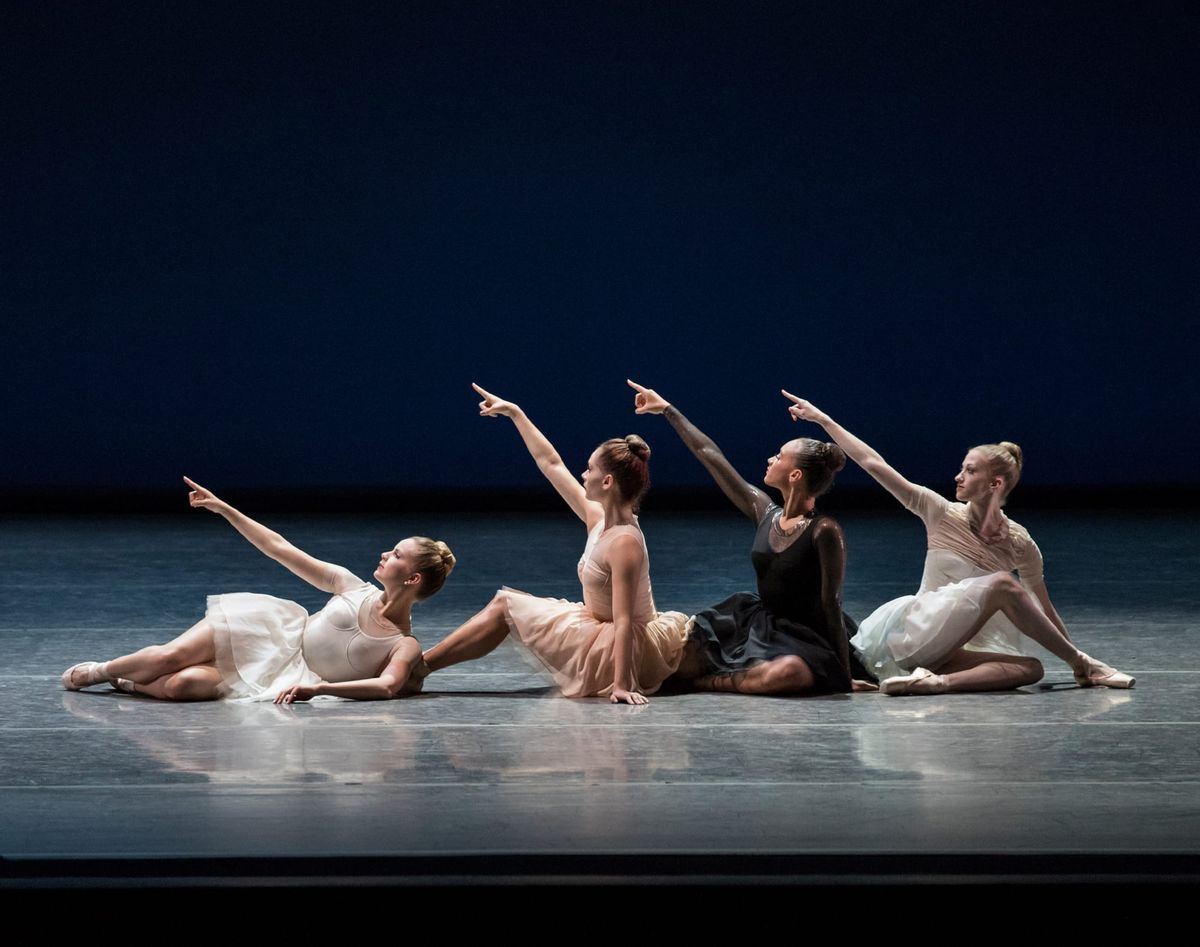
The company’s new bosses, former dancers Jonathan Stafford and Wendy Whelan, introduced this DC opening. Both were dressed casually. Their brief appearance in front of the curtains was followed by a premiere – Gianna Reisen’s “Composer’s Holiday” to Lukas Foss music. It is a ballet your local dance school might put on at its annual recital, crammed with entrances and exits but lacking sustained and developed passages of choreography. Reisen sets up situations for two female-male couples and for a corps de ballet of 8 that also splits into gender mixed pairs. The movement vocabulary is acrobatically neoclassical and the predominant pace is quite hurried. That the choreographer is young, still in her teens, does not excuse a world class company from responsibility for the presentation of this amateurish effort. The situation does not bode well for the new directorial regime. If you are wondering about Reisen, the program notes reveal that she was a 2017 graduate of the company’s affiliated School of American Ballet and is currently an apprentice dancer in Germany at the Semperopera Ballet in Dresden. The dancing of her piece by New York City Ballet was professional and had a lively pulse. There were relative newcomers for the leading roles - Mary Thomas McKinnon and Kennard Henson plus Emma von Enck and Roman Mejia. Fascinating in all the evening’s ballets were the intended contrasts between featured dancers and the corps.
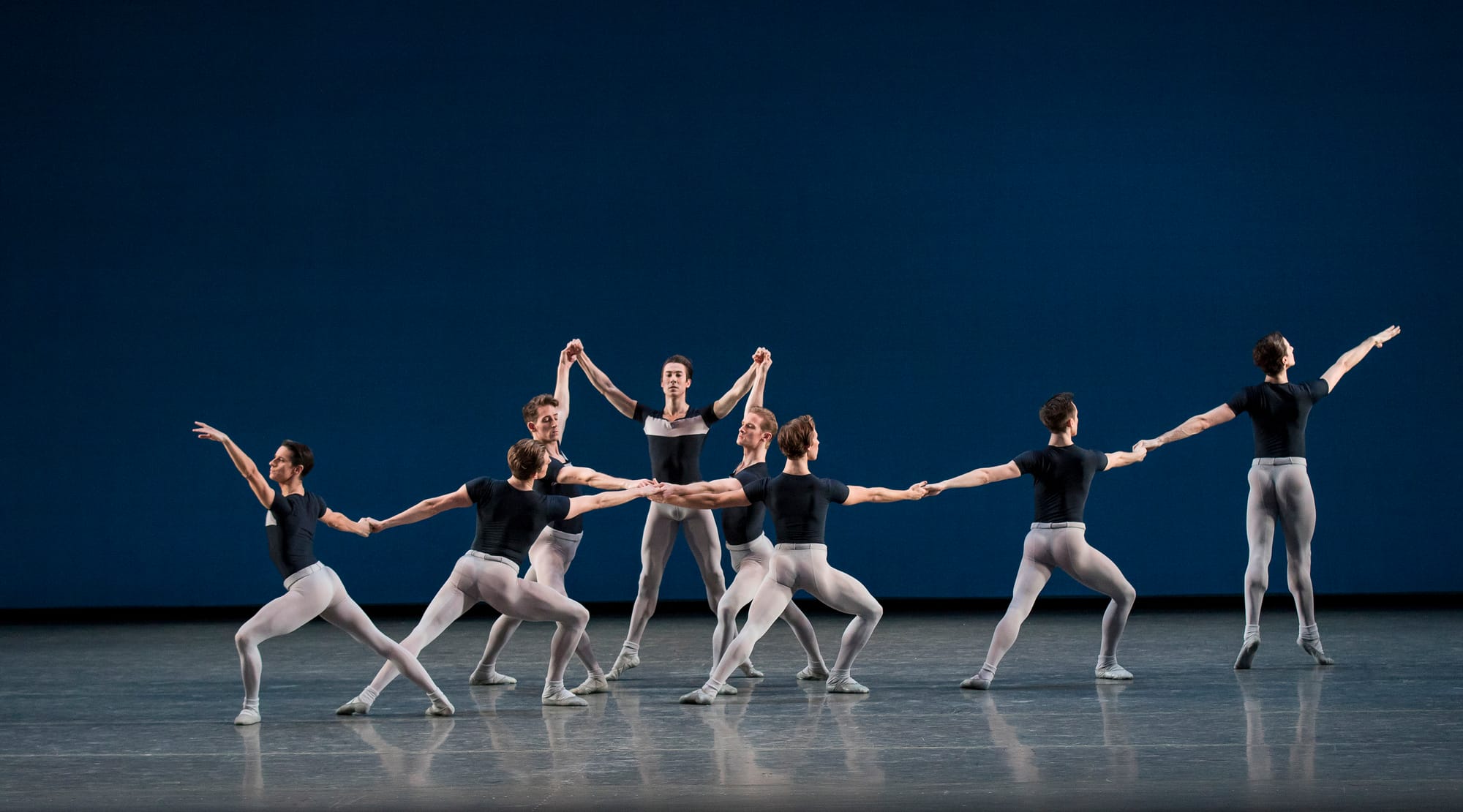
Just a brief pause separated the Reisen opus from the next ballet, “Chamber Music No. 2”, in which George Balanchine fractionated human anatomy cubistically to and against a Paul Hindemith composition. As in the Reisen, this 1978 ballet contrasted two couples (Abi Stafford and Joseph Gordon plus Teresa Reichlen and Russell Janzen) with a corps. Often the corps was used as a block, but Balanchine also broke it into four female-male pairs. The two leading couples were highly mobile and differed mainly in height – Stafford and Gordon being the shorter pair. The dancing and placement were clean cut throughout the piece, but missing was a hint of folkdance inflections that “Kammermusik” used to have when it was new.
As “The Dreamer” in Jerome Robbins’ fantasy to Prokofiev music, Gonzalo Garcia made the audience see all of the ballet’s figures through his own, sensual eyes. He saw himself as someone wrapped in thought. He watched a group of 6 women and 6 men to no avail. He more than noticed a prominent woman – Sterling Hyltin. She was at first anything but self for the Dreamer, then gradually she became not just his love interest but his alter ego. This 1979 Robbins ballet is an odd tale and the finesse of Garcia’s acting conjured the needed mood without turning the characters into gargoyles.
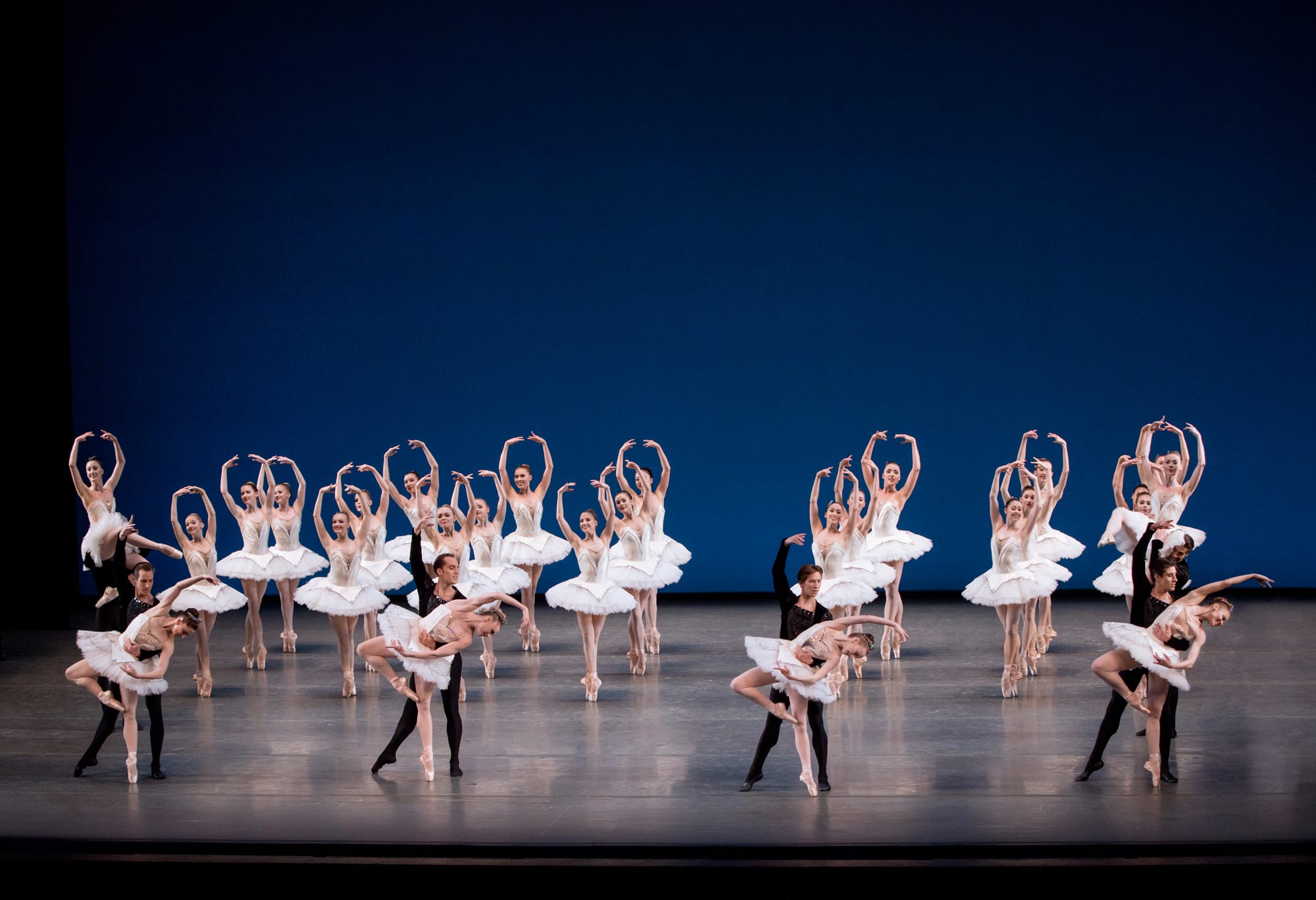
The program closed with the Bizet “Symphony in C”, which has become an enduring statement of classical form. Corps, soloists and star dancers interlock, generating a geometry of human anatomy that causes time to catch its breath. Balanchine made this ballet for the Paris Opera after World War 2, in 1947. The ballerina role of the first movement, allegro vivo, was originated by the dangerous Lycette Darsonval. At this performance, Ashley Bouder phrased the part’s balances and stretches with a sense of command. Tyler Angle partnered her without subservience and provided incisive entrechats. The slow movement, the adagio, was originated by Tamara Toumanova. On this occasion, Sara Mearns’ olympian proportions had melodic pliancy. Jared Angle was her heroic anchor. The buoyant third movement, allegro vivace, led by Baily Jones and Anthony Huxley, plus the the finale, allegro vivace too and triggered by Erica Pereira and Andrew Scordato, ended with all the foregoing dancers joining in to conclude this iconic work. How ”Symphony in C” was danced is also an omen for the Stafford/Whelan regime – a good one.
copyright 2019 by George Jackson



