Old Friends
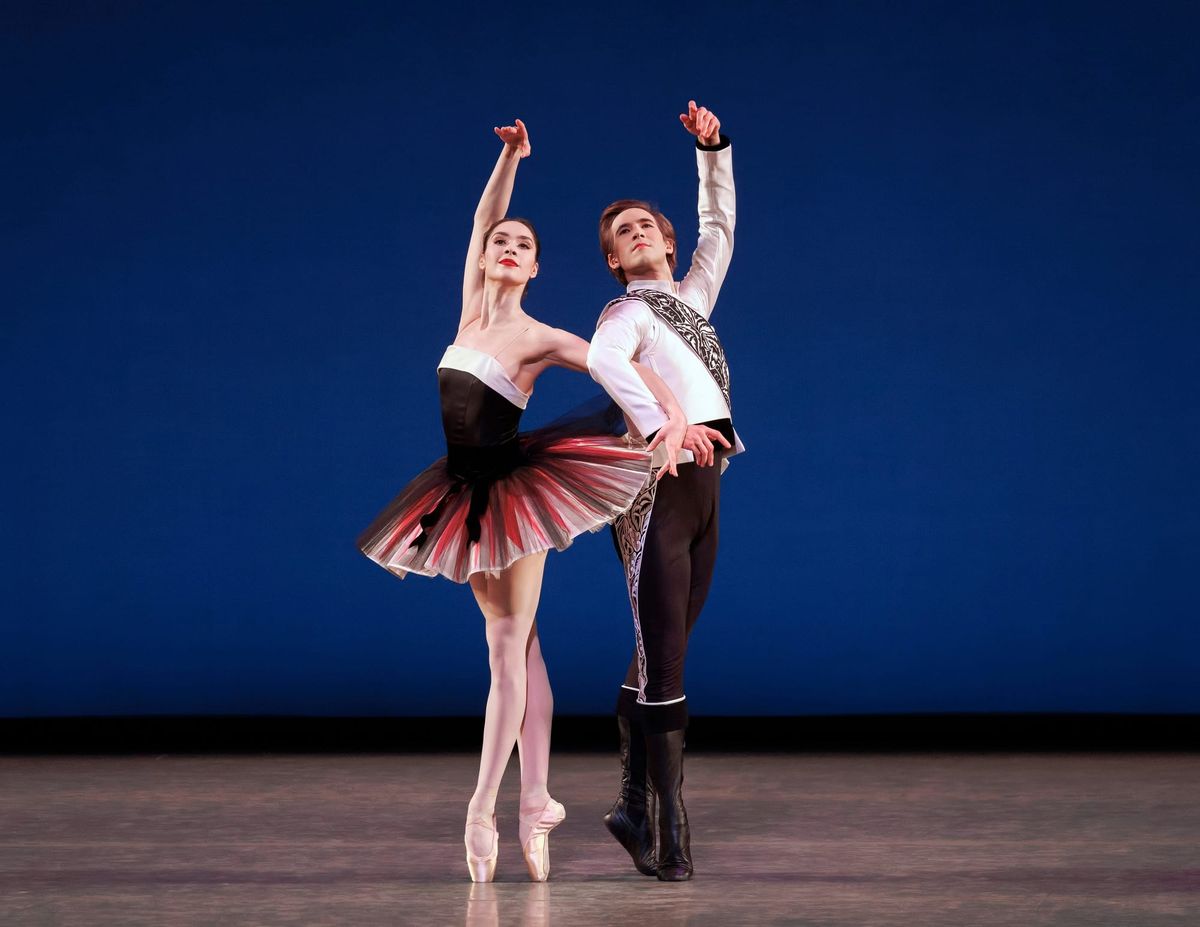
"Paquita", "A Suite of Dances", "After the Rain" 'Brandenburg"
New York City Ballet
David H. Koch Theater
Lincoln Center
New York, New York
May 1, 2025
Though still rare, non-Balanchine evenings are being programed at NYCB with more frequency (though Balanchine is referenced in the "Minkus Pas Trois" which opens "Paquita", the dance is a revision of Petipa's original). The evening’s program featured older works by NYCB stalwarts Jerome Robbins, Christopher Wheeldon, and Alexei Ratmansky, whose reworking of Petipa’s grand finale of his 1881 version of “Paquita", new last season, returned, its full-blooded dancing even dancier. Robbins got two works, "Brandenburg", his 1997 excursion into some of Bach Brandenburg concerti, which combined fine, spirited dancing with some overly repetitive choreography, and “A Suite of Dances”, another selection of Bach for an on-stage cellist (Hannah Holman) and Roman Mejia in his debut. Christopher Wheeldon’s 2005 pas de deux from “After the Rain” is a slow, languorous dance to slow, languorous music by Arvo Part, illuminated by the haunting presence of Miriam Miller’s debut.
There was a debut in “Paquita’s” opening “Minkus pas de trois”, or rather two debuts, as the two girls (Erica Pereira and Mia Williams in her first outing) got slightly new costumes, as the unfortunate black tights have been mercifully replaced, letting their legs and feet shine. The pas de trois still feels tacked on to the main event and Pereira and Williams both looked a bit tense and careful, as if they were performing a graduation exercise, though Pereira's pas de chats were deliciously jumpy and Williams had some beautifully held balances. Their footwork did relax and by the coda, they both looked like they were having fun bouncing through the emboîtés; the audience certainly was.
As the lone male, David Gabriel dove into the quick, chipper, challenging choreography, so full of tours en l’air to pirouette, cabrioles landing on one leg, smooth sissones making a square around stage, and glorious petite batterie. His dancing was strong but light, as he seemed to float effortlessly through the steps. Though he dances with a confident flair, he is not a flashy dancer; elegance rather than flamboyance seems to be his credo and he is a joy to watch.
So too is Ratmansky’s take on Petipa’s “Grand Pas”, full of bouncing corps formations with beautifully articulated torsos and heads bending in unison. I do wish the women had some sort of headpieces to help accentuate the elegant turns and nods, and some draperies or the traditional fountain would give it a bit of atmosphere, but even on the bare stage the dancing is irresistible, and the corps were thrilling as they poured on in Petipa’s kaleidoscopic choreography.
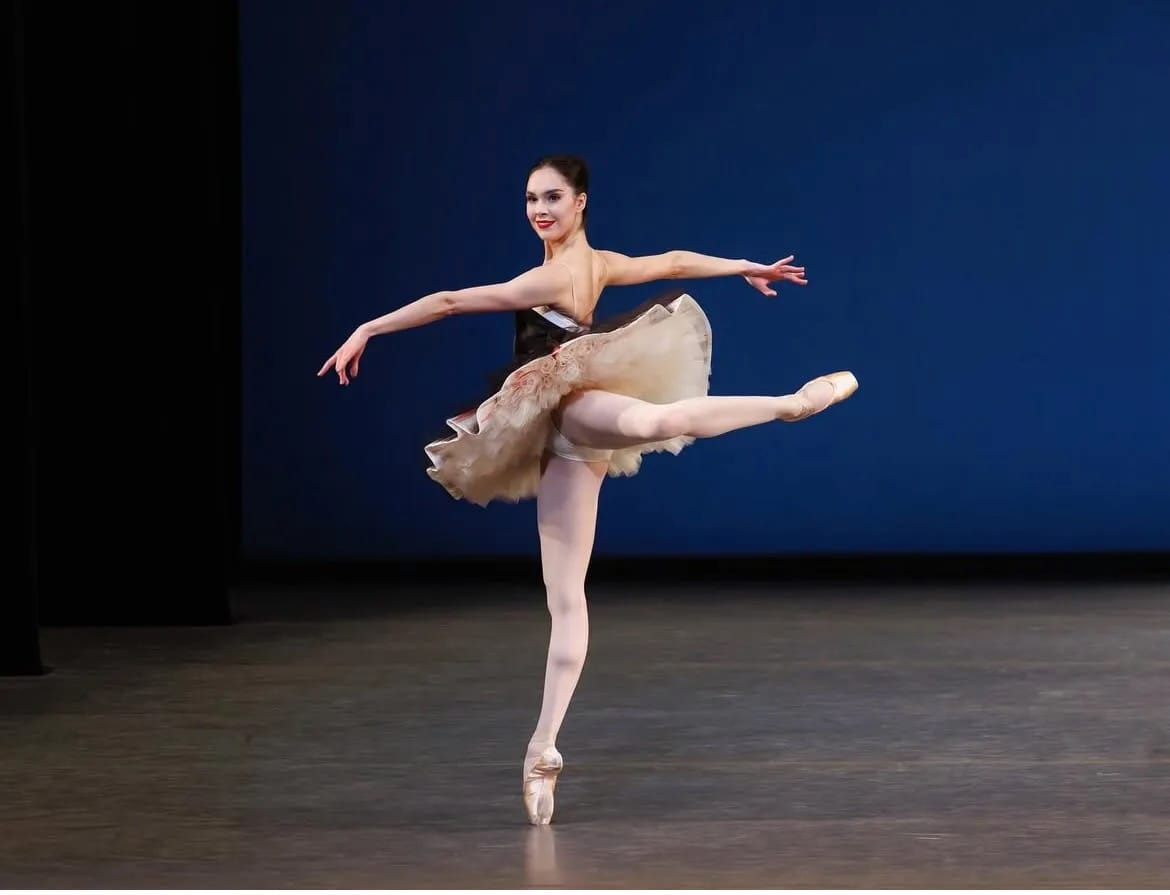
Mira Nadon and Joseph Gordon danced the lead couple with a radiant sheen. Ratmansky’s version hints at the abandoned plot's Spanish roots, and Nadon’s triumphant arm gestures looked like she was holding an invisible fan. Her harp solo caressed the air as she seemed to listen to the music and let it pull her into position. Her air of modest rapture and her serene balances gave her dancing a rich emotional depth, which seemed to explode in the coda. Nadon flew through the coda with power, speed, and grace; her backward chugs, on point no less, were among the best I have ever seen, skimming the stage while her arabesque leg stayed high and solid, ending in a deep, triumphant penché. She danced with such ease and authority that it seemed she was almost improvising. Nadon has a way of moving that looks both completely free and utterly classical.
Gordon was a gracious partner and seemed to understand that his character was originally a French nobleman, not Basilio’s cousin. His petit batterie in his solo was crisp and elegant and his turns to arabesque were immaculately controlled. He did get a chance to show off in the coda, and his turns as la seconde were thrilling.
“Paquita’s” Grand Pas, though, does belong to the women, and shows, yet again, how much Petipa loved choreographing for them. The four solos, each so different, are little jewels, and Ratmansky’s coaching has certainly helped them glow. Olivia MacKinnon was warm and inviting in the opening solo, opening her arms as if welcoming the audience. Ashley Laracey shimmered in her debut in the etherial second variation, using her long, flowing arms to caress the air. She danced with an quiet inner strength, giving each move a delicate force; it was a spiritual as well as an artistic triumph.
Emma von Enck danced the third variation, familiar as “Don Quixote’s” Amour, with an explosive charm that never became coy, and her goat-like leaps seemed to fly. Emily Kikta gave the fourth variation an exuberant Spanish flair, with a slight tongue in cheek smile, as if asking the audience to enjoy the show. They certainly did, especially her thrilling turns and final deep backbend.
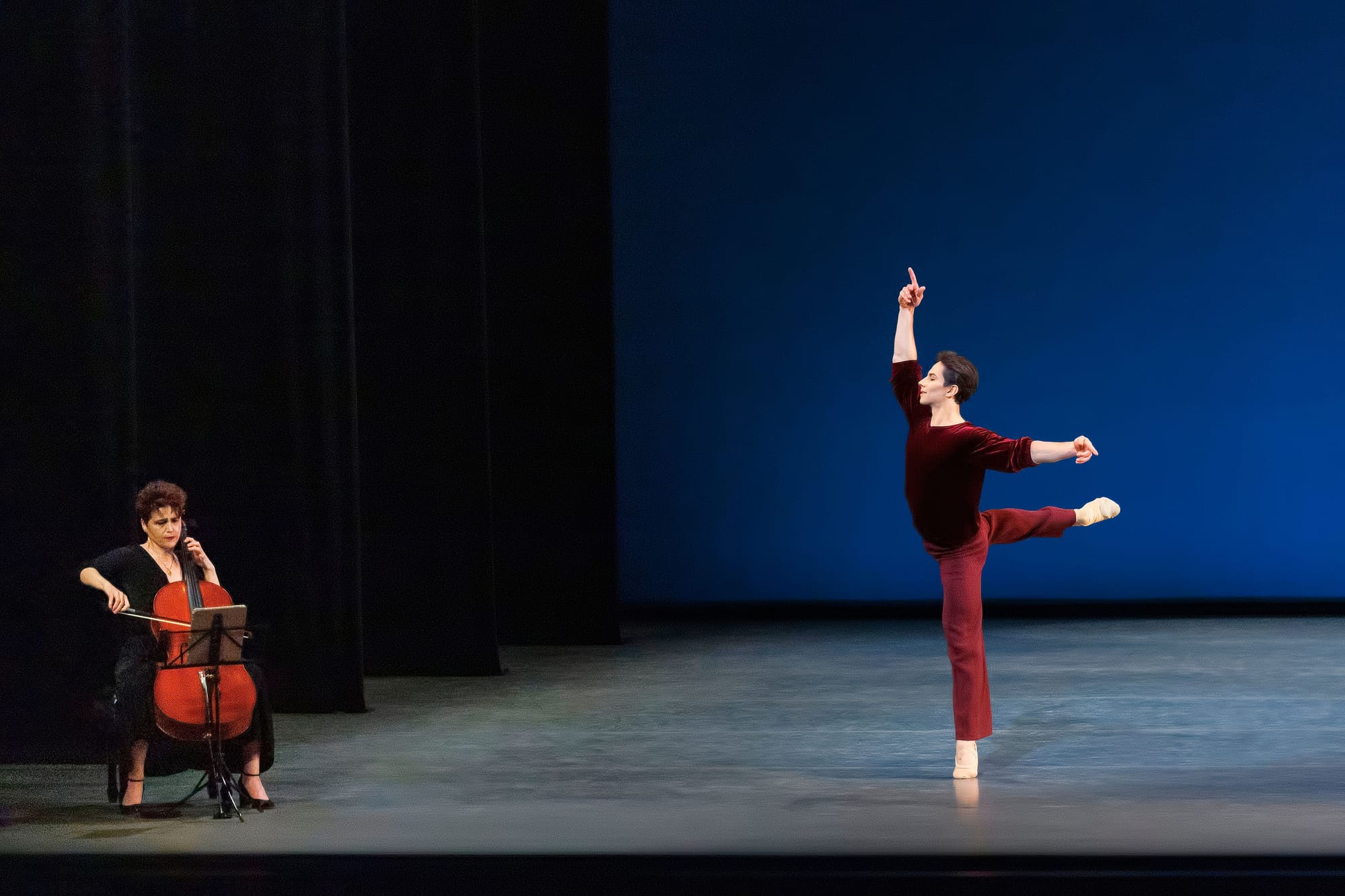
Robbins choreographed “A Suite of Dances” in 1994 for the then 46 year old Baryshnikov, who danced it first for his White Oak Project, and then for the New York City Ballet. It is usually danced by older performers who seem to be walking and dancing through memories. Roman Mejia, a young charmer with a warm flamboyance, certainly doesn’t have the memories of the 46 year old super star, so holding the audience with quiet, often gentle moves was a challenge which he met brilliantly. He gave the role a more youthful feel, as if he were experimenting rather than remembering. His dancing had a lightness and an easy fluidity as his moves flowed without effort. Lovely though his dancing was, his ability to command the stage while standing still and to share his thoughts and feelings with the audience was even more impressive. It was a remarkable debut.
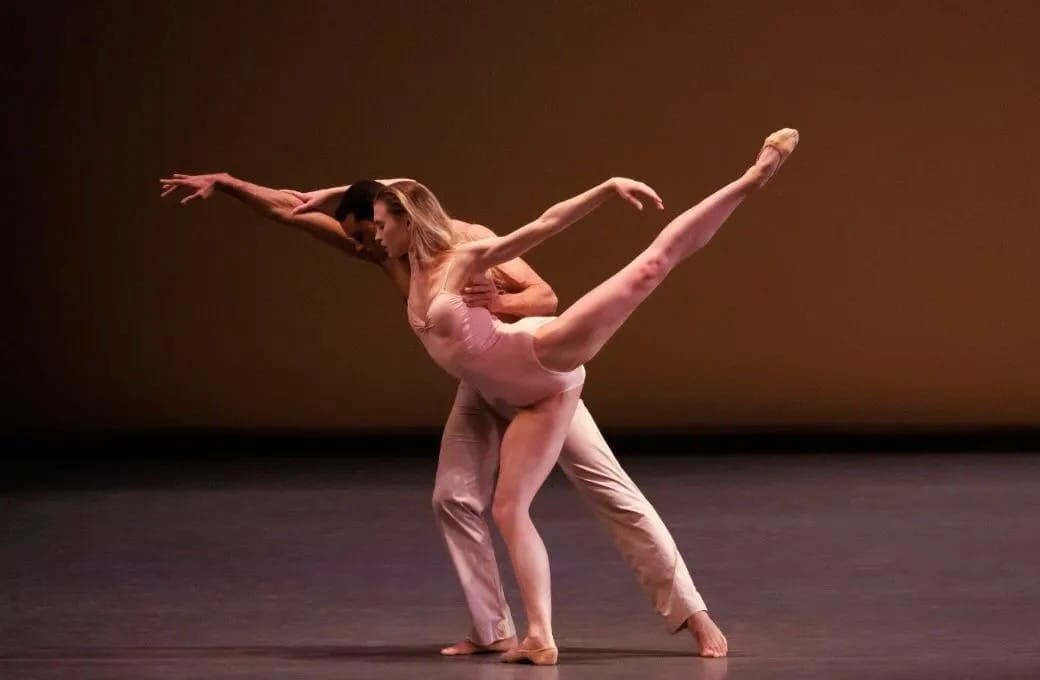
So too was Miriam Miller’s performance of the popular duet from Wheeldon’s “After the Rain”. Confidently supported by Preston Chamblee, she used her statuesque beauty and long limbs to hypnotize the audience. The slow, deliberate, almost oozing moves of the pas de deux convey no story; the work is pure atmosphere. Miller, in a flesh colored leotard, moved with a withdrawn sorrow and wrapped herself around the bare chested Chamblee. They could have been Adam and Eve expelled from Eden, or a couple who have lost a child—the details really didn’t matter. The pas de deux can seem mawkish, but Miller’s inward yet powerful control hinted at secrets the audience was eager to discover.
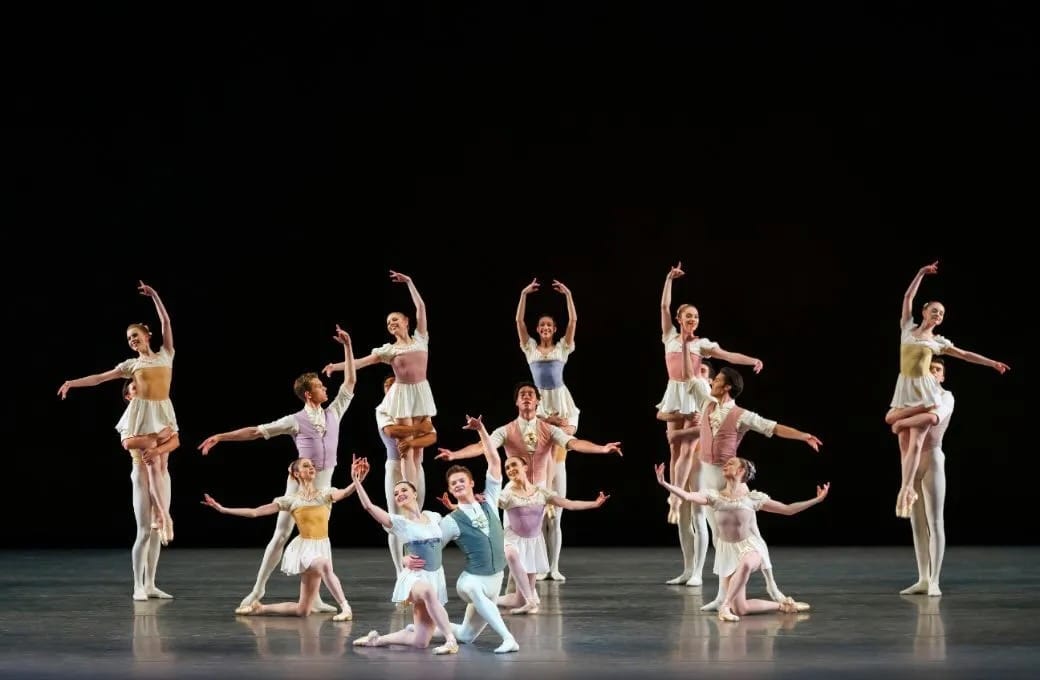
There are few secrets in Robbins’ 1997 “Brandenburg”, his final work to Bach, set to the third Brandenburg Concerto and parts of 2, 1, and 6; he died the following year. He seemed to be revisiting many of his favorite tropes, especially the youthful romps of so many of his earlier pieces. The twenty dancers (two main couples, Indiana Woodward with Jules Mabie, a debut, and Unity Phelan with Peter Walker, also a debut, and sixteen corps dancers) wear colorful peasantish outfits and perform folkish steps and frisky jumps in addition to cartwheels and somersaults—everyday moves that Robbins has used from “Fancy Free” onwards—with a casual formality.
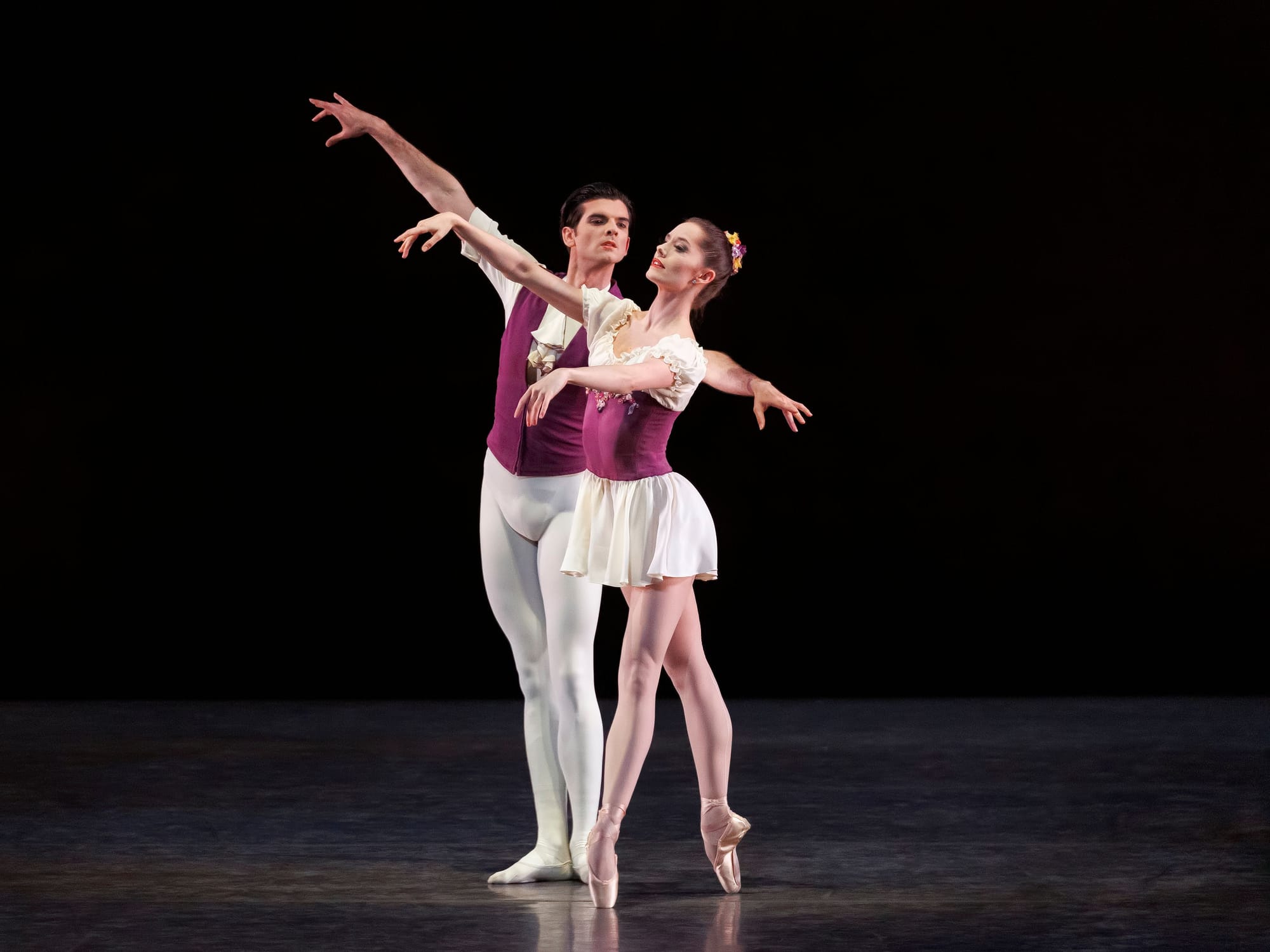
Woodward and Mabie’s delicate and lilting pas de deux, ending with another Robbins’ trademark, an upside down lift, was beautifully danced, with Woodward’s upper body at its nuanced, creamy best. Mabie partnered her with a courtly reticence. Phelan and especially Walker gave a gentle urgency to the second pas de deux, seeming to look for something or someone just out of reach. Their repeated near misses in part inverted Balanchine's "La Sonnambula", as Walker bent carefully out of Phelan's outstretched arm, appearing to walk through her, and though there is no narrative, there are hints of loss. Unfortunately, the ballet could have used a bit more loss, as its 40 minutes does get repetitive, and the last two movements, no matter how exciting and vibrant each individual dancer was, dragged a bit. It was as if Robbins didn't want to say goodbye, a reluctance that is forgivable in an old friend.
© 2025 Mary Cargill



