Old Favorites
"Airs", "Sunset", "Syzygy"
Paul Taylor American Dance
David H. Koch Theater
Lincoln Center
New York, New York
November 9, 2019, evening
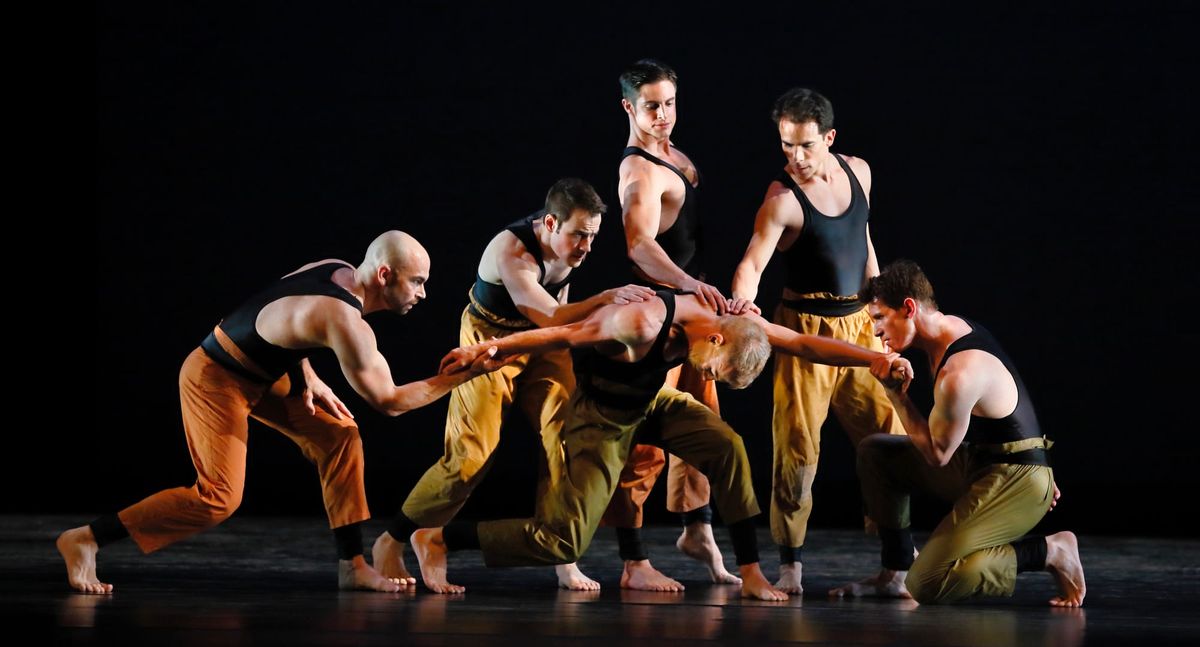
For its annual New York season the Taylor Company has not adopted the idea of themed triple bills, where the same dances are performed together. This may be easier on the schedulers, but it does limit and repertory, and a repertory as rich as Taylor's deserved to be seen from all angles. The Saturday night performance showed works from the 1970s and '80s, mature Taylor at his most confident, ranging from the classical harmonies of "Airs" and the frantic energy of "Syzygy" to the profound understanding of young soldiers' fears in "Sunset", avoiding any facile and obvious anti-war disdain.
"Airs", set to music by Handel. is Taylor in his serene mode, a group of playful angels, leavened by one odd person out, danced by Michelle Fleet. She gave the role a resigned dignity, as she wove in and out of the circling dancers, sometimes joining them and sometime watching. Her echoing duet with Christina Lynch Markham, as the dancers' reflected each other's moves, had a rare dramatic resonance, as if the audience were watching the dancers' thoughts. Fleet gave the quiet finale, as the three couples walked by her, a restrained and stylized sadness; even angles can be lonely, it seems, in Taylor's paradise.
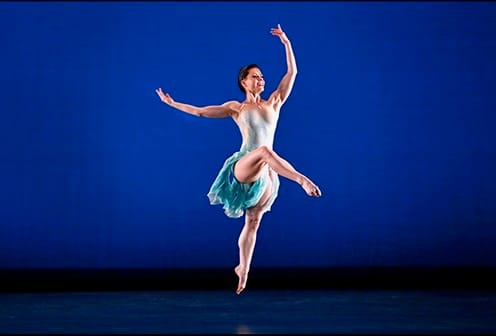
Madelyn Ho and John Harnage explored the brighter side of that paradise in their sprightly gavotte, full of unbelievably fast footwork. Their open-hearted joy seemed like an eternal spring, and there was a bucolic air to their dancing, the essence of a nymph and her faun. Sean Mahoney and Eran Bugge were a more mature but equally happy couple, confident and serene, as exemplified in the astounding lift in which Bugge balanced on Mahoney's thighs, leaning back with her arm outstretched, as if the air were her pillow.
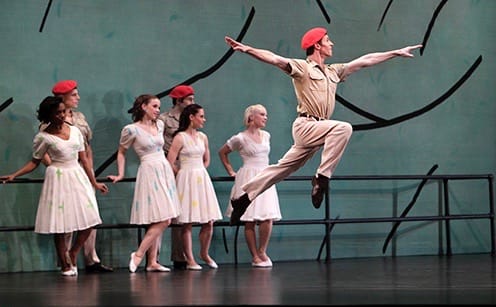
Mahoney was also in "Sunset", Taylor's haunting salute to comradeship in wartime. He and Robert Kleinendorst danced together and in a subtle examination of friendship, Taylor transformed inarticulate hesitation into poetry. With its shyly flirtatious woman and eager, awkward men, "Sunset" does echo the world of "Fancy Free" (Alex Clayton even gets a thrilling show off solo). But it follows them to war, as the elegiac Elgar music changes into a recording of loon calls, which somehow creates a quiet, dangerous jungle.
The women reappear there, no longer youthful companions but ghostly valkyries collecting the men from the battlefield. The one red beret left behind was a stark and unsentimental reminder of all the lives cut off far too soon.
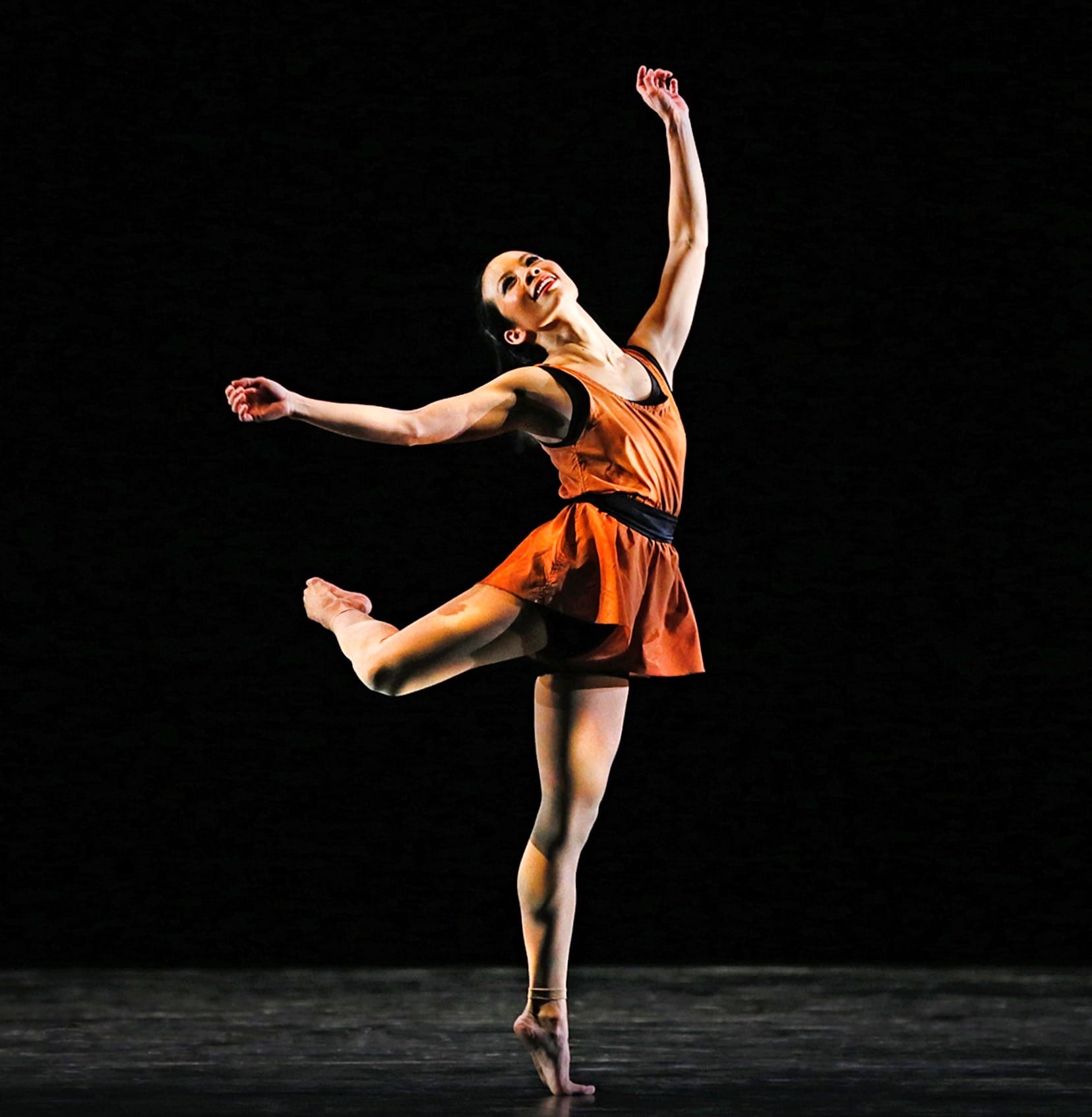
Syzygy is a term for the alignment of three or more celestial bodies, and it turns out that in 1987, when Taylor's "Syzygy" premiered, the earth, moon, and sun were in syzygy. The design does hint at astrological happenings, as the white streak against the black backdrop looks like jet exhaust, but there isn't much alignment in the work, a percussive mass of wriggling bodies, building in excitement. Madelyn Ho was the one calm center, revolving in attitude through the dancers as the jogged insouciantly backwards and forwards in a seemingly uncontrolled frenzy.
There were hints of meaning, as Kleinendorst seemed to emerge from the group as if breaking through a chrysalis with rippling, exploratory arms--he seemed boneless. Though there was some stylized violence which was quickly resolved, the piece really seemed a celebration of the dancers' energy, control, and power, a rush of adrenaline that never overstayed its welcome.
copyright © 2019 by Mary Cargill



