Old Faithful
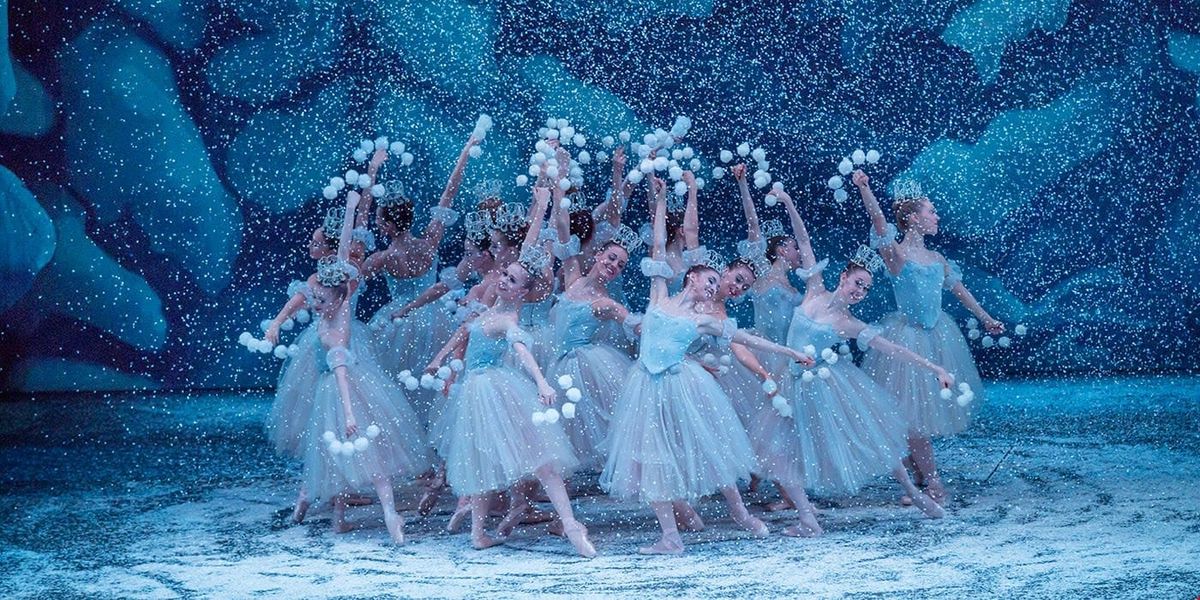
"The Nutcracker"
New York City Ballet
David H. Koch Theater
Lincoln Center
New York, New York
November 25, 2022
For some people, the Christmas season starts with New York City Ballet's magical tree growing up to the sky with scintillating, musical excitement. The production has remained basically the same for years; though the Chinese dance has lost much of its flavor, the boys still want to grow up to be cavalry officers and the girls still politely sip their tea and rock their dolls.
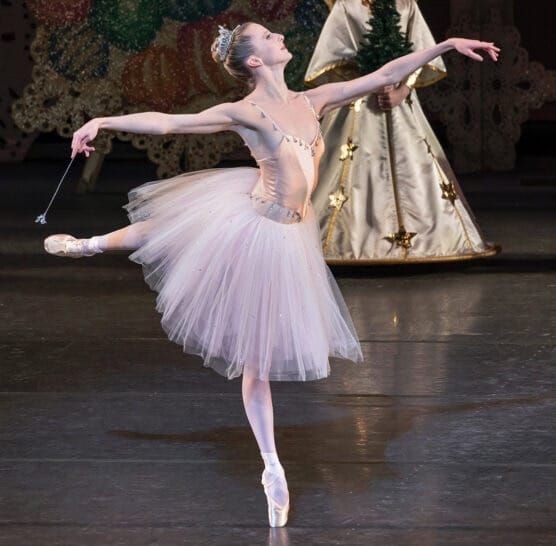
Sterling Hyltin, with Andrew Veyette, was the opening night Sugar Plum, dancing in what will be her farewell role later this season, and she showed, yet again, that she is leaving too soon. The Sugar Plum Fairy is an unusual role; there is no real emotion to develop, she is just warmth and sweetness though the music for the pas de deux's adagio soars with a hint on a disturbing and unresolved melancholy. Hyltin and Veyette let the music absorb their dancing, giving their pas de deux a slightly impersonal air, a vision with no artificial sweetener. It was a distillation of a traditional adagio, majestic and grand with no unnecessary emotion. Balanchine seems to have made it clear that this wasn't a love story by separating the woman's solo, usually danced for love of her partner, from the pas de deux and famous dance of the Sugar Plum is now an elegant and generous welcome for the little angles. The poor cavalier had his solo eliminated completely.
Hyltin danced Sugar Plum's solo with an airy delicacy, full of soft flowing low jumps, as if she were dancing it with one long breath, without any pauses for extra emphasis. She just glowed. The nameless cavalier did get a chance to show off in the brief coda and Veyette seemed to enjoy his fast, springy turns a la second; the audience certainly did.
Indiana Woodward's Dew Drop had lots of spring, too, as well as impeccably playful musical timing. She was able to hold a pose for an extra second, pausing with her leg in the air before slowly bringing it down, showing her elegant upper body without any exaggerated mannerisms. She seemed to float above the ground while carving crystalline shapes in the air; she was pure joy.
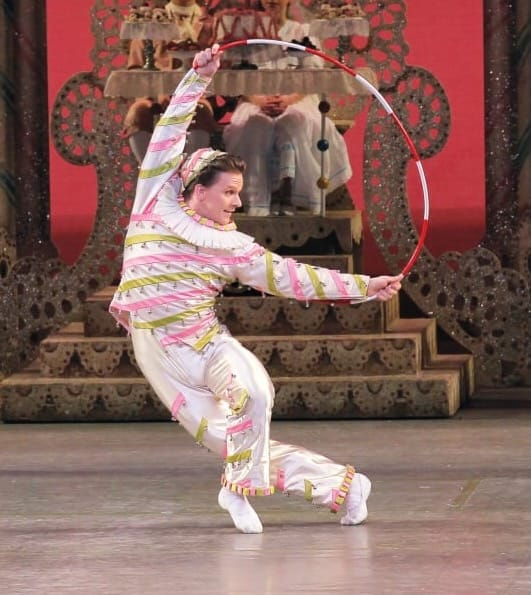
Daniel Ulbricht led the Candy Canes with a similar clarity and concentrated energy and his fifth positions seemed snapped into place by magnates. His power and precision, along with his fearless double twirls of his hoop, made it difficult to realize that he has been with the company for over twenty years. Sara Adams was an elegant if slightly careful Marzipan Shepherdess, and her smooth upper body made a vibrant contrast to her fast footwork. Alex Knight danced with a glorious flourish and gave Hot Chocolate an unusual dynamism.
The many children looked very well rehearsed and danced with an appealing seriousness--they were giving a performance and not a dance recital. The bouncy emboîtés of the little Polichinelles and the smooth floating Angels were particularly impressive. Hannon Hatchett was a rambunctious Fritz whose charm and small size made his misbehavior seem a result of too much sugar and not incipient juvenile delinquency. Lucas Hinds was a refined, elegant Nutcracker, with a noble carriage.
He apparently learned his manners from his Uncle Drosselmeier (guest artist Robert La Fosse), who made the old man an eighteenth century holdover with his knee britches and elaborate hand kissing. He avoided the creepy uncle approach (no menacing undertones here), understanding that children enjoy being scared when they know they are safe. His gentle care when fixing the broken Nutcracker doll was so moving; he was an adult who could sympathize with a little girl's fantasy and who knew that in years to come she would remember the magic.
© 2022 Mary Cargill



