Old and New, With Youthful Promise
“Birthday Offering,” “Kabalevsky Violin Concerto,” “Concerto Grosso,” “Chromatic Fantasy,” “Concerto,” “See The Youth Advance!,” “New Scarlett”
ABT Studio Company & The Royal Ballet School
NYU Skirball Center for the Performance Arts
New York, NY
February 10, 2017
It’s fascinating to watch young dancers, those just on the cusp of professional careers, as they feel their way through and experiment with various works. There is their exploration of what the work ought to look like, of course, but also, since these dancers are not yet set in their ways, the many expressions of their brewing individualities. In a performance by young artists from ABT Studio Company and graduates of the Royal Ballet School, the mixed bill program presented at the NYU Skirball Center offered a full menu of such expressions, in works ranging from classics by Frederick Ashton and Kenneth MacMillan to more recent creations, and even a world premiere. The more recent works fared better than the classics, with the dancers from both schoolings delivering an absolutely marvelous performance of a new ballet by Liam Scarlett to close the night.
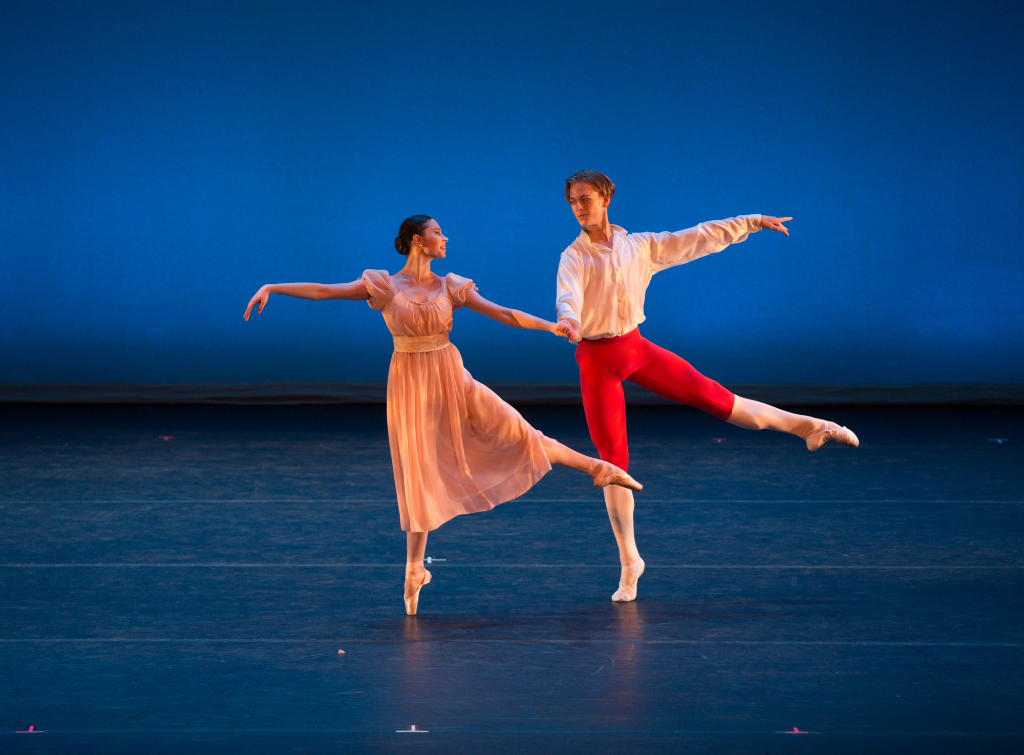
Of all the works presented, Ashton’s “Birthday Offering,” originally made for stars of the Royal Ballet for the company's 25th birthday in 1956, looked the weakest, and it was a shame that it was this performance that opened the night. The seven couples comprised of Royal Ballet School graduates were neat and careful, but it seemed that in trying hard to perform the work properly they missed the mark, and forgot to actually dance.
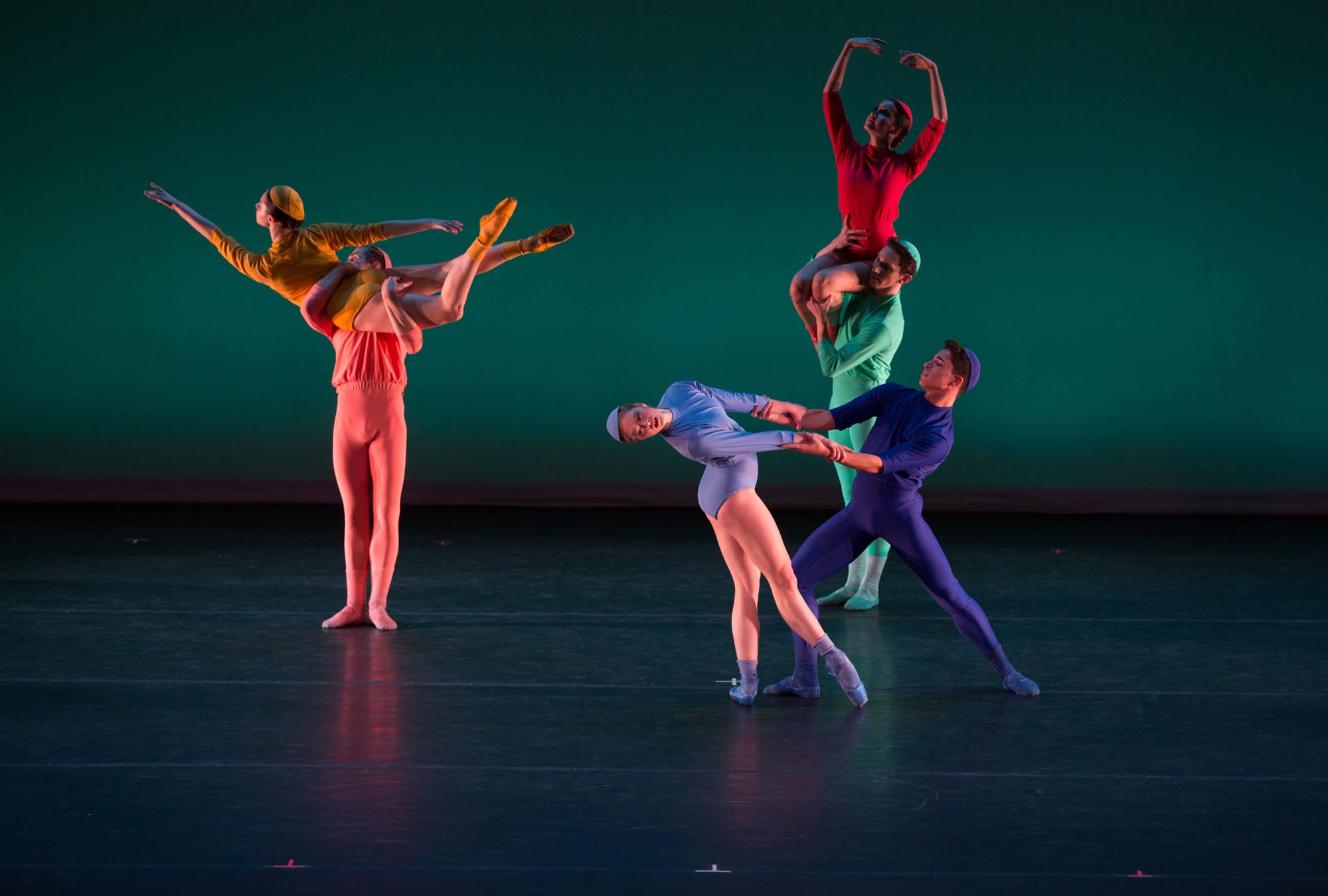
The dancers were much closer to the mark in the ballet that followed, the New York premiere of Marcelo Gomes’s “Kabalevsky Violin Concerto,” set to Dmitri Kabalevsky’s Concerto for Violin in C Major and performed by the ABT Studio Company. This work showed whimsical and playful choreography, and the dancing by Zimmi Coker, Luigi Crispino, Meghan Lynch and Jarod Curley was very engaging, with the dancers clearly acknowledging both the audience and each other. Following a playful First Movement duet, where Crispino dazzled with expressive jumps, Lynch and Curley in the Second Movement duet took advantage of every note, showing great lines and giving their softer music a story and added lyricism. A moment where Lynch gently put her hands around his face while he held her up in a lift, along with other, resonated with tenderness. Choreographically, the Third Movement kept things interesting by going back and forth between looking like a dance for four, a pas de trois next to a solo, and sometimes two duets.
Helgi Tomasson’s “Concerto Grosso” was then performed by the Royal Ballet School men, and showed all the dynamism that this work calls for, with a lot of power and explosion and great polish. Their dancing was of a quality one is accustomed to see from established professionals.
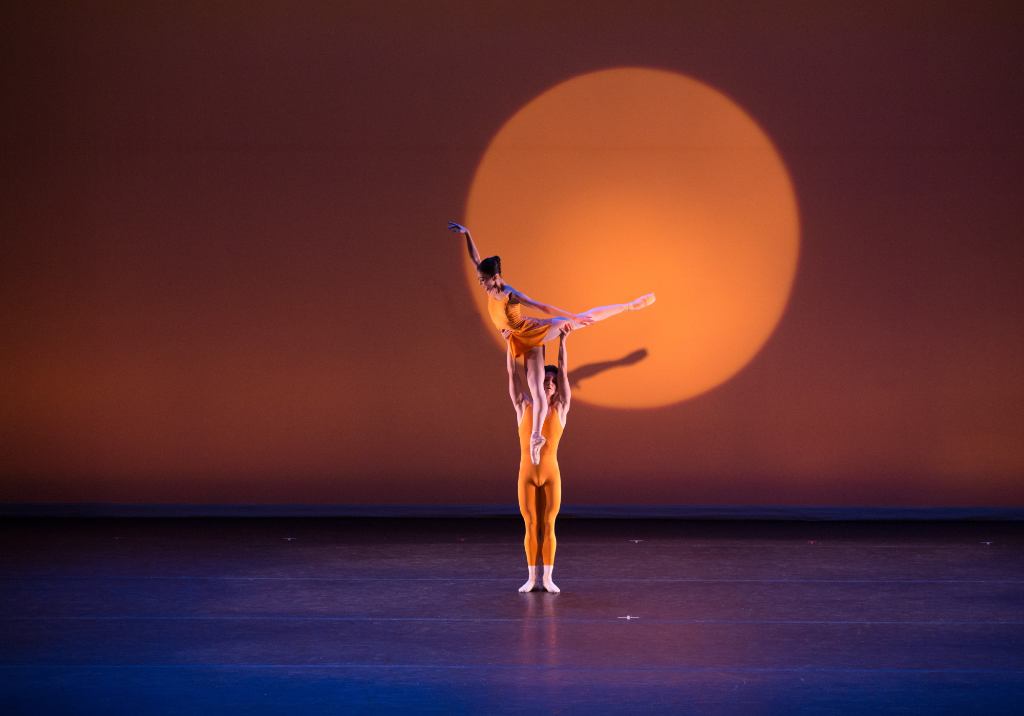
After an intermission, ABT dancers performed in the New York premiere of Dana Genshaft’s “Chromatic Fantasy,” which for all its choreo- graphic cohesion, suffered from poor costuming, unfavorably accentuating the ladies’ legs. By contrast, nothing detracted from MacMillan’s “Concerto,” in which Royal Ballet School’s Sae Maeda and Joshua Junker gave the Dmitri Schotakovich music softness through carefully executed ports de bras and gently approach arabesque lifts. The dancing could have been more mature, but was lovely nonetheless. Similarly, the New York premiere of Ethan Stiefel’s “See the Youth Advance!” set to variations by Ludwig von Beethoven looked every bit delightful. Stiefel’s ballet portrayed a polite world of baroque inspiration, where the ABT dancers presented youthful purity and hope. Demure pas de chats were the anchoring step in a ballet of some lyricism in one of the duets, and a lot of pretty, youthful flirtation.
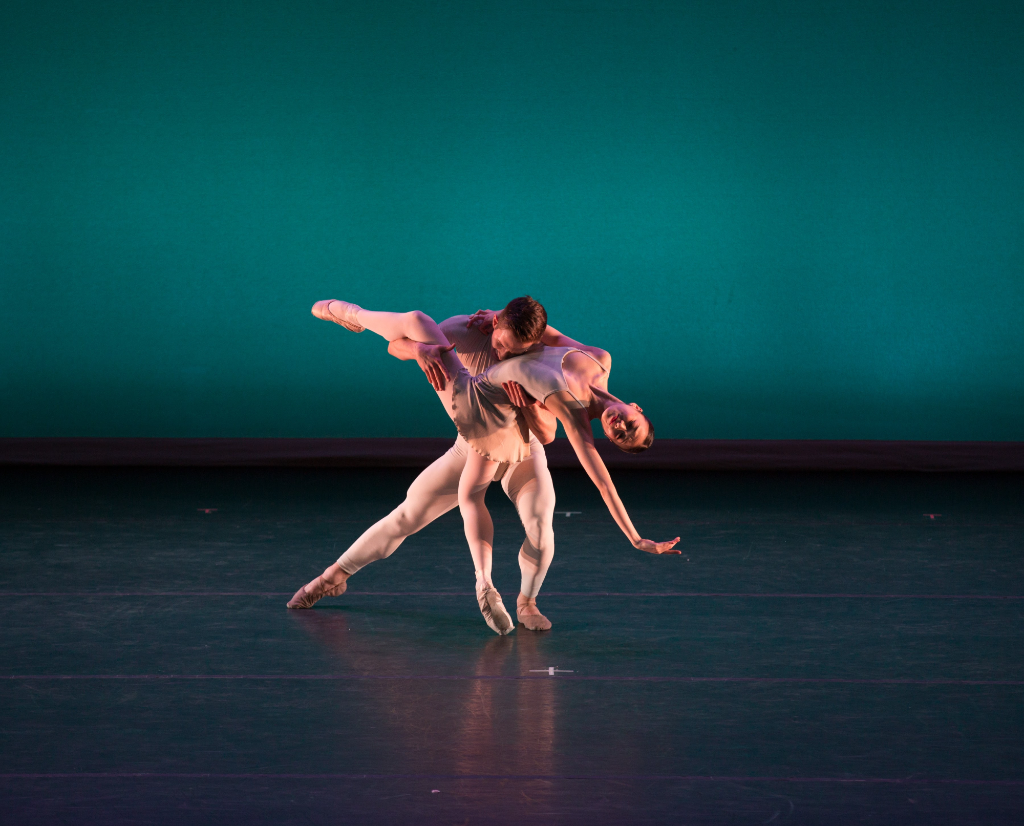
The gem of the night was the new Scarlett ballet, listed in the bill as “New Scarlett,” in which for the first time in the evening the dancers from both schools danced together. Despite their different backgrounds, their dancing combined seamlessly in a well-polished and intricate new work. The music was the Third Movement from Philip Glass’s Piano Concerto No. 2, and the choreography very much mirrored the shifts in color and the repetition of the score. Sometimes, the dancing was echoed across the dancers onstage, with one lift beginning on the bottom of stage left by one couple, and then, moments later, echoed by a couple in the middle of the stage. In another moment, two dancers were sitting at the bottom of stage right, waiting for the musical cue-in for their dancing as other dancers continued to move. The steps, and the dancers’ expressions, were intricately connected with the score, such as in moments where a flowing note sequence had one of the male dancers carry a female partner out and across the stage. Though all dancers looked good, Alice Bellini of the Royal Ballet School stood out the most with her very limber and expressive physique and her comfortable and eloquent approach to the very athletic sections of the work. She is certainly one to watch, but the whole cast of the night was showing promise.
copyright © 2017 by Marianne Adams



