Old and Different
“The Brahms-Haydn Variations,” “Monotones I and II,” “Green Table”
American Ballet Theatre
David H. Koch Theater
New York, NY
October 22, 2015
ABT’s fall season is traditionally a mixed bill affair but rarely one with works as audaciously diametrical in nature as this year. The company’s second night of the season offered older ballets created between 1932 and 2000, but each felt refreshingly different as much from what might be expected in a mixed bill these days, as from each other.
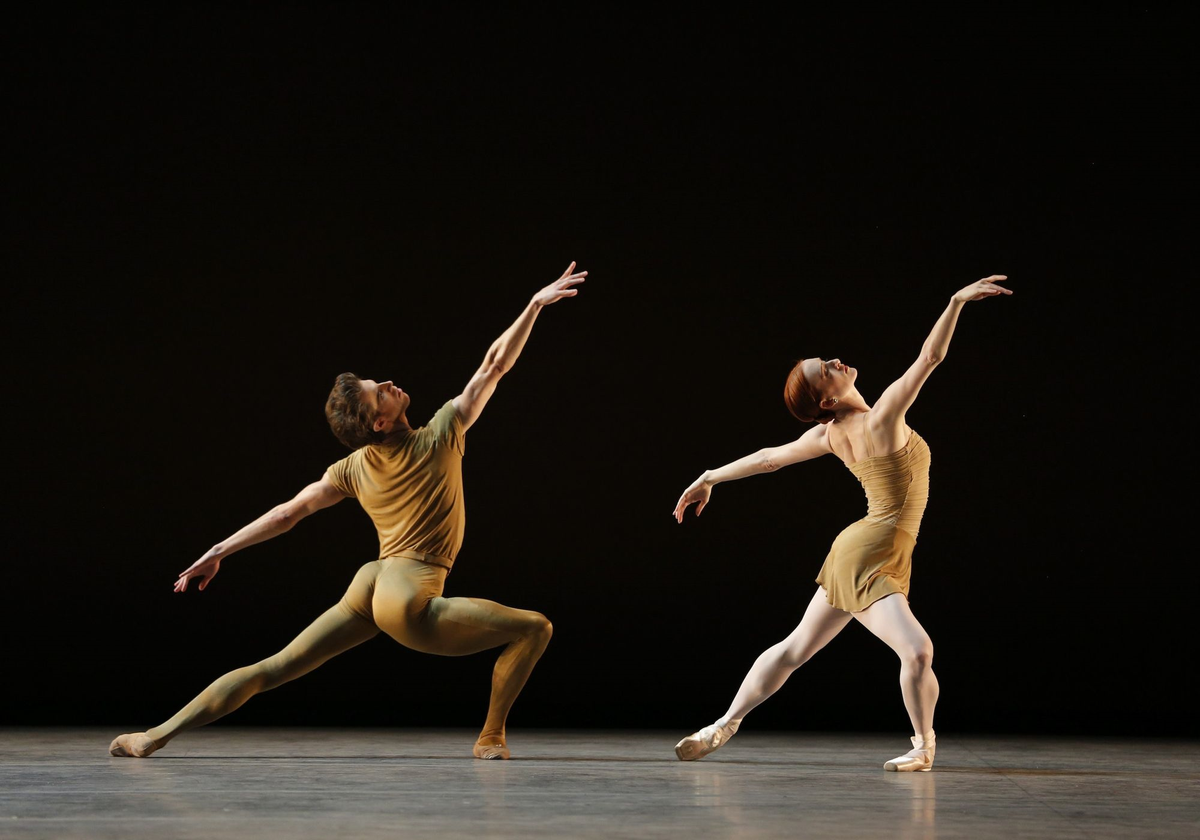
Opening the night, Twyla Tharp’s 2000 minimalist but complex “Brahms-Haydn Variations” brought volume but on the whole very little excitement. There were attempts at story-telling and cheekiness by Gillian Murphy and James Whiteside in one of the duets, beautiful polish and balletic clarity delivered by Maria Kochetkova and Herman Cornejo in what was the highlight duet of the work, as well as a breakaway commanding performance by Isabella Boylston showing she was worthy of her still recent promotion to principal, but by and large the ballet had a bread basket feel to the main offerings of the night.
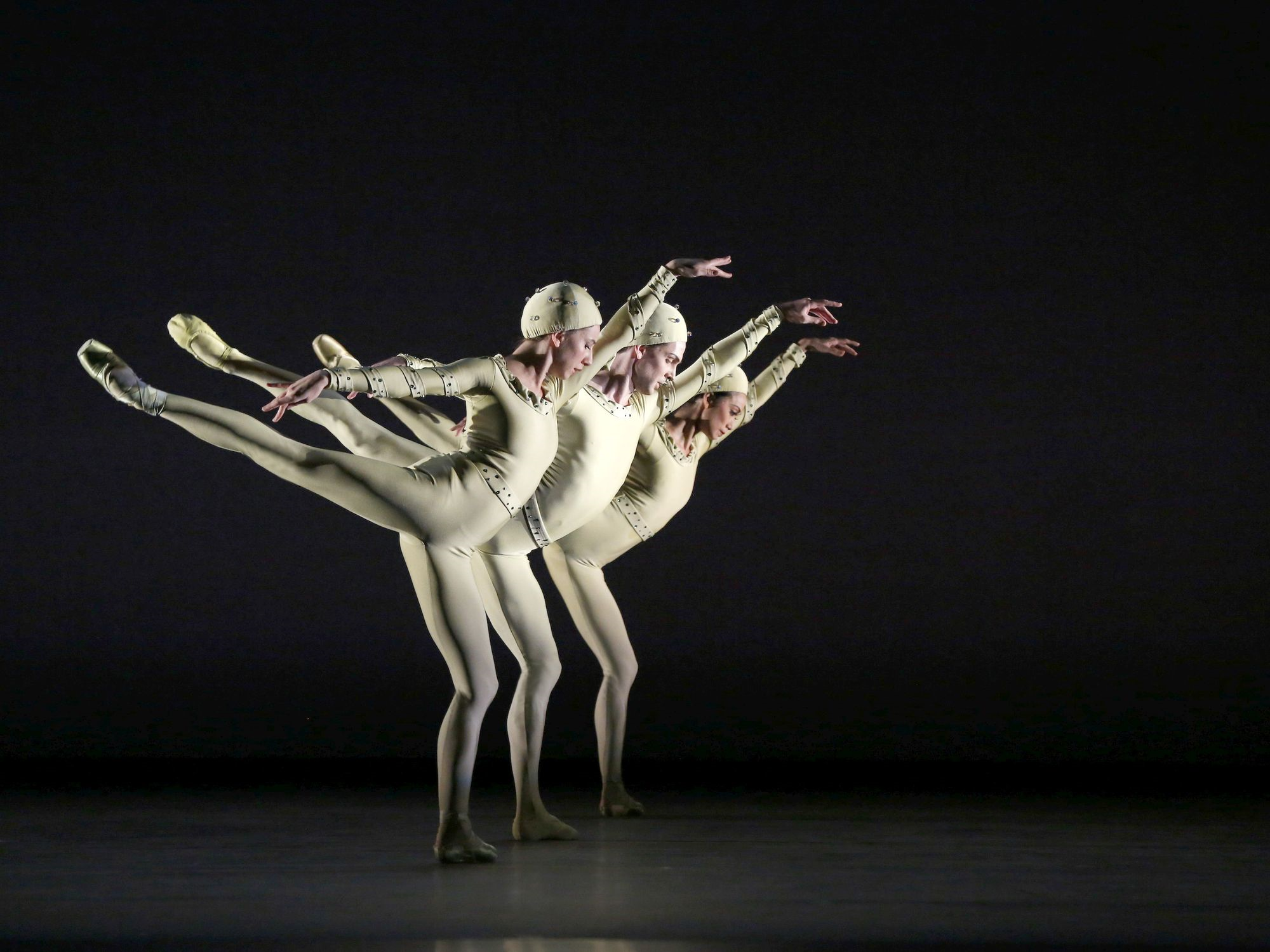
Those came after the first intermission, beginning with Frederick Ashton’s sublime “Monotones I and II.” In the lead-off, earthlier trio to Erik Satie’s “Trois Gnossiennes,” Stella Abrera, Isabella Boylston and Joseph Gorak beautifully conveyed the work’s hypnotic, mysterious quality by taking their time with the repetitions and the harmonious movement across the stage where the dancers at times move in unison and at others let the repeating step ripple through the line of three bodies to Satie’s lilting notes. Save for a little unevenness from the cast in the sequentially approached line of arabesques and a line of écartés devant, the only real complaint with this piece was with the unitard costumes, which, either due to their particular fabric or the way their golden-green hue interacted with the lighting, made the slender ladies appear larger than they actually are, which detracted from the overall aesthetic.
As prescribed by Ashton, despite being choreographed first the “Trois Gymnopédies” pas de trois followed second, its intricate transitions and refracted looking poses of mainly arabesques and attitudes continuing the spellbinding trajectory of harmonious movement of the other trio now in a more celestial way. Here, from the very beginning when Thomas Forster and Cory Stearns seamlessly lifted Veronica Part from a laying down split to a standing one, and with each rotation in that position (with her leg pressed against her body), the dancers projected an ethereal quality, and gave the movements and the ballet an almost translucent feel, one matching the aerial quality of the music. Though story-less and modern looking, this piece possessed all the emotional charge of the music which the dancers expressed throughout the work, but most profoundly when Forster and Stearns reached for Part, their positions forming a triangle with her looking like a distant illusion.
The ABT cast, though not perfect in their execution of the ballet, in both of its parts conveyed the sublime beauty of the way the choreography kisses the space throughout the dancers’ delicate transitions, and extracts ever more from the music, the steps' impression and the audience. It was an excellent reminder that few works can make the audience truly long for repeat viewing, and with this ballet it is to see a different dimension of both the work itself and its cast.
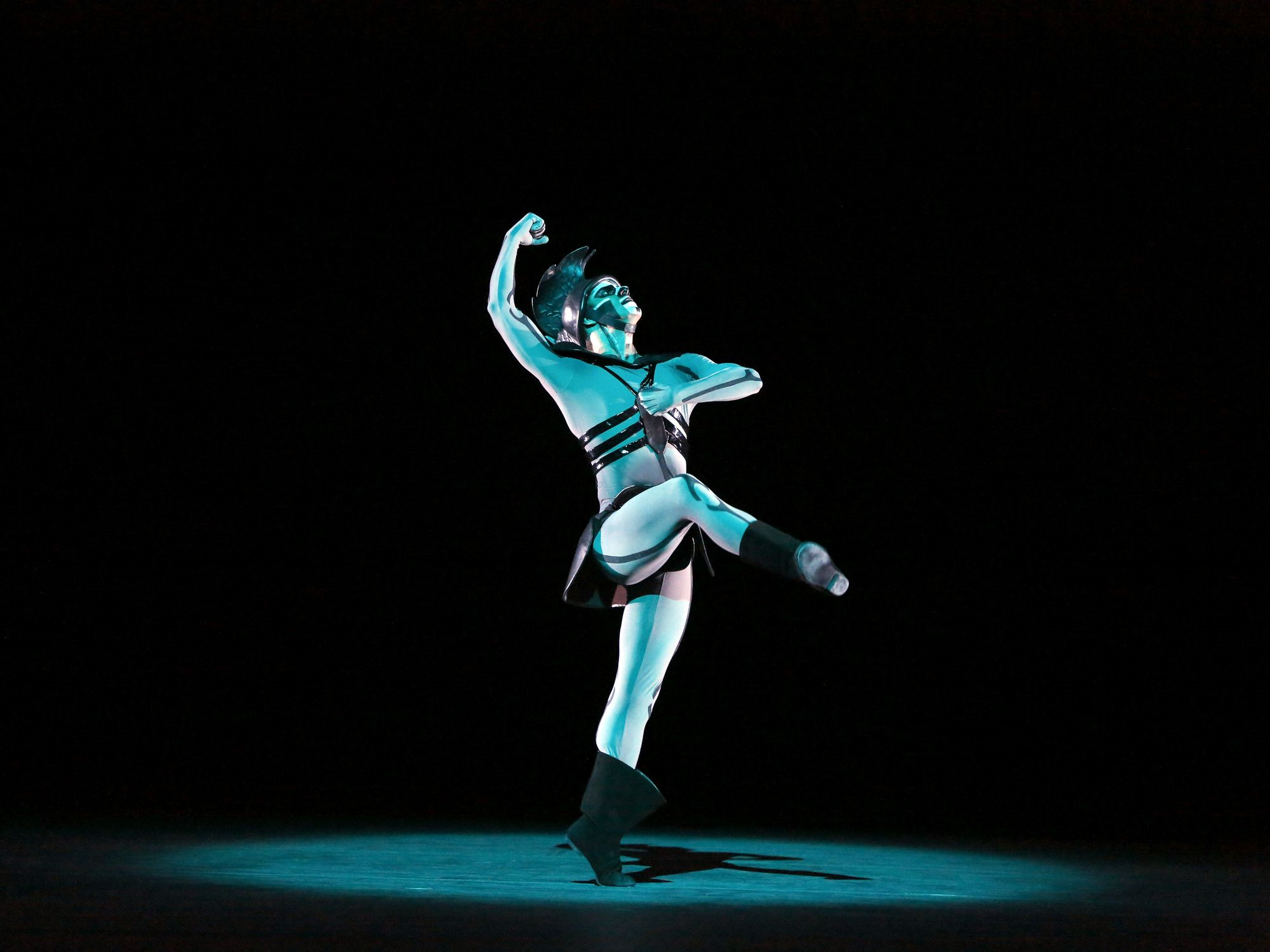
For the next and final course, ABT served up Kurt Jooss’s 1932 “The Green Table.” Set to piano score by F.A. Cohen, this critique of war and its futility, presented in jarring tableaux form, proceeded slowly, but with poignant eloquence. The nearly identical opening and ending scenes of the ballet, titled “The Gentlemen in Black,” which occur around a green table with dancers masked as hideous balding male bureaucrats devising their plans, had a caricatured and shallowly joyful feel in ABT’s hands during the first scene, and similarly jovial yet somehow laced with echoes of a numbed but real pain from the intervening scenes flavor in the last.
The ballet’s middle, with the ever present figure of Death danced by Marcelo Gomes, combined dance athleticism, particularly in “The Battle” scene, with complex dramatic portrayals. A nearly all-female “Refugees” scene was particularly moving, showing emotionally ravaged by war women in a way that looked like a dramatic painting come to life. Throughout it all, Gomes moved robotically, enunciating every close of the foot in fifth position as though hammering in a nail, and possessing little, if any, humanity. Even when he cradled Luciana Paris after her emotional demise as the Old Mother there was little comfort there besides the finality offered by the embrace and a certain escape from the sharp-footed and serpentine-handed Herman Cornejo as the Profiteer who appeared to capitalize on the grief.
After the technique-focused Tharp work and the lyrical Ashton ballet, this dramatic and somber performance rounded out the evening’s artistic facets, showing that the company can handle classicism, lyricism and dramatic, serious topics with equal forte.
copyright © 2015 by Marianne Adams



