Oh, You Beautiful Doll
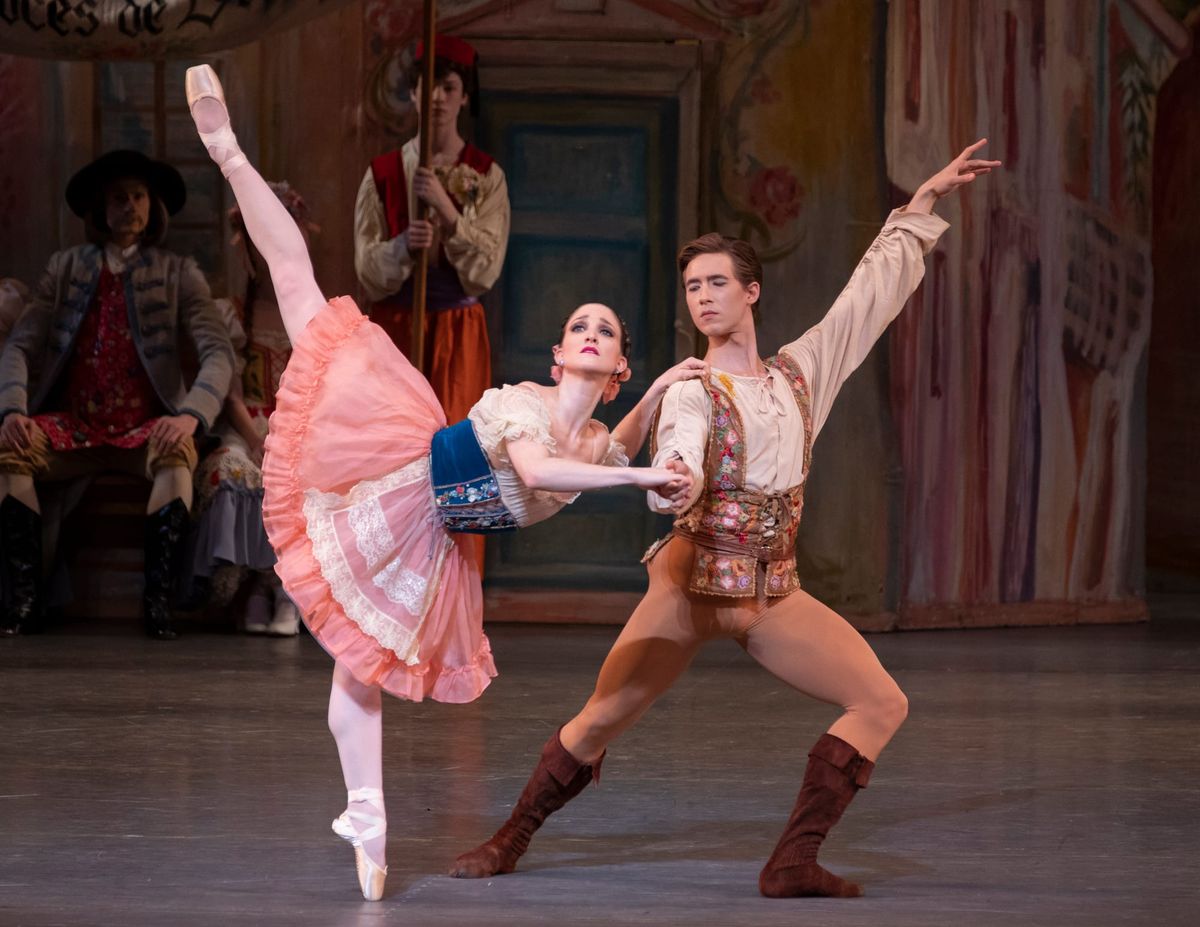
"Coppélia"
New York City Ballet
David H. Koch Theater
Lincoln Center
New York, New York
June 1, 2018
by Mary Cargill
copyright © 2018 by Mary Cargill
Ashley Bouder's first "Coppélia" was part of a busy final week of New York City Ballet's Spring season, which saw a number of debuts, including that of her Frantz, Joseph Gordon. With her forthright stage presence and radiant classical technique, Bouder would seemingly have been a natural for the spunky Swanilda long before this, but for some reason it never came her way. Perhaps, though, this was lucky because it allowed her, as she has so graciously posted, to work with Patricia McBride, Balanchine's original Swanilda. (NYCB's new regime, it appears, is willing, and perhaps eager, to bring back retired dancers.) McBride's work has had impressive dividends, especially in the mime sequences, which this season have been clear, resonant, and musical, not just some afterthought between the steps.
Bouder's delightful opening monologue to Coppélia clearly said "Oh please, won't you come down to dance with me" and then "Well--so much for you!" and she had the audience at "hello". The butterfly scene, which can make Frantz look like a yokel who would pull wings off flies, became a youthful misunderstanding as Swanilda, still miffed at Frantz's flirtation with Coppélia, deliberately turned her back in a huff and Frantz, with misguided gallantry, tried to use Swanilda's butterfly as a talisman, letting the audience know that he was clearly the right boy for her.
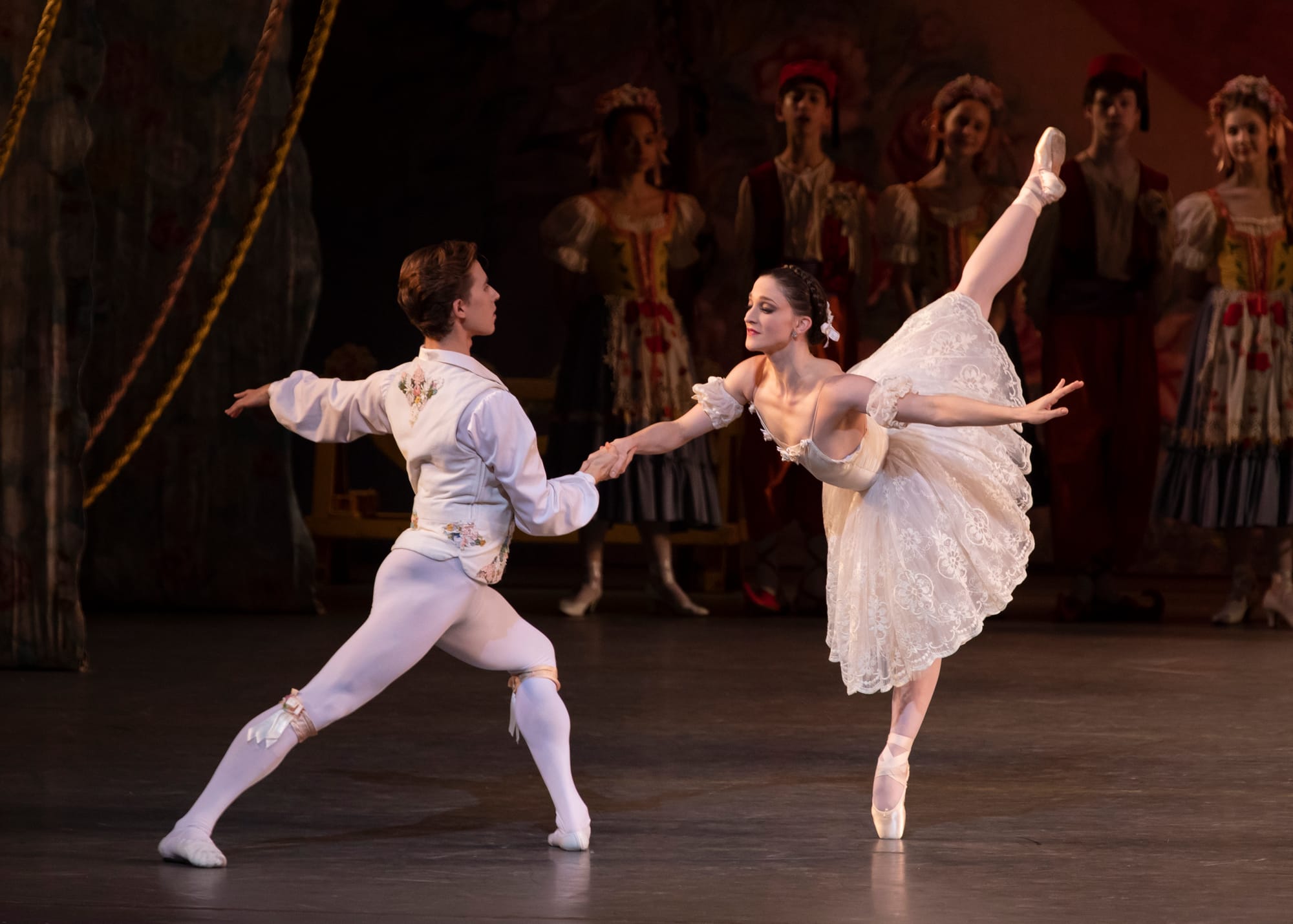
Bouder's Act II was lively, especially her mechanical shenanigans, but never deliberately cute, as she kept that fourth wall firmly in place. Her dancing, of course, was crisp and powerful, with secure balances, effortless jumps, fast footwork, and some sky-scraping grand pas de chats but she also shaded the dancing so that her final act built in excitement, as if she were growing more and more confident. The audience could get to know Swanilda just by watching Bouder's neck, held proudly upright as the independent girl in Act I, craning desperately in Act II as she tried to rescue Frantz, and the bending softly in Act III as she leaned against Frantz, turning her head to keep her eyes on him.
Gordon was not an especially cocky, over-confident Frantz. He was basically a sweet-natured but somewhat callow boy and his Frantz, like his touching second sailor in "Fancy Free", had a modest, winning charm. His dancing too, was not flamboyant, but his Act III solo was impeccably elegant, strong, and secure, with beautiful turns landing into second position, making it clear that the boy of the first two acts had learned his lesson. His partnering too, was flawless, as Swanilda seemed to float confidently up to his shoulder. It was a very impressive debut.
Giovanni Villalobos also had a fine debut as the poor Doctor. Though his Coppélius was not yet as detailed or individual as the much more experienced Robert La Fosse's, he was a real character, not a cartoon. He gave the moment when he thinks Coppélia has come to life a pathetic seriousness, so in keeping with the shimmering music; "Coppélia" is a comedy not a farce, and deals with human emotions, not just ridiculous situations, no matter how many laughs the second has. Villalobos and Bouder made this stunningly clear in the mirror scene when he handed the pretend Coppélia the mirror to the shimmering, magical music. Bouder took it slowly, extending into a perfectly pure and serene arabesque, and looked at herself; this was no "Oh, I feel pretty" joke, she seemed to become Swanilda saying "I am me".
Her friends, too, insisted on their individuality, as they all seemed to hear the music of the wheat dance in their own unique way and charged through the diagonals like members of the Galician track team throwing their arms up to hoist themselves over invisible barriers. But Bouder and Gordon had more than enough style to make up for any rough edges.
Copyright © 2018 by Mary Cargill



