Nutcracker at 65
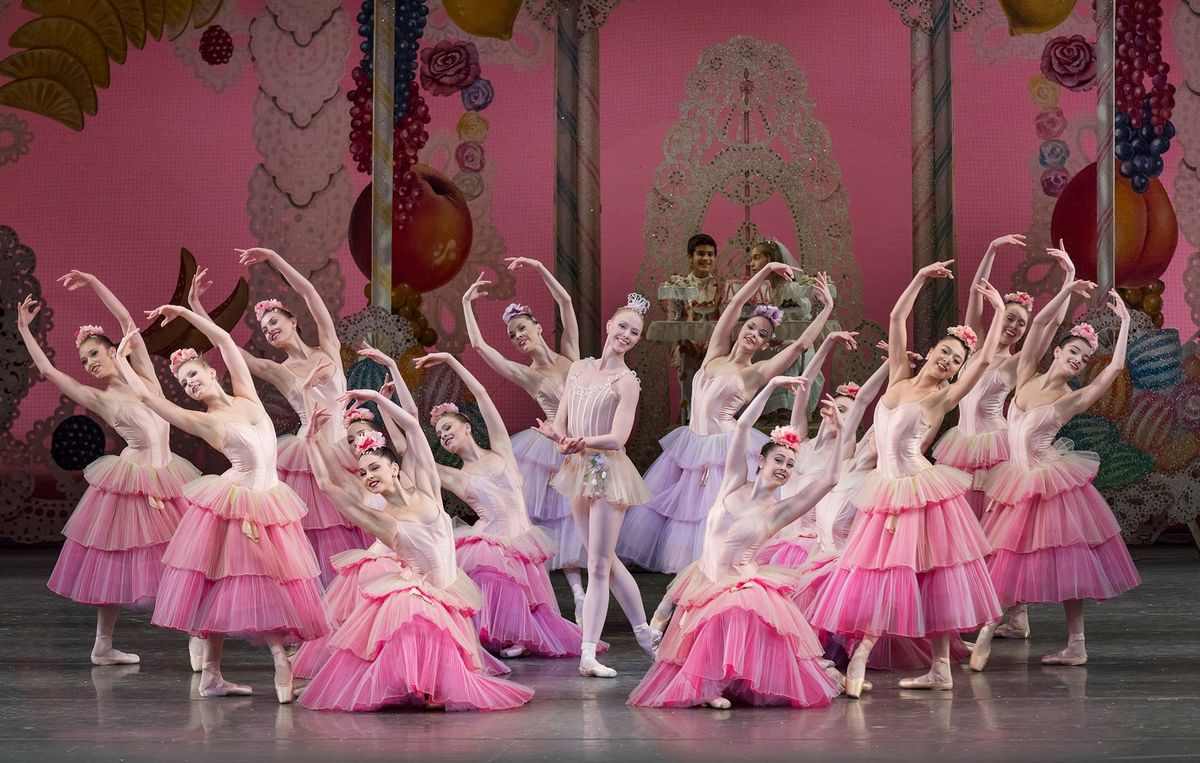
"George Balanchine's The Nutcracker"
New York City Ballet
David H. Koch Theater
New York, New York
December 17, 2019
"George Balanchine's The Nutcracker", as it's now called, turned sixty-five this year, old enough to be eligible for Medicare and half-price rides on the New York City subway. Whatever else might have changed over the decades, the ballet has always been anchored by Tchaikovsky's score, from its first delicate notes, glittering like ice on snow and transporting us to a cozy vision of Biedermeier Nuremburg, to its final fanfare as the hero and heroine are born aloft in a sleigh drawn by reindeer to an unknown destination, and Balanchine's response to that score, not just the steps, but the theme and tone as well.
Beyond its plot, the ballet also shows how one little girl learns the skills she'll need as she grows up, nurturing her newly acquired nutcracker like a doll, learning how to behave in society during the dances of act one, and how she earns her promotion when she distracts the Mouse King (by throwing her slipper) just long enough for the Nutcracker to run him through. Faced with an onslaught of marauding mice, both Marie and the Nutcracker Prince spring into action. Add empathy (hers)and chivalry (his, dropping to one knee and bowing before her with a panache that would put a medieval knight to shame) and good manners (both) and there is no question that the two deserve each other.
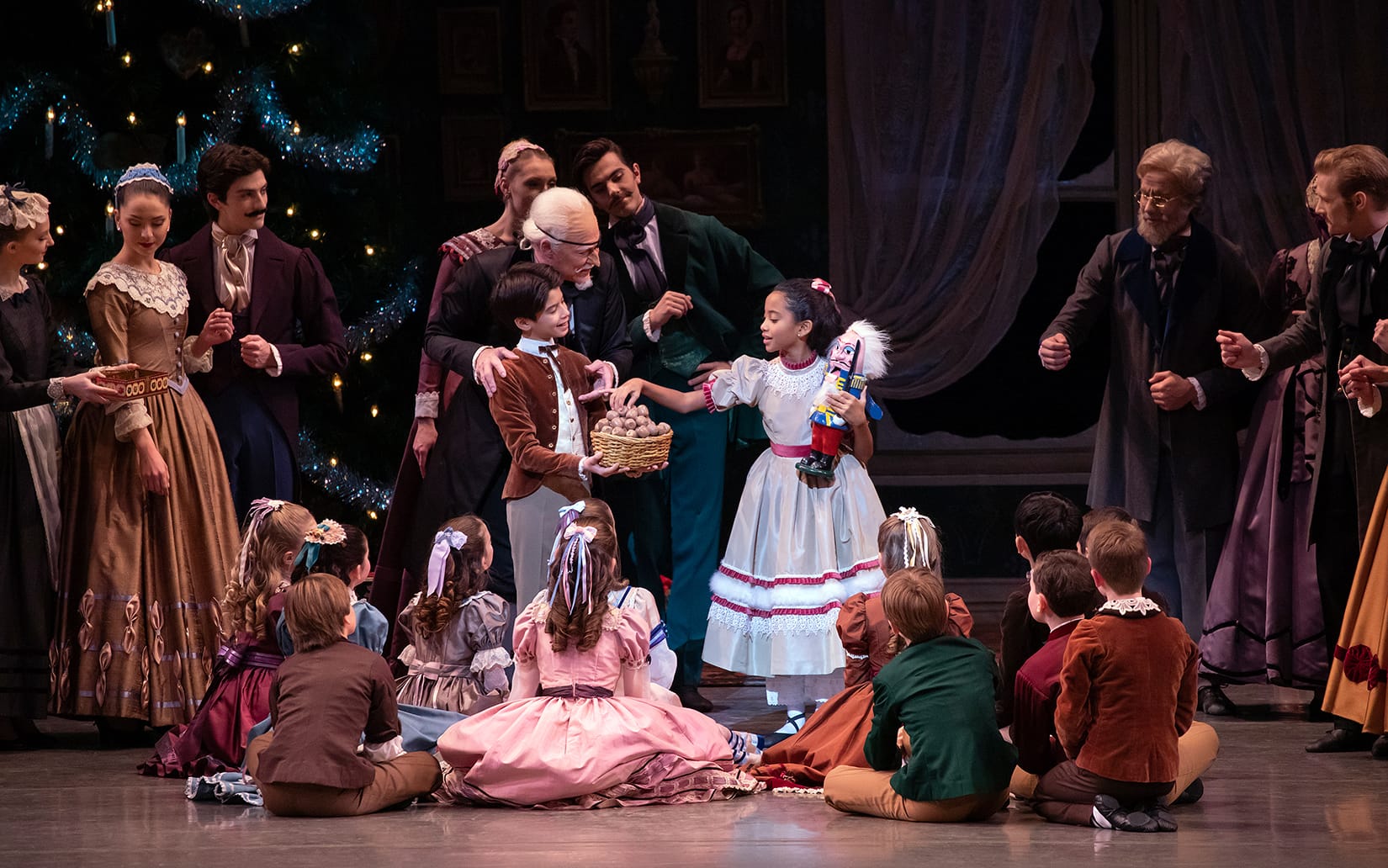
Certainly that's the way it felt watch- ing Charlotte Nebres as Marie and Tyler Quirk as Drossel- meyer's Nephew and later the Nutcracker. Nebres made a point of Marie's impetuosity early on. Having put her eye to the keyhole, she ran forward to share what she had seen, but, in her excitement, paused rather than stopping dead to recount it. Her momentum was all focused on returning to that keyhole and not missing a thing. Tyler Quirk looked like a classicist in the making. Revealed as a prince: his arm, holding a crown, commanded space, his foot beautifully pointed.
Their opposite, intentionally, is Marie's younger brother Fritz, here played by Reed Ouimet, always seeking attention, quick to anger, a little hellion. But dancing calmed him down and showed him at his most contented. At his least calm and contented, Fritz had a temper tantrum at the side of the stage, a cross between Popeye and the Energizer Bunny and, in its unchanging speed and intensity, a bit much. Another modern intrusion are the boys' helmets, bright red shiny plastic, like the water cups at my local pizzeria, and throwing off an alien 21th century glare under the stage lights, bringing us too close to home when we'd rather be in an imaginary Nuremberg.
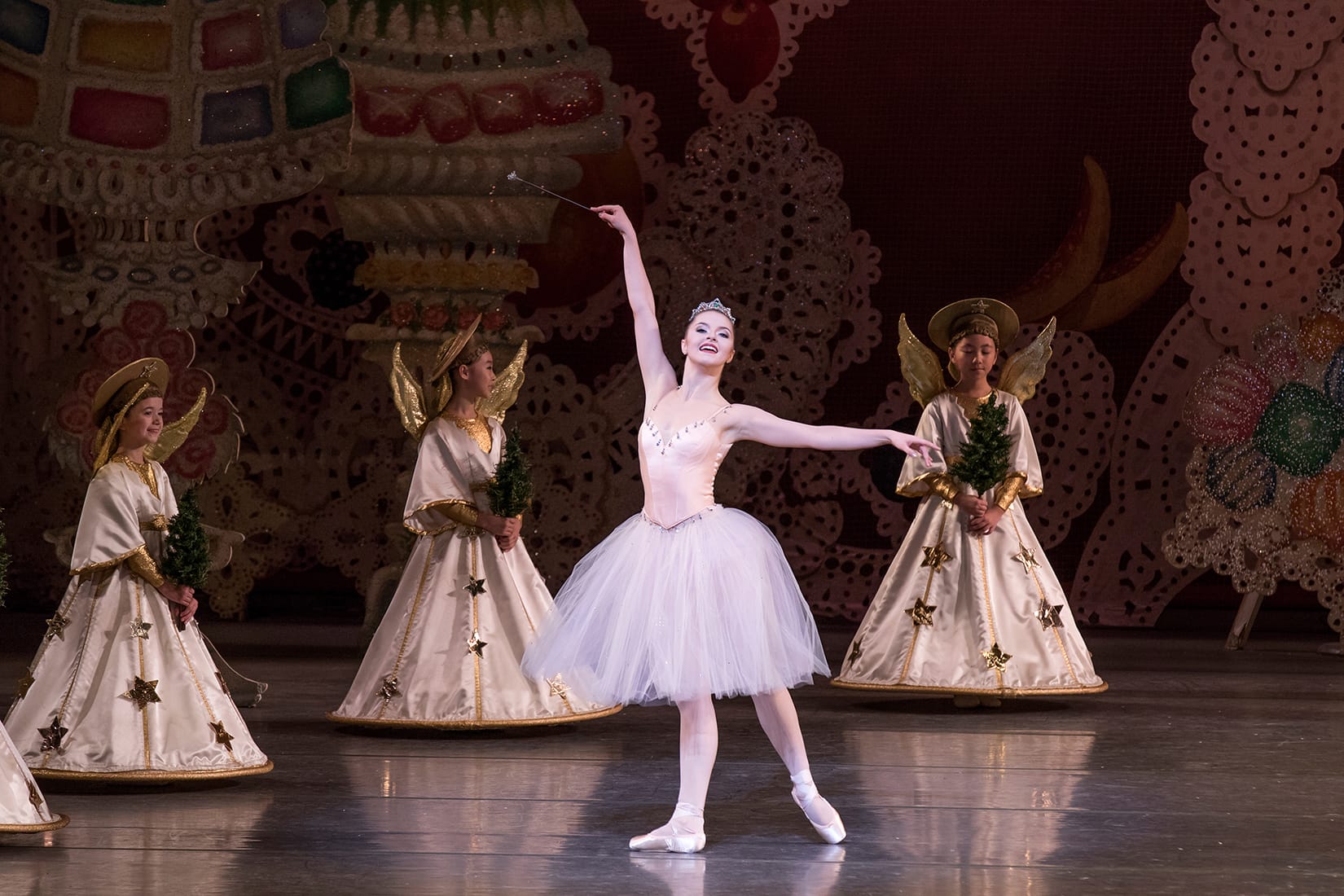
Konfiturerenburg (The Land of Sweets) is a place beyond time, where order is a given, hierarchy, with the Sugar Plum Fairy at its apex, is respected, and, if the angels seamlessly gliding by as the curtain goes upon act two are to be believed, a land where the rules of gravity are periodically suspended. As the Sugar Plum Fairy and her cavalier, Indiana Woodward and Anthony Huxley, made the pure classicism of their adagio glow like a string of pearls, not showy, but even-tempered, gracious and beautiful. Teresa Reichlin's Dewdrop was efficient and technically undaunted but did not leave much perfume behind. This may have been the first time that the lead Candy Cane in act two, who literally jumps through hoops, also played the grandfather in the opening party scene. Roman Mejia, making his mark as an up and coming virtuoso, acquitted himself honorably in both roles. Two of the most resonant moments of the evening belonged to the corps: the cumulative force of both the snow scene which whirled with the force of the snow squall that had passed through town that day and of the Waltz of the Flowers led by Unity Phelan, who on other nights dances the Sugar Plum Fairy and by Mira Nadon, an up and comer who will soon. At those moments, "The Nutcracker's" magic shown in all its glory.
copyright © 2019 by Carol Pardo



