Numbers Game
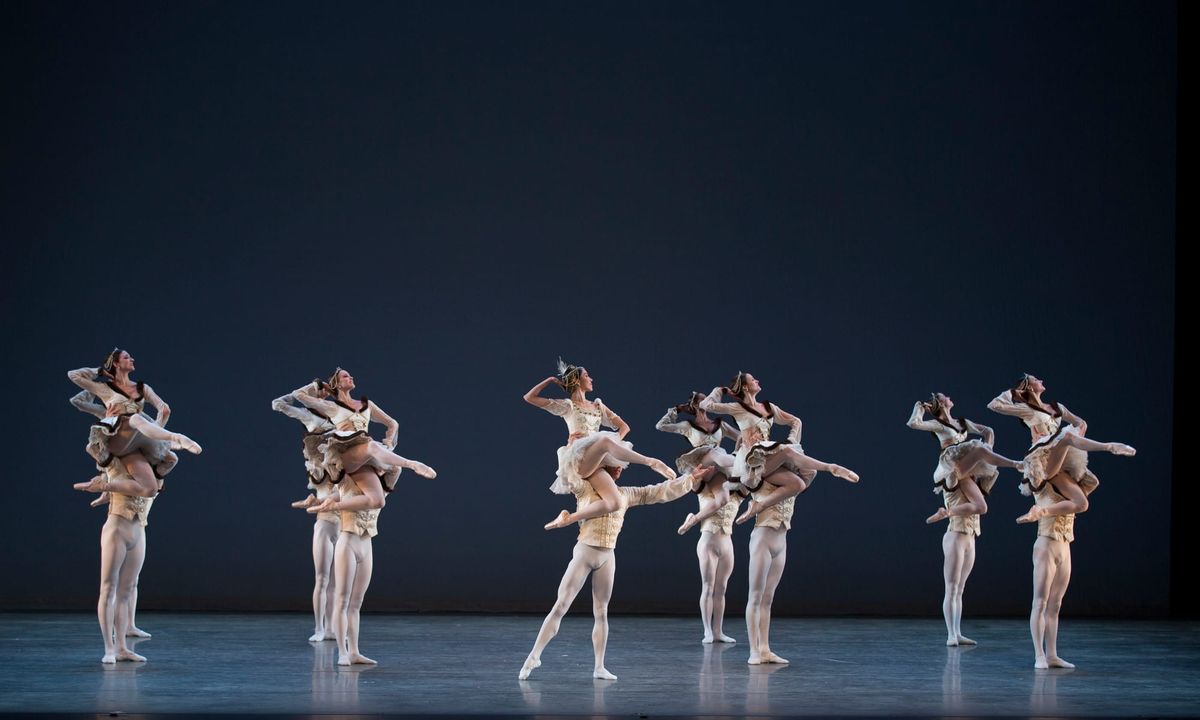
"Raymonda Divertissements", "Seven Sonatas", "Thirteen Diversions"
American Ballet Theatre
David H. Koch Theater
New York, NY
November 1, 2014, evening
Plotless abstractions ruled this program, as each work explored the choreographers' reactions to different music. Petipa's "Raymonda Divertisse- ments", of course, originally had a story, but the current version lets the audience float along on that velvet river of music passing through various jewel-like dances, though it is a shame that the river doesn't pass through some scenery. Paloma Herrera and Cory Stearns made their debuts as the hosts of this glorious confection. Other than the opening adagio and the rousing ending for the entire company, the happy couple don't actually dance together, as the traditional pas de deux is reduced to two solos, but Herrera and Stearns, with an openhearted graciousness, were able to show that they were dancing for each other while including their court and their audience.
Herrera gave the dancer formerly known as Raymonda a youthful eagerness combined with a refined and musical upper body; I especially remember her open arms as she circled around the stage seeming to embrace the corps. Her beautifully shaped feet floated through the solo's bourrées and her serene upper body gave the piece a feeling of private reverie, as if this dance were a prequel to Balanchine's "Emeralds". Stearns was a magnificent partner, and seemed to be wearing an invisible crown. His dancing exploded in the coda as he soared on with flying yet elegantly controlled jumps.
Their cohorts, too, danced very well, and everyone seemed much more in sync than in some earlier performances. The dancers in the male pas de quatre (Sung Woo Han, Blaine Hoven, Calvin Royal, and Patrick Ogle) looked relaxed and confident, though Ogle, a last-minute substitute, had some trouble with the finale. In the female duet, Nicole Graniero and Luciana Paris did seem to be mirror images, and the delicate little grace notes with their flickering feet were irresistible. Cassandra Trenary and especially Devon Teuscher danced with admirable and almost inhuman control, holding those beautiful landings as if their feet had magnets and their arms had wings. "Raymonda Divertissements" is pure diversion with no underlying theme or lesson, but watching it makes the world seem brighter, and it is a gift of pure beauty from Mr. Petipa and Mr. Glazunov which lets you walk a little taller knowing that such radiance is possible.
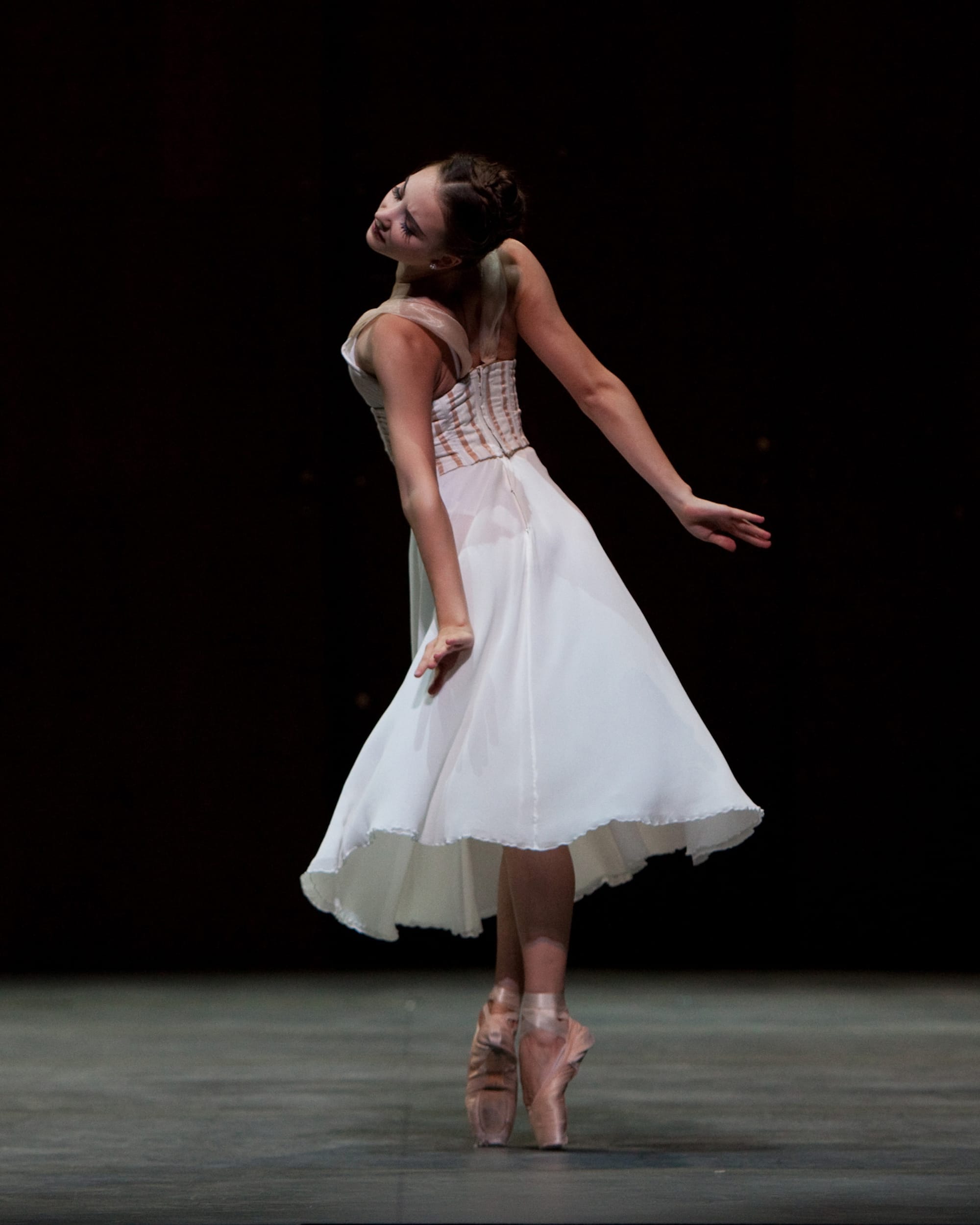
Alexei Ratmansky's "Seven Sonatas", to piano music by Domenico Scarlatti, is another abstract response to music. With Veronkia Part, Sarah Lane and Christine Shechenko, the physical beauty quotient was off the charts, but these dancers (and their partners Blaine Hoven, Arron Scott and Alexandre Hammoudi) seemed carefully chosen, as their various heights arrayed so harmoniously when they stood together; short, medium, and tall. As with so many of Ratmasky's works, potent details emerge from repeated viewings, though I think five sonatas would suffice. There is a dramatic line flowing through the work, an examination of relationships of three distinct couples; Ratmansky has the ability to make his dancers look both individual and cohesive. Arron Scott, always a musically incisive dancer, flowed through his restless, urgent solo, combining playfulness with a slightly uneasy restlessness which was echoed by Lane. Part and Hoven seemed a more mature, uncertain couple, as their pas de deux was full of potent gestures, of reaching up and falling back. Part's slightly reserved stage presence and creamy dancing were haunting. Hammoudi did not have the crisp, clean shapes of David Hallberg, who originated the role, or Joseph Gorak, who has also danced it, but his elegant, romantic line gave his pas de deux with the confident and serene Shechenko a luxurious grace.
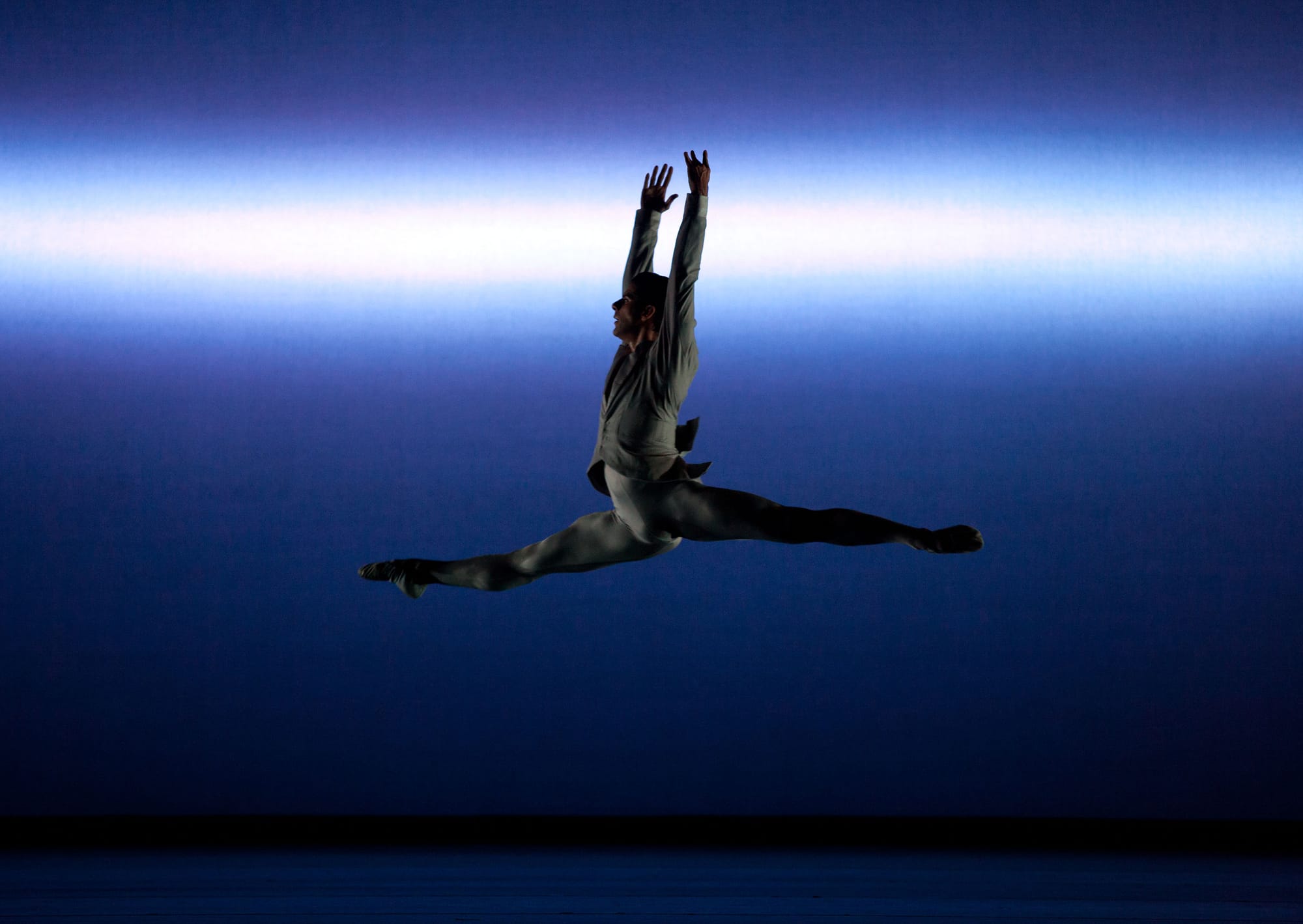
The bare stage was lit by Brad Fields, opening with a golden glow, possibly sunrise or sunset, depending on your mood, and fading to dark for the enigmatic ending, as the men lowered their partners to the ground and bent over them in with hints of mourning--intimations of lost youth or faded relationships. Lighting, also by Fields, also played a major role in Christopher Wheeldon's "Thirteen Diversions", to music by Benjamin Britten. Too major a role, as the glorious beams of color dividing the background overpowered the finicky choreography, and I found the musical light show more compelling than the dancing.
The four couples (Misty Copeland with Joseph Gorak, Hee Seo with Marcelo Gomes, Stella Abrera with Thomas Forster, and Devon Teuscher with Calvin Royal) were dressed in white formal-tinged dresses and jackets that flared out distractingly whenever the men turned, which they did with regularity. The dancers, some of the most distinctive and compelling that ABT has to offer, looked anonymous in the finicky choreography. The various pas de deux all seemed to be based on the same shards of conversation--"Look at my beautiful arabesque, and then watch me flop over and pretend to be a bag of potatoes for my partner to hoist." Even Gomes, despite moments of dignity, wasn't able to make the choreography cohesive. Thirteen is apparently not as lucky as seven.
copyright © 2014 by Mary Cargill



