New Flocks, New Tricks
“Swan Lake”
Mariinsky Ballet
BAM Howard Gilman Opera House
Brooklyn, NY
January 22, 2015
Fielding a leading cast of two imports, the Mariinsky Ballet showed points of departure and a sense of new direction against the backdrop of its iconic tradition. Amidst the uneven performances from the Perm ballet school trained Oxana Skorik and the Royal Ballet school trained Xander Parish in the main roles, you could see glimpses of emerging interesting new styles, and their imperfections kept them from monopolizing the viewers’ focus, letting the audience enjoy all of the company’s dancing.
Parish, a 2010 transferee from the Royal Ballet who became the first British dancer to join the St. Petersburg troupe, owned the stage from the moment he appeared. Tall, refined and glowing, he followed his princely entrance with a more typically Russian, deeper approach to his character, and a somewhat daring portrayal of this Prince as a young lad whose youthfulness made him clueless when surrounded by women. Despite his regal demeanor, he looked around curiously from one to another lady of the corps who danced with him, innocently joining them in the dance, but not really understanding any of their flirtations. Only when he met Odette did he register his attraction to her, even if he still seemed unsure of the right way to court her.
Besides his charisma and this interesting approach to the role, the refinement of Parish's steps made the technical aspects of his dancing a pleasure to watch. His jumps were light and high, and his renversés were particularly beautiful in the way their elongated form widely curved around the air. But the dancing wasn’t without its shortcomings: the approaches before each of his jumps seemed very low, so low in fact that it was hard to understand how he achieved his ballon; and in several parts of his solos, particularly the variation during the ball scene, most landings and stops on turns betrayed a distracting lack of upper turn out. In the ball scene his acting suffered a setback as well, as his portrayal of the character no longer seemed fully developed and the uncertainty of his Prince read as excessive restraint.
His partner Skorik, who joined the Mariinsky in 2007 after graduating from the Perm ballet school where she was trained under the guidance of the legendary, and the legendarily cruel at times, Lyudmila Sakharova (who many decades before produced another famous Perm export who went to dance for the Bolshoi - Nadezhda Pavlova), might be best known to the Western viewers as the star of David Kinsella’s film “Beautiful Tragedy” which narrates the difficulties of her ballet school studies. Her extensions, beautifully arched feet, and the incredible plasticity of her torso set her apart from most dancers, and she often turned to her physical gifts to try new, interesting ways of using the body within the choreography.
Throughout the ballet Skorik took every opportunity to embellish her dancing with deep bends (in any direction, but most beautifully to the back), having each upper body fold come from the waist and not just below the shoulders, and making each curve deeper. Certain of her moves, like a port de bras where Odette’s “wings” echoed the forward bend in Skorik’s spine by falling forward with both elbows facing front, then moved back, emerging wide-spread and fully elongated behind her, felt particularly novel and modern. Unfortunately, at times this creativity in the Odette role seemed like innovation for innovation’s sake because of Skorik’s frequent lack of control over her limbs and loss of balance, and as a result her reliance on flexibility seemed distracting and unnecessary. This focus on the body elements also left her white swan’s emotions in a plateau, making her Odette one to watch with curiosity, but not necessarily interest.
In stark contrast, her Odile was show-stopping and Skorik was fully in command of her elastic body, coiling and weaving around the Prince like a snake around her prey. Unlike many Odiles who color their performance with elegance, pride or near-romantic seduction, Skorik’s Odile was absolutely evil, almost sadistically so. Breathing heavily with eager anticipation, she waited impatiently for the Prince to swear his true love at the end of the ball scene, only to break out in cruel and hysterical laughter once the oath was said and the music exploded with its dramatic chords. Throwing her flower bouquet with triumphant, cold-blooded indifference and condescension, her departure from the stage with Rothbart was chilling in a rare way. Although the difference between Skorik’s Odette and Odile was undeniable, you couldn’t fault Parish’s naive Prince for not being able to tell these obviously different women apart; no prince stood a chance against this creature.
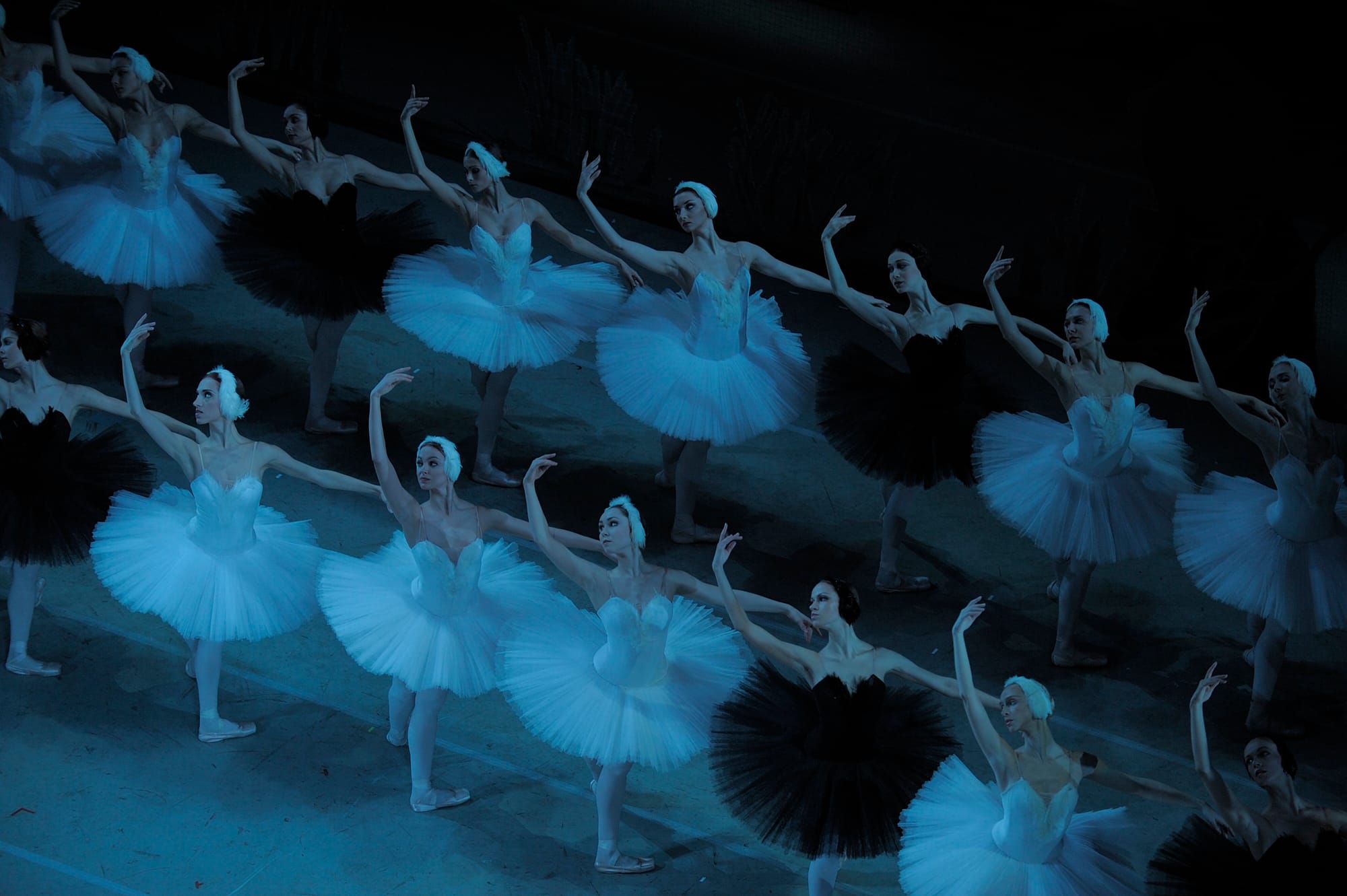
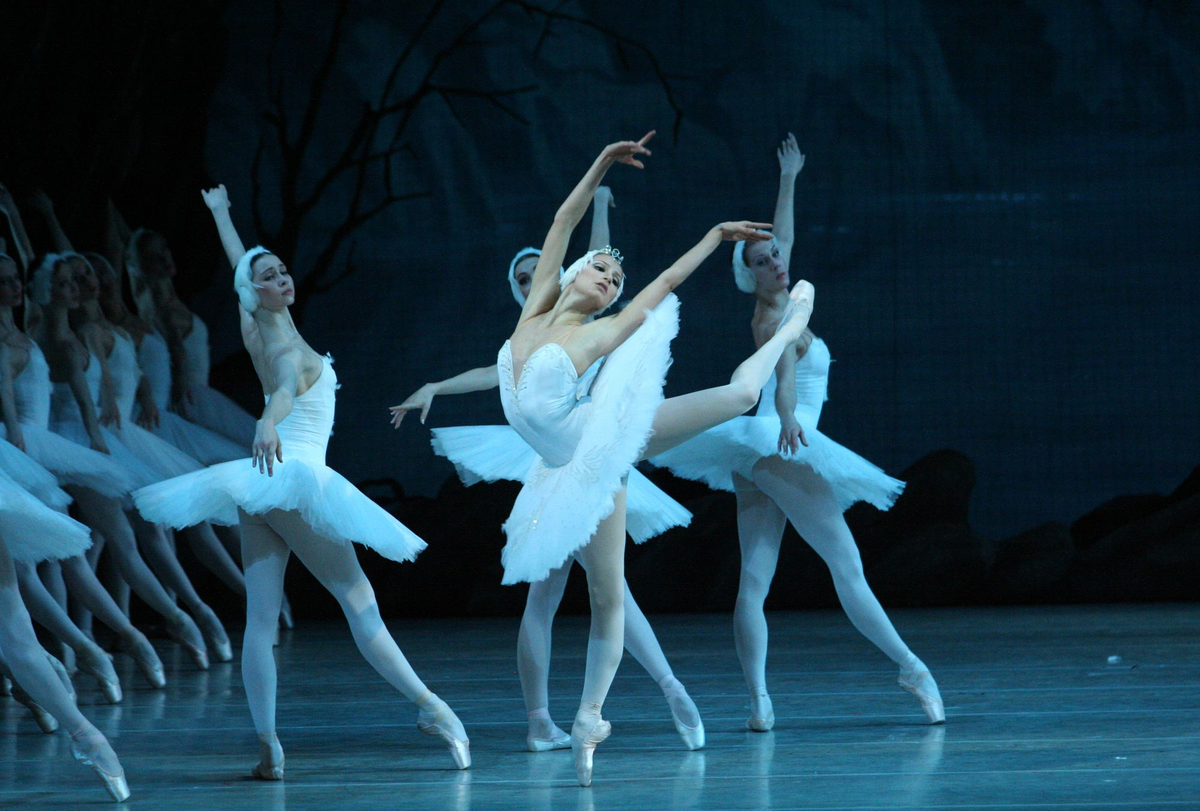
While aesthetically Skorik and Parish were a good match up, their partnering work was the weakest point of the performance. During the lakeside scenes Parish frequently struggled with the more difficult lifts and Skorik remained wobbly even on supported moves, so often in their duets instead of showing elegance they just showed a lot of learned mannerism alongside their quest for individual defining styles. This, perhaps, is what affected their chemistry, and was distracting enough to cause the eye to wander to the other dancers on stage during the white acts, where not a single feather appeared out of place. But the uncertainty and lack of polish was all but nonexistent during the ball scene pas de deux, suggesting that these individually interesting dancers could, with time, forge a great partnership, as well as remarkable artistic identities.
While the principal cast had these high and low points, the rest of the company presented an even, and evenly impressive performance. Yuri Smekalov stole the show in the beginning of the lake scene as Rothbart, using his costume’s wings expertly and in a very different way from the swans, looking menacingly at the audience over one of them just prior to the swans’ appearance. (That same gesture was then repeated with similar deviousness by Skorik as his daughter Odile – the apple here did not fall far from the tree.) The Joker, Yaroslav Baybordin, who had danced tentatively in his first performance of the role at BAM a week earlier, was full of confidence and truly funny, and Yana Selina, who replaced an injured Anastasia Nikitina as one of the two swans in the last act, danced with such a strong personal identity, beautiful high attitudes and stage presence that she could have easily stepped into the Odette role and carried the show.
Gavriel Heine, the first American-born graduate of the Moscow Conservatory, who replaced Valery Gergiev behind the podium for this “Swan Lake,” gave the company much better tempos and energy, and helped make this ballet seem to be all about explosiveness and newness. From the bold splashes of the ballet’s overture to the last fall of the curtain, this “Swan Lake” gave the carefully protected Russian classic a fresh new look.
copyright © 2015 by Marianne Adams



